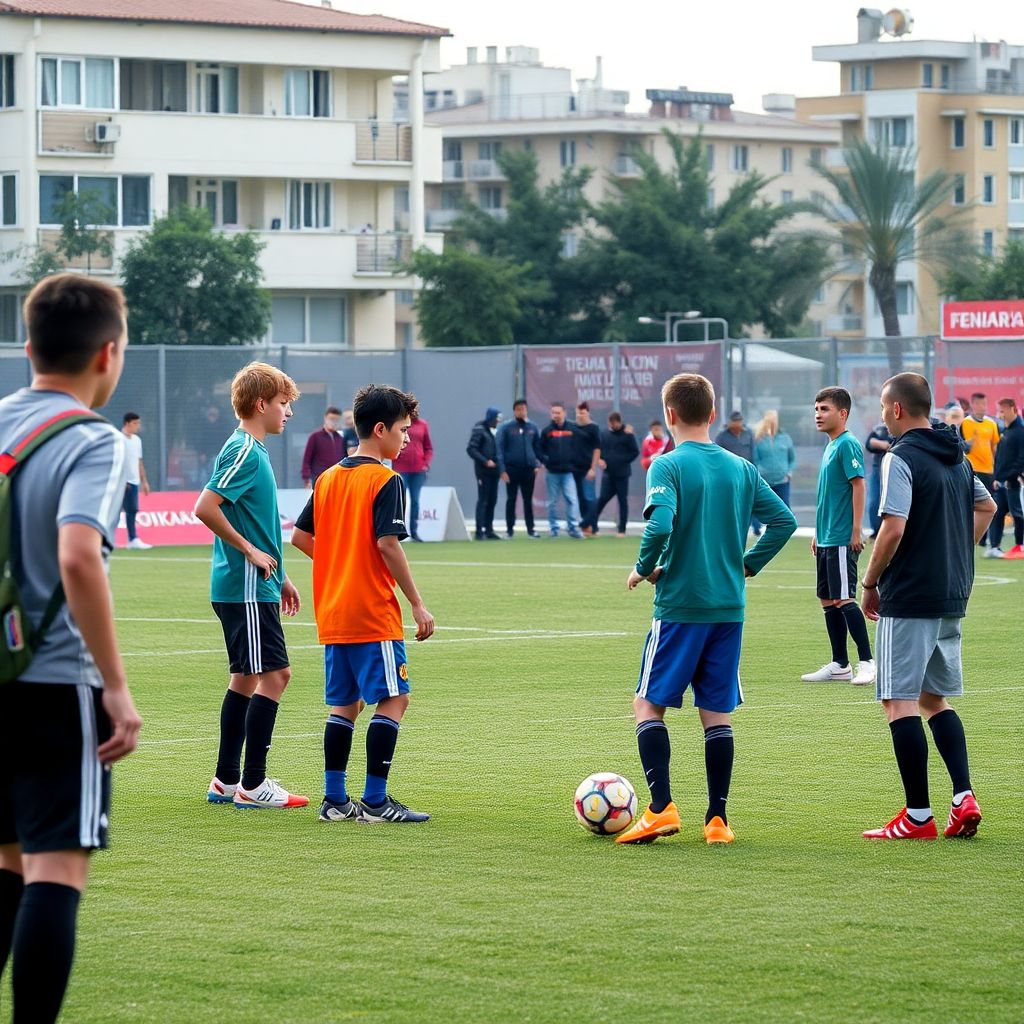
Scouting in Turkey works through a mix of club scouts, regional networks, and private academies that track players from grassroots to professional level. Clubs watch school leagues, local tournaments, and Turkey football academy trials for youth players, then filter talent using clear physical, technical, tactical, and mental benchmarks before integrating them into structured development pathways.
Scout’s Playbook: Essential Insights for Turkey-focused Talent Discovery
- Map regions, school leagues, and grassroots hubs before investing in regular travel and live scouting.
- Clarify roles between club scouts, coaching staff, and external football scouting agencies in Turkey.
- Use unified rating templates so every scout in your network evaluates players the same way.
- Track players over multiple matches and environments instead of judging on single trials.
- Link scouting decisions to concrete pathways: academy groups, loans, and strategic partner clubs.
- Build individual development plans and monitor progress with simple, repeatable KPIs.
- Prepare a realistic route to the first team that includes contracts, education, and family support.
Mapping Turkey’s Talent Landscape: Regions, Academies and Grassroots Networks
This approach suits clubs, academies, and intermediaries who already have basic structures and want to professionalise how they find players. It is not ideal for very small amateur clubs without travel budget, or for individuals looking for a shortcut guide on how to get scouted by football clubs in Turkey overnight.
Turkey’s talent pool is concentrated but diverse: big-city school leagues, Anatolian towns, and migrant-heavy districts all produce players. To cover this efficiently, combine macro mapping (regions and competitions) with micro mapping (specific academies, coaches, and trusted talent spotters).
| Region / Hub | Typical Strengths | Academy & School Output | Scouting Coverage Level | Suggested Focus for Clubs |
|---|---|---|---|---|
| Istanbul metropolitan area | High competition level, diverse player profiles, strong futsal and street football background. | Multiple club academies, private schools, and some of the best youth football academies in Turkey. | Very dense coverage from pro clubs and football scouting agencies in Turkey. | Target late developers, overlooked positions, and under-scouted districts and school leagues. |
| Ankara & Central Anatolia | Disciplined team play, strong school sports culture, physically robust players. | Steady flow from school competitions and municipal academies. | Moderate coverage; more gaps in smaller towns and villages. | Build relationships with PE teachers, identify regional tournaments, create recurring visit schedules. |
| Izmir & Aegean coast | Technically oriented players, comfort in possession, good climatic conditions for year-round football. | Active club academies and established grassroots clubs with clear development traditions. | Mixed coverage; strong around major cities, weaker in coastal tourist areas. | Partner with local clubs, run open Turkey football academy trials for youth players during holiday periods. |
| Black Sea region | High-intensity, aggressive style, mentally competitive players. | Community clubs with loyal fanbases, fewer large private academies. | Patchy coverage outside traditional football cities. | Use local scouts to reach rural areas, attend regional youth tournaments and school finals. |
| South & Southeast (Adana, Gaziantep, Diyarbakır) | Strong street football culture, raw attacking talent, creativity under pressure. | Growing academies and community initiatives, uneven infrastructure. | Under-scouted compared to big-three-city focus. | Establish long-term presence, run satellite centers, link with municipal projects and NGOs. |
Practical mapping tasks for a club or academy in Turkey:
- List all competitive youth leagues (school, federation, municipal) within your target radius.
- Identify the five to ten most productive grassroots clubs and school programs in each region.
- Assign named scouts or coaches to specific districts and competitions with fixed visit frequencies.
- Log every match watched in a central system with date, competition, and key notes.
Scouting Infrastructure: Club Roles, Scout Profiles and Data Systems
Effective scouting in Turkey requires clear structure more than expensive technology. Before expanding coverage, define who does what, how information flows, and which tools you will actually use each week.
Core elements to put in place:
- Defined roles and responsibilities
- Head of scouting: designs the calendar, sets standards, signs off key targets.
- Area scouts: cover specific leagues/regions, maintain coach and school relationships.
- Video/data scout: collects footage, tags actions, prepares short reports for coaches.
- Academy liaison coach: converts scouting reports into trial invitations and training plans.
- Simple, shared scouting tools
- Standard report template with sections for physical, technical, tactical, mental, and potential.
- Basic video storage (cloud folders or club server) labelled by player name, age, and match.
- Central database (spreadsheet or software) for all players seen, to avoid duplication.
- Data and communication workflows
- Weekly internal meeting to review top reports and decide who moves to live follow-up or trial.
- Clear process for coaches to request scouting of specific positions or profiles.
- Feedback loop from academy coaches back to scouts on trial outcomes.
- External partnerships
- Relationships with trusted local coaches, school PE staff, and regional coordinators.
- Selective cooperation with football scouting agencies in Turkey that operate ethically and transparently.
- Monitoring of Turkish football clubs youth recruitment programs to learn best practices and avoid conflicts.
Identification Criteria: Physical, Technical, Tactical and Mental Benchmarks
The steps below describe how to structure your player identification process in Turkey so that different scouts and coaches work to the same benchmarks and reduce personal bias.
- Define the profile by position and age group
Before going to any match, write down the non-negotiables for the role you need: for example, U15 full-back vs senior centre-forward. This aligns every scout and avoids collecting players you cannot actually use.
- Set minimum physical requirements (speed, endurance, coordination) tailored to age.
- Clarify 3-5 key technical skills per position (e.g., first touch, passing range, 1v1 defending).
- Note tactical basics you expect at that level (positioning, pressing triggers, decision speed).
- Observe players in live matches with structured focus
Use a standard observation sheet in every match you attend in Turkey. Watch players both on and off the ball, across different phases of the game, and in several matches if possible.
- Evaluate actions in context: quality of opposition, pitch conditions, and team style.
- Pay attention to transitions, pressing reactions, and recovery runs, not just highlights.
- Note consistency: does the player repeat good actions or just show isolated moments.
- Rate physical and technical attributes separately
Split your evaluation into at least two categories so you do not overvalue one strong area. Many players in Turkey are technically gifted but need time physically, or the opposite.
- Physical: speed, acceleration, agility, strength relative to age, game endurance.
- Technical: first touch, passing, dribbling, shooting, heading, ball control under pressure.
- Mark current level and potential level to show development gap clearly.
- Assess tactical understanding and game intelligence
In competitive Turkish youth matches, the ability to adapt to different systems and roles is critical. Look for players who solve problems, not just follow rehearsed patterns.
- Off-ball positioning: supporting angles, compactness, awareness of space.
- On-ball decisions: when to play forward, when to keep, when to switch play.
- Reaction to coaching instructions and in-game changes by the coach.
- Evaluate mental strength, behaviour, and environment
Mentality often decides who progresses in the best youth football academies in Turkey. Observe behaviour throughout the match and after it, not just during good moments.
- Resilience: reaction to mistakes, referee decisions, and physical duels.
- Competitiveness: willingness to press, track back, and support teammates.
- Family and school environment: realistic support, academic stability, travel possibilities.
- Decide the next step: follow-up, trial, or long-term tracking
After rating all areas, decide calmly what you will do with this player. Not every promising player needs an immediate invitation; some should be monitored over a full season.
- Immediate trial: clear fit for your age group and positional need, strong mentality signs.
- Follow-up matches: request specific videos, watch again vs stronger opposition.
- Long-term list: younger or late-maturing players monitored at intervals.
Fast-track mode: compact identification workflow
- Write a one-page profile with non-negotiables for each position and age group.
- Use the same two-page match report template for every player you watch in Turkey.
- After each week, shortlist only players you would realistically invite for trial now or within the next season.
- Review your decisions monthly to compare initial ratings with updated performances and adjust your benchmarks.
Talent Pathways: Academy Progressions, Loans, and Strategic Partnerships
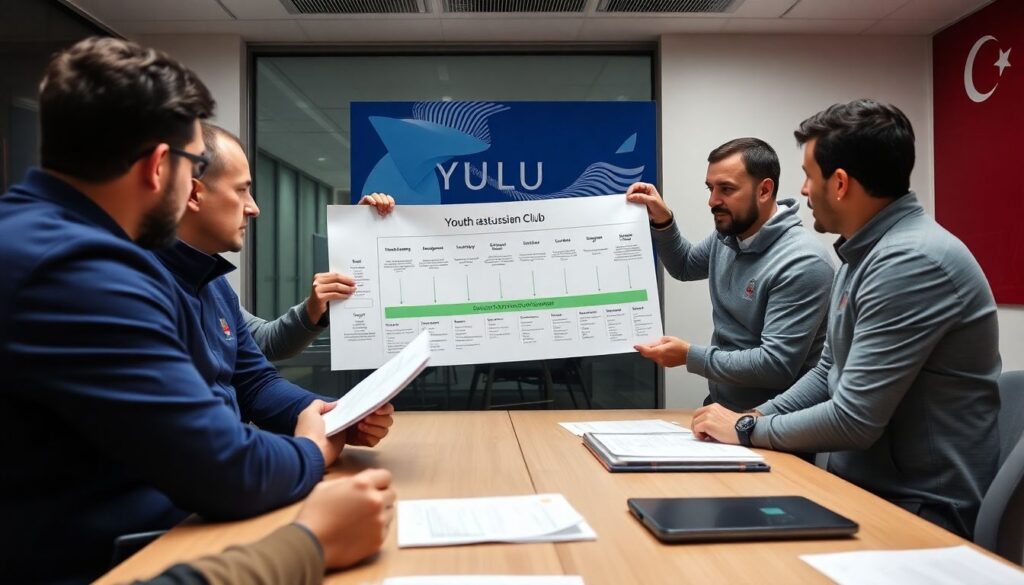
Use the checklist below to verify whether your club offers a realistic and transparent pathway from first contact to professional level within the landscape of Turkish football clubs youth recruitment programs.
- There is a written pathway document that explains levels from grassroots intake to senior team.
- Age groups are clearly defined with criteria for promotion, demotion, or staying another season.
- Players and parents receive honest feedback about where the player stands each season.
- Loan or dual-registration options exist with partner clubs for players blocked in their position.
- Formal partnerships with local clubs or schools are in place, with mutual expectations and benefits.
- Trial players know in advance what they will be evaluated on and when they will receive decisions.
- Academy and first-team staff meet regularly to align tactics, terminology, and key principles.
- Released players are guided towards alternative clubs, education, or other roles in football.
- Annual reviews compare how many players moved between levels vs. planned targets, and why.
- Scouts receive feedback on which of their recommended players progressed longest in the pathway.
Development Protocols: Training Design, Sports Science and Individual Plans
Common mistakes in Turkey’s youth development environment reduce the impact of good scouting. Avoid these issues when building training and monitoring systems.
- Training content is disconnected from match demands; sessions look impressive but do not target real weaknesses seen in competition.
- No individual development plans: every player in a group follows the same progression regardless of needs or position.
- Overloading players with matches and double training without monitoring fatigue, especially during exam periods and hot weather.
- Ignoring growth and maturation differences in younger age groups, judging late developers as “weak” or “slow” permanently.
- Using physical conditioning methods that copy senior programs instead of age-appropriate strength and coordination work.
- Minimal cooperation between coaches, physios, and teachers about injury prevention and recovery schedules.
- Neglecting video feedback and simple performance analysis that could give players clear visual learning.
- Focusing only on short-term tournament success instead of long-term player development and playing identity.
- Failure to document sessions and progress, making it hard to understand which methods worked.
- Relying on individual brilliance instead of teaching structured principles that help more players succeed.
Advancing to the First Team: Trials, Monitoring, Contracts and Retention
Besides the classic academy-to-first-team route, several alternative approaches can help Turkish clubs and players progress safely and realistically.
- University and semi-professional pathway – For players combining education with football, link with university teams and semi-pro clubs that can later sell or loan players upwards.
- Partner-club development model – Use strategic regional or lower-division partners where your young players can get adult minutes before returning as ready first-team options.
- Specialist development academies – In cooperation with reputable private centres, outsource specific phases (e.g., technique or rehab) while maintaining your own playing philosophy.
- Late-entry recruitment focus – Systematically monitor older age competitions and amateur leagues to find late bloomers who did not pass through traditional academies.
Practical Questions Coaches and Scouts Face in Turkey
How can a young player practically increase chances of being noticed in Turkey?
Play regularly in organised competitions, keep consistent performance, and request match footage whenever possible. Understanding how to get scouted by football clubs in Turkey also means joining structured clubs or academies, maintaining good school behaviour, and being available for trials when opportunities arise.
Are open trials useful compared to long-term scouting?
Open Turkey football academy trials for youth players can highlight raw talent but are rarely enough alone. The most reliable clubs combine trials with long-term observation in league matches, training sessions, and school tournaments.
How should a club choose between building its own academy and using partner academies?
If resources are limited, start with strong partnerships and a clear scouting network, then grow your own academy step by step. Studying the structures of the best youth football academies in Turkey helps set realistic standards and avoid unnecessary costs.
What is a safe way to work with private scouts and agencies?
Only cooperate with registered, transparent football scouting agencies in Turkey that provide written agreements and avoid asking for upfront payments from families. Keep final decisions inside the club and ensure agencies do not control player selection.
How much video analysis is realistic for smaller Turkish clubs?
Even with low budgets, recording matches with a basic camera or phone and storing clips in organised folders is achievable. Focus on key actions per player rather than full professional tagging systems.
How can scouts reduce bias when evaluating players from different regions?
Use identical report templates, clear benchmarks, and regular calibration meetings. Rotate scouts across regions occasionally so they experience different playing styles, and compare ratings with objective match data where available.
What should be communicated to parents during the scouting and trial process?
Explain the pathway, expectations, and timelines clearly, including education priorities. Avoid promising contracts and instead outline what the club will monitor and how feedback will be delivered.