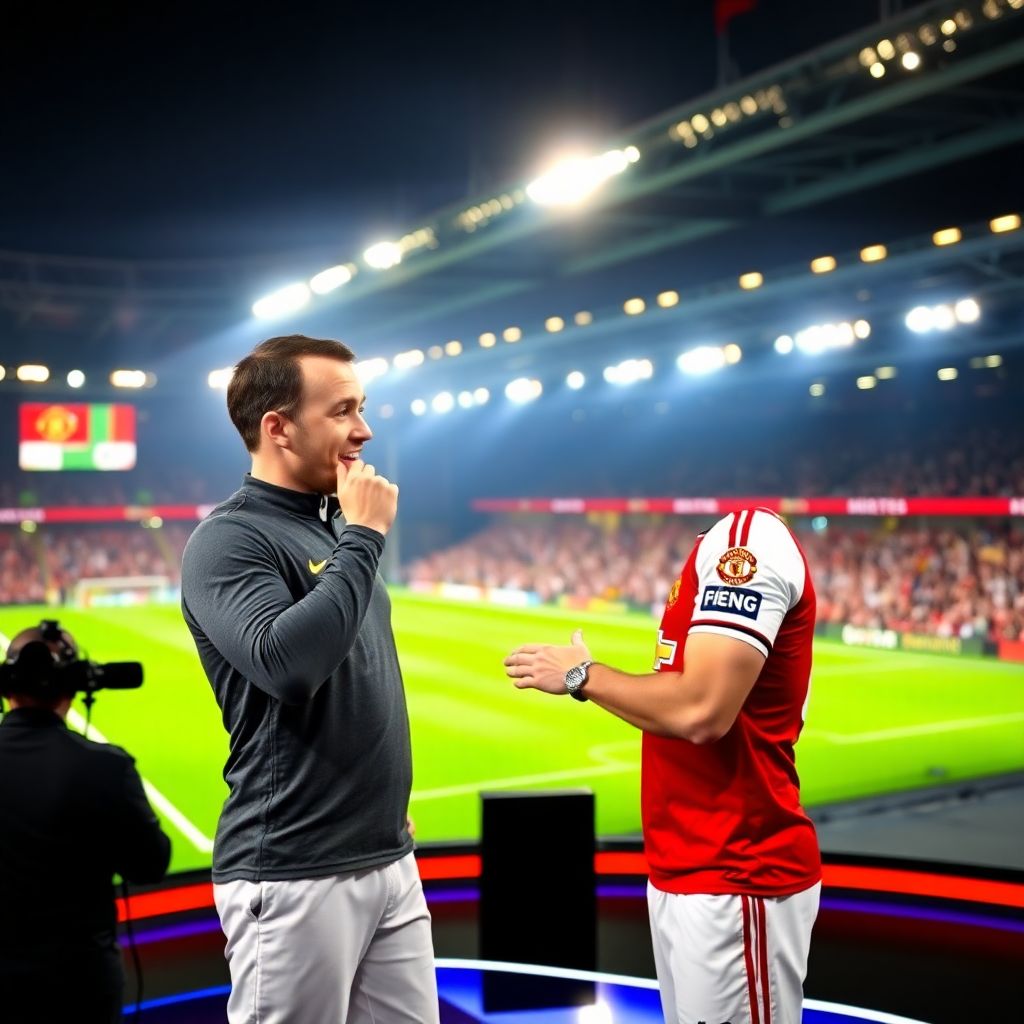
Wayne Rooney believes the most logical long-term choice for Manchester United’s dugout is already in place: Michael Carrick. The club legend argues that the interim coach, who took charge until the end of the season, has shown enough in a short period to be seriously considered as permanent manager rather than treated as a temporary solution.
Carrick was promoted in early January following the departure of Ruben Amorim. Since then, he has injected fresh energy and clarity into a United side that had been drifting. Under his guidance, the team has not only improved results but also rediscovered a sense of identity on the pitch, something that had been missing through a series of managerial changes.
Rooney, who shared a dressing room with Carrick during some of United’s most successful years, reminded observers that the club has already experimented with multiple coaching profiles. From the tactical discipline of Louis van Gaal and the pragmatism of José Mourinho to the pressing-based approach of Erik ten Hag and the more modern, dynamic ideas of Amorim, United have tried almost every managerial archetype. In Rooney’s view, after such a turbulent period, Carrick now emerges as “the most sensible option.”
Crucially, Rooney insists that his endorsement is not rooted in nostalgia or friendship. He highlights Carrick’s temperament and understanding of the club as decisive advantages. According to him, Carrick brings a “calming influence” to a high-pressure environment and genuinely cares about Manchester United beyond short-term success. That emotional connection, Rooney suggests, can be the foundation for more stable, coherent long-term planning.
Carrick’s start in the dugout has been impressive. Manchester United opened his tenure with a statement 2-0 victory over Manchester City at Old Trafford, a result that immediately shifted the mood around the club. That was followed by a thrilling 3-2 win away at Arsenal’s Emirates Stadium, underlining that the early upturn was no coincidence. Across his first five league games, United collected four wins and a draw, propelling themselves back into the race for the top four.
For Rooney, these results are about more than just points. He believes Carrick has influenced the entire squad, not only the core starting XI. Players such as Matheus Cunha, Benjamin Šeško, Harry Maguire and Lisandro Martínez have all shown noticeable improvement under the new coach. Their renewed confidence and sharper performances are, to Rooney’s mind, clear evidence that Carrick is building a positive, competitive environment where every player feels involved.
Rooney especially values the way Carrick manages personalities and expectations. In a team loaded with international stars and strong characters, maintaining harmony can be as important as tactical innovation. Carrick’s calm demeanor and reputation as a respected former player give him authority in the dressing room, while his willingness to rotate and reward form signals to the squad that places are earned, not guaranteed by reputation.
Another aspect Rooney emphasizes is Carrick’s deep knowledge of United’s culture. As a former midfield linchpin of the club’s last great era, Carrick understands what supporters expect: proactive football, controlled aggression, and a strong spine built on resilience and teamwork. This familiarity means he does not need time to “learn” the club-he is already aligned with its values and traditions, which can accelerate the rebuilding process.
Rooney argues that constantly looking outside for high-profile names has not delivered the sustained revival the club craves. Instead, United have cycled through different philosophies and recruitment strategies, which has led to inconsistency on and off the pitch. Elevating Carrick on a permanent basis, he believes, would mark a shift towards trusting someone who has grown from within the club’s own ecosystem and is more likely to implement a unified vision from the academy to the first team.
From a strategic standpoint, appointing Carrick permanently could also help re-establish a strong pathway from youth teams to the senior side. Rooney sees this as crucial to rebuilding a clear club identity. A coach steeped in United’s history is more likely to integrate young talent gradually, protect them in difficult moments, and build a core that can stay together for years rather than short-term cycles built around expensive transfers.
There is also the question of tactical evolution. While Carrick is still early in his managerial journey, his initial choices suggest a preference for structured possession, intelligent pressing triggers and a balanced midfield-principles that fit both modern football and United’s traditional emphasis on control and fluid attacking play. Rooney believes that, given time and backing, Carrick can refine this style into a recognizable blueprint that differentiates United from their domestic rivals.
Of course, appointing an inexperienced manager on a permanent basis carries risks, especially at a club where expectations remain sky-high. Rooney does not ignore this reality, but he argues that the risks of another external reset are even greater. A new outsider would likely demand different players, introduce new systems and potentially discard some of the progress Carrick has already made. Continuity, in his view, is now more valuable than the allure of yet another big-name appointment.
Rooney also points to the psychological impact of Carrick’s possible permanent promotion. For the players, it would send a clear message that strong performances and commitment under the current regime will be rewarded with stability, not swept aside in the next upheaval. For supporters, choosing Carrick could symbolize a return to a more authentic version of Manchester United-one that values its own people and long-term planning over short-term glamour.
In the broader context of English football, Rooney sees a potential parallel with other clubs who have found success by trusting individuals who understand the club from the inside. While every situation is unique, he believes United can learn from those examples rather than endlessly searching for a “perfect” outsider who must adapt from scratch to the unique pressures of Old Trafford.
Ultimately, Rooney frames Carrick’s candidacy as a chance for United to reset their priorities. Instead of chasing the next big managerial name at the first sign of adversity, the club could invest in a coach who has already shown he can win big games, unlock improved performances from key players and restore a sense of calm around the team. For Rooney, that combination of results, personality and club knowledge is precisely why Michael Carrick stands out as the most rational long-term choice for Manchester United’s future.