
Turkish football clubs in European competitions can compete better by combining strict financial control, smarter talent development, a clear tactical identity, and upgraded infrastructure with modern governance. This roadmap focuses on safe, realistic steps for Turkish Super Lig clubs UEFA rankings and progress, aligning long-term planning with short-term on‑pitch improvements and measurable KPIs.
Executive strategic snapshot for European competitiveness
- Run a yearly 360° audit: sporting, financial, organisational and data maturity, benchmarked against realistic European peers.
- Prioritise academy, local scouting and targeted signings instead of late, expensive over-30 stars with no resale value.
- Balance wage bill, transfer spend and European prize money with multi-channel revenues to reduce boom-and-bust risk.
- Adopt a stable tactical game model suitable for strategies for Turkish teams in UEFA Champions League and other UEFA competitions.
- Invest gradually in medical, recovery and pitch quality to support high-intensity European football schedules.
- Professionalise governance, grow international partnerships and branding to support improving Turkish clubs competitiveness in European football.
Assessing current gaps: sporting, financial and organizational diagnostics
This roadmap suits clubs aiming for sustainable presence of Turkish football clubs in European competitions, not only one-off qualification. It is especially relevant when the club has basic financial stability and leadership willing to commit for at least three to five seasons.
It is not advisable to start an aggressive European push when:
- The club has severe unpaid debts or transfer bans that threaten short-term survival.
- Ownership or board structure changes every season, making any medium-term plan impossible.
- Head coach turnover is chronic, with frequent shifts of playing style and recruitment profile.
- Basic operations (salaries, travel, match logistics) are already under serious stress.
Before designing strategies for Turkish teams in UEFA Champions League or Europa/Conference League, complete a simple diagnostic across three dimensions:
- Sporting: squad age profile, injury history, minutes for academy players, tactical flexibility, physical outputs.
- Financial: wage-to-revenue ratio, dependency on European income, transfer balance over recent years.
- Organisational: clarity of decision-making, level of data use, staff specialisation (analysts, scouts, fitness, medical).
For each dimension, set 2-3 realistic targets linked directly to European performance (for example, consistent group stage qualification, or winning home games against similarly ranked clubs).
Optimising the talent pipeline: academy, scouting and targeted recruitment
To answer how can Turkish clubs improve performance in Europe sustainably, build a robust talent pipeline with clear responsibilities and tools.
Core requirements include:
- Club-wide game model: a documented playing style that guides academy coaching, scouting profiles and first-team recruitment.
- Data and video infrastructure:
- Access to event and physical data for Super Lig and priority foreign markets.
- Video platforms for opposition and player analysis.
- Basic internal database for tracking prospects and reports.
- Qualified staff:
- Academy director with authority and clear KPIs (minutes played, transfer revenues from academy products).
- Scouting coordinator, regional scouts and at least one data-oriented analyst.
- Loan manager or responsible staff member following players out on loan.
- Contract management capacity:
- Legal and financial expertise for performance-based contracts and sell-on clauses.
- Processes to avoid players entering the final contract year without a clear decision.
- Pathway planning:
- Defined steps from U17 to U19 to reserves and first team.
- Individual development plans for high-potential players aligned with European-level demands.
Each recruitment decision must link to the long-term target of improving Turkish clubs competitiveness in European football, not only short-term local pressure.
Financial sustainability: revenue diversification and smart investment models
A stable financial platform is essential for Turkish Super Lig clubs UEFA rankings and progress. Below is a risk-aware roadmap with realistic, safe steps.
Key risks and constraints to consider first:
- Over-reliance on unpredictable European prize money can create dangerous budget gaps if qualification is missed.
- Short-term, high-wage signings may block academy talent and increase financial stress.
- Debt restructuring without operational changes only postpones problems.
- Unrealistic timelines for commercial growth may trigger cash flow crises.
-
Stabilise the operating budget
Separate a conservative base budget (without European income) from an upside scenario (with group stage or knockout progress). Plan wages and fixed costs only on the base budget.
- KPI: Wage-to-revenue ratio within a safe band based on historical club data.
- Risk mitigation: Use short-term performance bonuses instead of fixed wages.
- Fallback option: If revenues fall, activate predefined clauses to reduce bonuses or delay certain non-essential expenditures.
-
Prioritise value-creating recruitment
Adopt a clear policy: sign players with a realistic chance of resale or clear performance edge, not just big names. Align recruitment with the tactical model and wage structure.
- KPI: Net transfer result over a rolling multi‑year period.
- Risk mitigation: Use structured deals (instalments, add-ons) instead of large upfront fees.
- Fallback option: If a marquee signing is necessary for political or marketing reasons, limit contract length and include exit clauses.
-
Diversify revenue channels
Develop local and international revenues beyond matchday: sponsorships, merchandising, digital content and strategic partnerships.
- KPI: Share of non-matchday income in total revenues.
- Risk mitigation: Test new commercial products on a small scale before full rollout.
- Fallback option: If one channel underperforms (for example, retail), shift focus to digital campaigns or regional partners with lower fixed costs.
-
Link budgets to sporting strategy
Agree on a multi-season plan where the coach, sporting director and finance team share targets: domestic position, European qualification level, and squad cost envelope.
- KPI: Alignment between planned and actual squad cost, and between targeted and achieved European rounds.
- Risk mitigation: Mid-season budget review with predefined corrective measures.
- Fallback option: If targets are badly missed, trigger an automatic reset of transfer and wage policies for the following season.
-
Develop a long-term debt management plan
Map all liabilities (tax, bank, transfer, wages) and set a realistic repayment schedule matched with projected cash flows.
- KPI: Gradual reduction in short-term liabilities and interest burden.
- Risk mitigation: Negotiate covenants that avoid automatic penalties based on single-season performance.
- Fallback option: If revenues drop unexpectedly, prioritise essential payments (players, staff, tax) and restructure non-critical obligations.
Comparative view of strategic actions, costs, timelines and risks
| Strategic action | Estimated cost level | Typical timeline to see impact | Risk level if mismanaged |
|---|---|---|---|
| Strengthen academy and local scouting | Medium | Medium to long term | Low to medium |
| Define and implement tactical game model | Low to medium | Short to medium term | Medium |
| Upgrade medical and recovery infrastructure | Medium to high | Medium term | Medium |
| Stadium modernisation and matchday experience | High | Long term | High |
| Governance reform and international partnerships | Low to medium | Medium term | Medium to high |
Building a competitive tactical identity: analytics, coaching and match preparation
To support consistent European performances, clubs need a specific tactical identity that relies on data, detailed preparation and aligned coaching structures.
Use this checklist to evaluate progress:
- Defined game model documented and shared across first team, reserves and academy.
- Regular data reports after each league and European match, with clear learning points.
- Dedicated analysts providing pre-match dossiers for European opponents at least several days before the game.
- Training microcycles aligned with European midweek fixtures, including rotation plans.
- Set-piece strategy with rehearsed routines for both attack and defence, tailored to European opposition tendencies.
- Fitness and load management plans individualised for key players expected to start in Europe.
- Clear in-game communication structure between head coach, assistants and analysts.
- Post-match review process focusing on situations typical in European matches (transitions, pressing resistance, aerial duels).
- Scenario training for playing with and without the ball, both when leading and chasing the scoreline away from home.
- Alignment between recruitment targets and tactical roles required for European-level intensity.
Upgrading infrastructure: medical, recovery and stadium standards
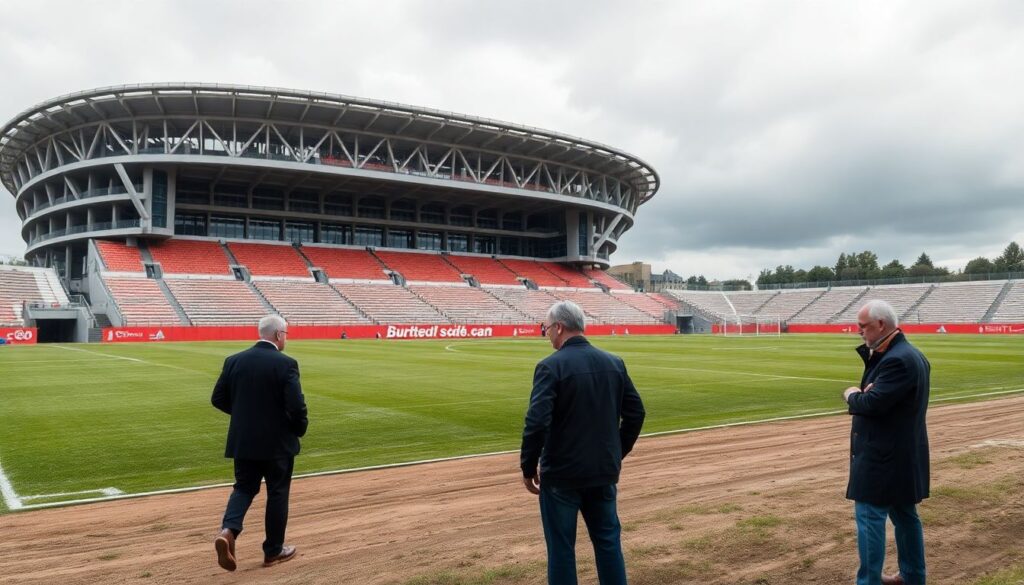
Infrastructure improvements are long-term but critical. Avoiding typical mistakes can save money and time while still contributing to better results in Europe.
- Investing in flashy facilities without ensuring basic pitch quality and maintenance is under control.
- Building new recovery areas without qualified staff or processes to use the equipment effectively.
- Ignoring travel, accommodation and nutrition planning for European away matches.
- Underestimating the impact of small details such as lighting, dressing room design and warm-up spaces on player readiness.
- Overcommitting to stadium projects that rely heavily on uncertain future European income.
- Neglecting medical data collection and communication between doctors, physios and fitness coaches.
- Failing to schedule maintenance windows around potential European qualifiers and group stage fixtures.
- Not involving coaching and performance staff in infrastructure planning decisions.
Governance, partnerships and international branding strategy
Governance and branding choices can follow different paths. Below are alternative approaches and when they are suitable.
- Professionalised board with independent sporting director: Best when ownership recognises the need for expertise and is willing to delegate. Supports stable long-term planning and a consistent game model.
- Consortium or city-backed model: Suitable when the club has strong regional importance and public or multi-investor support, reducing reliance on a single owner and allowing broader infrastructure projects.
- Strategic alliance with a foreign club: Useful for talent exchange, shared scouting and co-branded projects, especially when targeting specific markets or stepping-stone paths into major leagues.
- Digital-first international branding: Appropriate for clubs with strong domestic followings but limited physical international reach, focusing on global fan engagement, content and merchandising rather than costly overseas tours.
In all models, link governance reforms and branding plans directly to the central question of how can Turkish clubs improve performance in Europe, rather than pursuing visibility without sporting alignment.
Practical implementation concerns and concise answers
How long does it realistically take to see European progress from these strategies?
Small improvements can appear within one to two seasons, especially in match preparation and tactical identity. Structural gains from academy, governance and infrastructure usually require several seasons of consistent implementation and leadership stability.
What should a mid-table Turkish club prioritise first with limited budget?

Focus on clear tactical identity, local scouting, academy structure and basic data analysis. These require moderate investment but can quickly influence results and player value, laying the foundation for future stadium or large-scale commercial projects.
How can club leadership avoid overreacting to one bad European campaign?

Agree in advance on multi-season targets and evaluation criteria. Use rolling performance reviews that consider injuries, opponent quality and underlying metrics, not only final results, before making drastic changes to coach or squad.
Is it safe to plan on European prize money when building the budget?
Use European income only as upside, not as the foundation of the operating budget. Allocate such income for one-off investments, debt reduction or measured squad strengthening instead of covering fixed wage obligations.
How should Turkish clubs balance experienced foreign players and local talent?
Set a clear squad structure: a core of domestic players, a smaller group of key foreign leaders and a regular pipeline of academy graduates. Evaluate each signing based on fit to style, cost, leadership and potential resale value.
Do smaller clubs need a full-time analytics department to benefit from data?
Not necessarily. Starting with one staff member who combines video and basic data analysis can already upgrade preparation. As the club grows and targets higher European levels, the department can be expanded.
What if board or ownership changes disrupt the strategic roadmap?
Document strategies, KPIs and processes clearly so they outlive individuals. Aim to include core principles in official club regulations or long-term plans, making them harder to discard after leadership changes.