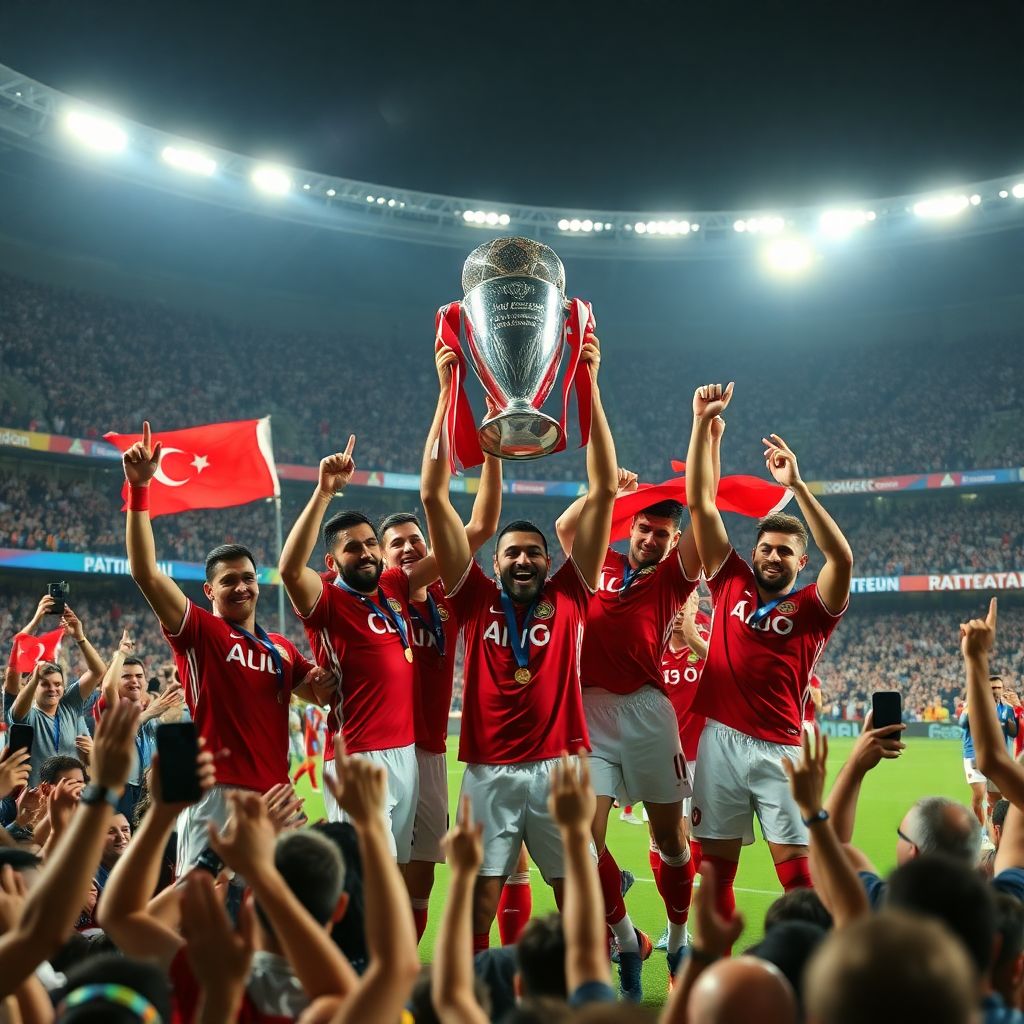
Turkish footballers became global stars by excelling with Turkish football players in European clubs, winning major trophies, and delivering decisive national-team performances that the world watched. From early pioneers in Serie A to modern Turkish football stars playing abroad in England, Spain and Italy, their reputations grew through consistent quality, tactical adaptability and big‑match impact.
Snapshot: Turkish players who reached global stardom
- Early trailblazers in Italy and France proved that Anatolian talent could compete with Europe’s elite.
- Modern icons reinforced this through Champions League runs and title‑winning seasons in major leagues.
- High‑profile moves, often described as top Turkish football transfers to Europe, created global visibility.
- National team success at international tournaments confirmed reputations built at club level.
- Tactical versatility helped Turkish football players in European clubs adapt to different football cultures.
- Off‑pitch branding, social media and sponsorships turned famous Turkish footballers in Premier League and elsewhere into recognisable global figures.
Trailblazers: Early Anatolian figures who broke into Europe
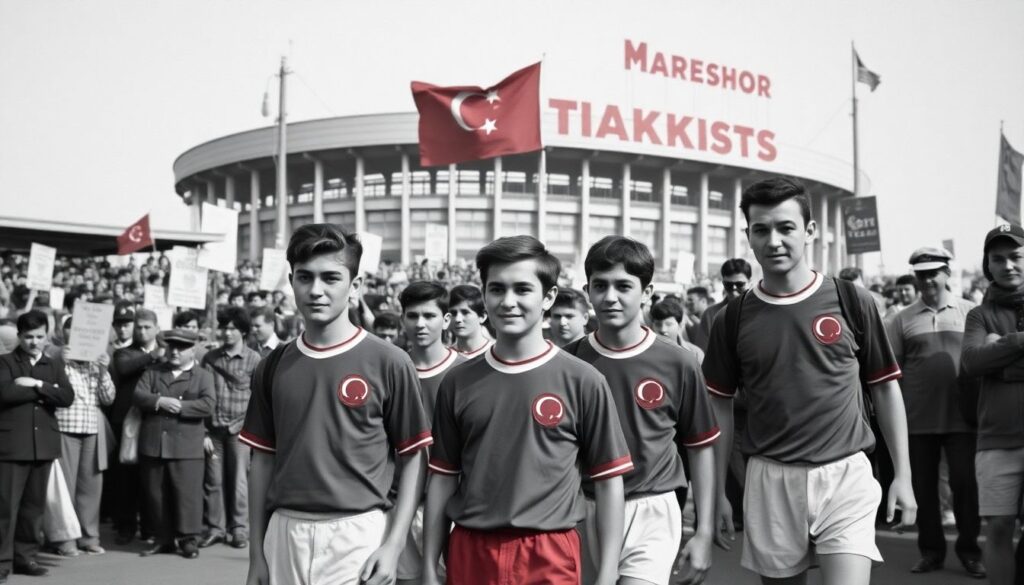
The story of Turkish global stars starts with a few bold trailblazers leaving Anatolia for Western Europe when this path was rare. In the mid‑20th century, players like Lefter Küçükandonyadis and Can Bartu joined Italian and French clubs, confronting language barriers, tactical differences and social adaptation almost alone.
These pioneers were typically playmakers or forwards, valued for technique and creativity. Their moves predated the modern wave of Turkish football players in European clubs and showed that talent from Istanbul or Ankara could succeed in Serie A or Ligue 1. Success was measured not only in goals but in becoming indispensable in foreign dressing rooms.
Metin Oktay’s spell at Palermo, Lefter’s time at Fiorentina and Nice, and Can Bartu at Fiorentina and Lazio each acted as proof-of-concept. They did not have today’s media exposure, yet their performances were closely followed in Turkey and respected abroad, laying psychological and scouting foundations for later generations.
- Early exports were individual exceptions rather than part of a systematic talent pipeline.
- Their main legacy was changing perceptions about what Turkish players could achieve abroad.
- They opened doors for future generations to be scouted and trusted by European clubs.
Modern icons: Profiles of contemporary global stars
-
Hakan Şükür – the reference point for Turkish centre‑forwards
Leading Galatasaray to European success and starring at the 2002 World Cup made Şükür one of the best Turkish soccer players in the world for his era. Spells at Inter, Parma and Blackburn may have been mixed, but his international record and longevity defined the modern Turkish No. 9.- Combined aerial power with penalty‑box instincts.
- Became the global face of Turkey’s 2002 World Cup generation.
- Set a benchmark for Turkish strikers moving to major European teams.
-
Rüştü Reçber – a goalkeeper recognised beyond Turkey
Rüştü’s reflex saves and aggressive style at Euro 2000 and the 2002 World Cup drew attention from giants, leading to Barcelona. Even without long dominance in La Liga, his international displays placed him among the best Turkish soccer players in the world at the time, especially in his position.- Showed that Turkish goalkeepers could lead at international tournaments.
- Earned a move to a global super‑club based largely on national-team form.
- Influenced later generations of Turkish keepers aiming for Spain and England.
-
Arda Turan – creative hub in Spain
Arda’s progression from Galatasaray to Atlético Madrid and then Barcelona represents one of the top Turkish football transfers to Europe. At Atlético he became a key playmaker in a title‑winning side and reached a Champions League final, raising the profile of Turkish attacking midfielders.- Proved a Turkish playmaker could be central in a high‑pressing, elite European team.
- Won major domestic honours in La Liga.
- Turned technical flair and resilience into a global personal brand.
-
Nuri Şahin – tactical intelligence in midfield
Although he represented Germany internationally, Şahin is often listed among Turkish‑origin stars who shaped perceptions of Anatolian talent. He shone for Borussia Dortmund, earning a move to Real Madrid and later Liverpool, admired for passing range and game reading rather than physical dominance.- Demonstrated that Turkish‑origin players could master complex tactical roles.
- Symbolised the bridge between Bundesliga schooling and Turkish football culture.
- Inspired dual‑national prospects to believe in top‑level careers.
-
Hakan Çalhanoğlu – set‑piece specialist and Serie A leader
From Hamburg and Bayer Leverkusen to AC Milan and Inter, Çalhanoğlu built a reputation for distance shooting, set pieces and versatility as a No. 10 or deep playmaker. His role in title‑challenging teams placed him firmly among contemporary best Turkish soccer players in the world.- Used technical excellence, not just physicality, to dominate midfields.
- Became a standard‑bearer for modern Turkish playmakers in Serie A.
- Maintained consistent performance across several big European clubs.
-
Çağlar Söyüncü – Premier League defender with global exposure
Söyüncü’s rise from Altınordu to Freiburg and then Leicester City illustrates the pathway for Turkish football players in European clubs. His standout season in England turned him into one of the famous Turkish footballers in Premier League, known for aggression and ball‑carrying from the back.- Showed that Turkish centre‑backs can adapt to Premier League tempo.
- Combined physicality with modern ball‑playing responsibilities.
- Enhanced the image of Turkish defenders as exportable assets.
Club careers: Transfers that propelled players onto the world stage
Certain transfers have acted as turning points, both for individual players and for the global perception of Turkish talent. These moves often involved stepping from domestic success into one of Europe’s top five leagues, or from a mid‑table side into a title‑challenging or Champions League club.
-
From domestic dominance to continental contenders
Examples include Galatasaray stars joining Italian or Spanish giants after European campaigns. These top Turkish football transfers to Europe were usually driven by strong performances in UEFA competitions, convincing foreign clubs that the adaptation risk was manageable. -
Bundesliga as a stepping stone
Many Turkish football stars playing abroad either emerged from or passed through the German system, reflecting migration patterns and strong academies. Success in the Bundesliga often led to moves to Spain or England, widening their global profile. -
Premier League exposure
Famous Turkish footballers in Premier League such as Tugay Kerimoğlu, Cenk Tosun and Söyüncü used England’s broadcasting reach to become known worldwide. Even at mid‑table or smaller clubs, consistent performances offered more visibility than starring roles in less televised leagues. -
Strategic lateral moves within Europe
Some players shifted between European clubs at similar levels to find better tactical fits or coaching environments. When successful, these internal European moves extended careers at the top and protected their status among the best Turkish soccer players in the world. -
Returns to Turkey after peak years
After spells abroad, returning to Süper Lig giants allowed stars to maintain hero status at home while keeping a residual international reputation. This cycle linked local fanbases with memories of foreign success, sustaining global recognition beyond their prime.
- Transfers amplified reputations that were already built through performance, rather than creating stars from nothing.
- Leagues with strong global broadcasting (Premier League, La Liga, Serie A) accelerated worldwide fame.
- Smart club choices, not only transfer fees, were decisive for long‑term visibility.
International impact: How national team performances cemented reputations
National‑team tournaments have been decisive in turning respected professionals into global names. A single World Cup or European Championship can compress months of club performances into a few high‑pressure matches that the entire world watches. For Turkish players, semi‑final runs and dramatic comebacks were particularly powerful reputation builders.
Strengths that boosted worldwide recognition
- Deep tournament runs, especially World Cup and Euro semi‑finals, placed multiple Turkish players in the global spotlight at once.
- Emotionally charged comebacks and late goals created memorable narratives picked up by international media.
- Performances against major footballing nations served as clear, high‑credibility benchmarks of quality.
- Collective cohesion and fighting spirit enhanced the attractiveness of individual players to scouts and fans.
Limitations and structural challenges
- Irregular qualification for major tournaments limited how often new generations could showcase themselves globally.
- Coaching changes and tactical instability sometimes prevented consistent use of top talents in their best roles.
- Pressure from passionate domestic media could quickly turn support into criticism, affecting confidence.
- Without frequent World Cup appearances, sustaining the label of best Turkish soccer players in the world becomes harder for each generation.
Tactical identities: Playing styles and position trends among Turkish exports
Turkish players who succeed abroad often share certain tactical traits: high work‑rate, technical skill in tight spaces, and comfort in transitional play. Historically, exports clustered around creative midfielders, wingers and strikers, though recent decades have produced more central defenders and goalkeepers capable of operating in high defensive lines.
Despite this evolution, several myths persist about Turkish footballers in Europe.
- Myth: Turkish players can only thrive in emotional, chaotic games.
Reality: Many Turkish football players in European clubs have become key figures in rigid, tactically disciplined systems, especially in Germany and Italy. - Myth: Physicality is a constant weakness.
Reality: Modern training and scouting have produced robust centre‑backs and box‑to‑box midfielders who match European standards in strength and stamina. - Myth: Goalkeepers and defenders from Turkey are too risky for top leagues.
Reality: Examples like Rüştü and Söyüncü show that, with the right environment, Turkish defensive players adapt well to elite tactical demands. - Myth: Only attacking players can become global stars.
Reality: International tournaments often spotlight defenders and keepers; strong performances here can be as decisive for global recognition as goals and assists. - Myth: Playing abroad automatically guarantees success.
Reality: Role fit, coaching style and personal adaptation are as important as league prestige in determining whether a move abroad leads to stardom.
Beyond the pitch: Branding, endorsements and cultural influence

Global stardom for Turkish players is no longer defined only by goals or trophies. Off‑pitch branding, social media presence and sponsorships turn on‑field achievements into long‑term recognition. Players with clear personal stories – migration background, community work, or distinctive playing style – often attract international brands and media attention.
For Turkish football stars playing abroad, visibility in multi‑language interviews and cross‑border campaigns reinforces their association with both their clubs and their home country. This dual identity can expand fanbases across Europe, the Middle East and diaspora communities, keeping their names relevant even when form dips.
Mini case: Turning a European move into a global profile
- Player secures a transfer from a Süper Lig club to a top‑five European league after a strong season and European competition exposure.
- In the first two seasons, the player focuses on consistent performances, learning the local language, and delivering in televised matches against big opponents.
- Parallel to on‑field work, the player builds a curated social media presence, collaborates with local and Turkish brands, and participates in community events.
- National‑team performances at a major tournament confirm the player’s status, leading to global sponsorship deals and regular features in international football media.
Quick self-check algorithm: has a Turkish player really become a global star?
Use this short checklist to evaluate any Turkish player’s global status:
- Has the player been a regular starter or key contributor for at least one club in a top European league or Champions League?
- Has the player delivered impactful performances in major international tournaments or decisive European knockout matches?
- Is the player recognised outside Turkey – through international media coverage, individual awards or major endorsement deals?
- Can neutral fans in at least two different footballing countries identify the player without following Turkish football closely?
Concise clarifications on how Turkish players achieved worldwide recognition
What makes a Turkish player a global star rather than just a good professional abroad?
A global star consistently influences matches at the highest club or international level, is widely recognised by neutral fans, and attracts attention beyond their own league. It is a combination of performance, visibility and cultural impact, not just playing outside Turkey.
Why do many Turkish players move through the Bundesliga on their way to bigger clubs?
Historical migration patterns created strong Turkish communities and talent pools in Germany, so Bundesliga clubs have long experience with Turkish or Turkish‑origin players. The league’s balance of physicality and tactics also prepares them well for England, Spain or Italy.
Are Premier League moves always the best option for Turkish footballers?
No. While famous Turkish footballers in Premier League gain massive exposure, the league’s tempo and physical demands do not suit every profile. For some technical players, La Liga or Serie A can be better environments to reach their potential and build long careers.
Can a player become globally known without leaving the Turkish Süper Lig?
It is possible but rare. Deep runs in European competitions or exceptional national‑team tournaments can create global attention, yet sustained worldwide recognition usually requires several seasons in top European leagues.
How important are transfer fees in building global-star status?
High fees can create initial headlines, especially for top Turkish football transfers to Europe, but long‑term status depends on performance. Many respected stars were not record signings; they earned their reputation through consistency and big‑match impact.
Do defensive players from Turkey get the same recognition as attackers?
Historically, attackers and playmakers received more attention, but this is changing. Strong showings by Turkish centre‑backs and goalkeepers in European leagues and tournaments are gradually balancing perceptions.
How can young fans in Turkey evaluate if a current player might become a global star?
Track whether the player dominates domestically, adapts quickly after moving abroad, and performs well in high‑pressure games. If international media begin to discuss them regularly, they are on the path from local talent to global figure.