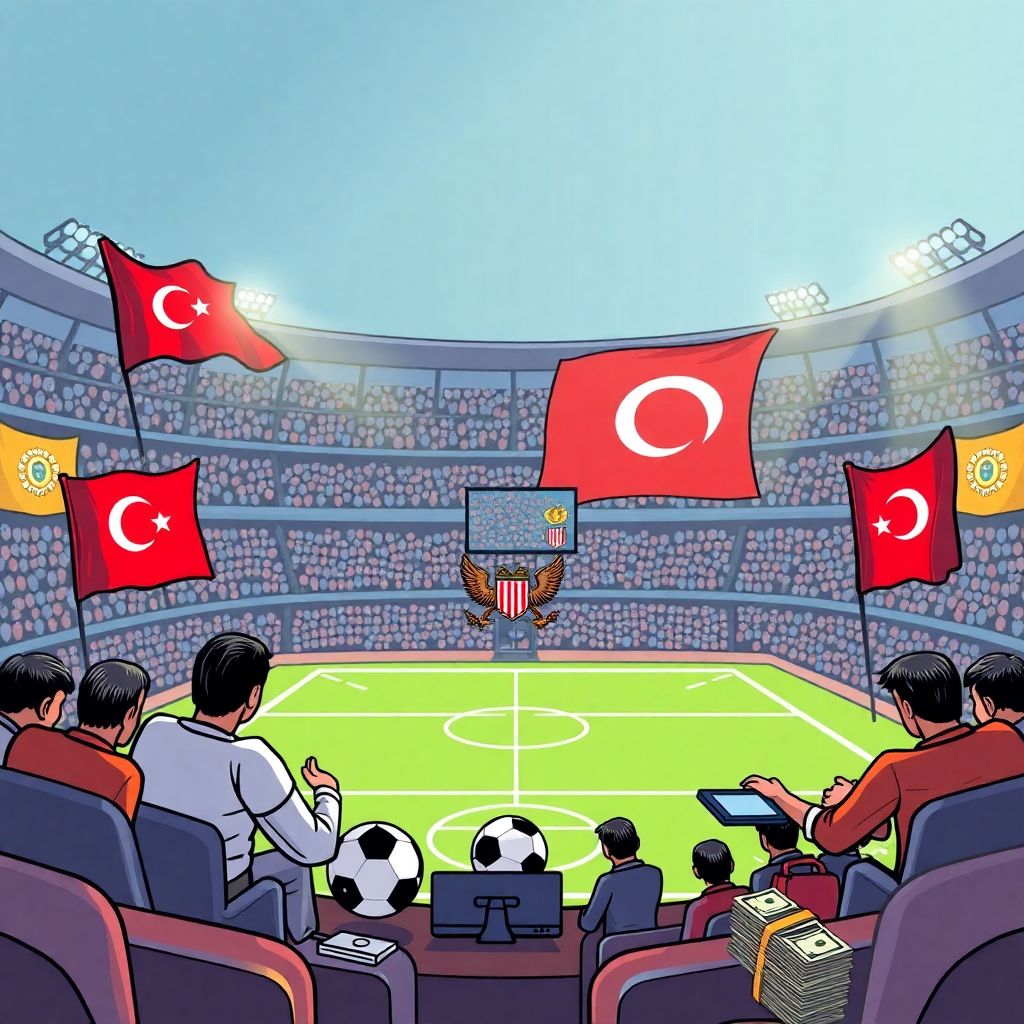
The business of football in Turkey is driven by domestic TV rights, player trading and strict cost controls under UEFA rules. Understanding the turkish football tv rights market, how clubs structure transfer deals, and how financial fair play limits spending helps explain why Turkish teams both attract big names and struggle with chronic debt.
Myths and realities about Turkish football finances
- Myth: TV money makes every Süper Lig club rich.
Reality: Turkey Super Lig broadcasting rights deals are unevenly distributed, with big clubs capturing much more, while smaller teams rely heavily on matchday and local sponsors. - Myth: Transfers are pure profit when a club sells a player.
Reality: Agent fees, unpaid instalments, sell-on clauses and remaining amortisation can easily turn a headline sale into modest net income. - Myth: Financial Fair Play only matters in European competitions.
Reality: UEFA financial fair play rules Turkey clubs even when they qualify rarely; past breaches can still bring settlement agreements, squad limits or fines later. - Myth: Investing in Turkish football clubs is a quick way to cash in on European success.
Reality: Most clubs run with high debt and volatile cash flow; returns depend on governance reforms more than on one Champions League run. - Myth: Domestic TV deals guarantee stability for years.
Reality: The turkish football tv rights market can be renegotiated, devalued or reshaped by streaming entrants, creating uncertainty from cycle to cycle.
Common misconceptions about TV rights in Turkey
TV rights in Turkey are the collective media contracts that package Süper Lig and often 1. Lig matches for broadcasters and streaming platforms. These deals define the main central revenue stream for clubs, influencing wages, transfer budgets and even political negotiations around the game.
Many fans assume there is one stable, ever-rising contract behind Turkey Super Lig broadcasting rights deals. In reality, tenders can fail, be extended temporarily, or split between broadcasters. Exchange-rate swings versus hard currencies also change the real value of contracts for both clubs and media companies.
Another myth is that distribution is equal. The typical structure favours so-called “Big Three” Istanbul clubs plus other title contenders via merit and audience bonuses. Smaller Anatolian teams therefore face a much tighter financial margin, despite competing in the same league and sharing similar cost pressures such as travel and basic salaries.
Finally, people often conflate “deal value” with cash in hand. Broadcasters may delay payments, demand discounts, or renegotiate if subscriber numbers disappoint. For clubs, this means planning TV income more conservatively, using it as a base, not as a guarantee for aggressive long-term commitments.
How broadcast deals are negotiated and their revenue models
- Tender design by the federation: The Turkish Football Federation (TFF) defines packages: full Süper Lig, digital highlights, radio, possibly international rights. The structure can encourage single-bidder dominance or invite multiple partners.
- Bid evaluation and political context: Financial strength, technical capacity, and sometimes political alignment influence which companies win. The balance between free-to-air exposure and pay-TV/OTT income is a key strategic choice.
- Currency and indexation clauses: Because costs and revenues differ by currency, contracts often include indexation to inflation or foreign exchange benchmarks. Poorly designed clauses can hurt either clubs or broadcasters when the lira moves sharply.
- Revenue distribution formula: The TFF applies a formula combining fixed participation, historical performance, current-season results and audience bonuses. The split determines how much of the pot flows to big-brand clubs versus smaller sides.
- Payment schedules and guarantees: Instead of one lump sum, broadcasters pay in instalments tied to the season calendar. Bank guarantees or state-backed assurances sometimes secure part of the obligations, but delays are still common.
- Sub-licensing and international rights: Winning bidders may sell on some packages to other channels or foreign partners. International rights for Turkish football remain underdeveloped compared with top European leagues, leaving growth potential untapped.
- Club budgeting practices: Prudent clubs budget below the announced headline deal, anticipating delays or renegotiations. Riskier clubs spend as if every lira will arrive on time, creating cash crunches when reality disappoints.
Transfer market mechanics: contracts, agents, and sell-on clauses
Transfer business in Turkey depends on understanding multi-year player contracts, signing-on fees and performance bonuses rather than just the headline fee. Clubs spread transfer costs (including agent commissions and signing bonuses) across the contract length through amortisation, which shapes how profitable or risky a deal looks in the accounts.
Agents are central. They negotiate salaries, bonuses, image rights and sometimes control which clubs can realistically compete for a player. Many of the stories in turkish football club transfers news and rumors originate from agents testing the market or creating leverage, long before a serious offer is made.
Sell-on clauses are particularly important for smaller Turkish clubs. When they sell a promising player to a bigger domestic side or to Europe, they often negotiate a percentage of any future transfer. This allows them to benefit if the player explodes in value, but it also complicates future deals for buying clubs.
Typical scenarios include:
- Short-term veteran deal: A big Istanbul club signs an experienced foreign player on a short contract with relatively high wages and low or free transfer fee, betting on immediate sporting impact over resale value.
- Development sale with sell-on: An Anatolian club sells a young talent to a bigger Turkish side with a modest upfront fee plus a sell-on percentage if he later moves to a top-five European league.
- Loan with option to buy: A financially stretched club borrows a player for a season, agreeing an optional future fee. This shifts risk into the future and buys time to see whether the player fits.
- Installment-based marquee transfer: A top club signs a star from abroad with the fee split into several instalments. Delays in broadcasting income or European prize money can create pressure to restructure these payments.
- Mutual termination: When salaries become unsustainable, player and club agree to part ways, sometimes with a lump-sum settlement. Accounting treatment affects how much “savings” actually appear in that year’s books.
Club accounting, debt structures and cash flow in the Süper Lig
Club finances in Turkey revolve around balancing unpredictable income (European qualification, big transfers) with fixed commitments (wages, stadium costs, debt service). Accounting policies, such as how they recognise transfer fees and interest, heavily influence reported profits and compliance with regulations like UEFA financial fair play rules Turkey clubs must follow.
Debt structures range from bank loans and bond issues to tax obligations and debts to related parties. Refinancing deals sometimes push problems into the future rather than solving them. For anyone considering investing in Turkish football clubs, understanding these layers of obligations is more important than looking at a single season’s result.
Advantages of current financial structures
- Access to local bank financing allows large clubs to smooth cash flow between TV instalments, transfer windows and European prize payments.
- Stadium ownership or long-term leases can create collateral for loans and improve matchday revenue potential over time.
- Amortisation of transfer fees helps spread costs, making major signings seem more affordable on paper in any single season.
- Collective TV deals provide a guaranteed baseline of income, reducing the risk of individual clubs negotiating poor media contracts.
- Strong domestic fan bases support merchandise sales and sponsor appeal, even when on-pitch performance is inconsistent.
Limitations and structural risks
- High leverage means a large share of annual income can go to interest and loan repayments instead of squad investment.
- Heavy reliance on TV income makes clubs vulnerable when the contract value falls or payments are delayed.
- Short-term transfer strategies can create ballooning amortisation costs that restrict future flexibility.
- Currency mismatches arise when wages and transfer fees are denominated in foreign currencies but revenues are mostly in lira.
- Governance issues and political interference sometimes prioritise short-term success over sustainable budgeting.
Financial Fair Play in Turkey: rules, monitoring and sanctions
Financial Fair Play (FFP) is the set of rules that requires clubs in UEFA competitions to live broadly within their means and respect obligations such as paying wages and transfer fees on time. For Turkish clubs, these rules have shaped squad building, wage policies and even stadium projects.
- Mistake: Treating FFP as a one-season test. UEFA assesses over multi-year periods. A single big transfer window can cause problems for several reporting cycles if not balanced by later profits or wage reductions.
- Mistake: Ignoring overdue payables. Delayed payments to players, other clubs or tax authorities can trigger sanctions even if headline revenues look strong.
- Myth: Sponsor deals can always “fix” the books. Related-party sponsorships are closely scrutinised for fair market value. Artificially inflated deals risk being partially ignored in the break-even calculation.
- Myth: Sanctions only mean fines. UEFA can impose squad size limits, transfer restrictions or even competition bans. For clubs aiming for Champions League income, these sporting penalties are often more damaging than money fines.
- Mistake: Late engagement with UEFA. Waiting until a formal investigation to adjust the business model leaves little room for negotiation. Proactive settlement agreements can provide a clearer roadmap back to compliance.
- Myth: Domestic leagues do not care. Even if national rules differ, domestic authorities increasingly use FFP-style concepts, so poor discipline in Europe can influence local oversight attitudes.
Revenue diversification: sponsorships, matchday income and internationalisation
Sustainable clubs in Turkey aim to reduce dependence on TV rights by growing commercial and international income. This includes front-of-shirt and sleeve sponsors, stadium naming rights, regional partnerships, improved matchday experiences and digital products for fans abroad.
Internationalisation is still emerging. Some clubs run social media accounts in multiple languages, arrange friendlies abroad and target merchandising to diaspora communities. Others explore strategic partnerships with clubs in Europe or the Gulf. The ambition is to create recurring income that is less volatile than player sales.
For individual investors or analysts, revenue diversification is a key lens when evaluating opportunities. Investing in Turkish football clubs that grow non-broadcast income tends to be less risky than backing models that rely on constant qualification for European competitions or big one-off transfers.
| Category | Trend in the last five seasons | Typical Turkish example | Main financial impact |
|---|---|---|---|
| Domestic TV rights | Contract cycles with renegotiations, experimenting with different broadcasters and platforms. | Turkey Super Lig broadcasting rights deals shifting between pay-TV and digital players. | Uncertain medium-term planning; clubs revise budgets when contract terms or values change. |
| Transfer activity | Regular outbound sales of top performers and frequent free transfers of experienced foreign players. | Big Istanbul club selling a star abroad while signing older internationals on short contracts. | Transfer profits help FFP compliance, but high wages and agent fees squeeze cash flow. |
| FFP outcomes | Several clubs entering settlement agreements and adjusting wage bills to meet break-even targets. | A leading club reducing squad size after UEFA financial fair play rules Turkey clubs tighten oversight. | Short-term sporting constraints in exchange for more sustainable long-term cost structures. |
Mini-algorithm: how to quickly sanity-check a club’s financial position
- Estimate stable income: Combine conservative TV money, average matchday revenue and recurring sponsorships; ignore optimistic transfer windfalls.
- Compare with fixed costs: Add annual wages, stadium costs and average debt service; see whether they exceed stable income.
- Review transfer balance: Look at recent seasons: is the club consistently a net buyer or seller in turkish football club transfers news and rumors?
- Check FFP exposure: Identify whether the club recently played in Europe and faced monitoring or sanctions under FFP.
- Decide risk level: If stable income barely covers fixed costs and FFP pressure is high, treat any growth plan as risky.
Concise clarifications on recurring finance questions
Why do Turkish clubs depend so much on TV money?
Collective TV deals are the largest predictable cash source, arriving in instalments across the season. Other revenue streams, such as ticketing and merchandise, fluctuate with performance and economic conditions, so clubs often anchor budgets around broadcast income.
Are Turkish clubs profitable from transfers on average?
Many clubs rely on transfer profits to balance their books, but not every sale is lucrative once wages, agent fees and amortisation are included. A club can appear active in the market yet still record accounting losses over several seasons.
How does FFP actually limit spending in Turkey?
FFP does not set a fixed wage cap; instead, it requires clubs to align football-related costs with realistic revenues over time and to avoid overdue payables. Turkish clubs that overspend must later cut budgets, sell players or negotiate settlements.
Is investing in Turkish football clubs suitable for small investors?
It is generally high risk because revenues are volatile, debt is common and transparency varies. Anyone considering such an investment should study audited accounts, governance quality and dependence on a few wealthy backers.
Do smaller Anatolian clubs benefit from TV rights in the same way as big clubs?
No. While all Süper Lig participants receive a base payment, performance and audience-based bonuses favour major brands. Smaller clubs often rely more heavily on local sponsorship and smart player trading to remain competitive.
Why are loan deals so frequent in the Turkish market?

Loans allow clubs to access players they could not afford permanently, while spreading financial risk. For selling clubs, loans showcase players and preserve resale value; for buying clubs, they reduce immediate cash outlay and FFP pressure.
Can strong commercial sponsors alone solve a club’s financial problems?
Commercial deals help, but they rarely offset chronic overspending on wages and transfers. Long-term stability usually requires a mix of disciplined budgeting, diversified revenue and compliance with both domestic rules and FFP.
Комментарии