Global trends at local speed: why Turkey is changing its football
Turkish football is no longer just about noise in the stands and chaos on the pitch. Over the last five‑seven years, global tactical trends have started to seriously reshape both the Süper Lig and TFF 1. Lig. Coaches coming from Europe and South America, widespread data analytics, plus pressure from UEFA competitions have nudged clubs away from pure improvisation toward more structured game models. This isn’t theory: it’s visible in pressing metrics, defensive lines, set‑piece routines and even in how fans talk about turkish super lig tactics analysis on social media and TV. Let’s unpack how exactly this evolution looks in practice.
From chaos to structure: pressing and positional play
The biggest shift is the adoption of coordinated high pressing and positional play. Ten years ago, most Turkish teams preferred mid‑block defending and counterattacks. Now, PPDA (passes allowed per defensive action) is dropping: top Süper Lig sides often post 8–9 PPDA against league rivals, approaching Bundesliga levels. Coaches like Okan Buruk at Galatasaray and İsmail Kartal at Fenerbahçe introduced structured pressing triggers (back‑pass, wide trap, poor first touch) and compact 4‑1‑4‑1 or 4‑4‑2 pressing shapes, instead of just “run and fight”. That shift demands fitter players, smarter rest defence and more training‑ground choreography.
Case study: Fenerbahçe’s hybrid press
Under Jorge Jesus, Fenerbahçe became a textbook case for analysts. In domestic play they often used a 4‑4‑2 out of possession, morphing into a 3‑2‑5 with the ball. The first line of press forced opponents wide, where the full‑back and near‑side central midfielder overloaded the flank. Data companies reported Fenerbahçe among the league leaders in high turnovers and shots within eight seconds of regaining possession. This hybrid model mixed South American intensity with European structure and influenced how best super lig teams modern tactics are designed, especially for clubs dreaming of deep European runs.
Super Lig vs European leagues: narrowing the tactical gap
The comparison super lig vs european leagues style of play is still not flattering in every area, but the gap is shrinking. Historically, tempo and pressing resilience in Turkey lagged behind the top five leagues. Now, average sprint distance per game and number of high‑intensity runs of the leading clubs are much closer to mid‑table Bundesliga or Ligue 1 sides than they were in 2015. Tactical flexibility is also growing: it’s become normal for coaches to shift between 4‑2‑3‑1, 3‑4‑3 and 4‑4‑2 diamond within one match, mirroring European trends. Video analysis rooms and dedicated set‑piece analysts are now standard at big Istanbul clubs.
Case study: Trabzonspor’s controlled transitions
Abdullah Avcı’s Trabzonspor provides a good lens on this tactical modernisation. Rather than the wild box‑to‑box battles typical of earlier years, his title‑winning team focused on controlled transitions. They used a compact 4‑2‑3‑1, low to mid block, with strict rest‑defence principles: both full‑backs rarely pushed forward simultaneously, and one pivot always stayed behind the ball. This allowed sharp counters but kept expected goals against relatively low for the league context. The approach looked far closer to a mid‑table La Liga side than to the cliché of end‑to‑end Turkish football many neutrals still have in mind.
TFF 1. Lig catching up: data, loans and identity

In TFF 1. Lig, budgets are smaller, but the tactical ripple effect is obvious. More clubs adopt data‑driven scouting and simple but clear game models instead of relying solely on “experienced veterans”. Loaned youngsters from Süper Lig academies arrive with ingrained positional concepts: pressing traps, half‑space occupation, build‑up rules against high press. As a result, ball circulation metrics have improved, long‑ball percentages drop, and compact 4‑3‑3 or 3‑4‑1‑2 structures become mainstream. For turkish super lig tactics analysis, this second tier is now a genuine laboratory where future starters for big clubs test ideas in a less forgiving, very physical environment.
Case study: Eyüpspor and tactical branding
Eyüpspor is a perfect illustration. Backed by serious investment, they hired coaches with clear positional play philosophies and imported technically refined players unsuited to direct‑only football. Their 2‑3‑2‑3 build‑up in possession, with inverted full‑backs and a false nine, is unusual for TFF 1. Lig but fits global trends. Ball‑dominant football not only boosted promotion chances, it also became a marketing tool: the club sells itself to players and sponsors as “modern and progressive”. This kind of tactical branding used to be reserved for European giants; now ambitious Turkish second‑tier clubs are adopting the same logic.
Why this matters for betting, predictions and analytics
Tactical shifts have also changed the landscape for fans and analysts looking for football betting tips super lig tff 1 lig. Older heuristics like “games in Turkey are always high scoring and chaotic” no longer hold across the board. High‑pressing teams may concede more transitions when their press is broken, but organised low blocks under modern coaches often drive down xG totals in specific fixtures. Bookmakers and model‑driven bettors now track pressing intensity, line height, and set‑piece efficiency, not just form and injuries. For anyone interested in super lig tff 1 lig match predictions today, ignoring these tactical nuances is simply leaving edge on the table.
Key global trends shaping Turkish tactics
1. High pressing and counter‑pressing – Inspired by Klopp and Guardiola, more Turkish clubs build their identity around winning the ball back within five seconds, requiring synchronised forward jumps and compact distances between lines.
2. Positional play and rest defence – Coaching staffs introduce strict rules on zone occupation, especially in the half‑spaces, and carefully structure coverage behind the ball to prevent counters.
3. Set‑piece optimisation – Clubs hire specialists, use data‑driven routines and exploit blockers, screens and late runs, turning corners and free kicks into a crucial xG source in tighter matches.
Economic drivers: why tactics are suddenly worth money
The tactical modernisation didn’t happen in a vacuum; it’s tied to clear economic incentives. Super Lig clubs struggle with currency volatility and UEFA’s financial regulations, so they must sell players abroad at higher fees. To do that, they need footballers who can operate within tactical systems comparable to those in Europe’s top leagues. A winger who understands pressing triggers and positional rotations is more valuable to a Bundesliga club than a purely instinctive dribbler. Consequently, investments in analysts, GPS tracking, and modern coaches are framed as asset‑management strategy, not just a quest for nicer football.
Broadcast value and sponsorship impact
Improved tactical quality also upgrades the broadcast product. Better game structure, recognisable styles and compelling match‑ups increase the value for TV partners and streaming platforms. International viewers looking for turkish super lig tactics analysis now find games that are easier to read and compare with other competitions, which helps the league in negotiations for overseas rights. Sponsors are more inclined to associate with “modern” clubs and leagues, where data and innovation are part of the narrative. This affects kit deals, regional partnerships and even revenue from pre‑season tours in Europe and the Middle East.
How clubs adapt internally: staffing and training grounds
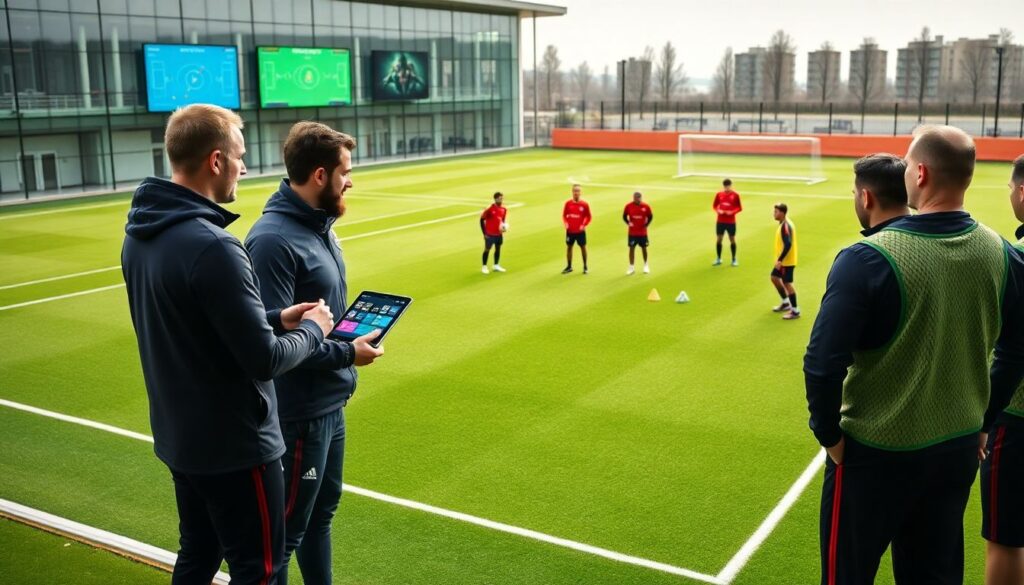
One of the under‑reported shifts is the change in backroom structures. Top Süper Lig and ambitious TFF 1. Lig clubs now employ heads of performance, opposition analysts, set‑piece coaches and data scientists. Training is increasingly designed around game‑like scenarios: rondos with pressing constraints, small‑sided games replicating 3‑2 build‑up or 4‑3‑3 rest‑defence, and video feedback sessions with clear KPIs. This aligns Turkish clubs with global best practices and explains why best super lig teams modern tactics are far more coherent than a decade ago. Young coaches with UEFA Pro licences and foreign language skills find more doors open.
Youth academies and tactical education
Youth development is also catching up. Traditional academies focused heavily on ball‑mastery and 1v1 skills; now they incorporate tactical periodisation and video analysis from U15 upwards. Prospects learn to play in multiple systems, understand pressing cues and read space, not just the ball. This matters for future transfer value and for the national team pipeline. When a 20‑year‑old full‑back debuts in the Süper Lig already comfortable as an inverted full‑back stepping into midfield, he fits straight into the evolving tactical landscape and becomes a more attractive asset for clubs abroad.
Forecast: where Süper Lig and TFF 1. Lig are heading
Looking ahead five years, expect even closer integration with European tactical norms, but with local twists. More foreign coaches with clear game models will arrive, and Turkish managers educated in this new environment will take over mid‑table and lower‑table sides. Data‑driven recruitment should reduce the gap between rich and poor clubs, as smart signings can partially compensate for budget limitations. TFF 1. Lig is likely to become more possession‑oriented at the top, while lower‑budget teams double down on compact low blocks and direct play, creating a broader stylistic spectrum and richer scouting opportunities.
Impact on the wider football industry
The tactical evolution in Turkey radiates beyond the pitch. Analytics companies gain new clients; local coaching education programs expand; media content shifts from pure drama toward tactical breakdowns and detailed match previews. When fans search for super lig vs european leagues style of play or dig into super lig tff 1 lig match predictions today, they enter an ecosystem of podcasts, blogs and video shows that treat Turkish games with the same analytical seriousness as the Premier League. This ecosystem, in turn, reinforces the demand for modern football, ensuring that global trends will continue to reshape Süper Lig and TFF 1. Lig for years to come.