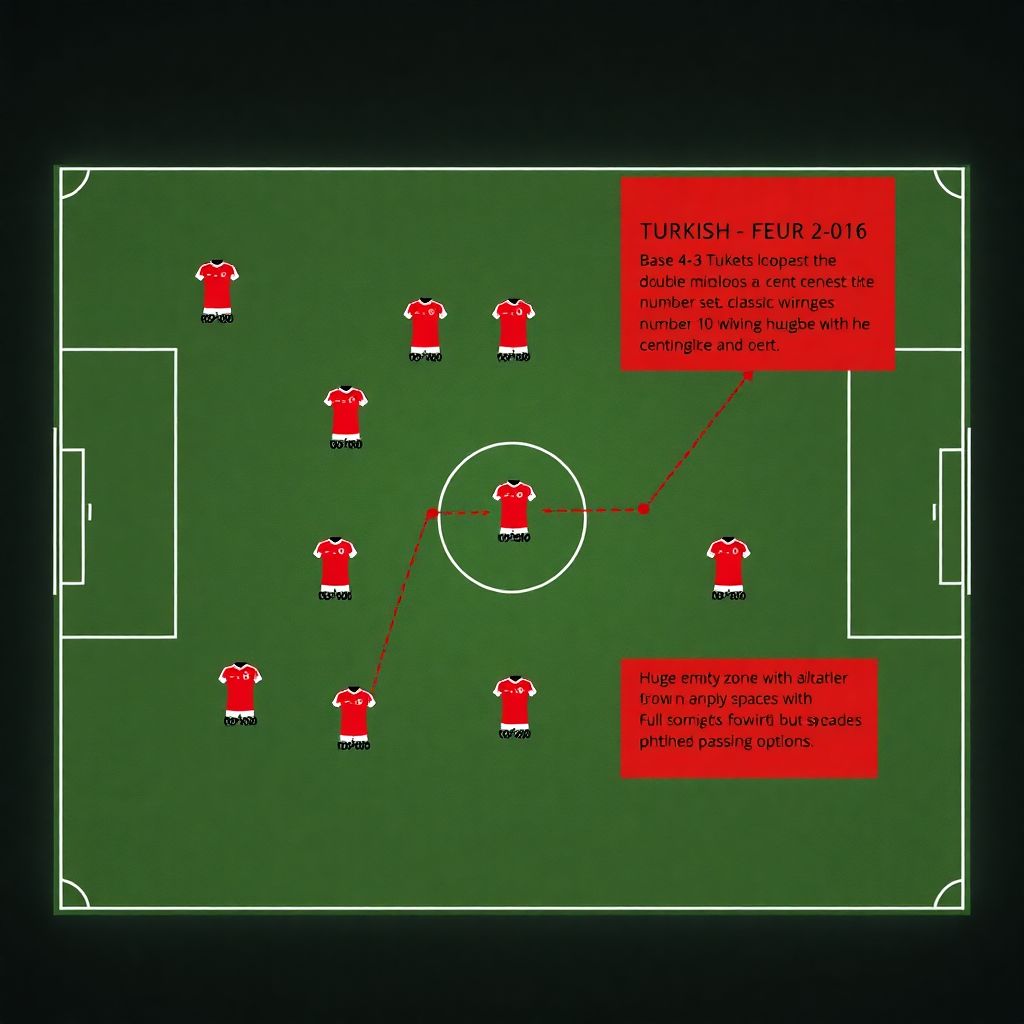
Why the Turkish national team suddenly feels…different
If you’ve watched Turkey over the last decade, you’ve probably had this feeling:
*same shirt, totally different team.*
Euro 2016 Turkey, Euro 2020 Turkey and Euro 2024 Turkey almost look like three different footballing cultures. That’s not random. It’s a story of tactical evolution – step by step, with a lot of painful mistakes and a few brave decisions.
Below — a structured, practical turkey national team tactics analysis that stays conversational, but digs deep enough that even a coach or analyst can use it.
—
Step 1. Euro 2016 – “Romantic pragmatism” that never really clicked
1.1. What Turkey were trying to be
Euro 2016 Turkey was built around a classic idea:
*compact mid-block, technical 10, fast wingers, full-backs bombing on.*
– Base shape: nominal 4‑2‑3‑1 / 4‑3‑3
– Defensive idea: sit in a medium block, guide opposition wide, collapse on crosses
– Attacking idea:
– build through the double pivot
– find the “10” (mostly Çalhanoğlu-type profile) between the lines
– release wide forwards + overlapping full-backs
On paper, it’s a very “standard” modern international setup. In practice, it depended heavily on moments of individual quality rather than stable structures.
1.2. Typical pattern (and the hidden flaw)
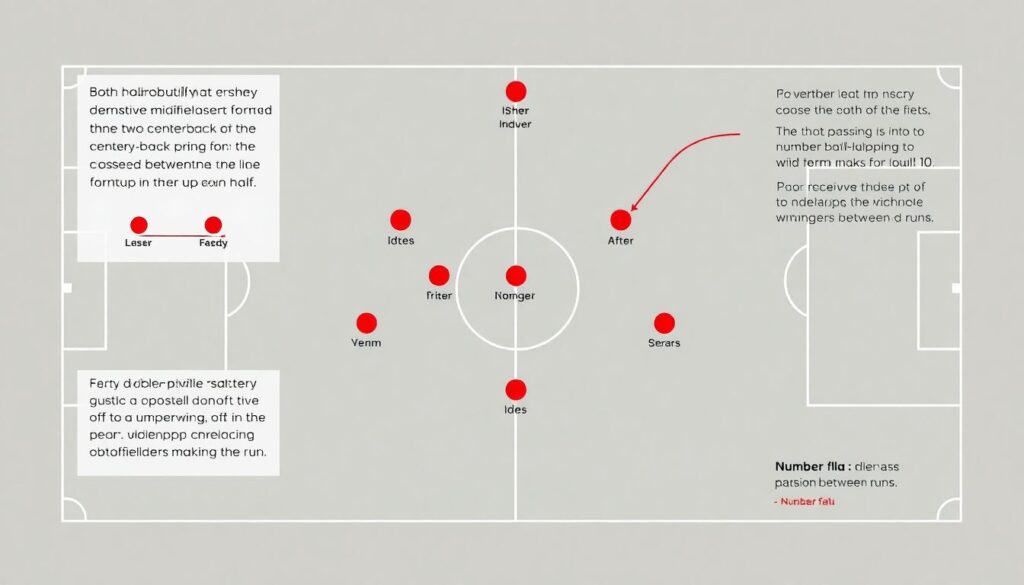
Turkey often:
1. Dropped the double pivot close to the centre-backs.
2. Used short circulation to pull rivals forward.
3. Searched for a vertical pass into the 10’s feet.
4. Relied on a quick lay-off to wingers or underlapping central midfielders.
The hidden flaw: spacing.
– The 10 dropped too low to even receive.
– Wingers sometimes stayed too wide and disconnected.
– Striker got isolated between centre-backs.
So the “positional” attack became a stretched 4‑2‑4 with a huge empty zone in the central attacking midfield areas.
1.3. Key mistake to learn from
Mistake: confusing *players’ roles* with *pitch zones*.
Turkey had good roles on paper (10, double pivot, wide forwards), but the zones were poorly occupied:
– Three players often showed in the same vertical lane.
– Nobody consistently occupied half-spaces high between lines.
– Full-backs overlapped blindly without an interior to combine with.
Takeaway for beginners:
If you coach or analyse, do not start from “we need a playmaker, two pivots, and wingers.”
Start from: *“Which exact zones do we want to control in each phase?”*
Names and roles come after the map of zones.
—
Step 2. Euro 2020 – When the system cracked under pressure
Euro 2020 is often remembered as a disaster. But analytically, it’s extremely valuable. You see what happens when a tactical idea collapses against faster, more organised opponents.
2.1. More conservative, less connected
The team arrived with a reputation as dark horses. Yet:
– The block sunk deeper.
– Distances between lines became huge.
– Striker and wingers pressed alone.
– Midfield stayed too close to defence, terrified of leaving space.
This produced an ugly hybrid: neither a compact low block nor a coordinated press. Just long gaps.
2.2. The press that wasn’t really a press
Turkey tried to:
1. Start pressing with the striker and ball-side winger.
2. Use the 10 to jump on the pivot.
3. Keep the double pivot slightly deeper “just in case”.
What actually happened:
– First line pressed, second line hesitated.
– Opponents bypassed the first line with one vertical pass.
– Turkey’s back four got attacked at full speed, over and over.
Classic structural error: the vertical compactness was broken.
Lines 1 and 2 were often 20–25 metres apart.
2.3. Transition chaos
In possession, build-up became extremely predictable:
– Heavy reliance on long balls.
– Few orchestrated patterns to escape pressure.
– No clear principle of *who* offers the central option on the first pass.
Result: the team defended too much, too deep, and had to run backwards constantly.
Warning sign for any analyst or coach:
If your “best attribute” is supposed to be counter-attacking, but your team never wins the ball in areas where a counter is dangerous, your game model is broken.
2.4. What beginners usually misread here
Many fans thought: “Players just underperformed” or “no passion.”
From a tactical lens, that’s incomplete. The model wasn’t helping the players:
– Press triggers were vague.
– Distances were unmanageable.
– Offensive structure didn’t create easy outlets.
Beginner tip: when you rewatch a bad tournament, don’t start by judging effort.
Start by pausing the screen when the ball is in midfield and count:
1. How many passing lanes does the ball carrier have?
2. Are the lines vertically compact (15–20 m total) when defending?
3. Can you guess, before the pass, *who* should press next?
If the answers are consistently negative, the issue is tactical before it is “mental”.
—
Step 3. Euro 2024 – A more modern, flexible Turkey
Now we reach the turkey national football team euro 2024 tactical analysis phase — where things get genuinely interesting.
3.1. From “formation” to “structures”
One of the biggest shifts: Turkey moved away from being obsessed with the nominal 4‑2‑3‑1 vs 4‑3‑3 debate and leaned into fluid structures:
– Out of possession: something like a 4‑4‑2 / 4‑2‑3‑1 hybrid.
– In possession: often a 3‑2‑5 or 2‑3‑5, achieved by
– full-back tucking inside
– opposite full-back staying wide
– wingers coming infield as attacking midfielders.
So instead of “we are a 4‑2‑3‑1 team,” it became “we create a 3‑2 base in build-up and a 5-lane occupation in attack.”
3.2. Better use of talent
Turkey finally started to:
– Put creative players in half-spaces, not glued to the touchline.
– Give young midfielders clear responsibilities in build-up.
– Use flexible rotations between 8s, wingers and full-backs.
This unlocked cleaner progressions:
1. Centre-back + inverted full-back + pivot formed a stable triangle.
2. One interior (8 or hybrid 10) dropped into the half-space.
3. Winger moved inside to pin full-back/centre-back.
4. Far-side winger stayed wide to stretch the back line.
That’s a much more modern positional structure.
3.3. A smarter press
Defensively, Turkey finally committed to a clearer idea:
– Front two guided opposition build-up to one side.
– Ball-side winger and full-back squeezed aggressively.
– Near-side central midfielder stepped up to close inside options.
Key improvement: synchronisation.
The back line wasn’t left naked as often; the midfield jumped with more conviction because the line behind it was ready to squeeze up.
Beginner-friendly lens:
Just watch the distances vertically. When Turkey pressed:
– Defenders were usually 10–15 m behind the midfield.
– The team looked like a compact block, not three cut-off layers.
—
Step 4. The three-tournament evolution in one glance
To summarise the trend (without a table):
1. Euro 2016:
– Idea: technical 10 + fast wings in a mid-block.
– Problem: poor spacing, overreliance on individuals.
2. Euro 2020:
– Idea: more conservative defensive stability.
– Problem: disconnection between lines, chaotic transitions.
3. Euro 2024:
– Idea: flexible structures, half-space occupation, synchronised press.
– Strength: better balance between control and risk.
The key evolution: Turkey moved
from romantic, player-centric football → to fearful, reactive football → to structure-based, role-clear football.
—
Step 5. Non‑standard ideas Turkey could try next
Now the fun part: what *unusual* tactical solutions could push this evolution further?
5.1. “Rotating pivot” instead of a fixed 6
Instead of a traditional single pivot who always sits in front of the defence, Turkey could experiment with a rotating pivot triangle:
– In build-up, one of the centre-backs steps into midfield.
– The nominal 6 can push higher as an 8 when the ball is secure.
– The far-side full-back tucks in to form the back three.
Why it’s interesting:
– Harder to mark the pivot zone because the 6-space is occupied by *different players*.
– Encourages centre-backs to break lines with the ball.
– Creates surprise angles, especially against teams that defend man-oriented in midfield.
Warning:
This requires very clear communication. If the centre-back steps in and the 6 doesn’t adjust, you can end up with nobody defending depth.
5.2. Asymmetric wide overloads
Turkey already uses wider structures, but they could go more extreme:
– One side becomes an overload side (full-back + winger + interior + occasionally striker drifting).
– Other side becomes a finishing side (isolated winger 1v1 with plenty of space).
The idea:
1. Attract 5–6 opponents to the overload side.
2. Use quick diagonal switch to free the isolated winger on the far side.
3. Attack the box with at least 4 runners.
This asymmetry suits a squad with technically strong half-space players and wingers comfortable attacking the box rather than only crossing.
5.3. “Staggered” front three in defence
Instead of defending with a flat front two or three, Turkey could experiment with:
– One forward high on the last line.
– One forward 5–7 m behind, screening the pivot.
– A winger very narrow on the other side, ready to jump.
This structure makes pressing traps easier:
– High forward presses centre-back and blocks back-pass.
– Deeper forward jumps on pivot.
– Narrow winger jumps to full-back when ball travels.
This design is especially useful against teams that insist on playing short from the back.
—
Step 6. Typical analytical mistakes (and how not to repeat them)
Here’s a short, practical checklist so your own turkey national team tactics analysis doesn’t fall into the usual traps.
6.1. Mistake 1 – Judging by formation graphics
Seeing “4‑2‑3‑1” on TV tells you almost nothing.
You must ask:
1. What is the build-up structure? (2‑3? 3‑2? 3‑1‑3?)
2. How is the team organised in the final third? (2‑3‑5? 3‑2‑5?)
3. What’s the shape when they defend high, and when they defend low?
Tip for beginners:
Pause the match and draw invisible lines by player positions, not shirt numbers. Describe that shape, not the pre-game graphic.
6.2. Mistake 2 – Ignoring rest defence
People often focus only on offensive patterns. But the real turning points for Turkey across these three tournaments came in rest defence (the structure behind the ball when attacking).
– 2016: full-backs high, pivots disorganised → vulnerable to counters.
– 2020: rest defence too deep → no immediate counter-press.
– 2024: better occupation of central zones behind attacks.
Beginner test: when Turkey are attacking in the final third, count:
– How many players are behind the ball?
– Are central zones closed if they lose it?
– Is there at least one player able to defend the first long ball?
6.3. Mistake 3 – Overrating “experience” and underrating spacing
A common narrative: “You need experienced heads in big tournaments.” That’s true to a point — but spacing beats age.
– A 22-year-old in a good structure looks calm and composed.
– A 32-year-old in a broken block looks panicky and slow.
When analysing Turkey, especially across 2016–2024, always ask:
*Did the structure help or sabotage the player’s decision-making?*
—
Step 7. How to study Turkey like a pro (even if you’re a beginner)
You don’t need a club job to analyse Turkey properly. You just need a process.
7.1. A simple 5-step match analysis routine
Use this for any national team game, not just Turkey:
1. Phase scan (5 minutes)
– First watch without pausing.
– Just note: how do they look in attack, defence, transitions?
2. Build-up focus (10–15 minutes)
– Rewatch all sequences starting from goal-kicks or deep recoveries.
– Write down: base shape, common patterns, “escape options” under pressure.
3. Pressing focus (10–15 minutes)
– Watch how the first line behaves when the opponent’s keeper has the ball.
– Identify pressing traps (wide? central?) and who triggers them.
4. Rest defence check (10 minutes)
– Pause when Turkey have the ball near or in the final third.
– Mark who is behind the ball and which zones are protected.
5. Key moments review (10 minutes)
– Rewatch goals, big chances, and near-misses.
– Trace them 8–10 seconds back: was it structure, or just a duel?
Over time, this process gives you your own internal “football tactical analysis course national teams” in miniature, just by self-study.
7.2. Tools you can (and shouldn’t) use at amateur level
– Good idea:
– Use wide-angle or tactical cam when available.
– Keep a simple notebook: “minute – phase – structure – note”.
– Bad idea:
– Obsess over raw possession % or shot counts without context.
– Copy pro analysts’ jargon without understanding the concepts.
If you ever move to the professional side, that’s when professional football data analysis services for national teams become genuinely useful — combining tracking data, event data and video to spot patterns not visible to the naked eye.
—
Step 8. How media and fans could level up the conversation
A subtle but important factor in tactical evolution is how matches are *talked* about.
8.1. From “heroes and villains” to “structures and trade-offs”
Instead of “X player is useless” or “coach has no clue”, commentators and fans could focus more on:
– Compactness between lines.
– Use of half-spaces.
– Rest defence structure.
– Clear press triggers.
This doesn’t make football “overly nerdy.” It just makes debates fairer.
When you see Turkey struggle, you’d ask:
– Is the problem structure?
– Or individual quality?
– Or a misfit between player profiles and roles?
That shift alone would massively improve public understanding.
8.2. A smarter way to consume analysis
If you regularly follow breakdowns and podcast reviews, you can treat them like a light turkey national team match analysis subscription for your brain:
– Pick two or three analysts whose methods you understand.
– Compare their ideas with what you see on the pitch.
– Don’t just agree or disagree — *test* the claims by rewatching clips.
Over a couple of tournaments, you’ll notice your own eye developing.
—
Step 9. What this evolution says about Turkey’s football identity
Strip away the noise, and a pattern emerges:
1. 2016: Turkey wanted to be a technical, emotional, “moments” team.
2. 2020: Fear pushed them towards rigid caution, without real control.
3. 2024: They started to trust structure and collective mechanisms.
The big decision now:
Do they double down on this structural path — with clear principles, brave ball progression, and coordinated pressing — or drift back to “hero ball” when results wobble?
If they stay on the structural route, Turkey can become a case study in how a national team with limited preparation time can still look tactically advanced.
For coaches, analysts and curious fans, following this journey closely is almost like having a living, ongoing football tactical analysis course national teams edition, with Turkey as the main module.
And that, more than any single result, is what makes the next tournament so intriguing.