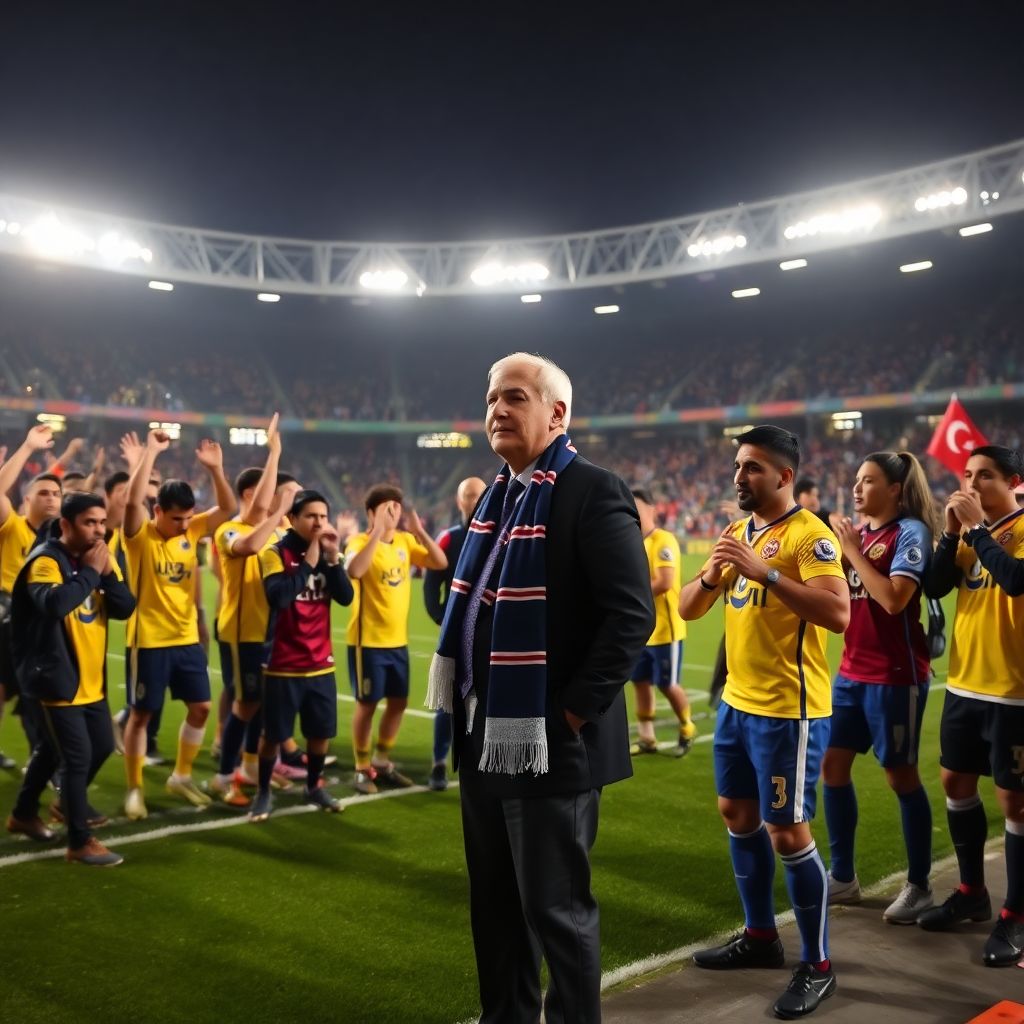
“12 matches ahead of us, we’re looking forward” – Saran focuses on the future after Trabzon win
Fenerbahçe president Sadettin Saran underlined that the club is fully focused on the remainder of the season, stressing that they have “12 matches, 12 finals” left in the league after the dramatic away victory against Trabzonspor. The yellow‑navy side defeated Trabzonspor 3–2 on the road in the 22nd week of the Trendyol Süper Lig, in a match that once again carried heavy emotional and competitive weight.
Speaking to reporters after the game at Papara Park, Saran began by emphasizing the hospitality shown to the Fenerbahçe delegation in Trabzon. He noted that from the moment they landed in the city, they were welcomed with respect and warmth, especially by the people of Trabzon, the city’s Governor, security forces, and Trabzonspor president Ertuğrul Doğan. According to Saran, every detail of their visit was handled thoughtfully, and the delegation felt that sincere effort had been made to ensure a calm and respectful atmosphere.
Saran highlighted that such gestures are particularly important given the tense history and rivalry between the two clubs. In recent years, meetings between Fenerbahçe and Trabzonspor have often been overshadowed by controversy, tight security measures, and mutual distrust between fan bases. Against that background, the way the Fenerbahçe contingent was treated in Trabzon stood out for him as a hopeful sign of change.
“The way we were received was truly admirable,” Saran said. He underlined that club officials, local authorities, and security units all played their part in ensuring that the match day unfolded without major incidents off the pitch. He described the coordination and communication between the clubs and local institutions as exemplary, stressing that this should be the standard going forward for high‑risk fixtures.
Saran then moved from thanking their hosts to talking about his broader hopes for the future of Turkish football culture. He expressed a clear desire to see away supporters regularly return to stadiums for big matches, including fixtures traditionally labeled as “high tension.” For him, the presence of both sets of fans is essential to the spirit of the game and to the integrity of the competition.
“Our hope is that from now on, our supporters can also travel to away matches,” he said. “We want the tension between us to come to an end. As the board of directors, this is our biggest wish.” With these words, Saran drew attention not only to Fenerbahçe’s own concerns but also to a broader problem in Turkish football: bans and restrictions on away fans that frequently drain atmosphere from stadiums and intensify polarization outside them.
The Fenerbahçe president framed the issue not just as a security question, but as a matter of mutual respect. According to him, if clubs, administrators, and local authorities manage to maintain the kind of dialogue and cooperation displayed in Trabzon, then controlled and safe away‑fan participation becomes realistic. He argued that football should be a platform that brings people of different backgrounds together rather than pushing them further apart.
Saran also used his statement to send a symbolic message of reconciliation. Publicly thanking Trabzonspor president Ertuğrul Doğan once again, he stressed that personal relationships and direct communication between club leaders play a key role in easing tensions. In his view, when administrators show respect and moderation in their own discourse, it naturally reflects on the behavior of fans and lowers the temperature around big games.
When asked about the significance of the 3–2 victory, Saran kept his response short but telling: “We are happy. We have 12 weeks, 12 matches left, and we’re looking ahead.” With this comment, he deliberately shifted the focus from a single result to the broader picture. For Fenerbahçe, the win in Trabzon is important both psychologically and in terms of the standings, but the president clearly does not want anyone at the club to become complacent.
By calling the remaining fixtures “12 matches” and effectively “12 finals,” Saran signaled that every game from now until the end of the season will be treated with maximum seriousness. He implied that there is no room for relaxation, overconfidence, or unnecessary distractions. The message was directed at players, technical staff, and fans alike: the season’s outcome will be determined not by one emotional night, but by the consistency the team shows week after week.
This focus on the future also reflects Saran’s broader leadership style. Rather than delving into referee decisions, controversial incidents, or heated statements, he chose to keep his comments constructive and forward‑looking. In a football climate where post‑match interviews often turn into debates about officiating and conspiracy, his calm tone stood out. He avoided fueling new arguments and instead underlined performance, planning, and the importance of unity inside the club.
The match in Trabzon may also mark an important psychological threshold for Fenerbahçe. Winning a high‑pressure away game against a historic rival, especially in an atmosphere that has often been hostile in past seasons, can significantly boost self‑confidence in the dressing room. For players, this kind of result reinforces the belief that they can handle tough conditions, intense crowds, and critical moments in the title race.
From a sporting perspective, Saran’s “we’re looking ahead” remark can also be read as a call for mental resilience. In a long league campaign, there are always emotional highs and lows. According to this approach, neither a big win nor a painful defeat should be allowed to unbalance the team. Instead, every match should be analyzed, lessons should be drawn, and then full concentration must shift to the next challenge on the fixture list.
The Fenerbahçe president’s emphasis on ending tension between clubs also has potential long‑term implications. If similar gestures of hospitality and respect are repeated in future high‑profile matches across the league, it could gradually transform the matchday experience. Families and neutral spectators might feel safer attending, and the overall image of the league could improve domestically and abroad. In turn, this could open the door to stronger commercial partnerships and greater international interest.
Ultimately, Saran’s comments after the Trabzonspor – Fenerbahçe clash carried two intertwined messages. On the one hand, he celebrated an important victory and framed the remaining “12 matches” as a clear road map toward the end of the season. On the other hand, he used the occasion to call for a calmer, more respectful football culture, in which away fans can once again travel freely and rivalries are lived passionately but without hostility.
By closing his remarks with yet another public expression of gratitude to their hosts in Trabzon, Saran reinforced his main line: Fenerbahçe is pleased with the three points, but even more determined to move forward focused on the title race and on building a healthier environment around Turkish football’s biggest games.