From dusty pitches to floodlights: the modern Turkish pathway
For a 13‑ or 14‑year‑old in Turkey, the dream of walking out in the Super Lig feels huge but strangely close: the stadiums are nearby, many players come from the same streets, the games are on every TV. Yet the road from U14 to professional football has changed dramatically over the past 20–25 years. In the 1990s and early 2000s, kids were often picked up from amateur clubs or even school tournaments with very little structure or long‑term planning. Today the journey is closer to a system: regional leagues, academy contracts, sports science, and a small army of scouts, analysts and youth coaches who all influence whether a youngster climbs the ladder or drops off midway.
The big turning point came when Turkish clubs started taking youth development seriously after repeated European campaigns highlighted a gap with countries like Germany, Spain and the Netherlands. Clubs realised that buying ready‑made stars was expensive and risky, while building their own players could be both cheaper and more sustainable. That’s when turkish football talent scouting slowly transformed from a handful of old‑school eyes in the stands into a more organised process with databases, video platforms and clear age‑group benchmarks. For a modern teenager, this means more chances to be noticed – but also higher competition and much stricter selection at every step.
Basic principles: what really moves a kid up the ladder
The story usually starts before U14: street football, school tournaments, weekend games in small local clubs. By the time a player officially hits U14 level, coaches are already looking for more than just raw technique. They want to see how a youngster learns, reacts to mistakes, handles instructions and behaves in a team. Expert youth coaches in Turkey often say that at U14–U15, “we are not looking for the final product, we are looking for the right ‘software’ inside the head.” Technical skill is still non‑negotiable, but the way a player thinks the game and absorbs feedback becomes the main filter.
From there, four principles usually decide if a youngster climbs the football ladder: consistency, adaptability, decision‑making and resilience. Consistency is about turning a “great game” into a “standard performance”; adaptability means playing in different positions or systems without losing your edge; decision‑making is the speed and quality of choices under pressure; resilience is whether a teenager bounces back after being benched, injured or dropped. Clubs may use different terms, but the criteria repeat from academy to academy. Super Lig coaches tend to emphasise that talent is just the starting ticket; the real currency is how fast and intelligently a player builds habits that survive the jump to senior football.
The role of academies and structured training
By U14 level, most serious prospects are either inside or actively trying to enter one of the best turkish football academies for youth. These academies vary in budget and shine, but they increasingly share a core structure: age‑specific training blocks, individual development plans, sports psychology support and regular performance reviews. Instead of simply “training hard,” youngsters follow cycles focused on specific aspects: pressing, positional play, weak‑foot work, physical conditioning. A modern academy day can include video analysis of their own games or even clips of top European players in similar positions, so kids connect what they do on the pitch with what they see on TV.
Expert academies stress that the jump from “playing a lot” to “training with purpose” is the turning point around U14–U15. At this age, growth spurts, school pressure and social life all collide; many kids either stagnate or lose discipline here. Coaches try to protect players from burnout by rotating workloads, monitoring sleep and nutrition, and, crucially, educating families about realistic expectations. For parents, the message from staff is usually simple but tough: support your child, but don’t live through them. When family pressure softens, youngsters often become more creative and less afraid of mistakes, which paradoxically accelerates their development.
Mentality, school and everyday life

There is a romantic image that future pros only think about football, but experts in youth development in Turkey insist on balance. Regular school, stable friendships and a life outside the pitch help protect young players from the emotional rollercoaster of selection and rejection. The most successful academies try to coordinate with schools, adjust training timetables for exams and sometimes offer tutoring. Coaches repeatedly mention that players who learn to manage homework, travel and training are often better at managing tactical tasks and match pressure. The self‑discipline that keeps grades afloat is the same discipline that keeps nutrition, sleep and recovery on track.
Interestingly, psychological resilience becomes visible in everyday details: does the player arrive on time, accept rotation, support a teammate who starts ahead of them? Scouts and coaches quietly notice such behaviours at U14–U15. They know that the higher a youngster goes, the harsher the environment: social media criticism, transfer rumours, temporary loss of form. The teenagers who learn early to separate self‑worth from one bad game have a real advantage. Mental coaches at several Super Lig clubs say that they now treat emotional education as part of the training plan, not as an optional extra.
How it works in practice: a typical pathway from U14 to Super Lig
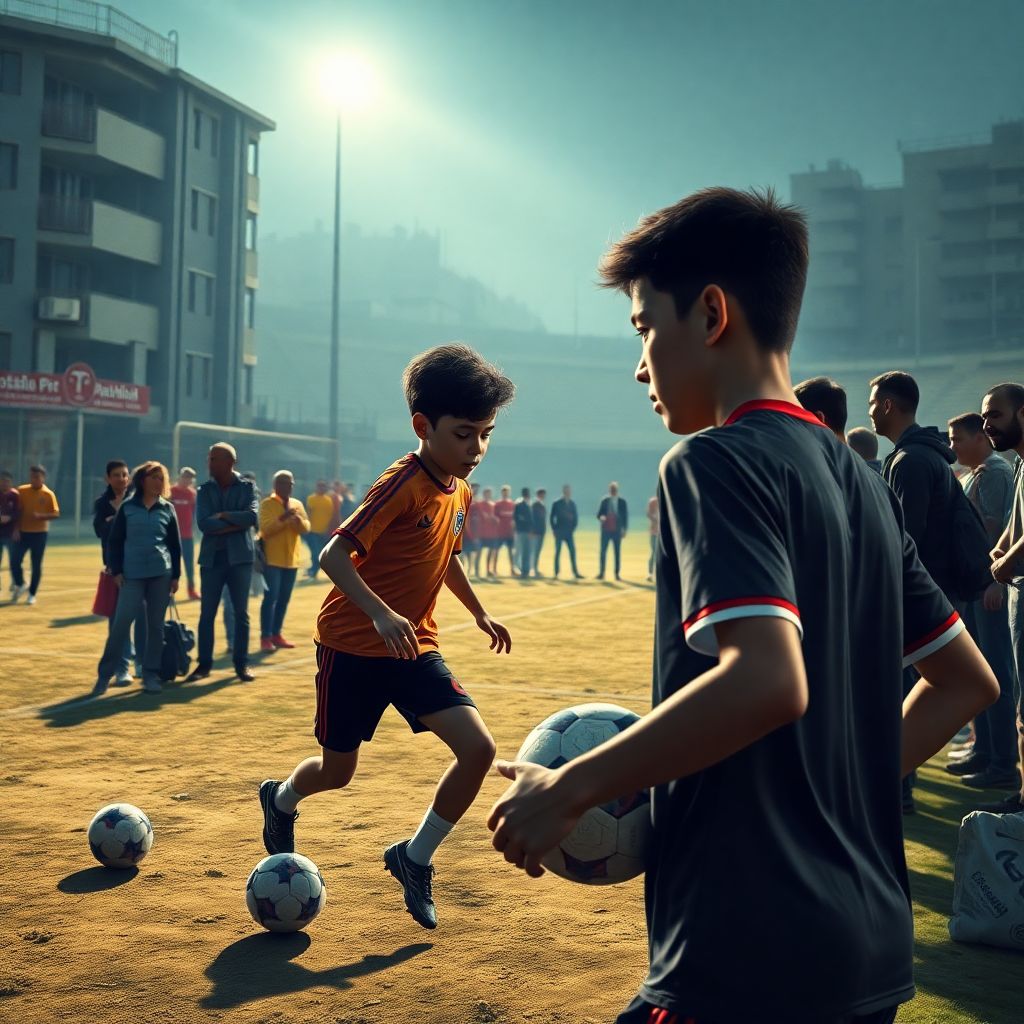
Let’s imagine a 14‑year‑old from a mid‑size Anatolian city who dreams about playing in the top division. He already plays for a local club in the regional youth league. At U14 competitions, the mix of spectators on the side‑lines can be surprising: parents, friends, local journalists and representatives of bigger clubs. Because turkish football talent scouting has spread deeper into the country, even second‑tier and Super Lig academies send staff to watch these games, especially in regions with a reputation for producing tough, competitive players. A good tournament can earn this youngster a trial invitation, but it usually takes several consistent performances, not just one highlight moment.
If he impresses at a trial for a bigger club’s academy, the next stage includes medical checks, fitness tests and classroom sessions explaining club rules, values and expectations. Youth coordinators explain to families that the club’s aim isn’t just to “sign” the child, but to build a five‑ to six‑year development plan. The youngster may move to a dormitory, share a room with other academy players and follow a weekly routine that looks closer to that of a pro: two‑a‑day sessions some days, gym work, video, and matches on weekends. The competition inside the squad is fierce; at every age jump – U15, U16, U17, U19 – several players leave and a few new ones arrive, raising the bar again.
From academy to first‑team environment
The step from U19 or reserve team to the Super Lig is brutally steep. Even very talented U17–U19 players often find that the pace, physicality and tactical complexity of top‑level football feel like a different sport. This is where super lig clubs youth development programs make a real difference. Many clubs now create “transition bridges” instead of a straight, impossible jump: they loan players to 1. Lig or 2. Lig teams, organise mixed training sessions with first‑team players, or play high‑intensity friendlies against strong senior sides. The idea is to gradually immunise youngsters against the shock of professional football.
Transfers also shape the route. In recent years, super lig young talents transfers often include sell‑on clauses and buy‑back options, giving big clubs a reason to let prospects go earlier while still keeping financial and sporting interest. A 19‑year‑old might sign for a smaller club where he can start regularly, while his original academy keeps a percentage of his next move. For the player, this can feel like a risk – moving away from the familiar badge – but experts point out that regular minutes at 19–21 are usually more important for long‑term career growth than training with a big club but barely playing.
Realistic examples of roles and adaptation
Position also changes the route. Attackers and creative midfielders often get thrown in younger because one decisive action can change a game and coaches are willing to gamble on their unpredictability. Central defenders and goalkeepers usually break through later, because any mistake is immediately punished and coaches prefer experience in those zones. A Turkish youngster who is a centre‑back at U15 might be temporarily moved to full‑back or defensive midfield in U17 to broaden his understanding of space and 1v1 situations; then, at 20, he might return to centre‑back with a richer skill set. This sort of “detour” is common and not a sign of failure, but many teenagers misread it until coaches explain the logic.
Experienced academy directors also mention that tactical flexibility can be a secret accelerator. A wide player who learns to perform both as a touchline winger and as an inverted inside forward fits more systems and more coaches’ ideas. In a football market where super lig young talents transfers are constantly in motion, being able to adapt to various schemes makes a young player attractive to different clubs and leagues. The ones who only shine in one rigid role often struggle when they meet a new coach with a new playbook.
Common misconceptions about the journey
A lot of myths surround the path from U14 to the Super Lig. One popular belief is that if you are not in a major academy by 14 or 15, your chance is gone. Scouts and coaches strongly disagree: physical development is uneven, some late bloomers grow or mature mentally at 16–17 and are picked up from smaller clubs or school competitions. Another myth says that “if you are good, they will find you for sure.” In reality, visibility matters: playing in competitive regional leagues, attending official trials and even sharing match clips via club channels can help. Talent is necessary but not self‑advertising; a family that quietly learns how to join football academy in turkey, follows the application rules and shows up prepared can change a youngster’s trajectory.
There is also a dangerous misconception that “training more” is always better. Experts in sports science at top academies emphasise the difference between productive workload and chaotic overtraining. Extra sessions after practice, late‑night futsal with friends, and weekend tournaments on tired legs sound heroic but often end in overuse injuries at 15–16. A stress fracture or chronic muscle issue at that age can silently kill a career. The smarter approach is to coordinate all activity with the main coach, integrate rest days, and treat sleep and nutrition as invisible training tools. It may feel less romantic than stories of nonstop football, but it is how modern pros survive long seasons.
What experts actually recommend
Youth coaches, scouts and performance specialists in Turkey often repeat a core set of recommendations to families and youngsters dreaming of the Super Lig. These aren’t magic formulas, just patterns they’ve seen in the kids who actually make it:
– Build strong basics: clean first touch, passing under pressure, scanning the pitch before receiving the ball, and a reliable weaker foot. Fancy tricks help highlights; basics win contracts.
– Protect the body early: proper warm‑ups, strength training with qualified coaches, enough sleep, and simple, consistent meals have a bigger long‑term impact than any “miracle” supplement.
– Treat school as a backup and a mental stabiliser, not as a rival to football; better habits in class often mirror better concentration on the pitch.
Scouts add a few practical notes from their side: they look for intensity in off‑the‑ball work, reactions after losing the ball, and emotional control after fouls or referee decisions. They insist that body language can sell or kill a player in a five‑minute window. A youngster who sprints to press, encourages teammates and recovers quickly from mistakes sends a powerful message even before he touches the ball again. This is where quiet leadership starts: not with armbands, but with consistent competitive behaviour.
Step‑by‑step: increasing your chances
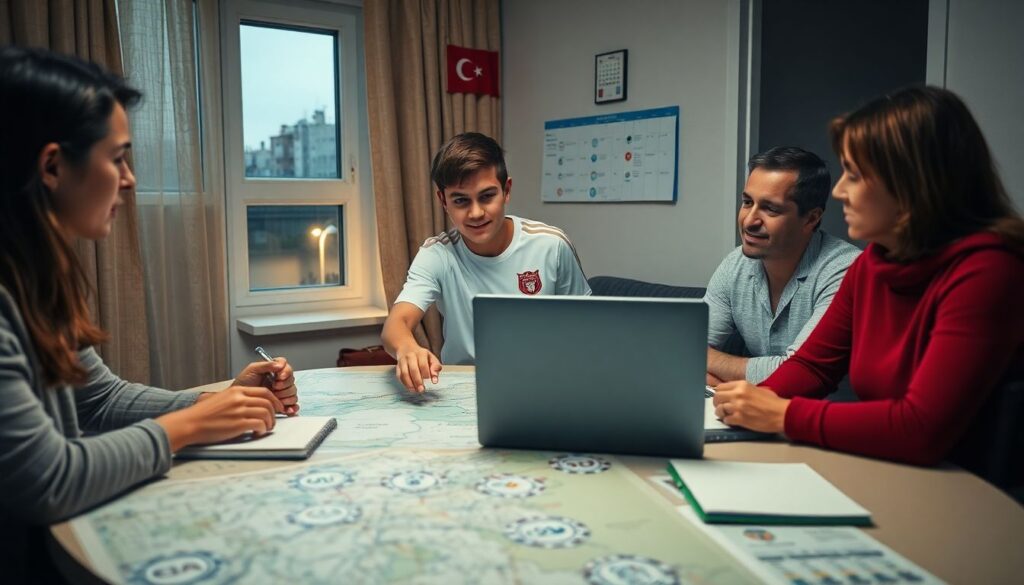
For a Turkish youngster (and their family) trying to turn a dream into a real plan, experts often break the process into a few concrete steps that can be adjusted to each region and club:
– Map the local landscape: find which clubs in your area have links to higher divisions, ask coaches where their former players moved next, and identify realistic entry points instead of chasing only the biggest names.
– Learn the formal routes: check club websites and federation channels for trial dates, medical requirements and age limits; many people miss opportunities simply because they are not informed on time.
– Keep a simple performance log: note minutes played, positions, goals or key contributions, and short feedback points from coaches. Over a season or two, this reveals patterns, strengths and weaknesses better than memory alone.
When families explore how to join football academy in turkey, they discover that each club has its own mix of open trials, scouting networks and recommendations. The common thread is that preparation and persistence matter more than a single brilliant afternoon. Sending highlight videos through unofficial channels or relying on social media alone rarely works; clubs trust their scouts, official trials and long‑term observation more than viral clips. The youngsters who accept this and patiently work within the system have a better shot at slowly climbing from U14 pitches to the Super Lig spotlight.