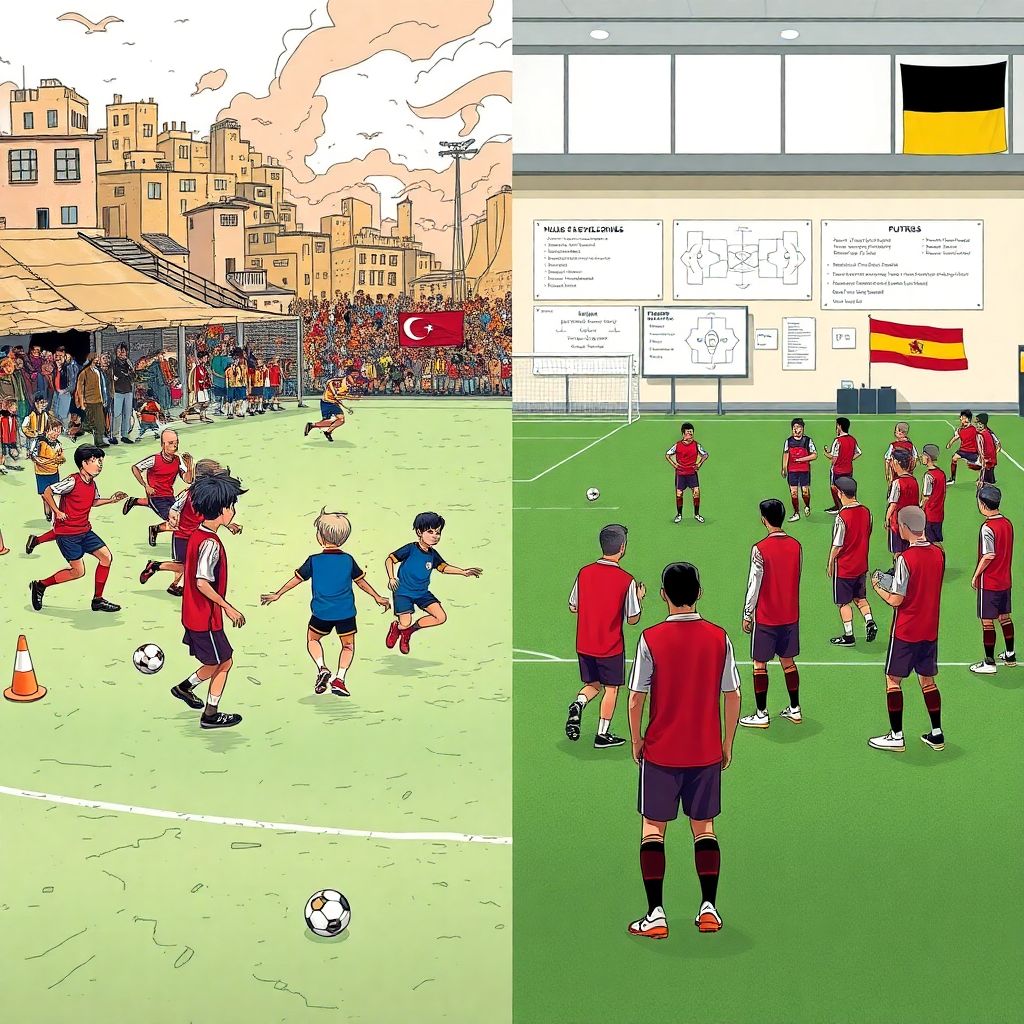
Why Compare Turkey and Europe’s Elite Football Nations?
When you put Turkey next to Europe’s traditional powerhouses, you’re really comparing two different football childhoods. In Turkey, talent often pops up in chaotic, passionate environments; in Germany, Spain or the Netherlands, it grows inside carefully engineered systems. Both sides produce stars, but the process feels totally different. Understanding these youth development models matters if you’re a parent choosing a football academy turkey, a young player dreaming of a pro contract, or a coach trying to modernise your club. Instead of asking “Who’s better?”, it’s smarter to ask: “What can each side steal from the other and adapt without losing its soul?”
Step 1: Talent ID – Street Ball vs Structured Scouting
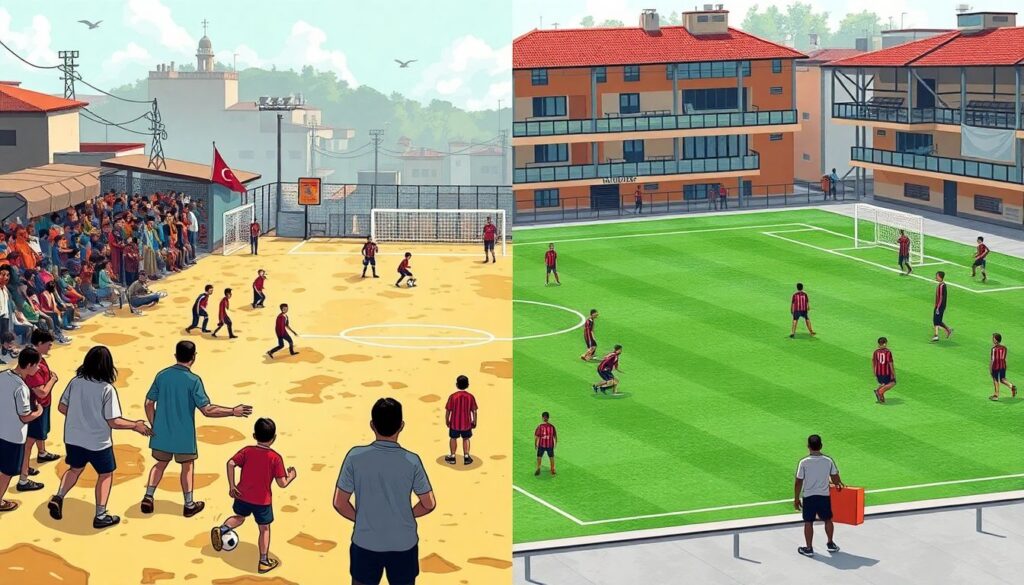
In Turkey, the first filter is often raw street football: crowded cages, school yards, dusty local pitches. Coaches rely heavily on the eye test and intuition, scanning regional tournaments or informal games. In Europe’s elite youth soccer academies abroad, scouting looks more like a quiet science project: databases, tracking minutes, technical tests and even psychological profiles. The risk in Turkey is that late developers or introverted kids get overlooked, while Europe can easily miss the fiery, unpredictable dribbler who doesn’t tick every box. A hybrid model would pair Turkish instinct with European data, so the kid with messy hair and a wild first touch still gets his numbers checked, not just a dismissive shrug.
Step 2: Training Culture – Intensity vs Individualisation
Ask any player and they’ll tell you: Turkish sessions often feel like mini‑derbies. High tempo, pressure, constant shouting, and a strong “prove yourself today or else” vibe. That forge can build mental toughness, but it also burns out sensitive players, especially when coaches treat every training like professional soccer trials turkey. In the best football academies in europe, the tempo changes more deliberately: some days are low‑intensity technical labs, others are game‑like tactical rehearsals. GPS vests track workload, and sports science decides when to push and when to rest. Turkey could borrow that periodisation, while European clubs might learn from Turkish fire – occasionally letting kids scrap and compete without over‑managing every heartbeat.
Step 3: Education and Life Skills – The Hidden Curriculum

One of the sharpest contrasts sits off the pitch. In many Turkish setups, school and football often compete like jealous siblings; when fixtures pile up, education usually loses. That gamble pays off for the 1–2% who “make it”, but leaves the rest stranded. In contrast, youth football camps europe typically wrap training in languages, nutrition classes, and mental skills workshops. Big academies in Germany or France treat education like a second training pitch where players learn discipline, time management and resilience. A modern Turkish model could formalise partnerships with schools, offering flexible timetables, online learning and tutoring inside the club. That way, a 17‑year‑old who gets released still has a realistic path, not just a broken dream and an empty CV.
Step 4: Game Model – Chaos vs Structure
Watch a U15 match in Turkey and you’ll often see pure chaos: transitions, long balls, wild tackles, and one or two kids trying to dribble the entire world. It’s fun, but it doesn’t always teach players how to solve problems collectively. In Spain or the Netherlands, even U12 sides follow a clear game model: build‑up rules, pressing triggers, and rehearsed patterns. The danger is over‑coaching: players become system robots who freeze when the script breaks. The sweet spot is somewhere in between. Imagine Turkish youth teams with a simple, shared style – for example, high pressing plus quick short combinations – but with regular “freestyle minutes” in training, where players are encouraged to experiment, fail and improvise without the coach barking at every mistake.
Step 5: Pathway to Pro – From Academy to First Team

The gap between youth and senior football is where many Turkish talents disappear. Some clubs still fill squads with ageing foreign players, leaving academy graduates stuck on the bench or loaned to lower leagues without plan or support. Elite clubs in Europe map each player’s journey with scary precision: minutes targets, tailored loan destinations, and mentors inside the first team. If you’re a young player picking a football academy turkey, ask blunt questions: How many academy players actually debut? Who got promoted in the last three years? Numbers speak louder than promises. Turkish clubs could copy Europe’s “individual development plan” habit – but add a cultural twist, pairing each prospect with a seasoned local pro who guides them through the madness of media, money and expectations.
Beginner’s Roadmap: 5 Practical Steps for Families and Players
1. Define your goal honestly: pro career, scholarship, or just high‑level play? Your dream shapes whether you chase elite youth soccer academies abroad or strengthen your place in a strong local club.
2. Audit the club: watch training, talk to other parents, and quietly check how coaches treat weaker kids, not just the stars.
3. Protect education: demand a clear plan that allows school and football to coexist; if a coach laughs that off, walk away.
4. Monitor workload: nag your child about sleep, diet and recovery as much as about goals and assists.
5. Plan exit routes: even if everything screams “future star”, prepare for injuries, dips in form and coach changes – that mindset reduces panic decisions later.
Common Mistakes to Avoid in Both Systems
One classic trap in Turkey is chasing badges instead of environments. Parents get dazzled by a big‑name club logo, ignoring the fact that their child might hardly play. Getting ten messy matches per month in a modest local team can beat sitting on the bench at a giant institution. In Europe, especially in the best football academies in europe, families sometimes over‑trust the system and stop asking questions, assuming the structure guarantees success. It doesn’t. Another shared mistake is treating early maturity as destiny: the tall, fast 13‑year‑old dominates now, but might stall later, while the small, technical kid quietly overtakes him at 18. Patience, plus focus on decision‑making and game intelligence, usually wins the long race.
Unconventional Solutions: Mixing Models Creatively
Instead of picking “Turkey or Europe?”, think blended. One left‑field idea: micro‑exchanges. Turkish clubs could send U14 groups for two‑week stints at youth football camps europe every year, not as transfer showcases but as learning labs. In return, European academies visit Turkey for high‑intensity mini‑tournaments to experience noise, pressure and hostile crowds. Another twist is remote mentoring: a Turkish prospect can train locally yet be followed online by a foreign academy coach who reviews clips monthly and sends feedback. Families who can’t relocate but want foreign exposure might target short spells at elite youth soccer academies abroad during school holidays, treating them as tactical and psychological upgrades rather than golden tickets. The future belongs to those who test, adapt, and steal the best bits from everywhere, not those stuck defending one “pure” system.
Комментарии