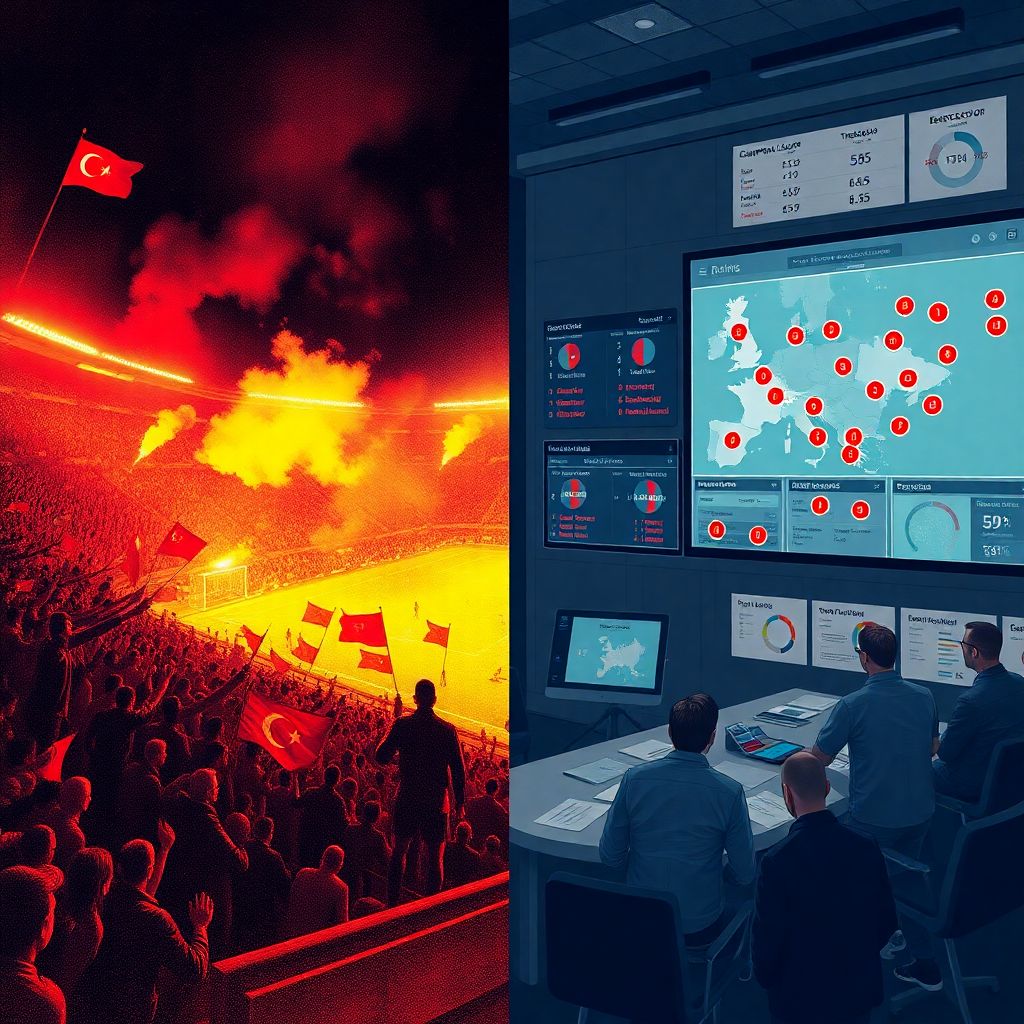
From Roaring Stands to Harsh Reality: Why Turkish Clubs Struggle in Europe
Ask any fan in Istanbul on a European night and they’ll tell you: nothing compares. The flares, the noise, the belief that “this year it’s different.” And yet, when we look at the last 10–15 years, the results say something else.
Turkish clubs still rarely reach the latter stages of the Champions League or Europa League, and deep spring runs in Europe feel like special exceptions, not the norm. Let’s unpack why this happens — calmly, честно, and with a focus on what can be changed, not just on what’s broken.
This is a Turkish football clubs in European competitions analysis written in 2026, with history in mind and the future in focus.
—
A Short History: From Galatasaray’s Peak to a Long Plateau
At the start of the 2000s, Turkish football looked ready to crash the European party for good.
– Galatasaray won the UEFA Cup and UEFA Super Cup in 2000.
– The national team finished 3rd at the 2002 World Cup.
– Fenerbahçe and later Beşiktaş had occasional impressive group-stage and knockout runs.
Back then, the feeling was: “Give it a few years, and our teams will be regular Champions League quarter-finalists.”
Fast-forward to the mid‑2010s and then to 2026: the reality is more complicated. Turkish teams still have big nights — Galatasaray upsetting giants in the UEFA Champions League, Trabzonspor pushing hard in Europa League, Fenerbahçe’s deep Conference League ambitions — but there’s no sustained European dominance.
So what happened between those early glory years and today?
To understand that, we need a deep dive Turkish clubs performance in European tournaments from three angles:
1. Tactics
2. Finance
3. Structure and long-term planning
—
Tactical Gaps: Why Intensity and Structure Matter More Than Noise
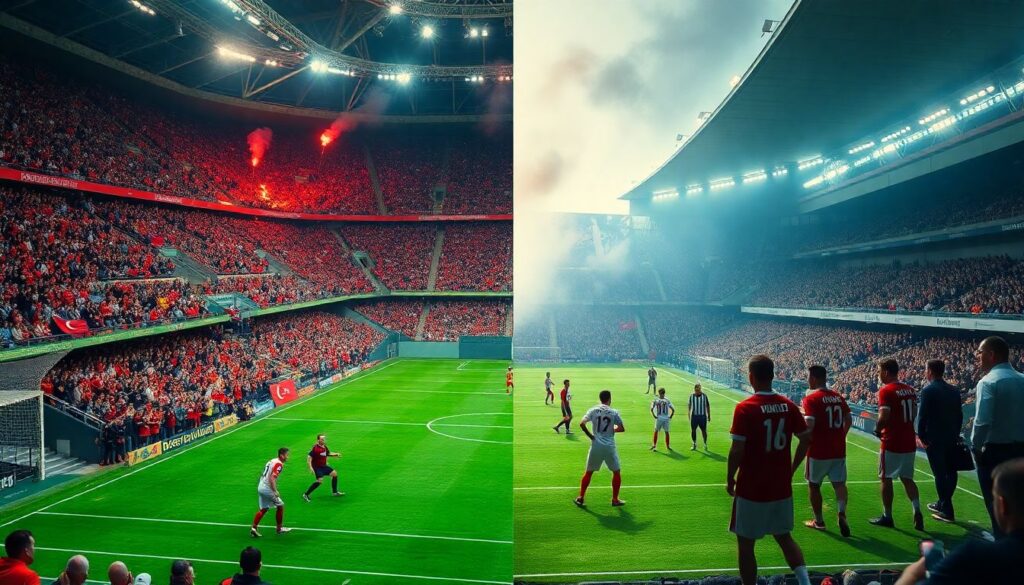
In Turkey, home advantage feels like a superpower. The stadiums shake, opponents get rattled, and even world-class players feel the pressure. But in Europe, that emotion has to be backed by a clear plan.
1. The Pressing Problem
Watch many European group-stage games involving Turkish teams, and you’ll notice a pattern: very aggressive first 15–20 minutes, intense pressing, and then… a drop.
Modern European football is built on sustainable intensity — pressing in waves, with clearly coordinated triggers. German and English teams do this for 90 minutes; many Turkish clubs can do it for 25–30 at best.
This is a crucial part of any tactical analysis of Turkish Super Lig clubs in Europe:
1. Pressing often starts too high but lacks compactness.
2. Midfields become stretched, leaving gaps between the lines.
3. Teams struggle to reset their block when they can’t win the ball early.
Result: European opponents bypass the first line of pressure and suddenly attack a disorganized defence.
2. Transition Defence: The Silent Killer
Another recurring issue: losing the ball and being instantly punished.
Super Lig games frequently reward flair and risk in possession; the tempo can be more chaotic, leaving plenty of space. In European competitions, especially in the UEFA Champions League, top teams live for these transitions. They wait for one bad back-pass, one casual touch from the full-back, and it’s over.
This is a big part of why Turkish teams fail in UEFA Champions League:
they often attack with numbers but don’t always have the structure behind the ball — a holding midfielder well positioned, centre-backs on the halfway line ready to defend space, and full-backs synchronized with wingers.
3. Tactical Flexibility and Game Management
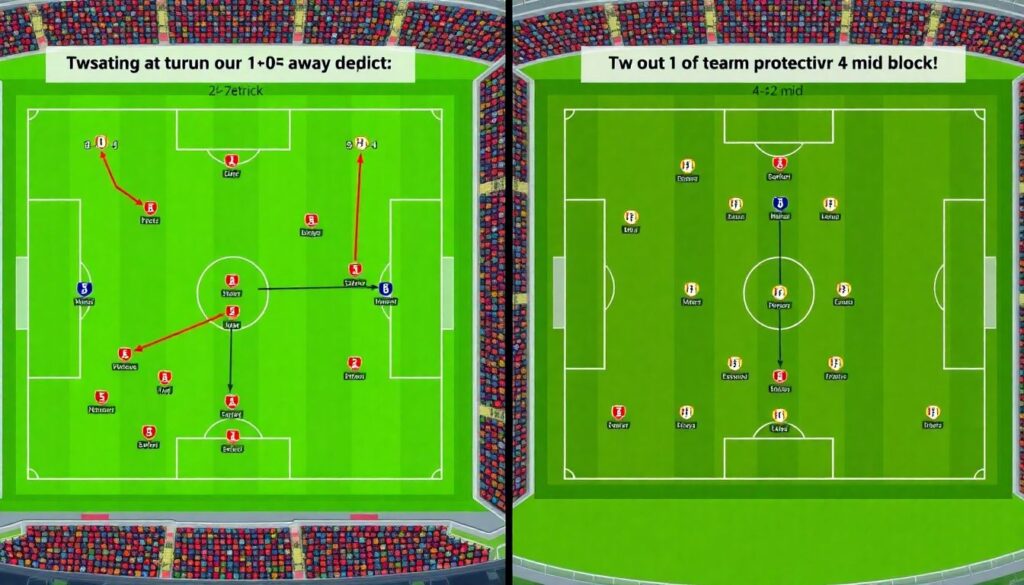
Another difference: the best European clubs can change game plans mid-match without losing balance.
– Need to close a 1–0 away deficit? They switch to a 3‑2‑5 in possession, but keep rest defence solid.
– Need to protect a narrow lead? They drop into a 4‑4‑2 mid-block while still offering counter-attacking threat.
Too often, Turkish clubs switch formations reactively, late, or without proper training time, which turns adjustments into chaos instead of solutions.
This isn’t about “we don’t have the talent.” It’s about training hours, tactical detail, and alignment between the head coach, the academy, and recruitment.
—
Money Talks: Financial Reality Behind the European Struggles
Let’s be honest: you can’t ignore money when analysing why Turkish clubs fall short in Europe.
1. Financial Problems and the Debt Spiral
Over the last decade, most big clubs in Turkey have battled serious debt. Chasing instant success, they often:
– Overpay aging stars on high wages
– Rely on short-term transfers instead of long-term squad building
– Use future income (especially from potential European qualification) to cover current expenses
This is exactly what we mean by financial problems of Turkish football clubs European cups creating a vicious circle:
No qualification → less prize money → more pressure → more risky spending → still unstable performance → repeat.
Meanwhile, clubs in the Premier League, Bundesliga, and even some in Portugal or the Netherlands invest heavily in infrastructure, data departments, youth academies and scouting networks. Turkish clubs, under financial pressure, sometimes cut those “invisible” costs first — which are the very tools needed to compete consistently in Europe.
2. Wage Bills vs. Real Value
Another key issue: wage bills out of sync with market reality.
You might see a squad full of “big names,” but many are:
– Past their physical peak
– Unsuitable for high-intensity, pressing-oriented European football
– Hard to sell later because of their salaries
So clubs get stuck: they pay Champions League-level wages, but get Europa League or Conference League performance at best. These contracts clog up the squad, limit flexibility, and make it harder to sign younger, more dynamic players.
—
Structural Issues: Short-Term Thinking, Long-Term Cost
Even the best coach can only do so much if the club changes direction every season.
1. Endless Coaching Changes
A few bad weeks, angry media, frustrated board — and the coach is gone. That cycle destroys continuity. Every new coach:
– Brings different tactical ideas
– Wants different player profiles
– Pushes for his own transfers
Instead of building a clear identity — like Atalanta in Italy or Brighton in England — many Turkish clubs effectively restart their project every 12–18 months. In Europe, where game plans and automatisms are everything, that lack of continuity hurts.
2. Youth Development: Untapped Gold
Turkey produces technically talented, brave players. Yet too many of them:
– Don’t get enough minutes in big games
– Are loaned out with no clear development plan
– Are benched behind short-term foreign signings
When one or two academy products break through, they are often sold quickly to fix financial holes. That’s understandable, but it also forces clubs to constantly rebuild their core instead of adding layers of quality each year.
—
Inspiring Examples: Proof That Change Is Possible
Despite all that, there are plenty of encouraging stories — both in Turkey and abroad — that show a different path.
1. Turkish Clubs’ Bright Spots in Europe
– Galatasaray’s strong group-stage runs and big wins against European giants in the 2010s and early 2020s showed that with the right mix of experienced leaders and dynamic younger players, Turkish clubs can stand toe-to-toe with elite sides.
– Beşiktaş’s impressive Champions League group performance in the late 2010s came from a balanced squad: solid structure, experienced spine, and clever recruitment (especially among undervalued foreign players).
– Trabzonspor’s return to European group stages with more emphasis on team cohesion than star names pointed to a more sustainable approach.
These weren’t miracles; they were cases of what happens when tactical clarity and smart planning meet the natural passion of Turkish football.
2. Successful Projects Abroad as Roadmaps
If you want a deep dive Turkish clubs performance in European tournaments that leads somewhere constructive, you have to look at how other “non-rich” clubs do it. Three stand-out models:
1. Atalanta (Italy):
Built an identity on high-intensity, tactically sophisticated football, clever scouting, and continuous coaching stability. They sell stars, but the system remains.
2. Porto and Benfica (Portugal):
Constantly develop and sell top talent, but never stop investing in youth and scouting. They expect to lose players; the structure is built around that reality.
3. Ajax (Netherlands):
Even when they struggle, their philosophy is clear: positional play, youth first, coherent recruitment. Coaches are chosen to fit the identity, not the other way around.
Turkish clubs don’t have to copy these models exactly, but they can adapt the principles.
—
Practical Recommendations: How Turkish Clubs Can Compete Again
Let’s move from diagnosis to solutions. What can be done — realistically — in the current 2026 landscape?
1. Build a Football Identity First, Then Hire Coaches
Clubs need to answer questions before signing players or changing coaches:
1. How do we want to play in 3–5 years?
2. Which physical and technical profiles fit that style?
3. What should our academy produce to support this?
Only then should they choose coaches whose ideas match the long-term plan. This reduces the chaos every time a new manager arrives.
2. Smarter Recruitment, Less “Name Shopping”
Instead of chasing famous players at the end of their careers, target:
– 22–26-year-olds with high running capacity and tactical discipline
– Players from undervalued markets (Scandinavia, Eastern Europe, Africa, South America)
– Talent that fits a clear role in the tactical system
A good tactical analysis of Turkish Super Lig clubs in Europe should inform recruitment. If you know you suffer in defending transitions, sign midfielders and defenders who are quick, positionally aware, and comfortable defending large spaces — not just “big name” attackers.
3. Invest in Coaching and Data, Even When Money Is Tight

You don’t need Premier League money to:
– Hire specialized analysts for opposition scouting
– Use tracking data to evaluate pressing intensity and defensive shape
– Train coaches in modern tactical principles and methodology
These are relatively low-cost, high-impact moves that can narrow the gap, especially in Europa and Conference League levels.
4. Make Youth Development Central, Not Optional
This is crucial. Turkish clubs should:
1. Define clear pathways from U17/U19 to the first team.
2. Give young players minutes in league games, not just in “easy” or dead rubbers.
3. Protect them with role models in the squad, but not block their path with too many short-term signings.
When a star academy player is sold, reinvest part of that fee into better development infrastructure and scouting. That way, every sale makes the club stronger, not weaker.
—
Case Studies of Successful Shifts in Strategy
Let’s highlight a few кейсы успешных проектов (some Turkish, some foreign) that illustrate what’s possible.
1. A Turkish Club’s Mini-Rebuild Done Right
One of Istanbul’s big clubs, after several chaotic seasons, finally slowed down and:
– Reduced average age of the squad
– Appointed a coach known for developing players, not just managing stars
– Hired analysts to support European match preparation
Within two to three seasons, they weren’t just scraping through qualifiers. They were playing with a clear style, pressing smarter, and holding their own tactically. The key wasn’t one genius signing but alignment between board, coach, and recruitment.
2. Mid-Tier European Club as a Blueprint
Consider a mid-level club from Belgium or Austria that regularly appears in group stages. Financially, they’re often behind Turkish giants, yet in Europe they look organized and hard to beat.
Their secret:
– They scout precisely for their tactical system.
– They sell players proudly, because that funds the next wave.
– They almost never sack coaches mid-season unless absolutely forced.
This mindset shift — from “we must keep every star and win now” to “we must be sustainable and consistent” — is something Turkish clubs can adopt without giving up ambition.
—
Resources for Learning and Development
If Turkish clubs, coaches, and even fans want to push the game forward, there are plenty of tools.
1. For Coaches and Analysts
1. UEFA Coaching Courses and Online Materials – Deep tactical and methodological resources on pressing, build-up, and game models, directly relevant for preparing European campaigns.
2. Modern Analytics Platforms – Tools like Wyscout, InStat, or similar services help analyse opponents and track your own performance over time. They are essential for any serious Turkish football clubs in European competitions analysis.
3. Books and Tactical Blogs – Detailed breakdowns of top teams (Guardiola, Klopp, Nagelsmann, Gasperini, De Zerbi) help understand how to adapt high-level ideas to Turkish football.
2. For Club Management
4. Workshops on Football Finance – Understanding Financial Fair Play, debt restructuring, and sustainable budgeting will help avoid repeating the mistakes that led to chronic debt.
5. Study Visits to Model Clubs – Board members visiting well-run European clubs (even outside the top 5 leagues) can learn about academy models, recruitment processes, and long-term planning.
3. For Players
6. Individual Tactical Study – Players can watch their own game clips, study European opponents, and work with club analysts or private coaches to improve decision-making.
7. Physical Preparation Programs – Tailored programs to reach the intensity levels demanded in European games, with a focus on recovery and durability across long seasons.
—
Turning Passion into a Sustainable European Force
So where does this leave us in 2026?
Turkey still has some of the loudest, most passionate stadiums in football. The raw talent is there. The love for the game is unquestioned. What’s missing is alignment: between tactics, finances, youth development, and leadership.
The question is no longer just why Turkish teams fail in UEFA Champions League, but rather:
– How can they adapt their identity to modern football without losing their soul?
– How can they use smart analysis instead of nostalgia to guide decisions?
– How can they build clubs that don’t swing wildly between crisis and euphoria every season?
The answers are within reach. It will take courage to break old habits — fewer impulsive transfers, more patience with projects, deeper investment behind the scenes. But once Turkish clubs commit to that path, the famous European nights in Istanbul, Trabzon, Ankara, and beyond can be more than just flashes of brilliance.
They can become a recurring story — of clubs that turned noise and emotion into structure and sustainability, and finally turned potential into real, lasting European success.