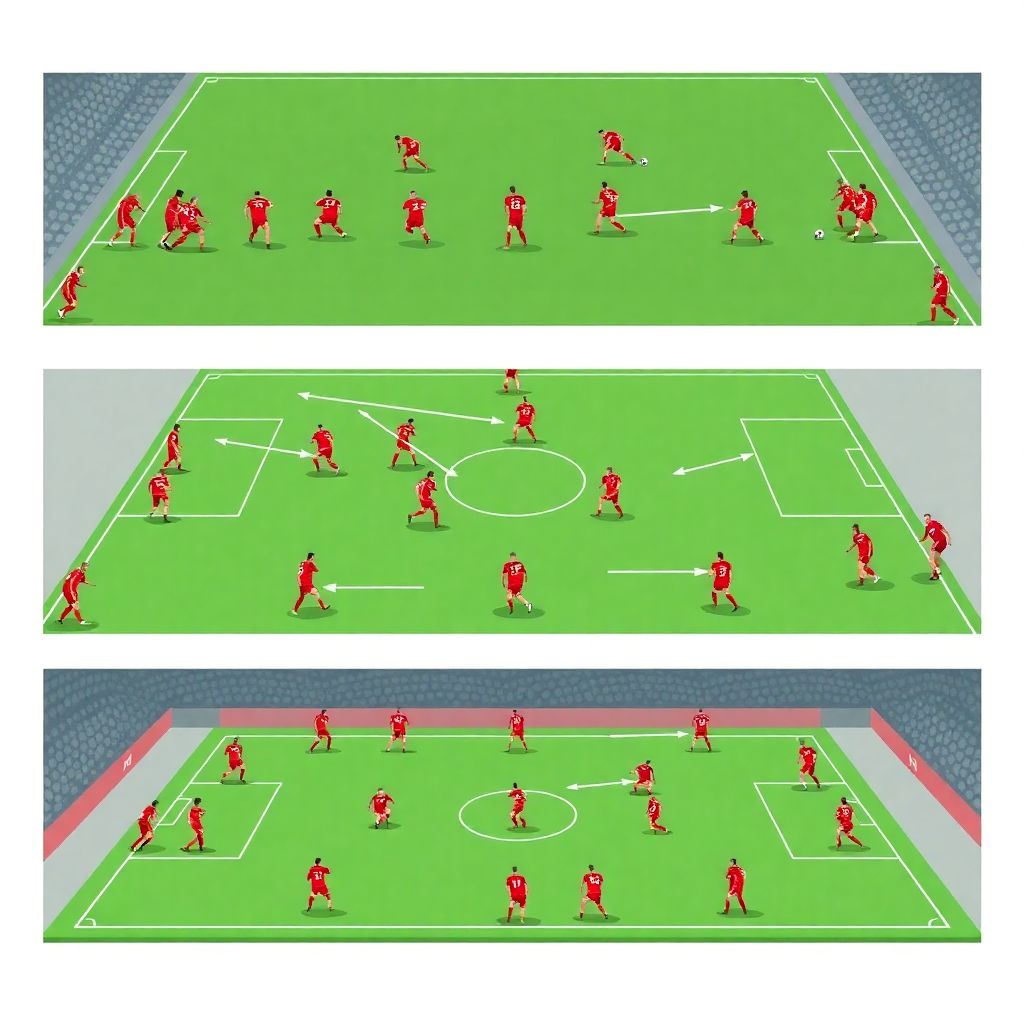
Why the Last 20 Years of Turkey’s Tactics Matter for You
If you coach, play, or even just obsess over the game, the last two decades of the Turkish national team are basically a living lab of how a mid-tier football nation can punch above its weight. From the emotional, comeback-heavy Euro 2008 side to the more structured, data‑driven setups you see today, each era leaves clues you can steal for your own team. Think of this as a practical Turkey national football team tactics analysis, but done in plain language, with a focus on what you can actually apply on the training pitch tomorrow rather than just collecting trivia about old tournaments.
From Chaos to Controlled Aggression: Mid‑2000s to Early 2010s
Around the mid‑2000s, Turkey leaned heavily on mentality, improvisation and individual flair. Defensively, the block often sat in a 4‑4‑2 or 4‑2‑3‑1, compact but reactive, waiting to pounce on mistakes. In possession, the playbook was simple: win second balls, attack wide, flood the box. The Euro 2008 run showed how powerful this can be if your players are mentally relentless. For your own team, the lesson is clarity: even a basic structure can work if roles are brutally simple and transitions are rehearsed, not left to chance, especially for amateur or youth squads.
Building a Modern Identity: 2010s Possession, Pressing and Hybrids
As the 2010s rolled in, Turkey started chasing a more modern, European style. Coaches tried to mix short‑passing build‑up with selective pressing, often in a 4‑2‑3‑1 or 4‑3‑3. The Turkey national team football coaching philosophy shifted from “react and fight” toward “control and provoke mistakes.” That meant a deeper pivot who could receive under pressure, full-backs pushing high, and wide forwards tucking inside. For you, the big takeaway is sequencing: don’t copy the full structure on day one. Build patterns from the back, add pressing triggers later, then connect them through clear game models your players can actually remember.
The 2020s: Flexible Structures and Smarter Risk
In the last few years, Turkey has experimented with back threes, asymmetrical full-backs and more nuanced pressing heights. You’ll often see them start in a 4‑2‑3‑1 but morph into a 2‑3‑5 or 3‑2‑5 in possession, using one full-back to invert and the other to provide width. The key upgrade is risk management: rather than pressing end‑to‑end, they pick zones and moments, using cover shadows instead of wild chases. For practical use, you can borrow this by assigning “press zones” instead of man‑oriented pressing, teaching players to shift as a unit and only jump when the pressing cue you’ve defined actually appears.
Necessary Tools for Learning from Turkey’s Tactics
To turn all this into something usable, you need a basic toolkit rather than expensive tech. Start with full‑match replays of Turkey, not just highlights; you’re hunting for shape, distances and timing. A simple notepad or spreadsheet lets you log how they press, when full-backs join, and how the pivot behaves under pressure. If you want deeper Turkey national football team match analysis service features without breaking the bank, many scouting platforms offer limited free access, enough for you to freeze frames and mark positions. Your real “technology” is a repeatable routine for watching, pausing, and sketching phases.
- Use wide‑angle footage when possible to see the whole block, not just the ball.
- Screenshot key moments (build‑up, press, rest‑defence) and print or share with players.
- Keep a running glossary of terms you actually use on the training ground.
Extra Resources: Books, Courses and Templates
If you want to go deeper, pair your own observations with structured learning. Some of the best books on football tactics Turkey national team coaches cite aren’t about Turkey specifically, but about principles: pressing, positional play, and transition management. Use those concepts, then plug in Turkish match examples to make them concrete. An online course football tactics with examples from Turkey national team can help you see how pros annotate clips and design sessions from them. Combine that with your notes and you’ll quickly build a personal playbook instead of blindly copying someone else’s PDF or session pack.
Step‑by‑Step Process: Turning Turkey’s Evolution into Your Game Model
Step 1: Pick One Era and One Phase of Play
Don’t try to master 20 years at once. Choose an era—say the Euro 2008 counter‑attacking side or a recent possession‑heavy team—and focus on one phase: build‑up, pressing, or transition. Watch two or three matches only for that phase. Pause every time it appears, sketch the starting shape, and ask: who provides width, who protects the centre, who makes depth? This narrow focus keeps you from drowning in details and lets you turn the Turkey national football team tactics analysis into simple diagrams and rules tailored to your level.
Step 2: Translate Patterns into Simple Rules for Players
Once you spot recurrent patterns, convert them into rules a 16‑year‑old can repeat back to you. For example, if you like how Turkey’s full-backs behave, your rule might be: “If the winger comes inside, full-back overlaps; if the winger stays wide, full-back underlaps or holds.” Limit yourself to three core rules per line (defence, midfield, attack). The goal is to extract the essence of the Turkey national team football coaching philosophy—clarity and compactness—without burying your players under a lecture. Test these rules in small‑sided games before using them in full 11v11 drills.
- Write rules on the dressing‑room board before training.
- Repeat them during water breaks in simple, consistent wording.
- End each session by asking players to explain the rules back to you.
Step 3: Build Training Sessions That Mirror Real Turkish Patterns
Training should mirror game pictures you saw on video. If you loved how Turkey pressed in a 4‑2‑3‑1, design 6v6 or 7v7 exercises where your front four must force play to one side, just as the national team does. Start with unopposed walk‑throughs to fix starting positions, then add opposition and scoring conditions that reward correct pressing cues. Over time, increase chaos: more players, bigger space, quicker restarts. This is how the abstract “Turkey model” becomes your team’s concrete habit, anchored in repetitions that feel like the clips you studied.
Troubleshooting: Common Mistakes When Copying National‑Team Tactics
Problem 1: Your Players Can’t Physically Sustain the Press
One frequent issue: coaches fall in love with Turkey’s high‑energy pressing but forget their own squad trains twice a week, not daily. If your team dies after 20 minutes, scale the idea, not the ambition. Press in zones (only in the middle third), shorten the pitch, or press on specific triggers—like a backward pass to a centre‑back—rather than on every touch. When stuck, rewatch clips and check how often Turkey actually presses; you’ll notice they choose moments carefully instead of playing kamikaze football for 90 minutes.
Problem 2: Overcomplicating Build‑Up for Lower Levels
Another trap is trying to recreate intricate 3‑2 build‑up structures with players who struggle to receive under pressure. If your centre‑backs panic, ditch the fancy rotations and copy earlier, simpler Turkish patterns: clear wide outlets, diagonal balls into strong target players, aggressive counter‑press after long passes. Use the idea behind modern systems—creating triangles and safe outlets—but reduce the number of moving parts. Progress only when your back line can consistently find the pivot without a meltdown every other possession.
- If mistakes pile up, lock the shape and forbid rotations for a few sessions.
- Use constraints: one‑touch for free players, two‑touch max for defenders.
- Reward safe progression, not risky “Hollywood” passes.
Problem 3: Copying Without Measuring
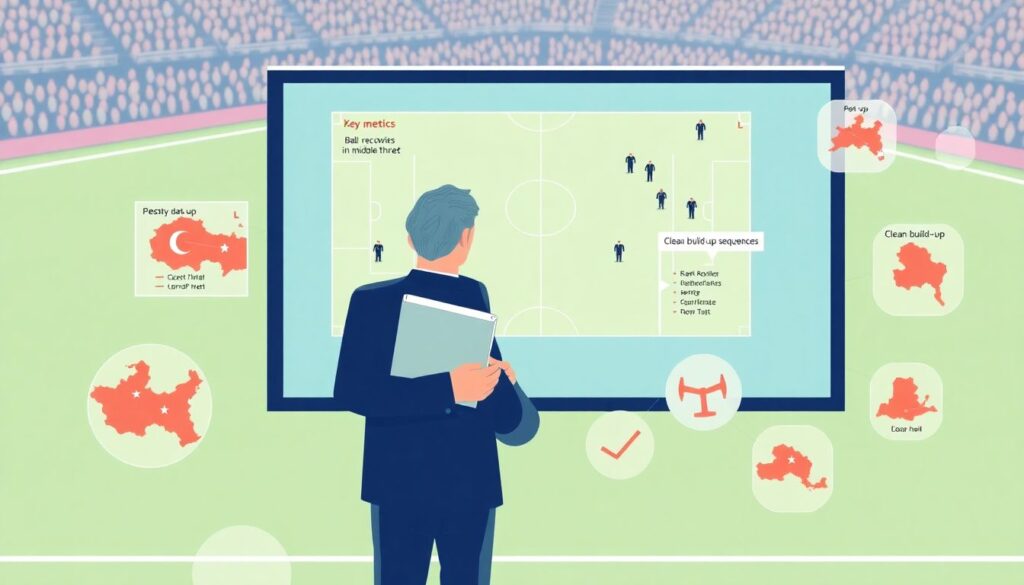
Coaches often adopt a new pressing or build‑up idea without checking if it actually improves results. Borrow a trick from any half‑decent Turkey national football team match analysis service: track a few key metrics. How many times per half do you win the ball in the middle third? How many clean build‑ups to the final third without a turnover? Video plus a notebook is enough. Review after three or four games; if numbers don’t move, tweak rules or simplify shapes. Without this feedback loop, even the smartest tactical imports turn into cosmetic changes that only live on your tactics board.