Why Turkey’s Youth Academies Suddenly Matter So Much
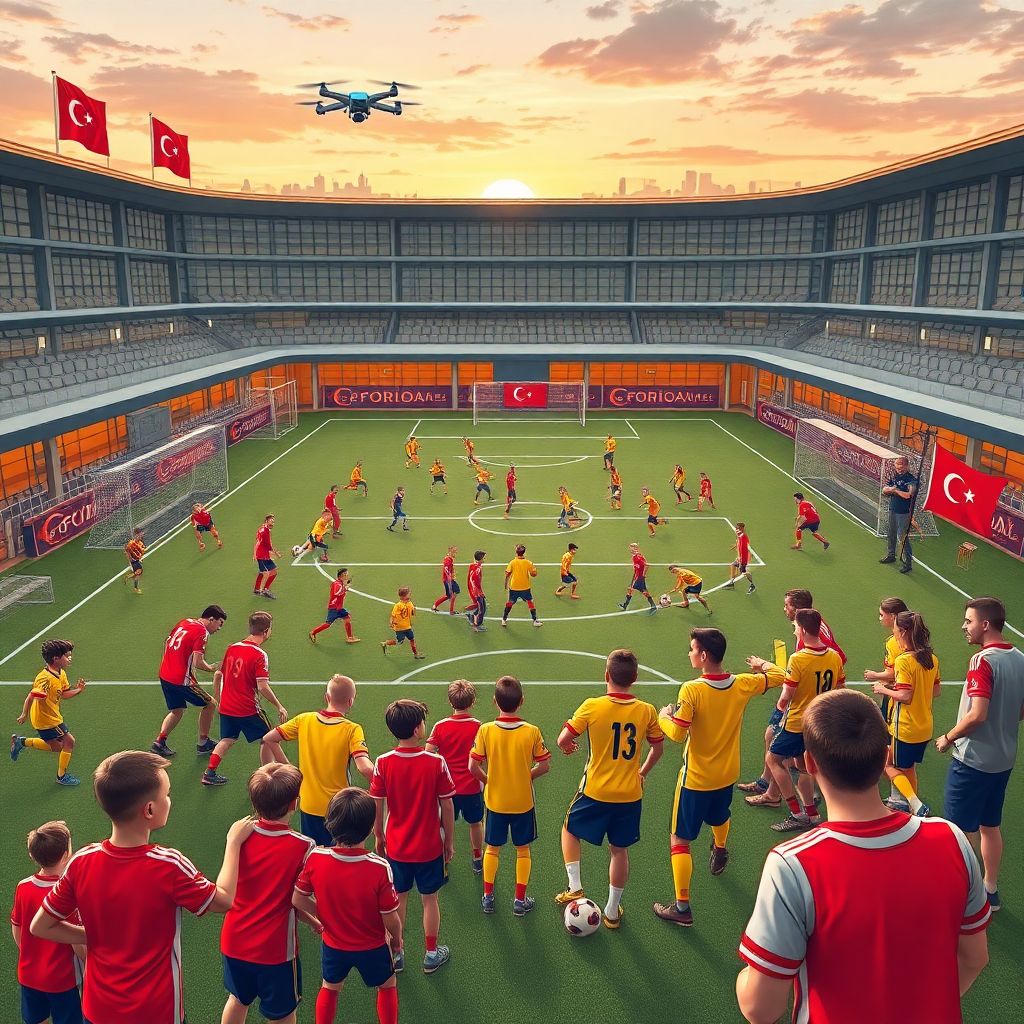
Turkey’s national team didn’t get “younger and faster” by magic. A big part of the shift comes from a quiet revolution in how clubs grow kids into professionals. Under the radar, the football academy in Turkey has gone from “extra training for talented boys” to a semi-scientific system that tracks growth, sleep, psychology, and tactics from age 8 onward.
In other words, we’re not just talking about a few good coaches anymore. We’re talking about small factories of future internationals.
What Exactly Is a Youth Academy? (Definitions Without the Jargon)
Let’s decode the main terms so we’re on the same page:
– Youth academy – A long‑term training program for kids and teenagers run by a club or federation. The goal is to turn a 10‑year‑old with raw talent into a 20‑year‑old who can survive Champions League tempo.
– Development pathway – The planned “ladder” from U10 → U12 → U14 → U16 → reserves → first team. If this ladder is broken at any step, the system starts wasting talent.
– Talent identification (talent ID) – The process of finding promising kids: trials, scouting school tournaments, neighborhood leagues, even online highlight videos.
– Game model – A club’s “football language”: pressing style, build‑up patterns, roles for each position. The best academies teach this language from day one, so the jump to the first team feels like switching classrooms, not planets.
Text Diagram: The Ideal Player Pipeline
Imagine a simple vertical flow:
U8–U10 → U11–U13 → U14–U16 → U17–U19 → Reserve team → First team → National team
Now, let’s add what actually happens in Turkey when the system works well:
1. U8–U10: Coordination, fun, basic technique
2. U11–U13: Technique under light pressure, basic tactics
3. U14–U16: Physical preparation, position‑specific roles
4. U17–U19: High‑intensity match play, tactical discipline
5. Reserve team: Adult football, managing pressure and results
6. First team: Top‑level competition, exposure to Europe
7. National team: Highest tactical and mental demands
If you see this as a conveyor belt, Turkey’s challenge has never been “starting the belt.” It’s keeping it from breaking at stages 4–6, where study, military service, injuries, or poor planning used to derail promising kids. Modern academies are trying to lock those cracks.
What Makes Turkey’s Academies Different Right Now?
A decade ago, many Turkish academies were basically:
“Talented kid + loads of training + a few tournaments = maybe a pro.”
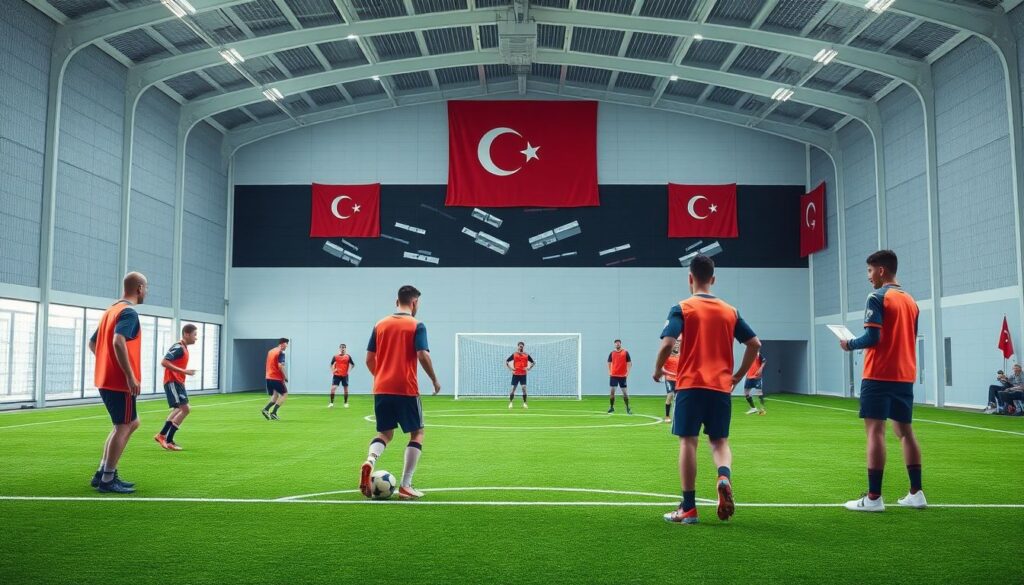
Today, the best soccer academies in Turkey are pushing something closer to a lab environment.
Long paragraph? Let’s break it:
– GPS and heart‑rate trackers to measure actual load
– Individual performance databases (“Player X struggles under high press” instead of “He’s kind of inconsistent”)
– Session plans designed backward from the first team’s system
– More collaboration between academy coaches and national youth coaches
Short version: Turkey is finally connecting science, data, and its already crazy passion for football.
Comparison: Turkey vs. Western Europe in Youth Development
Let’s stack Turkey against a “benchmark country” like Germany:
1. Infrastructure
– Germany: standardized training centers, long‑term federation planning.
– Turkey: quality varies; big Istanbul clubs resemble Europe, smaller clubs are catching up but still uneven.
2. Playing style teaching
– Germany: detailed game models from U12 onwards.
– Turkey: historically more focus on individual skill and improvisation; now moving toward structured models without killing creativity.
3. Minutes for young players
– Germany: Bundesliga mandates, economic pressure to sell young talent.
– Turkey: pressure for immediate results and foreign signings; some clubs are finally flipping the script to develop and sell.
The interesting thing: Turkey’s “late” modernization might be a secret weapon. It can mix European structure with the street‑football creativity that hasn’t fully disappeared.
Galatasaray: Turning Trials into a Long-Term Science Experiment
The phrase Galatasaray football academy trials usually conjures images of huge lines of kids outside Florya. That still exists. But the process behind it is getting smarter.
Here’s how a modern trial day at a big club like Galatasaray tends to work (simplified, but realistic):
1. Players get tested for speed, agility, and coordination.
2. Small‑sided games (3v3, 4v4) are filmed.
3. Coaches rate not just goals and dribbles, but scanning, decision-making, reaction.
4. Data is logged; players who show potential but aren’t ready are marked for follow‑up scouting rather than “sorry, goodbye forever.”
So the “trial” is no longer a one‑shot audition. It’s the start of a dataset.
Diagram: How a Trial Turns Into a Development Plan
Text‑based process:
Trial → Basic tests (speed, agility)
→ Game footage analysis
→ Coach + analyst meeting
→ “Accept / monitor / reject” decision
→ If “accept” → Individual development profile created
→ Assigned coach + position plan → Seasonal evaluation
Instead of “He’s good,” the file might literally say:
– Strong: 1v1 attacking, first touch
– Needs: defensive positioning, stamina
– Plan: 2x per week extra work on defensive body orientation + aerobic capacity block
This is how an academy stops relying on talent alone and starts building international‑level players on purpose.
Fenerbahçe and the Data-Driven Sign‑Up Revolution
Search traffic for Fenerbahce youth academy registration exploded in recent years for a reason: the club made the process clearer and more digital.
Where it used to be “know someone who knows someone,” now you increasingly see:
– Online forms with age, position, previous club, short bio
– Appointment‑based screening instead of chaotic open days
– Follow‑up invitations for specific age groups and positions the academy actually needs
That might sound boring, but it’s a big cultural shift. Less “who you know,” more “what you can do” + “what the club is trying to build.”
The non‑standard part? Fenerbahçe and others are starting to use multi‑club scouting networks: smaller partner clubs across Turkey send promising players into the Fenerbahçe pipeline, but stay involved. This spreads development beyond Istanbul and keeps kids playing in familiar environments longer, which is often psychologically healthier.
How to Join a Football Academy in Turkey (Without Losing Your Mind)
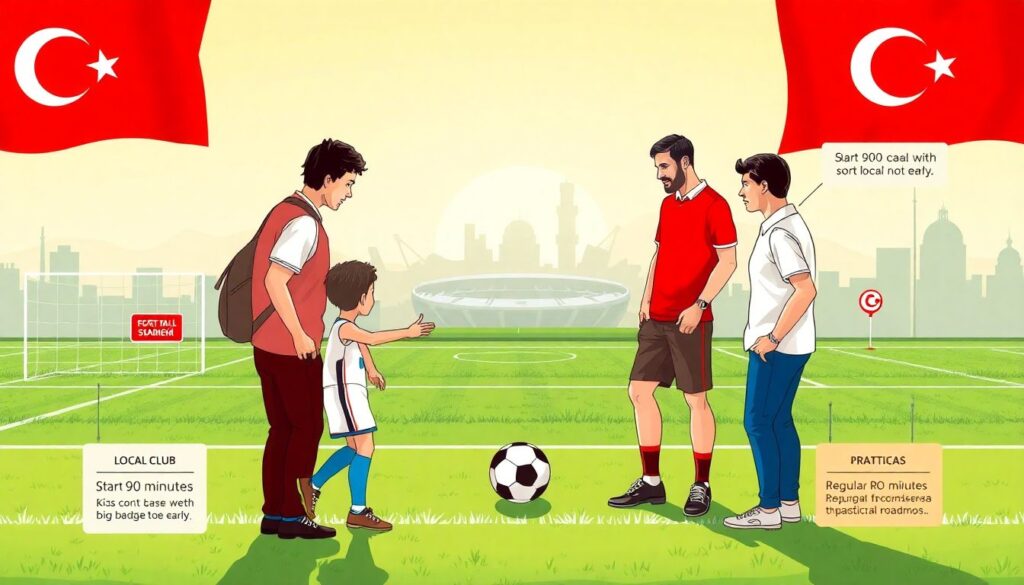
Parents and kids often ask the same question: how to join a football academy in Turkey without wasting years on the wrong steps. Here’s a compact, practical roadmap.
1. Start local, not global
Don’t chase the “big badge” too early. A well‑run local club where your kid plays 90 minutes every weekend beats sitting on the bench for a giant.
2. Aim for academy‑linked neighborhood clubs
Many big clubs have “feeder” teams. Try to get into a local team that regularly plays friendlies vs. academies or has alumni who moved up.
3. Track development, not just trophies
Keep basic stats: minutes played, positions tried, weaknesses worked on. This helps you speak the same language as academy coaches later.
4. Use official channels
Check club websites and federation announcements for legitimate trial dates and registration forms. Avoid “private agents” promising contracts for a fee.
5. Embrace patience
Late bloomers exist. A 15‑year‑old who suddenly adds 10cm and tactical awareness can pass kids who were streets ahead at 11.
This step‑by‑step approach doesn’t guarantee a career. But it massively raises the chances that, if your kid has the level, the right people actually notice.
National Team Needs: What Kind of Player Is Turkey Trying to Build?
You can judge an academy system by the type of player it produces. In earlier generations, Turkey often produced:
– Emotionally intense, technically gifted attackers and midfielders
– Defenders who relied more on last‑second heroics than positioning
– Goalkeepers with great reflexes but inconsistent decision‑making
Recent youth national teams show a shift:
– Centre‑backs who are comfortable in build‑up
– Full‑backs who can invert into midfield
– Wingers with pressing discipline, not just solo dribbling
– Midfielders trained on tempo control, not only vertical chaos
This doesn’t happen by accident. It means academies are building their sessions around the modern tactical needs of the national team, not just letting talent “self‑organize.”
Non‑Standard Solution: National Team “Modules” Inside Club Academies
One bold idea that’s already emerging informally and could be expanded:
– Select a group of U15–U17 players from different clubs.
– Once a month, gather them for a 2‑day “national team tactical camp” that runs inside a club academy facility.
– Teach specific modules: how to press in a 4‑3‑3, how to build from the back under high press, how to rotate positions in midfield triangles.
In pseudo‑diagram form:
Club routine
→ Monthly “national module”
→ Back to club with new concepts
→ Age progression
→ Youth national team call‑ups → Senior NT
The key is that these “modules” don’t replace club identity. They layer national‑team principles on top, so when players arrive at senior camp, they already share some tactical vocabulary.
Comparing Turkey’s Academies With Global Models
Let’s put Turkey next to three types of academy ecosystems:
1. Ajax/Barcelona‑style identity factories
– Clear, almost dogmatic style from U8 to first team
– Off‑field education and life skills integrated
– Turkey is moving in this direction at big clubs but hasn’t fully standardized it nationwide.
2. Premier League private‑school model
– Luxurious facilities, global scouting
– Very high competition, high dropout rates
– Turkish top academies echo this at smaller scale, but budget and league structure differ.
3. South American “pressure cooker” model
– Technical genius, hungry players, intense competition
– Less infrastructure, more chaos, but a lot of personality
– Turkey historically resembled this more: emotional stadiums, individual flair, less system.
The sweet spot for Turkey:
Borrow the structural discipline of Europe without losing the emotional intensity and spontaneity that make Turkish players unique in the first place.
Non‑Standard Solution: “Hybrid Development” Seasons Abroad
Here’s a creative twist some Turkish academies could use more:
– Loan 17–19‑year‑olds not just to lower‑league Turkish clubs, but to academically strong, tactically demanding European second divisions (Belgium, Austria, Scandinavia).
– Keep a Turkish mentor coach in touch with them weekly via video: feedback on matches, mental support, cultural bridge.
– After a season, bring them back as “imported leaders” for the domestic league and national team pool.
This creates players who are both culturally tied to Turkey and tactically shaped by different European schools. For a national team, that diversity of education is gold.
Under the Hood: What Training Actually Looks Like
To understand how academies shape future internationals, it helps to peek at a “normal” U15 training week at a top academy.
Long version (simplified):
– Day 1 – Recovery + video: 20 minutes of game clips, then light rondos and mobility.
– Day 2 – Position‑specific work: centre‑backs on line management, forwards on timing of runs.
– Day 3 – Tactical day: 10v10 with constraints (e.g., must build through full‑backs).
– Day 4 – High‑intensity drills: repeated sprints with the ball, pressing triggers.
– Match day – Clear individual goals (“break the line with a pass at least three times,” “win 70% aerial duels”).
– Post‑match – Short debrief, GPS load analysis, individual notes.
Short version: it’s not just “training” anymore; it’s controlled experimentation on future national‑team players.
Non‑Standard Solution: “Decision-Making Labs” for Players
A clever idea some progressive coaches in Turkey are flirting with:
– Use simple VR or video‑based tools where players watch match situations and must choose an action in 2–3 seconds.
– Score not only the outcome, but also the speed of decision and the tendency to scan before deciding.
– Incorporate this into weekly training for midfielders and defenders.
Text‑diagram for the cycle:
Game → Extract sequences
→ Player VR/video session
→ Decision metrics logged
→ Training task designed to fix weak patterns
→ Next game, re‑check behavior
This directly targets what separates a good Super Lig player from a reliable international: making the right choice, fast, under stress.
Psychology and Culture: The Unseen Backbone
Technical and tactical work is only half the story. Turkey’s football culture is emotional: media pressure, fan expectations, derby intensity. Many talented youngsters collapse under it.
Top academies are starting to add:
– Psychologists who work on resilience, identity beyond football, and coping with failure
– Media‑simulation sessions (fake interviews, hostile questions, social‑media noise scenarios)
– Workshops on money management and family pressures
The aim is simple: when a 20‑year‑old makes his debut for the national team, he should feel pressure, but not shock. The environment should feel like a more intense version of what he’s already rehearsed.
Non‑Standard Solution: “Pressure Scripts” for Big Games
Instead of vague advice like “stay calm,” some coaches are experimenting with detailed scripts players can literally rehearse:
– “If you misplace your first pass, do X, Y, Z.”
– “If the crowd whistles you, repeat this breathing pattern and focus cue.”
– “If you’re subbed early, follow this post‑game routine instead of doom‑scrolling.”
These scripts might sound over‑engineered, but elite sport is full of routines. Turkey skews emotional; giving young players simple mental algorithms can stabilize them in derbies and national‑team qualifiers.
The Next Decade: What Could Turn Turkey into a Youth Powerhouse?
To wrap it into something practical, here are three leverage points that could make Turkey one of Europe’s best talent factories:
1. Standardize minimum academy standards across all pro clubs
Not everyone needs a luxury complex, but everyone needs: qualified coaches, basic sports science, data tracking, proper pitches.
2. Reward clubs financially for minutes given to homegrown U23 players
Link part of TV money or federation bonuses to real, on‑pitch opportunities for academy graduates. Suddenly, the pathway to the national team clears up.
3. Create a national “open data pool” for youth performances
Age‑group statistics, physical metrics, and match clips from across the country stored in a central database. National‑team scouts and club academies could track progress together instead of starting from scratch every time.
If Turkey leans into these non‑standard, system‑level tweaks—on top of what clubs like Galatasaray and Fenerbahçe are already building—then the phrase “future stars of the national team” stops being wishful thinking. It becomes a production line, built on passion, science, and just enough chaos to keep Turkish football uniquely alive.