
The evolution of sports science in Turkish football
If you look back to the 1990s, Turkish clubs relied mostly on the “eye test” and coach intuition. GPS vests, force plates and video-based tracking were rare even in big Istanbul teams, and periodisation meant “run more in pre‑season”. The turning point came after Euro 2008 and especially after the 2010 World Cup analytics boom: foreign fitness coaches brought lactate testing, structured load management and basic data dashboards. By the mid‑2010s, top‑flight sides started hiring dedicated sport scientists, and today, in 2026, sports science and analytics units are embedded in most Süper Lig clubs, often reporting directly to the sporting director rather than just the head coach.
From instincts to integrated data ecosystems
Modern Turkish clubs are shifting from isolated spreadsheets to integrated data pipelines. GPS units feed external load metrics, optical tracking provides positional data, while wellness apps capture subjective readiness. Instead of a single analyst with a laptop, elite setups run small multidisciplinary teams: biomechanists, conditioning coaches, and data engineers. The aim is to fuse biomechanical profiles, tactical behaviour and medical history into one decision-support layer. This transition is uneven: Istanbul giants invest in cloud‑based platforms and custom APIs, while many 1. Lig sides still juggle Excel files and basic match stats, creating a visible performance gap on the pitch.
Different methodological approaches in Turkish clubs
One group of clubs follows a “performance-first” approach, centring everything on physical outputs: high-intensity distance, repeated sprint bouts, and neuromuscular fatigue indices. Another cluster leans toward “game-model analytics”, prioritising expected threat, pitch control and pressing efficiency. A third, more recent camp tries to blend both, using individual physical profiles to personalise tactical roles. In practice, this means some teams still overemphasise Yo‑Yo test scores, while others bench physically strong players whose on‑ball decision data is weak. The most advanced Turkish setups treat every player as a dynamic system where tactical, physical and psychological data are co-modelled.
Technology stacks and performance tracking systems
Hardware choices differ widely. Top clubs deploy hybrid football performance tracking systems for turkish teams, combining GPS/IMU sensors with optical tracking to avoid blind spots in crowded penalty areas. Mid-table sides often rent league-wide camera data and add affordable wearables in training only. On the software side, we see a mix of off‑the‑shelf performance analytics solutions for turkish football clubs and custom-built Python/R scripts. Where budgets are limited, analysts routinely scrape event data, build lightweight xG models, and visualise outputs in open‑source BI tools, trading automation for flexibility but still creating tangible competitive advantages.
Pros and cons of current sports tech adoption

Technology undoubtedly upgrades decision quality, but it also introduces fragility. On the plus side, continuous load monitoring reduces soft-tissue injuries, and microcycle optimisation improves peak freshness for European fixtures. Detailed positional data helps refine pressing triggers and rest defence. However, high-cost systems demand robust IT support and careful data governance. Overfitting to proprietary metrics can lock clubs into vendors, while staff who lack statistical literacy may misinterpret noise as signal. In some academies, coaches complain that screen time is replacing pitch-side observation, leading to “analysis paralysis” instead of clear, actionable coaching cues.
Human capital: jobs, salaries and education pathways
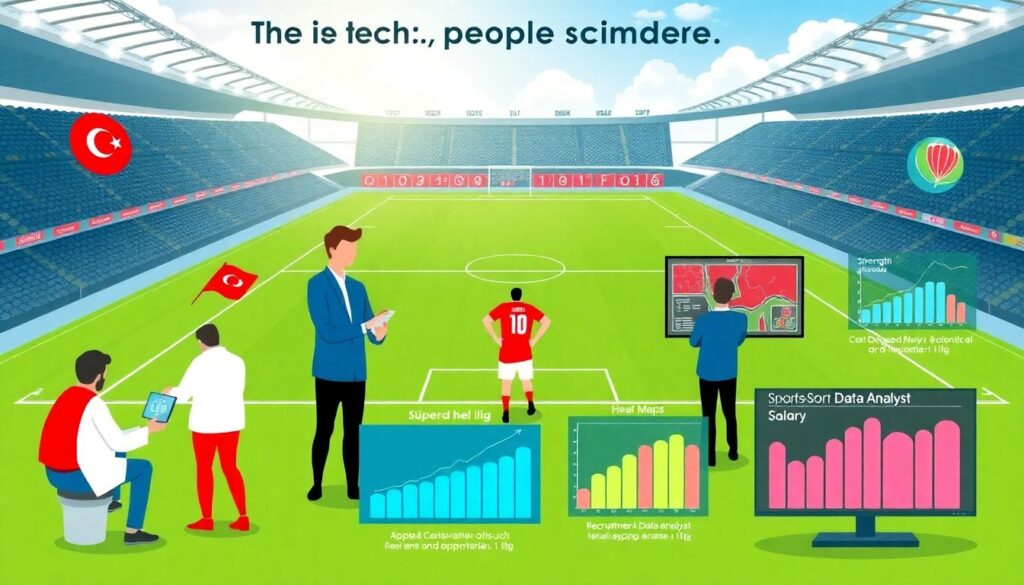
Behind the tech, people matter most. The growth of sports science jobs in turkey football clubs has been steady, especially in Süper Lig and ambitious 1. Lig sides. Roles range from applied sport scientist and strength & conditioning coach to recruitment data analyst. The sports data analyst salary in turkey still trails Western Europe but has risen as clubs compete for bilingual staff who can read international literature and code. Parallel to this, universities have expanded sports science degree programs in turkey, often adding modules in statistics, machine learning and athlete monitoring, yet many graduates still require in‑club mentoring to be truly applied.
- Entry roles: GPS data operator, video tagging assistant, academy fitness coach.
- Mid-level: first-team sport scientist, opposition analyst, recruitment modeler.
- Senior: head of performance, director of analytics, high-performance manager.
How clubs should choose tools and methods
Choosing the right solution is less about brand names and more about aligning with the club’s game model and budget. A high-pressing team needs accurate high-speed running metrics and robust recovery monitoring; a possession-oriented side might prioritise spatial control and progressive passing analytics. Key criteria include interoperability with existing databases, data ownership clauses, and the learning curve for coaches. Instead of buying the “shiniest” system, Turkish clubs benefit from staged implementation: start with clear KPIs, validate that new metrics actually correlate with performance outcomes, then scale. This avoids wasting funds on underutilised dashboards.
- Define non‑negotiable questions (injury risk, recruitment profile, tactical identity).
- Audit current data quality and staff competencies before adding new layers.
- Insist on staff training and support in Turkish, not just English documentation.
Current trends and 2026 outlook in Turkish sports science
By 2026, three trends stand out. First, predictive modelling for injury risk and match load is maturing; several Süper Lig clubs run internal algorithms that flag “red‑zone” players 48 hours before kick‑off. Second, cross‑department data integration is accelerating: medical, scouting and academy units now share unified athlete IDs. Third, remote and women’s football monitoring are growing fast, pulling in new performance analytics solutions for turkish football clubs. As these trends solidify, competitive differentiation will hinge less on owning data and more on turning it into fast, clear decisions that coaches actually trust on match day.
Balancing analytics with culture and coaching intuition
Numbers alone don’t win derbies in Kadıköy or Trabzon. The most effective Turkish clubs are learning to translate complex metrics into simple coaching language: “shorten the recovery gap,” “press five metres higher,” “rotate full-backs earlier.” Analysts who respect local football culture, communicate in plain terms and accept coach intuition as another data stream tend to have more impact. If the next decade continues this trajectory, Turkey will not just import sports science ideas; it will export its own applied models, shaped by high-intensity football, passionate environments and a uniquely demanding competition calendar.