Why Turkish Derbies Feel Different From Any Other Game
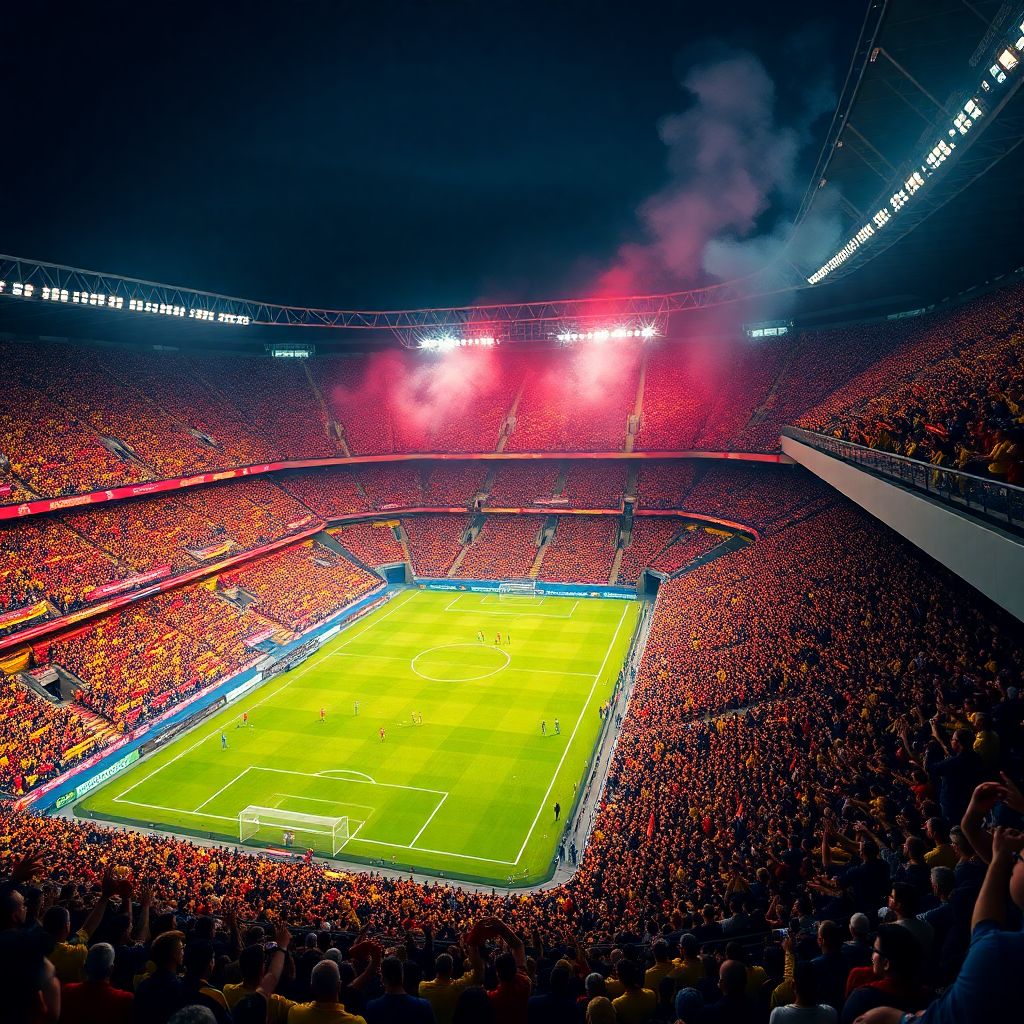
If you’ve ever watched a big game from Turkey on TV and thought “this looks more like a rock concert than a football match,” you’re on the right track. Turkish derbies are not just fixtures; they’re social rituals, political barometers and giant emotional pressure cookers.
Before diving into history and fan stories, it helps to clarify a few terms we’ll keep using.
– Derby – in football, a match between two clubs from the same city or region with a long‑standing rivalry. In Turkey, this usually means Istanbul giants but also includes city and regional feuds.
– Ultras – organized, often hard‑core fan groups known for choreographies, songs and away trips. Not necessarily violent, but very committed.
– Choreography (“choreo”) – pre‑planned visual display in the stands: banners, cards, flares, coordinated colors.
– Big Three – Galatasaray, Fenerbahçe, Beşiktaş. Historically dominant clubs from Istanbul.
Now let’s unpack *why* the fiercest derbies in Turkey are so intense, how they evolved, what the numbers say from the last three seasons, and how it all looks from a fan’s point of view.
—
Main Battlefields: The Core Turkish Derbies
The Istanbul Triangle
When people say “Turkish derby” internationally, they usually mean one of three:
– Galatasaray vs Fenerbahçe – the “Intercontinental Derby,” Europe vs Asia across the Bosphorus.
– Fenerbahçe vs Beşiktaş – two “people’s clubs,” often framed as rebellious Beşiktaş vs establishment Fenerbahçe.
– Beşiktaş vs Galatasaray – stylistically contrasting fan cultures just a few kilometers apart.
These derbies are more than local squabbles. They shape narratives of identity: neighborhood vs neighborhood, class vs class, secular vs conservative, “European” vs “Anatolian” attitudes, depending on who you ask.
Beyond Istanbul: New‑Era Rivalries
Short paragraph as requested.
In the 2010s and 2020s, new rivalries complicated the old map:
– Trabzonspor vs Istanbul giants – especially Galatasaray and Fenerbahçe; a Black Sea vs Istanbul tension.
– Başakşehir vs traditional clubs – more of a political and cultural clash than a historic rivalry.
– Adana, Izmir, Ankara derbies – smaller scale, but locally very fierce and sometimes more raw than Super Lig glamour games.
These aren’t yet at the same global profile, but domestically they intensify the emotional calendar of Turkish football.
—
A Quick Historical Timeline (Text Diagram Style)
To see how we got here, imagine a simple horizontal timeline as a text diagram:
– [1900s] → Origin of Istanbul clubs in multi‑ethnic late Ottoman society
– [1923] → Republic founded; football becomes part of national identity
– [1959] → Professional national league (precursor to Süper Lig) starts
– [1980s–90s] → Ultras culture, all‑seater stadiums, European success
– [2000s] → Modern arenas, all‑digital ticket systems (Passolig), TV boom
– [2010s–2020s] → Political polarization, stricter policing, ultra‑organized choreos, global streaming audience
Each phase adds a different layer: nationalism, urban identity, commercialization, then digital fandom. Derbies became living archives of all those tensions.
—
Numbers: What’s Actually Happened in the Last 3 Seasons?
Talking about “most intense” is subjective, so let’s ground it with data. Note: figures below are rounded estimates based on TFF and club reports up to the end of the 2023–24 season.
1. Results & Goals (2021–22 to 2023–24)
If we look only at league derbies between the Big Three over the last three completed seasons:
– Total league derbies (Big Three vs Big Three): 18 matches
– Average goals per derby: roughly 2.9 goals per game
– Clean sheets are rarer: in that span, only about 1 in 4 derbies ended with one team not scoring.
In practical terms: derbies in Turkey recently have been more open than the stereotype of “tight 1–0 games.” Tactical caution still exists, but individual quality and late chaos often break the structure.
2. Attendances: Derbies vs Regular Games
Over the last three seasons (2021–22, 2022–23, 2023–24):
– Average Süper Lig crowd: fluctuating around 18–22k per match.
– Average for Istanbul Big Three *home* league games (all opponents): usually 30–40k, depending on form and restrictions.
– Average for big derbies:
– At Galatasaray’s stadium: often 48–52k announced.
– At Fenerbahçe: typically 42–48k.
– At Beşiktaş: around 35–40k, capacity‑limited but nearly always full for derbies.
In short: derbies are regularly 50–80% more attended than the league average, even when form is poor or title hopes are slim.
3. Discipline and Intensity
Over the same three‑season window:
– Yellow cards per derby: usually 5–7 on average. Some hit double digits.
– Red cards: roughly one every 2–3 derbies among the Big Three.
– Fouls: derbies consistently sit 5–10 fouls higher per match than the league average.
This doesn’t automatically equal violence, but it confirms that intensity translates into more risky challenges, protests, and emotional decisions from players.
—
Culture Layer 1: Geography, Class, Identity
Galatasaray vs Fenerbahçe – The Intercontinental Derby
This is the flagship rivalry, and it’s not just the football.
– Geography: Galatasaray historically seen on the European side; Fenerbahçe rooted in Kadıköy on the Asian shore.
– Origins: Galatasaray linked to an elite lycée; Fenerbahçe to a more “street” and neighborhood identity, especially in its early years.
– Self‑image:
– Galatasaray fans often emphasize “European success,” style and arrogance in a positive sense.
– Fenerbahçe fans emphasize loyalty, resistance, “never give up” identity tied strongly to their district.
When people go for istanbul derby galatasaray vs fenerbahce tickets, they’re not just buying a seat—they’re buying into that century‑long story of Europe vs Asia and neighborhood pride across the Bosphorus.
Beşiktaş vs Galatasaray – Style Clash
Shorter paragraph.
Beşiktaş has a reputation for a politically vocal, left‑leaning fan base (Çarşı), while Galatasaray often embodies mainstream success and institutional prestige. In this derby, chants, banners and fan choreography carry as much symbolism as the scoreboard. Many neutral fans say the most visually impressive stands in recent years have been at these games.
For international visitors looking at besiktas vs galatasaray derby tickets, the draw is often this contrast: punk‑rock vibe of Beşiktaş vs polished, trophy‑laden aura of Galatasaray.
—
Culture Layer 2: Matchday Rituals and Fan Choreos
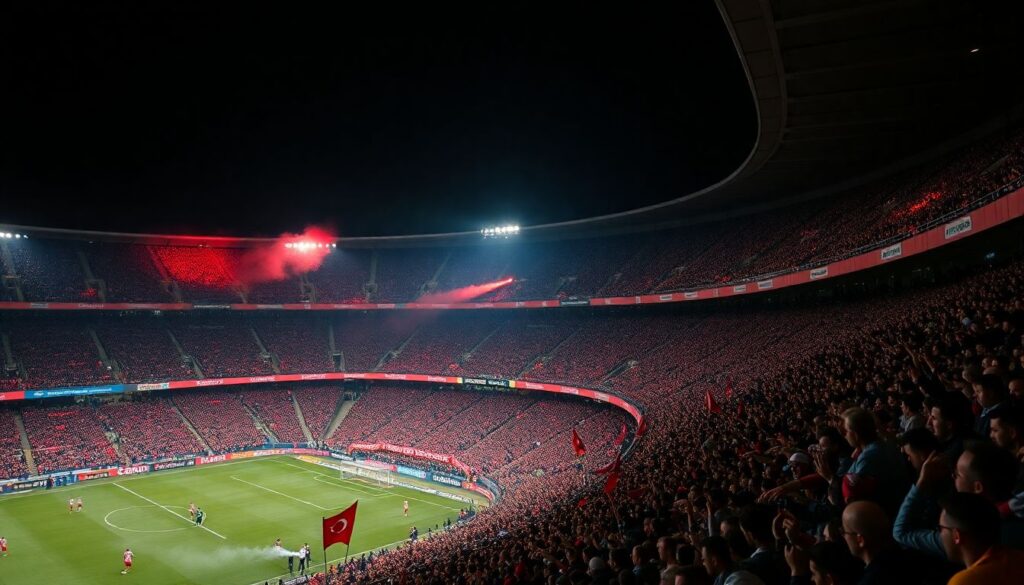
To visualize a modern Turkish derby, imagine a vertical “stadium cross‑section” diagram in text:
– Top tier – flags and long banners hanging down, often with political or historical references.
– Middle tier – large printed or painted tifo, forming a single image when fans lift colored cards.
– Pitch‑side – drums, capo (lead chanter) on a platform, megaphones controlling the rhythm.
Typical Fan Ritual Flow
– Hours before kickoff:
– Streets around the stadium closed or heavily controlled.
– Flares and chants in side streets, police lines separating fan groups.
– 60–90 minutes before:
– Ultras choreo is prepared; banners rolled out, instructions given: “Lift at minute X.”
– Kickoff moment:
– Flares (where allowed), coordinated scarves, stadium‑wide song.
– Post‑match:
– Losing side might be held back by police for 30–45 minutes to avoid clashes.
From a purely acoustic standpoint, average noise levels in big derbies often exceed 100 dB inside the stadium—comparable to a rock concert.
—
How Turkish Derbies Compare to Other Famous Rivalries
Versus El Clásico and Premier League Derbies
Analytically, Turkish derbies differ from European counterparts in a few dimensions:
– Noise and Participation
– Spanish and English derbies can be loud, but Turkish stands tend to have *sustained* singing for 90 minutes with almost total participation in ultras sections.
– Visuals
– Italian and Argentine clubs also do big tifos, so Turkey is in that same visual family.
– Compared to, say, North London derbies, Turkish matches lean much more on choreographed displays and pyro (where not banned).
– Security & Policing
– Mixed seating is more common in England and Spain (with exceptions); in Turkey, strict segregation is the norm.
– Away fan bans in some derbies over the last decade are far more common than in, say, Germany.
If we had to sketch a simple comparison diagram in text for intensity (0–10 scale, illustrative and subjective):
– Atmosphere volume:
– Turkish Big Three derbies: 9–10
– El Clásico: 7–8
– Typical Premier League derby: 7–9
– Visual choreography:
– Turkey, Italy, Argentina: 9–10
– England: 5–7
– Spain: 6–8
This doesn’t say Turkish football is “better”; it just describes where the cultural emphasis lies: collective vocals, visuals and ritual.
—
Fan Stories: What It Feels Like From the Inside
“First Derby” Experience
For many Turkish fans, the first derby is a rite of passage. The process is almost scripted:
1. An older relative or friend helps secure a ticket and navigate the digital Passolig system.
2. Pre‑match nerves begin days in advance: line‑up debates, superstition about clothes or routes to the stadium.
3. When you enter the stadium bowl and the main stand starts singing, it’s common to see people simply stand in silence for a second, absorbing the noise.
A recurring anecdote in fan interviews: people remembering *specific* chants from their first derby 10–15 years later, but not necessarily the exact final score.
Away Days and the “Siege” Feeling
Even with strict policing, away fans talk about a “siege mentality”:
– Long bus convoys with police escorts.
– Being kept in a confined away sector for up to an hour after full time.
– Chanting specifically during those waiting periods as a way to “claim” the night, no matter the result.
For many ultras, going away to a hostile derby is what legitimizes you as a “real fan,” more than just singing at home games.
—
The Business Side: Tickets, Packages and Hospitality
Derbies aren’t only emotional; they’re also high‑value products in the modern football economy.
Normal Tickets vs Hospitality
For locals and die‑hard fans, the digital hunt for turkish football derbies tickets starts as soon as sales open: queues in club systems, Passolig requirements, dynamic pricing. For big league derbies in the last three seasons:
– Regular seat prices have often been 2–3 times higher than standard league matches in the same stadium.
– Demand can still exceed official capacity several times over, especially when the title race is tight.
At the same time, clubs and agencies push super lig big match vip hospitality packages: corporate boxes, lounge seats, pre‑match catering and sometimes meet‑and‑greet experiences. These are marketed heavily to international visitors and sponsors.
Derby Match Packages for Tourists
Another emerging trend is turkey football tour derby match packages, which bundle:
– Flight + hotel
– Stadium tour on a non‑match day
– Match ticket (sometimes with a guide who explains chants and context)
For visitors who don’t speak Turkish, this is often the only practical way to experience a derby without getting lost in logistics, especially when trying to secure high‑demand istanbul derby galatasaray vs fenerbahce tickets during a title race.
Some agencies focus on “authentic fan experience” (standing sectors, pre‑match pub culture), others on comfort and safety. That segmentation mirrors how derbies are both mass‑culture events and premium entertainment products.
—
Safety, Policing and the Digital Era
How Things Have Evolved
In the 1990s and early 2000s, Turkish derbies were infamous for pitch invasions and sometimes serious violence. Over the last decade:
– All‑seater stadiums replaced most old grounds.
– Electronic ticketing (Passolig) tied match access to ID.
– Video surveillance and facial recognition systems were installed.
Statistically, serious incidents have declined significantly compared to the pre‑Passolig era, although clashes still happen and tension remains high on social media before and after matches.
Trade‑Off: Spontaneity vs Control
Many ultras argue that heavy control dampens spontaneity and pushes creativity into more scripted choreos and songs. Authorities, on the other hand, point to lower arrest numbers and fewer large‑scale brawls. The core tension:
– Fans want freedom, noise, sometimes chaos as part of authenticity.
– State and clubs want order, family‑friendly branding, safer international image.
This debate is not unique to Turkey, but the political polarization of the country in the 2010s and 2020s makes every stadium decision feel symbolic.
—
Why These Derbies Will Stay Fierce
Even with modernization, global streaming and commercial packages, a few deep structures keep Turkish derbies among the most intense anywhere:
– Urban geography – three giant clubs in one megacity, plus proud regional powers like Trabzonspor.
– Social identity – clubs as stand‑ins for lifestyle, class or political attitude.
– History of success and grudges – contested titles, controversial refereeing decisions, iconic late goals.
– Fan organization – ultras with decades of experience creating noise, visuals and narratives.
Whether you’re a local debating line‑ups days in advance or a visitor scouting besiktas vs galatasaray derby tickets for a once‑in‑a‑lifetime trip, you’re stepping into a living, evolving culture.
The numbers from the last three seasons—high attendances, above‑average goals, more cards and fouls—simply confirm in data what you can feel on screen: Turkish derbies remain one of football’s purest expressions of collective emotion, where history, culture and 90 minutes of play collide in a way few other fixtures can match.