
Data and analytics in Turkish football: where are we really?
Turkish football likes to think of itself as emotional, chaotic, driven by atmosphere rather than spreadsheets. Yet quietly, in back offices from Istanbul to Anatolia, laptops are opening, dashboards are loading, and coaches are asking analysts: “Show me why we keep conceding from the left half-space.” The question is not whether data is entering the game in Turkey – it clearly is – but whether local clubs are actually catching up with global trends or still treating analytics as a side project for the “IT guys.”
—
What we actually mean by “data and analytics” in football
H2 – Key definitions without the buzzwords
When people say “data” in football, they often mix three different layers without noticing:
1. Event data – every on-ball action: passes, shots, tackles, pressures, carries, interceptions. It’s typically time‑stamped and tagged with location on the pitch.
2. Tracking data – the position of every player and the ball several times per second, collected via camera or GPS. This lets you measure pressing intensity, distances covered, compactness of lines, and off-ball movements.
3. Contextual data – match state (scoreline, minute), tactical shape, player roles, even weather, travel fatigue or referee tendencies.
Football analytics then sit on top of these layers. At the most basic level, you have descriptive stats: “we took 15 shots.” More advanced levels include expected goals models, pitch control, sequence analysis and machine‑learning models that predict how likely a possession is to end in a shot or turnover.
When a club says it is using *football data analytics services for clubs*, that can mean anything from getting a PDF report once a week to running a full workflow where coaches, scouts and the board use shared dashboards in daily decisions. The gap between those two realities is exactly where many Turkish clubs currently sit.
—
H2 – How Turkish clubs are actually using data today
H3 – The reality behind the marketing talk
If you talk privately with analysts in Süper Lig and 1. Lig, a pattern appears. Most clubs:
– Have one to three analysts juggling opposition scouting, internal reporting and sometimes even social media graphics.
– Rely heavily on off-the-shelf platforms for video and stats with limited custom work.
– Struggle to connect insights to decision-making, because final calls are often driven by short‑term pressure, politics or purely subjective opinions.
This does not mean there is no progress. The bigger Istanbul clubs now use tracking data, integrate GPS from training and routinely share video clips combined with numbers in pre‑match meetings. Yet in many mid‑table or smaller clubs, analysts are still exporting Excel sheets at 2 a.m. before matchday, with little time for deeper work like tactical pattern detection or long‑term player development analysis.
[Diagram: A simple funnel with three layers – “Raw data” at the top, “Basic reports” in the middle, “Decisions & actions” at the bottom. A red note on the side says: “Most Turkish clubs are stuck between raw data and basic reports, with leakage before decisions.”]
The bottleneck is not just budget; it is workflow. Turkish football tends to see analytics as a *department* rather than a *language* every department speaks. This is exactly where global leaders have pulled away.
—
Comparing Turkish reality with global front‑runners
H2 – What top European clubs are doing differently
H3 – Integrated decision pipelines vs. isolated reports
Look at how elite European clubs use data, and a few common elements stand out:
– Shared data infrastructure – One central database feeds scouting, medical, performance, and finance. Everyone pulls from the same source of truth.
– Specialized roles – Data engineers, data scientists, tactical analysts, recruitment analysts, physical performance analysts. Not one overstretched “video guy.”
– Feedback loops – After a match or transfer, the club evaluates whether its models and assumptions were accurate and refines them.
In Turkish clubs, you often see the opposite:
– Multiple disconnected tools with duplicated or inconsistent numbers.
– Video scouts doing manual tagging with minimal automation.
– Very weak feedback loops; if a transfer fails, the narrative is “he didn’t adapt,” not “our data model overrated his pressing intensity and underweighted his injury history.”
This is where sports data analytics companies in Turkey have started stepping in, trying to build middle‑layer solutions that unify feeds, clean data and offer semi‑custom dashboards tailored to the local context. But adoption still depends on whether the head coach and sporting director are willing to change their habits.
—
H2 – Technology stack: software, people and culture
H3 – Tools are easy, integration is hard
Most Turkish clubs now have some form of football performance analysis software for clubs, offering video clipping, basic stats (xG, passes, duels) and set‑piece tagging. These tools are not fundamentally different from what a mid‑tier Bundesliga or Ligue 1 club uses. The differentiator is how deeply they’re embedded into everyday work:
– Are players getting personalized video + data capsules on their phones before and after games?
– Do assistant coaches come to meetings with questions *for* the analyst, or do they come to *be shown* some generic charts?
– Does the sporting director track recruitment KPIs in the same platform used by the analysts, or do they rely on agents and gut feeling?
A Premier League club might combine event data, tracking data and wage/age information into a “squad management” dashboard updated daily. Many Turkish clubs are still at the stage of using PDFs and WhatsApp voice messages. So the software exists, but the cultural layer – trust in numbers, shared vocabulary, repeatable processes – lags behind.
[Diagram: Three concentric circles labeled “Tools” (outer), “Processes” (middle), “Culture” (core). An arrow points inward with note: “Most money spent on tools; real leverage is in culture.”]
—
Scouting and recruitment: where data can move the needle fastest
H2 – Why recruitment is the low‑hanging fruit
Transfer mistakes are extremely costly in Turkey, especially for clubs balancing UEFA FFP requirements and volatile revenue streams. That’s precisely where analytics can provide near‑term impact. Using data to filter and prioritize targets, then handing a short list to scouts, is more realistic than trying to build a full Moneyball club overnight.
Instead of watching hundreds of full matches, analysts can:
– Use models to identify players who excel in the exact defensive or offensive actions a coach needs.
– Filter by age, salary range, contract length and injury risk.
– Compare a player’s profile not just within his league, but against reference distributions from top European competitions.
This is also where clubs might literally buy football statistics and data for teams from external providers: multi‑league datasets, historical performance, and advanced metrics like xThreat or packing rates. The essential question becomes: are Turkish clubs using these datasets only to confirm what they’ve already decided, or are they letting the data drive which players they even look at in the first place?
[Diagram: A flow chart – “Universe of players” → “Data filters (age, style, metrics)” → “Shortlist” → “Live/Video scouting” → “Medical & character checks” → “Transfer decision.” A red X marks the path where scouting jumps straight from “Universe of players” to “Transfer decision” without data.]
—
H3 – Non‑standard ideas for smarter recruitment in Turkey
Instead of merely copying Western models, Turkish clubs could lean into local specifics and constraints:
1. Regional micro‑market models
Build custom indices for Balkan, African and South American leagues that historically feed into Turkey. Rather than generic “top 5 league benchmarks,” design models tuned to the style, refereeing and physical demands of those source leagues.
2. Loan and resale engine
Mid‑budget clubs could design a data‑driven strategy around undervalued U21 or U23 players, with explicit resale targets and time windows. Data would track development, minutes, and market signals from interest abroad.
3. Agent network mapping
Use graph analysis to map which agents consistently place players that adapt well to Turkey (tactically and culturally) and which clusters correlate with high failure rates. This is rarely talked about, but extremely practical.
Such ideas do not require cutting‑edge machine learning; they require discipline, data hygiene and a willingness to question traditional pipelines.
—
Tactical and performance analysis: beyond “we ran more”
H2 – From running stats to tactical intent
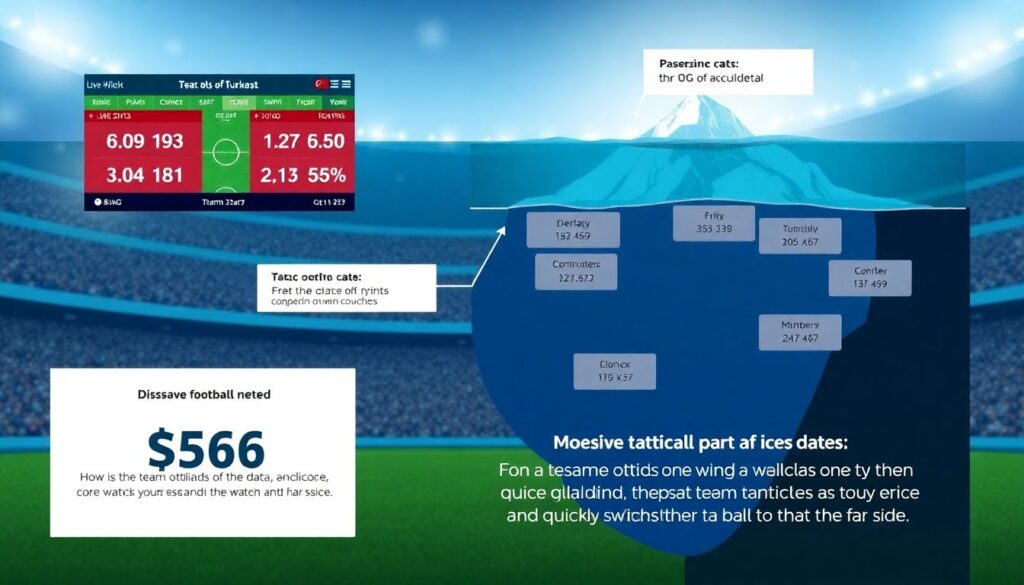
Many match broadcasts in Turkey now show distance covered, “sprints,” and maybe team xG. That is the visible tip of the analytics iceberg. Coaches need far more nuanced information to design training and in‑game adjustments:
– How often do we successfully overload a wing and switch to the far side?
– Which pressing triggers actually lead to high‑value regains, not just chaotic duels?
– Are our centre-backs forced to defend large spaces more than the league average?
Data from tracking systems can feed metrics like line height, team compactness, and time to regain possession. However, those numbers become actionable only when they’re matched with video and tactical language. The best analysts in Turkish clubs are already building “tactical playbooks” where each pattern – say, a 3rd‑man combination on the right – is linked to expected value (xG or xThreat gained per execution).
[Diagram: Two columns – left: “Raw metrics (distance, sprints, xG)”; right: “Tactical questions (Who, where, when, what if?)”. Arrows show raw metrics feeding into tactical questions through a box labeled “Context + video.”]
—
H3 – Unconventional performance ideas tailored to Turkey
Instead of only copying what Premier League clubs do, Turkish teams could exploit local structural elements:
1. Atmosphere‑sensitive tactics
Use data to quantify how pressing intensity and decision-making change in home vs away games, especially in high‑noise stadiums. Design specific “emotional overdrive” game plans for the first 15 minutes at home, then deliberately shift to lower‑variance tactics later.
2. Referee‑aware risk management
Turkish refereeing styles and foul thresholds differ from other leagues. Build models that adjust tackle intensity, pressing duels and tactical fouling behavior based on the appointed referee’s historical data.
3. Micro‑climate conditioning
Track performance drops in specific away venues (altitude, humidity, pitch quality). Instead of generic fitness targets, tune training loads and recovery to the exact stadium profile you will visit in the next two weeks.
These are not gimmicks; they are ways to turn local chaos into a structured advantage.
—
Building internal analytics capacity: consulting, then ownership
H2 – The role of external partners – and the trap
Many clubs start their “data journey” by hiring vendors or consultants. This is not inherently bad. High‑quality sports analytics consulting for professional football clubs can accelerate setup, help choose tools, and create early dashboards that demonstrate value. The trap is thinking that outsourcing equals transformation.
If a club treats analytics like stadium catering – something you buy as a service and forget – it will forever stay behind. The clubs that catch up with global trends will be the ones that:
– Use consulting as a bootstrap phase, not a permanent crutch.
– Gradually hire at least one data‑literate decision maker in the sporting structure (e.g., a sporting director who can read and challenge models).
– Insist that every external report ends with explicit decisions and follow‑up questions, not just pretty heat maps.
[Diagram: Timeline from Year 0 to Year 3. Year 0–1: “Vendor‑led” (consultants + basic tools). Year 1–2: “Hybrid” (consultants + internal analyst). Year 2–3: “Club‑owned” (internal team, consultants only for specialized projects).]
—
H3 – A practical 5‑step roadmap for a mid‑tier Turkish club
A mid‑table Süper Lig club with limited resources doesn’t need to mimic Manchester City. It needs a clear, realistic plan. One possible path:
1. Define two or three priority questions
For example: “How do we reduce goals conceded from crosses?” and “How do we buy younger players with resale value?” Narrow scope forces depth.
2. Audit current data flows
Identify what is already being collected (GPS, wellness, scouting notes, match stats) and in what format. Fix obvious gaps and inconsistencies first.
3. Centralize and standardize
Even a simple database or unified spreadsheet structure with unique player IDs and consistent metric definitions will dramatically reduce friction.
4. Build one or two flagship dashboards
One for recruitment, one for match analysis. These should be co‑designed with coaches and sporting director so they actually get used.
5. Institutionalize feedback loops
After every transfer window and every 10 games, review predictions vs outcomes. Adjust models, tweak KPIs, and capture lessons in writing.
This kind of focused, iterative approach is far more powerful than buying ten new platforms and hoping culture will magically shift.
—
Non‑standard strategic moves Turkish clubs could pioneer
H2 – Turning structural disadvantages into edges

Instead of lamenting smaller budgets or political complexity, Turkish clubs could treat their situation as a sandbox for innovation that richer leagues might be too conservative to try.
H3 – Three bolder ideas worth experimenting with
1. Transparent player development “contracts” with data clauses
Create written development plans shared with players, agents and staff, with measurable targets (minutes in specific positions, sprint metrics, involvement in certain patterns). If targets are met, specific bonuses trigger; if not, everyone sees why. Data is no longer just internal surveillance but part of a mutual commitment.
2. Open‑source collaboration among non‑rival clubs
Smaller clubs could pool resources to sponsor shared analytical R&D: for example, a joint tracking dataset for youth leagues or a shared model for injury‑risk prediction. This would lower costs and create local expertise rather than buying everything from abroad.
3. Data‑driven communication with fans
Use simplified analytics to explain tactical choices and squad planning to supporters: short videos, interactive visuals on club websites, Q&A with analysts. In the long run, this reduces irrational pressure (“why don’t we sign this big name?”) and aligns expectations with reality.
[Diagram: A triangle with vertices “Club,” “Player,” “Fans,” connected through lines labeled “Data‑based trust.” In the center: “Shared understanding of strategy.”]
—
Are Turkish clubs actually catching up?
Some clearly are. The top Istanbul sides now run setups that resemble mid‑tier European clubs from a decade ago, with growing use of tracking data and integrated recruiting processes. A few ambitious provincial clubs are quietly experimenting with youth‑focused, data‑aware strategies and creative loan agreements. On the other hand, a significant part of the ecosystem still treats data as decoration: a few numbers in TV graphics, a few charts in PowerPoint before big games, convenient when confirming existing beliefs and quietly ignored when not.
The global trend is unforgiving: decisions are becoming more measurable, and the gap between clubs that systematically learn and those that improvise widens every season. For Turkish football, catching up is less about copying the latest models from England and more about doing three simpler things relentlessly:
– Capture the right data with discipline.
– Turn it into clear, shared language among coaches, analysts and management.
– Close the loop by consistently asking: “What did we think would happen? What actually happened? What will we do differently now?”
Clubs willing to live with that level of honesty will not just catch up with global trends; they’ll be ready for whatever the next wave of football analytics brings. Those that don’t will keep searching for the next “magic transfer” while quietly losing ground to teams that prefer spreadsheets to stories.