
Turkish football is changing fast — and the most exciting part is that it’s not just about new players or flashy stadiums. It’s about numbers, patterns, and smart decisions. In other words: data.
If a few years ago “analytics” sounded like something for tech companies, today it’s the quiet engine behind smarter transfers, better match prep, and even player development in Turkey. And the clubs that embrace it early are already pulling ahead.
Let’s break down how this is happening — and what you can actually do with it, whether you’re a coach, analyst, scout, or ambitious fan looking to get into the game.
—
The New Reality: Why Data Matters in Turkish Football
Ten years ago, the typical analysis in Turkey might have been: “We played badly in the first half, better in the second,” plus a couple of video clips. Today, the conversation is shifting to pressing efficiency, expected goals, pass networks, and load management.
Clubs are starting to treat data as a competitive weapon, not a luxury. Training grounds in Istanbul, Trabzon, and Konya are quietly filling up with GPS vests, tracking cameras, and dashboards. And the clever ones are connecting it all to decisions on recruitment and match prep.
What really changed?
– Data got cheaper and easier to collect.
– Software became more user-friendly.
– A new generation of coaches and analysts grew up with numbers and video, not just intuition.
Now, data analytics in football recruitment is no longer “nice to have.” It’s becoming the minimum if you want to avoid expensive transfer mistakes and build a balanced squad.
—
From Gut Feel to Smart Deals: Data in Recruitment
Let’s be honest: Turkish clubs have wasted a lot of money over the years. Big-name transfers that don’t fit the system, players who aren’t physically ready for the league, or talents who never get minutes because no one checked how they’d adapt.
Analytics doesn’t remove risk, but it seriously reduces blind spots.
How Clubs Are Actually Using Data in Transfers
Here’s how smarter setups now approach recruitment:
– First, they define game model and key roles (e.g., “inverted full-back who can progress the ball under pressure”).
– Then they use a football scouting and analytics platform to filter players around the world who fit those criteria.
– They cross-check video, data, injury history, and personality references.
– Finally, they compare internal players vs external options before committing money.
Instead of chasing highlight reels, they’re chasing repeatable performance.
One analyst from a Super Lig club summed it up like this:
“Before, we’d watch 5–6 games of a player and trust our feelings. Now we start with 50–60 games of data, then use video to understand the ‘why’. Emotions still matter — but they come last, not first.”
—
Inspiring Transfer Stories from Turkish Football
We’re starting to see concrete examples:
– A mid-table Super Lig club shifted to a data-led transfer strategy and focused on undervalued players from Scandinavia and Eastern Europe. Over two windows, their net spend decreased, but their league position climbed and resale values improved.
– A 1. Lig club used metrics like high-intensity runs, pressing involvement, and smart passes to identify an attacking midfielder from a smaller Balkan league. Within two seasons, he became a key player and was sold abroad for a multiple of the original fee.
These aren’t Hollywood stories — they’re quiet, methodical wins built on data and discipline.
—
Match Preparation: Turning Numbers into Game Plans
Recruitment is only half the story. The real fun starts when data shapes how you prepare for each match.
Turkish analysts are increasingly blending football performance analysis software with old-school tactical work:
– They tag every action: pressures, runs, passes, duels.
– They identify opponent patterns: where they lose the ball, how they build up, who gets tired after 70 minutes.
– They feed this into short, clear messages for coaches and players.
No one wants players bombarded with charts. The art is transforming complex data into one or two key ideas per line:
“Force their right CB to build, he’s sloppy under pressure.”
“Full-back #3 stops tracking at the back post after the 75th minute.”
That’s data, hidden inside simple football language.
—
Case Study: How Data Helped Win a Big Match

A Cup game example from a top Turkish club:
– The analyst team noticed the opponent conceded most of their shots after losing the ball in central areas.
– They also saw that their left-back consistently struggled with diagonal balls behind his back.
– The game plan: force central turnovers and target that space with quick switches.
Training was then built around these patterns.
Result: two goals came exactly from those situations. Officially, it was “great pressing and good preparation.” Unofficially, it was a victory for analytics and well-applied insight.
—
What the Experts Recommend: Building a Data Culture
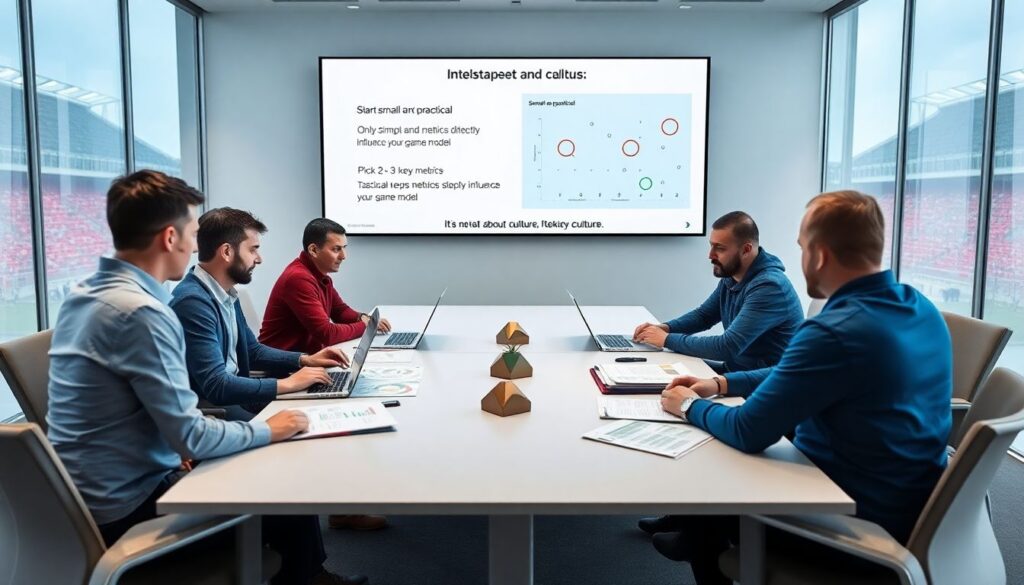
If you talk to analysts and performance experts working with Turkish clubs, you’ll hear the same message:
“It’s not about tools. It’s about culture.”
Here are a few consistent recommendations from practitioners:
– Start small and practical.
– Pick 2–3 key metrics that directly influence your game model.
– Educate coaches and players so they understand, not fear, the numbers.
One performance coach put it bluntly:
“If the head coach doesn’t buy into analytics, nothing happens. The best software in the world is useless if your reports stay in someone’s email.”
—
Step-by-Step: How a Turkish Club Can Level Up in Analytics
You don’t need a Premier League budget. You need clear priorities and consistency.
1. Define your questions
– Which problems are killing you right now? Injuries? Set-piece goals conceded? Poor finishing?
– Start tracking those areas first. Don’t measure everything.
2. Choose the right tools
– Begin with simple video tools and gradually plug in more advanced solutions.
– Use sports data analytics services for football clubs that can scale with your budget and league level.
3. Build internal communication
– Agree on shared definitions (what is a “chance”? what counts as a “press”?) so everyone speaks the same language.
– Present insights as stories and solutions, not as abstract spreadsheets.
4. Review, adapt, repeat
– After each block of games, sit down: What did the data predict correctly? Where were we wrong?
– Adjust your models and metrics instead of clinging to them.
—
Where to Get the Data: The Turkish Market Opportunity
Not so long ago, smaller Turkish clubs had a simple problem: good data was either too expensive or totally inaccessible. That’s changing.
Providers now offer tailored data feeds, regional pricing, and flexible packages. If you’re ready to buy football analytics data Turkey, you can actually choose between different levels of detail — from basic event data (shots, passes, duels) to advanced tracking (player positions, sprint speeds, pressing zones).
For many clubs, the smartest move is to:
– Start with a reliable data provider,
– Combine it with one main football scouting and analytics platform,
– And plug this into your internal video workflows.
You don’t have to build everything from scratch. You just have to connect the pieces intelligently.
—
Tools of the Trade: Making Sense of the Numbers
The best setups don’t have 20 tools. They have a tight, integrated stack.
Analysts typically combine:
– GPS tracking for physical data (distance, sprints, high-intensity runs)
– Event data for technical and tactical actions (passes, shots, duels, pressures)
– Video platforms to contextualize the numbers
– Customized dashboards to present key metrics in one glance
Some football performance analysis software now even automates common workflows:
automatic tagging of events, instant xG calculations, pass maps, and shot maps you can share with coaches in minutes.
The goal isn’t “more data.” It’s “faster, clearer decisions.”
—
Practical Tips for Using Software Effectively
To avoid drowning in tools:
– Choose software that fits your staff’s actual skills. If your analyst is alone, don’t buy something that requires a whole data science team.
– Prioritize platforms that integrate video, data, and reporting in one place.
– Standardize templates so each pre-match report looks familiar: coaches shouldn’t waste time figuring out what they’re looking at.
—
How Individuals Can Get Into Football Analytics
You don’t have to work at a big club to start learning. Many of the best analysts in Europe began as volunteers, bloggers, or students plotting xG graphs in their spare time.
If you want to enter this world, your path in Turkey is clearer than ever.
Skills You Should Start Building
Here’s a focused roadmap:
– Football understanding
– Study tactics: positional play, pressing systems, transition principles.
– Watch games with a notebook: what patterns repeat? Where does space open?
– Analytical thinking
– Basic statistics: averages, distributions, correlation, regression basics.
– Comfort with spreadsheets and simple coding (Python/R is a plus, not mandatory at first).
– Communication
– Learn to explain complex ideas in plain football language.
– Practice writing short, sharp reports: “3 key insights, 2 risks, 1 recommendation.”
—
Learning Resources to Get You Started
You don’t need a master’s degree; you need consistency and curiosity.
Useful directions:
– Online courses and webinars on sports analytics and football tactics
– Public analytics blogs and newsletters focusing on data, xG, and tactical trends
– Open data projects and community competitions that let you test your ideas
– Video platforms where analysts break down matches using data overlays
Look especially for providers who offer starter access to data or demos of a football scouting and analytics platform. Getting hands-on experience, even with small sample data, is far more valuable than just reading theory.
—
Common Mistakes Turkish Clubs (and Analysts) Should Avoid
As data grows, so do the traps.
Here are a few patterns experts repeatedly warn about:
– Overcomplicating things
– 50-page reports that nobody reads help no one. Focus on impact, not volume.
– Chasing trends without context
– Copying a European giant’s metrics without adjusting to the Turkish league’s rhythm, schedule, and physical profile is a mistake.
– Ignoring the human side
– Data cannot see family issues, language barriers, or mental health. Use numbers to ask better questions, not to label people.
– Working in silos
– If the analyst, fitness coach, and head coach never sit in the same room, everything gets fragmented. Successful clubs build cross-functional teams and weekly shared reviews.
—
Why This Matters Now — And Not “Someday”
The gap between early adopters and late adopters is widening. In European competitions, Turkish clubs are facing opponents who have been building data departments for a decade. Catching up means acting quickly and smartly, not waiting for a perfect moment.
If you’re inside a club, you can:
– Start one pilot project: for example, optimize set pieces for the next 10 matches using data.
– Measure the impact, then use the results to argue for more investment.
If you’re an analyst or coach:
– Build a portfolio of your work: reports, visualizations, tactical breakdowns.
– Show how you can save money, improve performance, or reduce injury risk.
The message from experienced practitioners is consistent:
“The clubs that treat analytics as a long-term investment — not a toy or a PR trick — will dominate the next decade in Turkish football.”
—
Closing Thoughts: Turning Potential into an Edge
Turkey has everything needed for a data revolution in football: passionate fans, rich tactical history, intense competition, and a growing ecosystem of tools and services.
Now it comes down to choices:
– Will recruitment be guided by structured analysis or by last-minute impulses?
– Will match prep rely on memories and impressions, or on verified patterns?
– Will Turkish clubs use data to build resilient, scalable systems — or keep reinventing themselves every season?
Analytics won’t replace good coaching, smart scouting, or player intuition. It will amplify them.
If you’re inside the game, the question isn’t whether you should adopt data, but how fast and how smart you’re willing to do it.