
From Side Pitch to Spotlight: Why Women’s Football in Turkey Matters Now
If you look at women’s football in Turkey today, it feels like walking into a match right after half-time: the first 45 minutes were messy, but the game finally has a clear direction. Since the early 1990s the sport has moved from informal neighbourhood teams and underfunded university squads to a structured women’s football Turkey league with promotion, relegation and growing media interest. By 2026, we’re no longer asking, “Should women play?” but “How fast can this thing scale without losing its soul or leaving players behind?”
How It Started: A Short History with Long Shadows
Early pioneers and stop‑start progress
The first organized women’s teams in Turkey appeared in the late 1980s, often run by idealistic PE teachers or former male players who simply gave the women an unused training slot. The Turkish FA launched a national league in the 1990s, cancelled it, then relaunched in the 2000s. This stop‑start pattern meant generations of players never reached their peak. While Europe professionalised, Turkey relied on volunteers, municipal clubs and minimal budgets, which slowed the technical level and pushed many talented girls into other sports or early retirement.
European push and the club revolution
The turning point came when big men’s clubs realised that UEFA funding and brand reputation depended on visible women’s sections. Beşiktaş, Galatasaray, Fenerbahçe and Trabzonspor set up or revived women’s teams, quickly joining the list of best women’s football clubs in Turkey. That badge on the jersey changed everything: media finally paid attention, sponsors saw a safer bet and parents became more willing to let daughters join. However, the gap between these giants and small community clubs widened, creating a two‑speed ecosystem that still shapes the league in 2026.
Necessary “Tools”: What Real Growth Actually Needs
Infrastructure and training environments

Let’s treat the system like a toolkit. The first tool is simple but often missing: guaranteed access to quality pitches and gyms. Many squads still train on worn artificial turf at impossible hours, squeezed in after the men’s youth teams. A real upgrade means separate locker rooms, medical rooms and at least semi‑professional strength and conditioning support. Without that, talk about closing the gap to Europe is just noise, because even the most motivated player cannot compensate for chronic overuse injuries and inconsistent training loads.
Human capital: coaches, staff and role models
The second indispensable tool is competent people. Turkey has passionate coaches, but too few with modern licences and specific experience in the women’s game. A sustainable system needs more female coaches, analysts, psychologists and physios who understand gender‑specific needs like ACL risk or nutrition. Alongside that, visible role models matter: when girls can watch national team regulars on TV and then meet them at a women’s football academy Turkey in their city, ambition stops being abstract and turns into a concrete career path with stages, deadlines and realistic expectations.
Money, governance and data
The third toolset is financial and organisational. Stable central funding, transparent club budgets and multi‑year contracts are basic conditions for an actual career, not a side hobby. What’s still underused is data: match tracking, GPS, injury databases and audience analytics to understand who comes to games and why. These elements sound corporate, but they protect players, convince sponsors and help broadcasters decide when to stream Turkish women’s football matches so that casual fans actually discover them rather than stumbling over highlights by accident at midnight.
Step‑by‑Step: How the Ecosystem Can Grow
Step 1: Fix the pathway from playground to pro
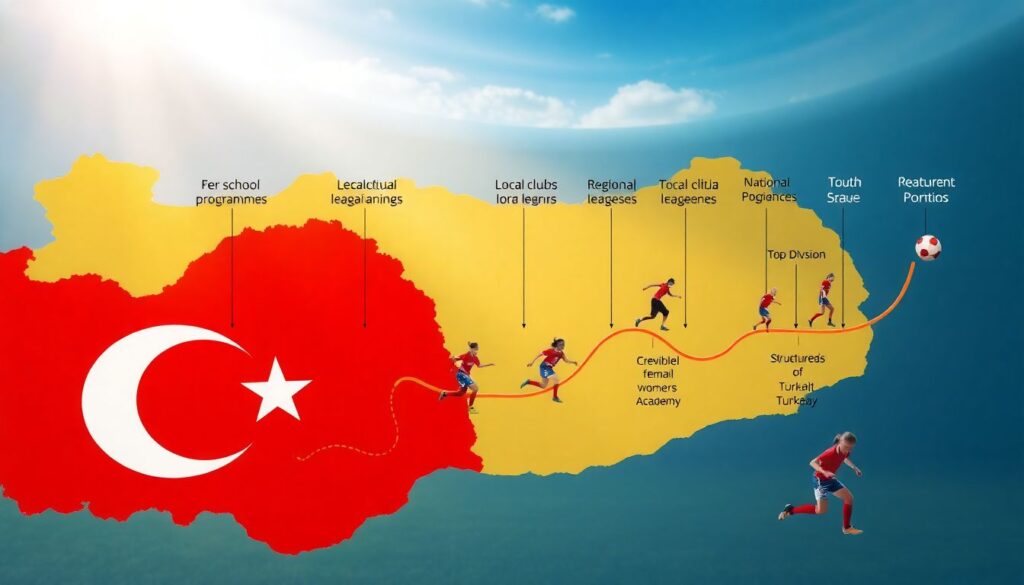
You can think of development as a pipeline that currently leaks at every joint. Step one is mapping that pathway clearly: school programmes, local clubs, regional leagues, youth national teams and then the top division. Every province should have at least one credible women’s football academy Turkey structure tied to a club, not just a weekend “girls’ day” event. This way, a talented 10‑year‑old in Van or Mersin can see the same ladder as a kid in Istanbul, instead of relying on chance invitations or family connections to move up.
Step 2: Professionalise the women’s football Turkey league
The second step is turning the top league into a fully professional environment, not a semi‑pro patchwork. That means minimum wage standards, mandatory medical insurance, and limits on how many players can be unpaid students. Centralising part of the TV and sponsorship income, then redistributing it, would protect smaller clubs from going bankrupt after a bad season. A tighter calendar, better refereeing standards and consistent branding also help casual viewers recognise the product, which is vital if you want broadcasters to commit to multi‑year deals instead of one‑off experiments.
Step 3: Make it easy to watch and attend
The third step is removing friction for fans. Buying Turkish women’s football teams tickets still feels old‑school in many cities, with local kiosks, cash payments and zero digital marketing. Moving sales online, syncing with club apps and using dynamic pricing for families or students would immediately lift attendances. On the media side, regular windows to stream Turkish women’s football matches on mainstream platforms—not obscure links announced one hour before kick‑off—help people build habits. Once fans know “Sunday at five, there’s a game,” viewership starts to stabilise.
Troubleshooting: Typical Obstacles and How to Tackle Them
Low visibility and media stereotypes
One recurring problem is that women’s football only hits headlines for scandals, not for tactics or player stories. The fix is less glamorous but practical: invest in club media teams who actually understand the sport. In‑depth interviews, tactical explainers and bilingual content make it easier for journalists to cover games seriously instead of relying on clichés. When editors see that content performs well, they allocate more space. Over time, this chips away at stereotypes and convinces sponsors they are backing a credible, competitive product rather than a charity project.
Player burnout and unstable careers
Another hidden issue is burnout: many players juggle university or full‑time jobs with intense travel and training. The solution is coordinated scheduling and career planning. Clubs should support flexible study programmes, create links with employers and offer offseason workshops on finances and second careers. National federation guidelines can cap weekly training plus match hours for semi‑pro squads. These steps sound bureaucratic, but they prevent the common scenario in which a key player abruptly quits at 24 because she simply cannot afford to stay in the game.
Regional inequality and cultural resistance
Growth is uneven: coastal cities move fast, some inland regions lag. Where families still hesitate to let girls play, top‑down campaigns rarely work. Instead, clubs can partner with local schools, municipalities and respected community figures to run open days and mixed‑gender football festivals. When parents see safe facilities, female coaches and clear rules on harassment and travel, resistance often softens. Linking these efforts to scholarships or education support gives football an added value beyond recreation, making it easier to argue that daughters gain opportunities rather than just another hobby.
Where the Game Stands in 2026
Competitive level and international benchmarks
By 2026, the Turkish women’s national team is still chasing Europe’s elite but the gap is narrower, especially at youth levels. Domestic clubs occasionally upset stronger rivals in UEFA competitions, showing that with better planning the ceiling is higher than many assumed a decade ago. The best women’s football clubs in Turkey now regularly sign players from Africa, Eastern Europe and even South America, raising standards in training sessions and introducing new tactical ideas. The real challenge is spreading this progress down to second‑tier teams, not just polishing the top.
Fans, culture and matchday experience
Crowds remain modest by men’s Super Lig standards, yet more diverse. You see families, groups of teenage girls and curious tourists picking up Turkish women’s football teams tickets as part of a weekend in Istanbul or Izmir. Chants are less aggressive, and stadiums feel relatively safe, which is a selling point the league doesn’t fully market yet. Supporter groups run their own social media, highlight player stories and sometimes call out clubs on late payments or poor conditions, acting as informal watchdogs and pushing the culture towards more accountability.
Future Potential: What Needs to Happen Next
Smart investment instead of blind spending
Looking ahead, the question isn’t whether women’s football will grow, but how intelligently it will be managed. Splashy short‑term budgets can create illusions of progress, then vanish with a new board. Smarter investment means long contracts for core players, youth development guarantees and incentives for clubs that field home‑grown talent. Sponsors should be nudged toward multi‑year deals tied to clear KPIs: attendance, grassroots projects, social impact. Done right, this stabilises the ecosystem and avoids the boom‑and‑bust cycles that harmed earlier generations of women’s teams in Turkey.
Integrating tech and global audiences
Finally, there is untapped potential in digital audiences. Young fans already live on phones; the league must meet them there with reliable streams, short‑form highlights and behind‑the‑scenes content. If broadcasters and clubs coordinate to stream Turkish women’s football matches with decent production, subtitles and accessible archives, international viewers will follow players they discover at tournaments or on social media. In a decade, that online presence could become as important as stadium attendance, turning Turkish women’s football into an exportable product instead of just a local curiosity.