From Chaos to Structure: Why Tactics Became Turkey’s Main Story
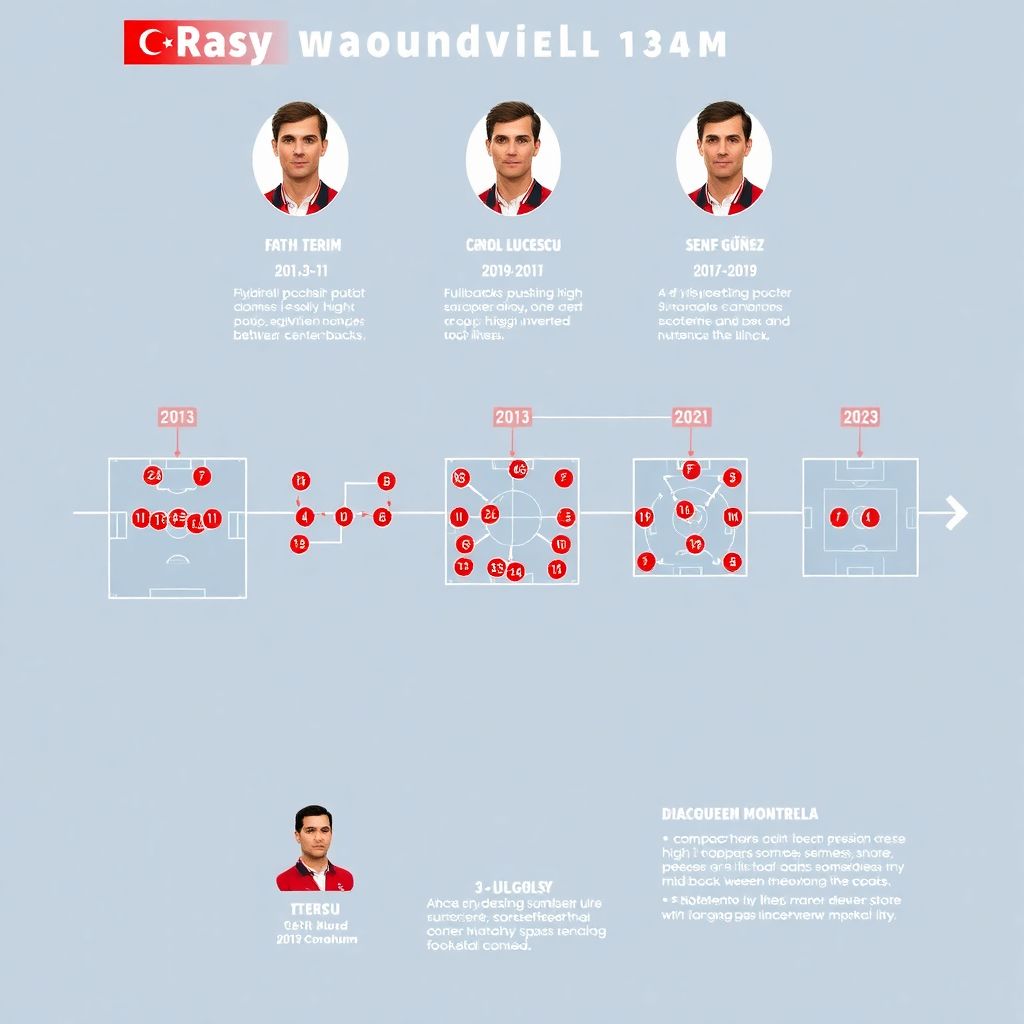
Over the last ten years the conversation around the Turkish national team quietly shifted from “Who’s our star?” to “What’s our game model?”. That’s really what any honest Turkish national football team tactics analysis is about now: the move from emotional, momentum‑driven football to something closer to a stable, repeatable system. Between Euro 2016 and the mid‑2020s Turkey cycled through several coaches, but under all that noise lay a clear tactical evolution: more attention to rest defence, structured pressing, and smarter use of a technically gifted but defensively fragile midfield. To understand where Turkey is in 2026, you have to trace how they got from Fatih Terim’s flexible 4‑2‑3‑1 to Vincenzo Montella’s compact, calculated approach.
Historical Context: From Terim’s Romanticism to a Data‑Aware Era
Legacy of the 2000s and the Euro 2008 Hangover
The emotional high of Euro 2008 created a long tactical hangover. For years, the dominant idea was that Turkish teams could rely on late comebacks, individual brilliance and crowd energy. Structure often took a back seat: the fullbacks bombed on, the double pivot was loose, and counter‑pressing was more instinct than pattern. That style produced iconic nights but also huge volatility; weak sides could drag Turkey into chaotic games and profit from disorganization. This romantic blueprint shaped expectations so strongly that every later coach had to fight not just opponents but the myth that “chaos is our identity,” delaying a more modern, controlled tactical framework.
Fatih Terim’s Last Cycle (2013–2017): Hybrid 4‑2‑3‑1
In the years leading to Euro 2016, Terim tried to blend that emotional identity with modern structure. On paper the team played a 4‑2‑3‑1, but in possession it often morphed into a 2‑3‑4‑1, with fullbacks pushing high and one pivot dropping between centre‑backs. The idea was to free creative 10s and inverted wingers between the lines. Out of possession, though, the block oscillated between aggressive pressing and passive mid‑block without clear triggers. That inconsistency became a recurring theme in the Turkey national team tactical evolution last decade: decent attacking mechanisms undermined by unstable defensive spacing and poor control of transitions, especially against well‑coached sides.
Transition Phase: Lucescu and the First Structural Corrections
Mircea Lucescu (2017–2019): Cleaning the Slate
Lucescu’s era is often remembered negatively for results, but tactically it was an important reset. He lowered the defensive line, insisted on a more compact 4‑1‑4‑1/4‑3‑3 and started phasing in a younger, more coachable generation. The priority shifted toward minimizing transition chaos: both fullbacks were rarely allowed to attack simultaneously, and one advanced midfielder was tasked with immediate counter‑pressing after loss. This made Turkey less explosive but more predictable in a good way. The main mistake many fans made in judging this phase was focusing only on creativity metrics and ignoring that defensive expected goals conceded per game was usually more stable than in previous cycles.
Common Analytical Mistakes in Reading This Period
When you look back with modern tools, there are a few traps to avoid. First, judging Lucescu’s tenure purely by possession percentage is misleading; his model encouraged controlled concessions of the ball in non‑dangerous zones. Second, shot counts without shot quality disguise how Turkey often forced opponents into low‑probability attempts. Third, highlight‑driven narratives underrate the gradual improvement in spacing between the back line and midfield. If you’re using tactical analysis services for national football teams, always ask for context: game state, opposition style and squad age profile, not just surface stats. Otherwise you mislabel a foundation‑building phase as pure regression.
The Güneş Renaissance and Its Limits
Euro 2020 Qualifiers: High‑Pressing Optimism
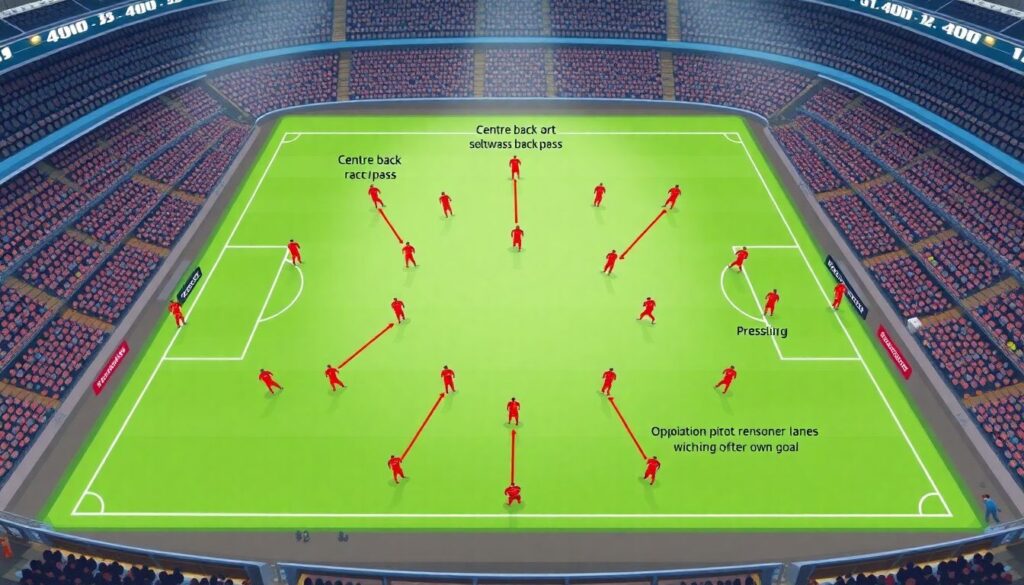
The return of Şenol Güneş around 2019 brought a more proactive identity. Turkey adopted a 4‑1‑4‑1 that tilted into a 4‑3‑3 with aggressive pressing and clear triggers: back‑pass to a centre‑back, sideways ball to fullback under pressure, or bad body orientation from the opposition pivot. The double 8s jumped high, wingers narrowed to block central lanes, and the single pivot protected the half‑spaces. This scheme produced an excellent Euro 2020 qualifying campaign and fed the idea that a young, fearless side had finally married intensity with structure. However, the pressing was energy‑heavy and depth control behind the fullbacks remained fragile, something elite opponents later exposed ruthlessly.
Euro 2020 Tournament: Lessons in Game Management
At the delayed Euro 2020, Turkey were widely tipped as dark horses but collapsed tactically. The same high block that looked brave in qualifying became a liability against better build‑up structures. Distances between lines stretched, the pivot got isolated, and fullbacks were repeatedly caught high with no proper rest defence. The key lesson: tactical systems must be scalable from qualifiers to tournament football, where opponents punish every structural gap. For analysts and beginners studying this phase, the warning is simple: don’t extrapolate from a small sample of qualifiers; model how a pressing scheme behaves against top‑tier circulation, not just mid‑level European sides.
The Kuntz Experiment: Flexibility and Role Confusion
Hybrid Structures and Role‑Based Tweaks
Stefan Kuntz brought a more opponent‑specific approach, switching between 4‑2‑3‑1, 4‑4‑2 diamond and even asymmetrical 3‑2‑5 structures in possession. The idea was to optimize roles for emerging stars: inside‑drifting wingers, a roaming 10 and a more mobile 9. Build‑up became more deliberate, with rotations between the pivot and fullbacks to escape pressure. But constant tweaks also created role confusion, especially for defenders unused to back‑three rest defence principles. The team sometimes looked like a collection of clever micro‑plans without a stable macro game model. This phase underlines a broader point: flexibility without strong automatisms quickly turns into tactical noise.
Newbie Tips: How to Study This Flexible Period
For beginners diving into an online course football tactics analysis Turkish team oriented, this era is a great case study in how and when flexibility backfires. To read it correctly, follow a simple three‑step checklist: 1) Identify the base shape in the first build‑up phase; 2) Track how that shape morphs when the ball enters the final third; 3) Observe rest‑defence positioning the moment possession is lost. Many fans stop at step two and judge only attacking fluency. If you skip step three, you’ll miss why Turkey conceded so many high‑value counters: beautiful positional play in front, but fragile occupation of central corridors behind the ball.
Montella and the Modernisation Push
Compact 4‑3‑3 and Controlled Aggression
Vincenzo Montella’s arrival marked the most coherent tactical project of the decade. He leaned into a compact 4‑3‑3 that often resembled a 4‑4‑2 without the ball, with one winger tucking next to the striker. The key shift was risk management: fewer rushed attacks, more emphasis on third‑man combinations and underlapping fullbacks instead of constant overlaps. The midfield triangle balanced creativity and control; one 8 had license to join the front line, while the other stayed closer to the pivot to secure rest defence. Montella’s Turkey tried to win territory in waves, not in constant chaos, finally aligning on‑ball ambition with off‑ball stability.
Data, Scouting and the New Backroom Culture
Another under‑the‑radar evolution was behind the scenes. The federation invested more in video analysis, physical data tracking and opposition scouting, moving closer to European best practice. Instead of relying mostly on coach intuition, staff began integrating metrics like field tilt, PPDA and packing rates to inform game plans. For anyone searching for the best books on modern football tactics Turkey‑focused analysts recommend, you’ll notice a strong overlap with the concepts increasingly visible in Montella’s setups: structured pressing, rest‑defence geometry, and rational occupation of half‑spaces. The cultural shift wasn’t just tactical; it was about normalizing evidence‑based decision‑making at national‑team level.
Step‑by‑Step: How to Analyse Turkey’s Tactical Evolution
A Simple Workflow for Amateur Analysts
If you want to do your own Turkish national football team tactics analysis, use a stepwise workflow. 1) Start with formations on paper and note in‑possession and out‑of‑possession shapes separately. 2) Map pressing triggers and pressing heights over 10–15 minute segments to see if intensity is sustainable. 3) Evaluate rest defence: how many players stay behind the ball during attacks, and where they stand. 4) Study chance creation patterns: cutbacks, crosses, through balls, or set‑pieces. 5) Finally, overlay player profiles to judge role suitability. This structured approach stops you from overreacting to single moments and keeps you focused on repeatable patterns.
Frequent Errors and How to Avoid Them
There are recurring mistakes even semi‑experienced analysts make with the Turkish side. One is confusing individual errors with systemic flaws; a single missed duel doesn’t necessarily mean the structure is bad. Another is ignoring opponent context: a low block that looks “negative” might be optimal versus a superior midfield. Also, be wary of highlight reels that emphasize spectacular long shots while hiding the lack of high‑quality chances. If you’re using external tactical analysis services for national football teams, cross‑check their visualisations with full‑match footage. Metrics without video can mislead you on spacing, communication and real‑time decision‑making under pressure.
Practical Advice for Beginners Studying Turkey’s Tactics
What to Focus on First
For newcomers, the tactical landscape can feel overwhelming. Simplify by focusing on three core aspects: defensive line height, spacing between midfield and defence, and the role of the pivots. Once you can read these consistently, add layers like pressing traps and build‑up patterns. A helpful trick is to watch games twice: first at normal speed, then at 1.25x focusing only on Turkey’s shape when they lose the ball. Pause just after turnovers; that frozen frame reveals discipline levels better than any stat. Over time you’ll start seeing the through‑line connecting Terim’s hybrid 4‑2‑3‑1, Güneş’s pressing and Montella’s compact control.
Resources and Learning Path
To deepen your understanding, mix theory with practice. Read general tactical literature, then immediately apply concepts to Turkey matches from different eras; contrast qualifiers with tournament games. Many modern platforms now bundle an online course football tactics analysis Turkish team modules with interactive clips, which helps you link buzzwords like “rest‑defence” or “half‑space overload” to concrete examples. Keep a simple notebook: one page per match, with sections for shapes, pressing, transitions and set‑pieces. This low‑tech habit prevents passive watching and accelerates pattern recognition, so you internalize how the national team’s tactical identity has gradually matured over the last decade.