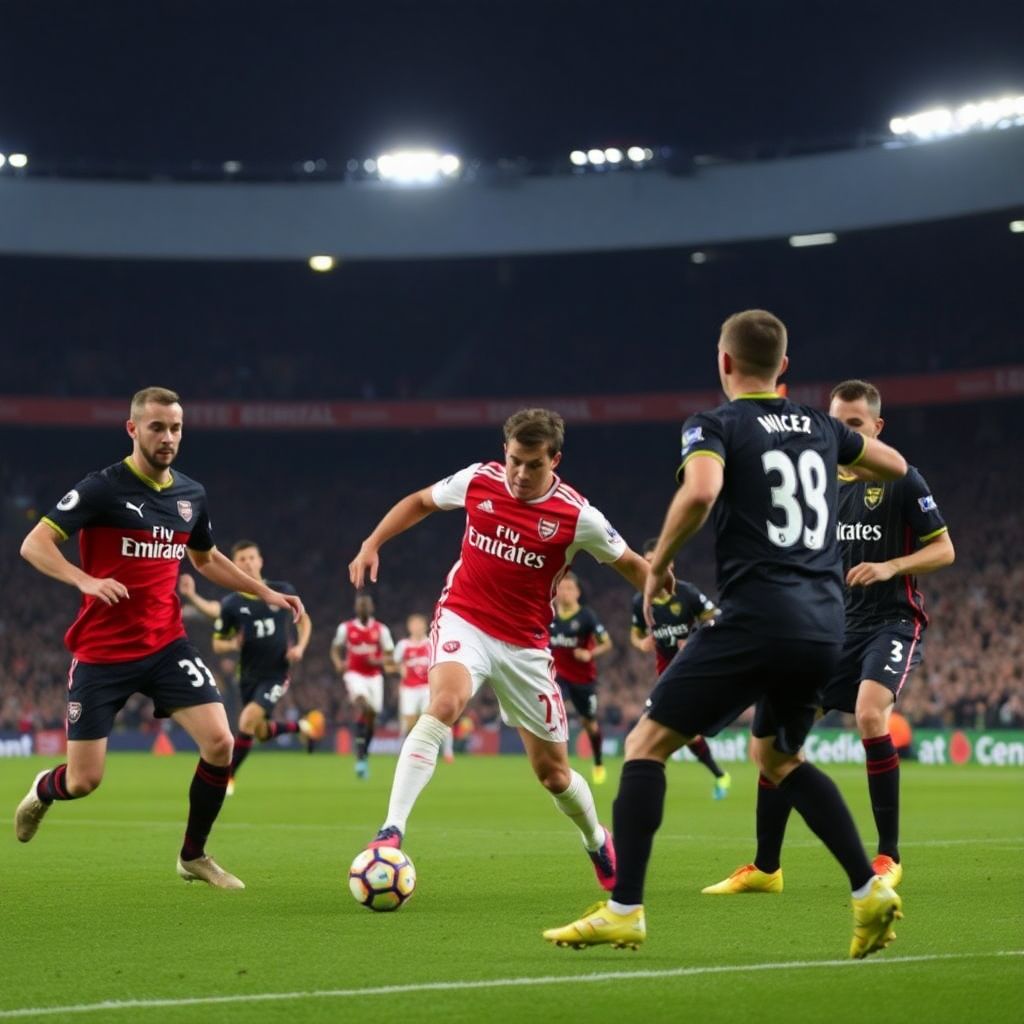
“Rice Is Not Playing in Midfield,” Says Graeme Souness
Graeme Souness has delivered a strong assessment of Arsenal and England midfielder Declan Rice, arguing that the player does not operate like a complete central midfielder and often drops too deep during build-up play.
Rice joined Arsenal from West Ham United in the summer of 2023 in a deal worth £100 million. Since arriving in north London, he has become one of the most important figures in Mikel Arteta’s team. His defensive reliability, physical strength and ability to cover large areas of the pitch have made him a regular starter in both Premier League and Champions League matches.
However, Souness believes Rice’s role is not as influential as it should be for a player of his status and price tag. Speaking on Piers Morgan’s programme, the former Liverpool captain and ex-Galatasaray manager questioned how often Rice actually takes responsibility in the centre of midfield.
“How often do you see him as the last man with the ball?” Souness asked. “When the team is building from the back, he becomes the deepest player. He moves between the two centre-backs or drops alongside a centre-back and a full-back. Most of the time, he is not really playing in midfield.”
According to Souness, dropping deep allows Rice to receive possession without facing immediate pressure, but it also limits his ability to control the tempo and advance the team. He described this approach as an old-fashioned method of avoiding difficult situations rather than taking command of the match.
The former Scotland international acknowledged Rice’s defensive qualities. He considers the Arsenal player one of England’s best defensive midfielders, particularly because of his awareness, positioning and ability to identify danger before it develops.
“He senses danger very well,” Souness said. “But he is always positioned there. If that is where he wants to play, then perhaps he is closer to being a centre-back than a midfield player.”
Souness also criticised Rice’s contribution when Arsenal have possession. He argued that the midfielder frequently carries the ball forward before making a safe sideways pass instead of attempting to break lines or create attacking momentum.
“I see him running 30 metres with the ball and then passing sideways,” he explained. “He strikes the ball well and opens his body properly. There is nothing unpleasant about him as a player, but he is not a complete midfielder.”
The criticism is particularly notable because Rice has been praised by many analysts for developing his attacking game since moving to Arsenal. At West Ham, he was primarily associated with defensive work and ball recovery. At Arsenal, he has occasionally played in a more advanced role, especially on the left side of midfield, where his passing range and late runs into the penalty area have produced important moments.
Souness, however, appears to believe that Rice’s overall influence remains restricted by his conservative positioning. In his view, a top-level central midfielder must do more than protect the defence and recycle possession. Such a player should also demand the ball under pressure, dictate the rhythm, progress play through the middle and help the team maintain control when opponents increase the intensity.
The Scottish pundit also connected Rice’s performance to England’s defeat by Argentina in a World Cup semi-final. England had taken a 1-0 lead but subsequently retreated too deeply, allowing Argentina to regain control of the contest.
Souness attributed part of the problem to Rice and Elliot Anderson, claiming that the pair failed to keep England’s midfield functioning effectively.
“I put that down to Declan Rice and Elliot Anderson,” he said. “They could not make the team play through midfield. They dropped back and stayed alongside the defensive line.”
This argument highlights the difference between defensive positioning and genuine midfield control. A defensive midfielder can protect the back four, interrupt attacks and win second balls, but the role also requires the player to provide an outlet during difficult phases of possession. If the midfielder consistently hides between the defenders, the team may become easier to press and lose its connection with the attack.
Rice’s supporters would counter that his deep positioning is often a tactical instruction rather than a personal limitation. Arsenal frequently use a structured build-up system in which one midfielder drops between or beside the centre-backs to create numerical superiority against the opposing press. This movement can allow the full-backs to advance and give the team a safer route out from defence.
His physical qualities also make him valuable in transitions. Rice can cover significant distances, challenge opponents without unnecessary fouls and recover possession after turnovers. These strengths are especially important for a team that commits many players forward and must react quickly when an attack breaks down.
At the same time, the criticism raises a legitimate question about balance. When Rice plays too far from the forwards, Arsenal may lack a midfielder capable of receiving the ball between the lines. This can force the team to rely heavily on wide combinations, crosses or individual actions from its attacking players.
The debate is therefore less about whether Rice is a good footballer and more about how he should be used. His defensive instincts are among the strongest in the Premier League, but his next step may be to become more demanding in possession. That would mean receiving the ball while marked, turning under pressure, attempting more progressive passes and taking greater responsibility for setting the pace of the game.
Arsenal’s tactical system also places considerable responsibility on its midfielders. The player operating at the base must protect the defence while contributing to the first phase of construction. The more advanced midfielder, meanwhile, must support attacks and arrive in dangerous areas. Rice has shown that he can perform both tasks, although not always with the consistency expected from a £100 million signing.
For England, the issue is similarly important. The national team has often struggled to maintain control against elite opponents after taking the lead. If the midfield retreats too close to the defence, the forwards become isolated and the opposition gains territory. Rice’s ability to remain available in central areas could help England avoid that pattern.
Ultimately, Souness’s comments represent a demanding interpretation of the central midfield role. Rice remains a key player for Arsenal and England, but his critics want to see greater authority with the ball. Defensive intelligence may have established his reputation; the ability to control matches could determine whether he becomes regarded as a truly complete midfielder.