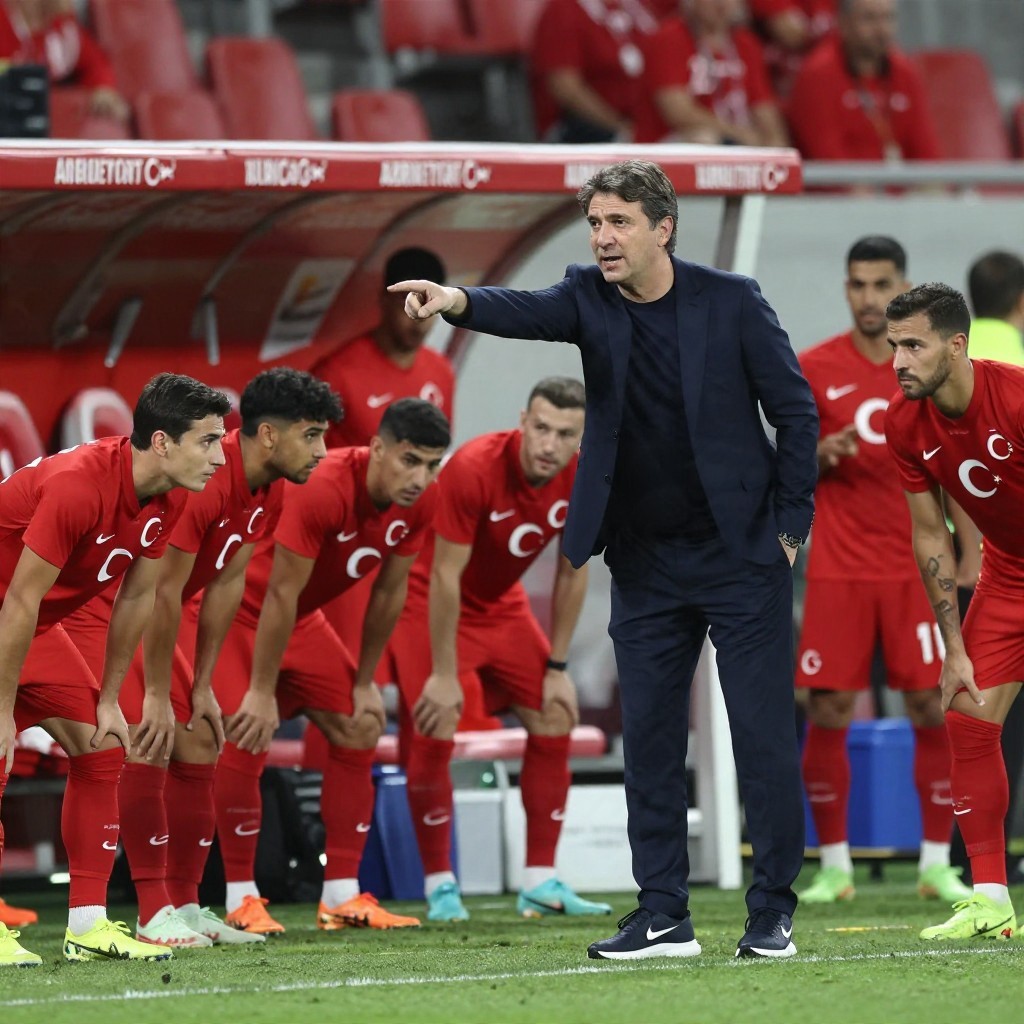
Turkish coaches abroad bring a set of adaptable coaching ideas rather than one fixed national system: competitive intensity, tactical flexibility, emotional connection with players, and attention to match momentum. Their value depends on how well they translate these principles to a club’s squad, league and culture; Turkish football tactics and coaching style are not a guarantee of results.
What Turkish Coaches Bring to Football Abroad
- A flexible approach to game plans, shaped around opponents and available players.
- Strong emphasis on competitive focus and responding to changes in match momentum.
- Practical ways to connect tactical instructions with player motivation and team cohesion.
- Ideas that can be adapted abroad without copying the conditions of Turkish football.
What Defines the Turkish Coaching Approach
There is no single Turkish coaching doctrine. Coaches from Turkey develop different methods through their education, playing experience, clubs and professional influences. The phrase “Turkish coaching approach” is best understood as a broad description of tendencies that some coaches may share, not a rule that applies to every coach.
In practice, a coach may combine careful tactical preparation with an emphasis on intensity, collective responsibility and emotional engagement. The balance varies: one coach may prioritise possession and structured build-up, while another may focus on transitions, pressing or defensive organisation.
For Turkish football coaches abroad, the central task is translation. They must explain their ideas in terms players understand and reshape them around local competition, club resources and squad strengths.
How Turkish Football Shaped Its Coaches’ Tactical Ideas
Coaching ideas develop through interaction with players, opponents and club expectations. A coach’s tactical choices may reflect the demands of competitive matches, the need to manage changing game states and experience working with varied squad profiles. These influences do not produce one system, but can shape a practical, responsive approach.
- Start with the match problem. Identify whether the team needs to control possession, protect space, press higher or attack quickly after regaining the ball.
- Match the plan to the squad. Select roles and responsibilities based on players’ actual strengths rather than forcing a preferred formation.
- Prepare for changing momentum. Set clear responses for conceding, taking the lead or facing an opponent who changes shape.
- Connect tactics with motivation. Make each player’s contribution explicit, so intensity supports the plan rather than replacing it.
- Adjust during the game. Use substitutions, role changes or a different pressing height to address what the match is revealing.
Which Principles Travel Well Across Leagues
Some ideas transfer readily because they concern communication and decision-making rather than a specific league’s pace, refereeing patterns or physical demands. These mini-scenarios show how a club might apply them:
- A club building from the back: Keep the principle of coordinated movement, but adapt the build-up pattern to defenders’ passing range and opponents’ pressing habits.
- A team defending a lead: Define when to press and when to protect space. The exact defensive block should reflect the players’ strengths and the competition’s demands.
- A squad with several young players: Pair clear tactical roles with frequent, specific feedback so that intensity does not become rushed decision-making.
- A side facing a physically demanding schedule: Retain collective discipline while adjusting pressing triggers and training load to suit recovery and squad depth.
These examples illustrate why Turkish football managers overseas need to transfer principles, not copy a ready-made formation or training routine. A method that works in one league may need substantial adjustment elsewhere.
Adapting Turkish Football Philosophy to Local Squads
Potential advantages
- Flexible planning can help a coach respond to different opponents and available player profiles.
- Clear collective responsibilities can connect individual effort to the team’s tactical plan.
- Attention to match momentum can give players practical cues for changing phases of play.
Constraints to account for
- Players may interpret intensity, direct feedback or tactical instructions differently across club cultures.
- A preferred style may not fit the squad’s technical qualities, depth or time available for training.
- League-specific demands can make a familiar pressing, transition or possession pattern less effective.
Successful adaptation begins with observation: assess the squad, learn how the club communicates and identify which habits players can execute consistently. Then introduce changes in manageable steps.
How Clubs Can Put These Ideas into Practice
Clubs should assess Turkish coaches in international football by how they diagnose and teach the game, not by assumptions about nationality. Common implementation errors include:
- Treating nationality as a tactical system. Ask the coach to explain the intended principles and match plans instead of expecting a stereotyped style.
- Copying a formation without its supporting behaviours. Define pressing cues, cover, spacing and transition responsibilities alongside the shape.
- Demanding instant cultural fit. Give the coach and players a clear process for communication, feedback and resolving misunderstandings.
- Changing too many habits at once. Prioritise a small number of observable behaviours, review them and build from there.
- Confusing emotion with performance. Motivation matters, but it must be connected to sound decisions, role clarity and repeatable execution.
For example, a club appointing a coach who favours aggressive pressing can first agree on triggers-such as a backward pass or a receiver facing their own goal-then practise the nearest players’ roles and the rest of the team’s cover. The club can review whether those actions are executed reliably before raising the press or expanding the plan.
Measuring the Impact of Turkish Coaches Abroad
A useful mini-case is a club that wants to press more effectively. The coach defines the triggers, assigns supporting roles and reviews match footage with players. The club then checks whether the team presses together, protects space behind the press and creates useful recoveries. If one part repeatedly fails, the staff adjust the plan rather than judging success by formation or reputation alone.
Evaluation should combine tactical execution, player understanding and match outcomes. Results matter, but a short run of results cannot by itself show whether a coaching idea has transferred successfully.
Questions About Turkish Coaching Beyond Turkey
Is there one Turkish football coaching philosophy?
No. Coaches from Turkey have different backgrounds and methods. The label describes a broad context, not a uniform doctrine.
What tactical ideas can Turkish coaches bring abroad?
They may bring flexible match planning, attention to game momentum and clear collective responsibilities. The specific ideas depend on the coach and must fit the squad.
Do Turkish coaches always favour attacking football?
No. A coach’s approach may be possession-focused, transition-oriented, defensively cautious or mixed. Opponents, players and club objectives shape the plan.
How should a club assess a Turkish coach?
Assess how the coach analyses the squad, explains tactical roles and adapts to the competition. Avoid using nationality as a substitute for reviewing methods and fit.
Which coaching principles are easiest to transfer between leagues?
Clear communication, role definition and structured responses to match situations can transfer well. Their execution still needs to reflect local players and league demands.
How can players adapt to a coach arriving from Turkey?
Players can clarify role expectations, learn the coach’s tactical cues and give specific feedback about what works in training and matches. Shared understanding helps turn new ideas into consistent habits.