World Cup 2026: FIFA Bans Vuvuzelas and Other Noisy Devices from Stadiums
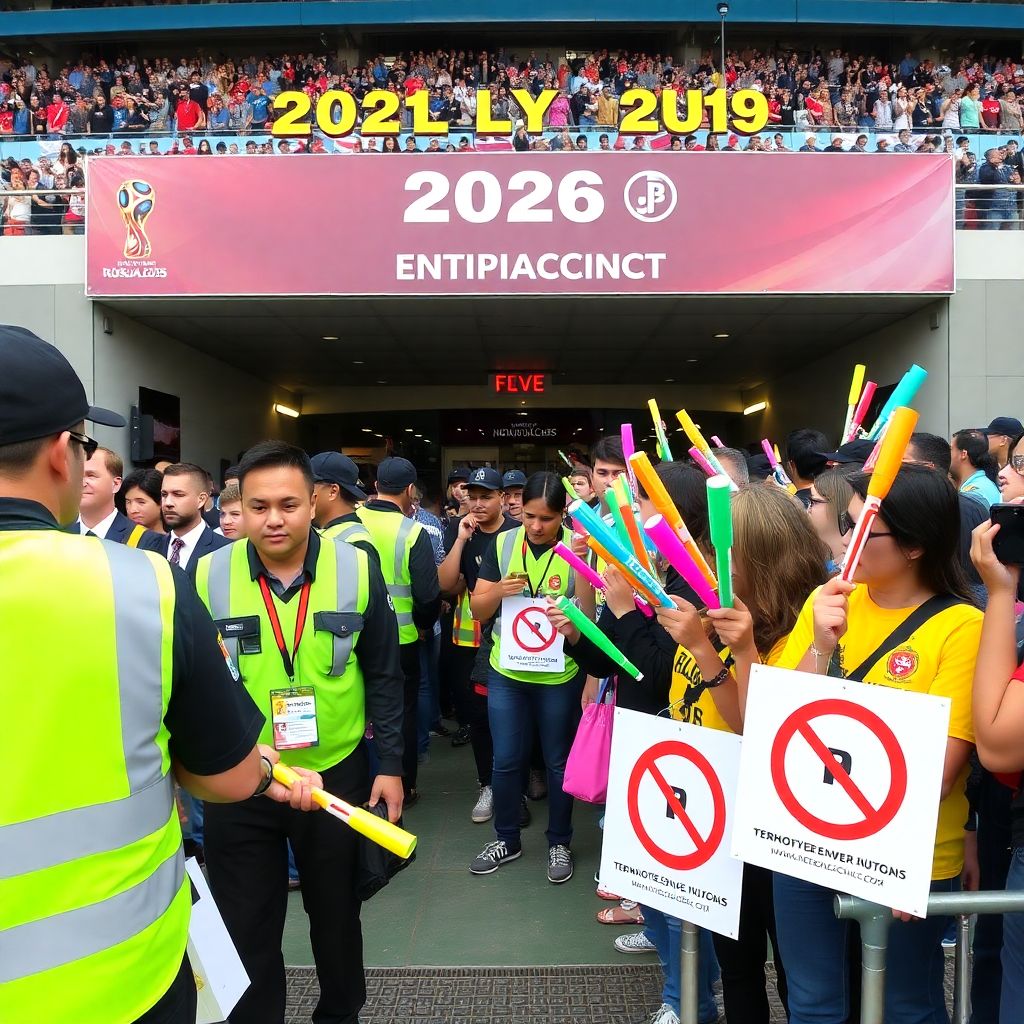
FIFA has confirmed that vuvuzelas and other loud noise-making devices will not be allowed inside stadiums during the 2026 World Cup, marking a clear break from one of the most recognizable – and controversial – symbols of recent tournament history.
Ahead of the competition, which will be hosted jointly by the United States, Canada and Mexico, FIFA released an updated code of conduct for spectators. Among the key points is a strict prohibition on items that produce excessively loud or continuous noise. This includes vuvuzelas, whistles, air horns and similar devices that were once part of the soundscape of big international matches.
The plastic vuvuzela entered football folklore during the 2010 World Cup in South Africa. Its monotonous, buzzing drone filled stadiums and television broadcasts around the globe, becoming an instant auditory trademark of that tournament. While some regarded it as a unique expression of local fan culture, others criticized the instrument for drowning out chants, affecting concentration on the pitch and irritating viewers and players alike.
Those debates appear to have shaped FIFA’s stance going forward. In the list of prohibited items for 2026, vuvuzelas are explicitly named and grouped with other high-decibel tools. The organization underlines that any object capable of generating continuous, extremely loud noise will be confiscated at entry points and not permitted inside match venues.
The new regulations go beyond sound. FIFA has also banned laser devices, laser pointers and similar light-emitting equipment. The measure targets objects that can distract or potentially endanger players, referees and other spectators. In recent years, incidents involving laser pointers directed at goalkeepers or penalty takers have drawn strong criticism, and FIFA now signals a zero-tolerance approach for the upcoming tournament.
Another notable element of the code of conduct concerns everyday items: spectators will not be allowed to bring reusable water bottles or similar containers into the stands for security reasons. Stadium operators are expected to provide alternative ways for fans to access drinking water and beverages inside the venues, but all liquids and containers will be subject to strict control at the turnstiles.
FIFA makes it clear that breaching these rules will have concrete consequences. Fans who attempt to enter with banned items risk being denied access altogether. Those who manage to get prohibited objects into the stadium and use them inside may be removed from the venue and could face further disciplinary measures, depending on the seriousness of the infraction.
The 2026 World Cup will be the first edition featuring 48 participating national teams, expanding the scale and logistical complexity of the event. The tournament is scheduled to run from 11 June to 19 July. The opening match will see co-host Mexico face South Africa, a symbolic pairing that subtly recalls the 2010 World Cup, where vuvuzelas first achieved global fame and, in a sense, now close their World Cup chapter with this ban.
Why FIFA Is Targeting Noise Levels
Behind the simple list of prohibited items lies a broader discussion within football about the stadium experience. Governing bodies and medical experts have long pointed to the potential health risks of prolonged exposure to very loud, uniform sounds. During the 2010 tournament, several studies raised concerns about the impact of vuvuzela noise on hearing, particularly for children and for those seated close to concentrated clusters of instruments.
From FIFA’s perspective, reducing excessive noise is also tied to maintaining a certain level of comfort for the diverse global audience the World Cup attracts. Unlike domestic leagues, where local traditions and instruments are more consistent, World Cup stadiums host neutral fans, families and first-time visitors who may be less tolerant of extreme sound. The ban can thus be read as an attempt to create a more balanced, inclusive atmosphere, where songs, chants and applause are heard over mechanical droning.
Impact on Fan Culture and Atmosphere
For many supporters, especially those who embraced the vuvuzela as a symbol of African and global football culture, the ban will feel like the end of an era. The 2010 World Cup soundscape was unlike any other, and for a segment of fans that uniqueness is part of the event’s charm. Critics of the ban argue that sanitizing stadium noise risks making the atmosphere more corporate and less spontaneous.
At the same time, others welcome the move, seeing it as a way to bring back more traditional forms of support – drums, songs, coordinated chants and visual displays with scarves and flags. In recent tournaments, players and coaches have frequently commented that they prefer environments where they can hear both each other and the crowd’s reactions without being overwhelmed by a single dominating sound.
World Cup 2026 will therefore offer a kind of natural experiment: can the tournament retain intensity and color without the soundtrack of vuvuzelas and air horns? Organizers appear confident that supporters will fill the stands with their voices and creativity, without needing plastic amplifiers.
Safety, Broadcasting and Player Performance
Security and health are only part of the equation. Broadcasters and sponsors, who invest heavily in the World Cup, have long complained that extremely loud, high-pitched instruments degrade the quality of television sound, mask commentary and reduce the ability of viewers at home to follow tactical instructions shouted from the sidelines or communication among players.
From a sporting standpoint, quieter environments, at least relative to the vuvuzela era, allow referees to be heard more clearly and help players communicate on the pitch. While no one expects a silent stadium, tournament organizers prefer crowd noise that rises and falls organically with the game, rather than an uninterrupted wall of sound.
The decision to include whistles and air horns in the ban also reflects concerns about confusion on the field. Artificial whistles from the stands can disrupt play, cause players to stop prematurely or provoke disputes when they believe the referee has signaled something that never actually happened.
The Laser Pointer Crackdown
The explicit ban on laser devices is another strong signal. In recent high-profile matches around the world, cameras have caught green or red beams directed at goalkeepers’ faces during penalties, or at players about to take free kicks. Aside from the obvious distraction, experts warn that repeated exposure to concentrated laser beams poses a risk of eye damage.
By outlawing any object capable of projecting intense beams of light, FIFA wants to eliminate the risk before it escalates into a genuine safety incident on the World Cup stage. Security staff will be trained to identify and confiscate such items at checkpoints, and surveillance systems inside stadiums will monitor for their use during matches.
What Fans Can Expect at Stadium Entrances
The tougher rules imply more thorough checks at stadium gates. Supporters attending World Cup matches in 2026 should expect additional screening of bags and personal items, including a closer inspection of anything that might resemble a horn, whistle, flashlight or laser. Even seemingly harmless gadgets may be examined to ensure they do not conflict with the new regulations.
Fans will need to adapt by traveling lighter and paying close attention to official guidelines about what is and is not allowed. Organizers typically release detailed lists of permitted and banned objects well in advance, giving ticket holders time to prepare. Those who arrive with items on the prohibited list will likely be asked to dispose of them or leave them outside the venue, without any guarantee of retrieval after the match.
Hydration and the Ban on Reusable Bottles
The restriction on bringing reusable water bottles and containers raises practical questions, especially for matches in warmer host cities. While the rule is primarily a security measure – rigid bottles can be thrown, used to conceal prohibited substances or modified to hide other objects – it puts extra responsibility on stadium management to ensure that supporters can stay hydrated in a safe and accessible way.
Organizers are expected to rely on controlled points of sale for drinks and on designated water stations where possible. Prices, queue management and the availability of non-alcoholic options will be under particular scrutiny, as public perception of fan treatment is now a major factor in judging the success of a tournament.
Balancing Passion and Control
The 2026 World Cup rules reveal the ongoing tension between preserving the raw, emotional nature of football support and imposing strict standards of safety, comfort and broadcast quality. Vuvuzelas once symbolized the unfiltered noise of the global game; now, their exclusion symbolizes a more regulated era in which governing bodies seek to shape not only the matches but also the soundtrack around them.
Whether supporters see this as a positive evolution or an unnecessary limitation will become clear once the tournament begins. What seems certain is that, for the first time since they roared into global consciousness in 2010, World Cup stadiums will echo to a different kind of noise – one driven less by plastic horns and more by the collective voice of the crowd.
As 48 teams prepare to compete across three vast host nations, fans planning to attend should familiarize themselves with the new guidelines, leave the vuvuzelas and air horns at home, and be ready to support their national teams within the new, tightly defined framework set by FIFA for World Cup 2026.