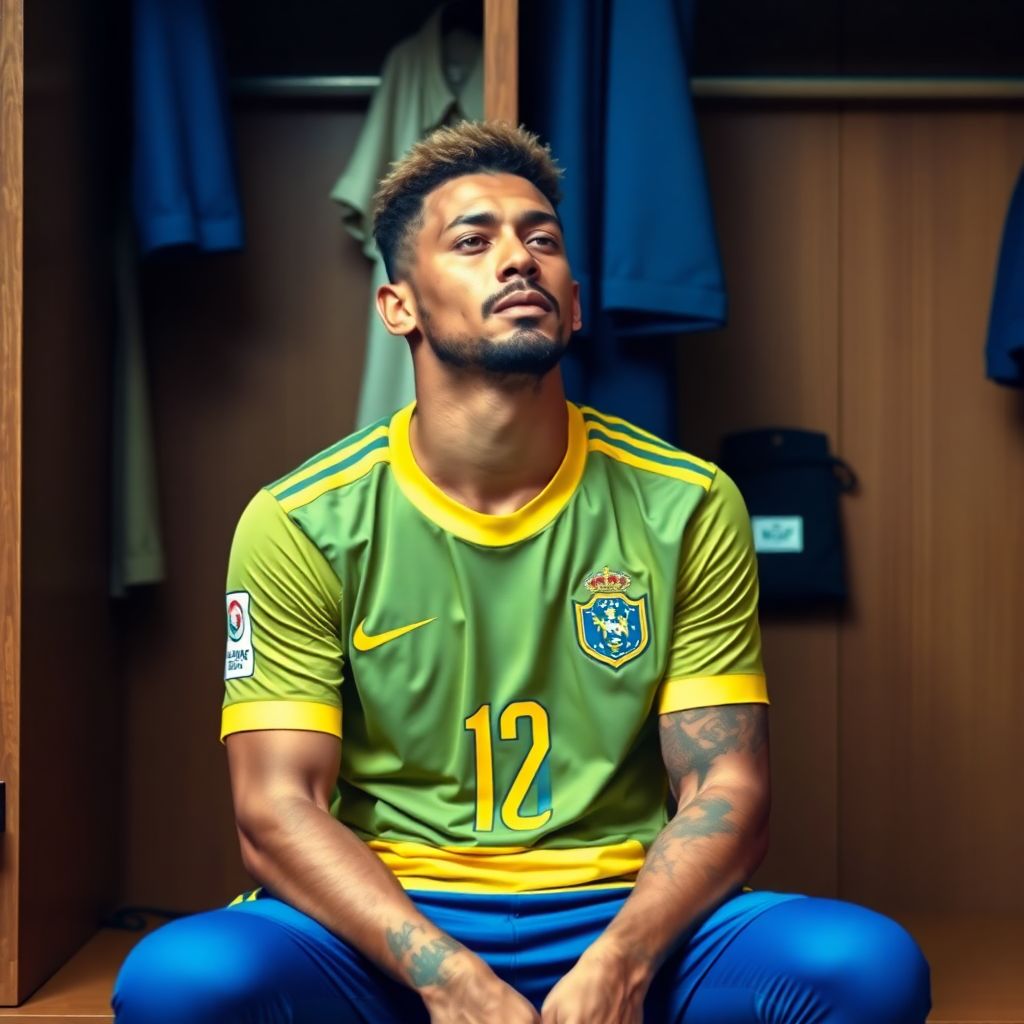
“I Was Crying in the Dressing Room”: Neymar Opens Up After Emotional World Cup Return
Neymar could not hold back his tears after stepping onto the pitch at the 2026 World Cup for the first time. Brazil’s iconic number 10 spoke openly about the wave of emotions he experienced following the 3-0 victory over Scotland, a match that also wrote a new chapter in his personal and national-team history.
Brazil secured top spot in Group C with a convincing win, thanks largely to Vinícius Júnior’s brace and another goal that sealed the scoreline at 3-0. Neymar began the encounter on the bench and was brought on in the 76th minute, replacing Matheus Cunha. Even though he had only a short time on the field, this appearance carried immense significance: it marked his first game for the national team in 980 days and his World Cup debut in the 2026 tournament.
A Historic Milestone: Four World Cups in Yellow and Green
By coming on against Scotland, Neymar entered an elite circle of Brazilian legends. He became only the fourth player in the country’s history to feature at four separate World Cup tournaments, joining Pelé, Djalma Santos and Cafu. For a football-obsessed nation that measures greatness through the World Cup, this statistic alone places him among the immortals of the Seleção.
At 34, the forward is no longer the teenage prodigy who dazzled the world with his flair and audacity. Yet this appearance proved that he still has a central role to play in Brazil’s plans, not just as a creator and finisher, but as an experienced leader guiding a new generation of stars.
“I Was Crying in the Dressing Room”
After the final whistle, Neymar did not try to hide the emotional toll of his journey back to the biggest stage. Speaking to Brazilian media, he described just how much he had endured to wear the famous yellow shirt again.
He explained that he had gone through a long and painful recovery, emphasizing how much effort he had invested to return to full fitness. According to his own words, when the match ended and he finally walked back into the dressing room, the emotions overwhelmed him. He admitted that he burst into tears, describing it as a moment of release after months of suffering and uncertainty.
Neymar added that he felt deep gratitude for being able to help his country once more. He underlined that simply stepping onto the field and contributing again for Brazil was a blessing, something he did not take for granted after so much time on the sidelines.
First Appearance at the 2026 World Cup
Although the tournament was already underway, the clash with Scotland was Neymar’s first opportunity to play in this World Cup. Brazil had already completed two group matches – against Morocco and Haiti – without their number 10. In both fixtures, the team had to adjust to his absence as he continued recovering from injury.
The coaching staff opted not to rush him back, aware of both his physical fragility in recent years and his enormous importance to the squad. Only when the medical team gave full clearance, and Neymar himself reported feeling ready, did the manager decide to use him. That moment finally arrived in the third group game, and the late substitution against Scotland became symbolic: it was not just a tactical choice, but a signal that one of Brazil’s biggest stars was truly back.
980 Days Away from the National Team
Perhaps the most striking figure behind Neymar’s return is the sheer length of his absence. Nearly one thousand days had passed since he had last pulled on the Brazilian jersey in an official match. For a player who has long been the face of the national team, those 980 days felt like an eternity.
During that period, Neymar faced serious physical setbacks that forced him to spend more time in rehabilitation rooms than on the pitch. Repeated injuries disrupted his rhythm, raised questions about his future at international level, and even led some to wonder if he would ever appear at another World Cup. His return at 34 years old therefore carried a sense of defiance – against time, against doubt, and against the idea that his story with Brazil had already been written.
Missing the First Two Group Matches
The early stages of Brazil’s campaign took place without their main creative force. Injuries had ruled Neymar out of the opening fixtures against Morocco and Haiti, and the medical team treated his recovery with extreme caution. The priority was not just to get him back onto the field, but to ensure he could remain available for the decisive stages of the tournament.
Without him, the responsibility fell heavily on players like Vinícius Júnior, Rodrygo and other attacking talents. They responded impressively, helping Brazil to strong performances that set up the final group match against Scotland as an opportunity to both secure first place and reintroduce Neymar into the competitive rhythm of the World Cup.
Vinícius Júnior Shines as Brazil Top Group C
While Neymar’s return stole the emotional headlines, the match itself once again underlined the rise of Vinícius Júnior as a leading figure in the national team. The forward scored twice, displaying the pace, skill and composure in front of goal that have turned him into one of the most feared attackers in world football.
His performance allowed Brazil to take control of the game early and never look back. The third goal, which completed the 3-0 scoreline, removed any remaining doubt about the group standings. With the victory, Brazil finished as leaders of Group C, setting up a more favorable path in the knockout stages and reinforcing the perception that they are among the major contenders for the title.
The Emotional Weight of the Number 10 Shirt
Neymar’s words after the Scotland match also hinted at the special pressure that comes with wearing Brazil’s number 10. It is not just a squad number, but a symbol loaded with history – the shirt that once belonged to Pelé and has come to represent the creative soul of Brazilian football.
Returning to that role after such a long absence, and doing so on the World Cup stage, inevitably amplified his emotions. Knowing he now stands alongside Pelé, Djalma Santos and Cafu as a four-time World Cup participant adds yet another dimension to that pressure. Neymar is fully aware that every appearance, every touch of the ball, will be measured against the expectations built over years of brilliance and adversity.
A New Role: From Prodigy to Mentor
Although he remains a decisive player, Neymar’s presence in this tournament is not limited to his technical ability. At 34, he is one of the most experienced figures in the squad, and his role has naturally evolved from starlet to mentor.
Younger players, some of whom grew up idolizing him, now share the dressing room and the pitch with him. His journey – from early fame to devastating injuries and now an emotional comeback – serves as a powerful example of resilience. Inside the squad, his voice carries weight, and his attitude in training and during recovery sends a message about commitment and professionalism.
The Psychological Battle Behind the Comeback
Neymar’s confession about crying in the dressing room did more than reveal a private moment; it exposed the mental battle that elite athletes often fight away from the cameras. Long-term injuries do not just weaken the body – they challenge self-belief, patience and motivation.
His acknowledgment of pain, hard work and gratitude suggests that, beyond the physical therapy and medical treatment, he had to rebuild his confidence and mental strength. The relief he felt at being able to contribute again for his country reflects the fear that, at one point, he might not return to this level. That he chose to speak so candidly about it humanizes him, showing a side of vulnerability that fans do not always see.
What Neymar’s Return Means for Brazil’s Ambitions
From a purely sporting perspective, Neymar’s return at this stage of the tournament is a major boost for Brazil. The team had already demonstrated depth and quality in his absence, but adding one of the world’s most creative forwards to an in-form attack significantly increases their threat.
Having him available also gives the coach more tactical options: Neymar can operate as a classic number 10 behind the striker, drift in from the left, or drop deeper to link play. His vision and passing can unlock tight defenses, while his experience in high-pressure matches will be invaluable as Brazil move into the knockout rounds, where small details often decide entire campaigns.
A Career at a Crossroads, Not a Conclusion
For many players, a fourth World Cup would feel like a farewell tour. In Neymar’s case, it looks more like a crossroads. The 980-day gap since his previous cap, combined with his age and injury history, invited speculation that he might be approaching the end of his international chapter. Instead, his reaction after the Scotland match suggested a man who feels he still has something meaningful to add to Brazil’s story.
Whether this World Cup ultimately becomes the crowning achievement of his career or another painful near-miss remains to be seen. What is already clear is that Neymar’s journey back – marked by physical suffering, emotional strain and an outpouring of relief – has redefined how his legacy will be judged. He is no longer simply the gifted dribbler and showman; he is also the veteran who fought his way back to the stage where he always believed he belonged.
As Brazil march on in the 2026 World Cup, Neymar’s tears in the dressing room will be remembered as a turning point: the moment when a footballer known for his flair reminded the world how much sacrifice lies behind every step onto the pitch in the famous yellow shirt.