National Team Holds First Training Session in Miami Ahead of 2026 World Cup
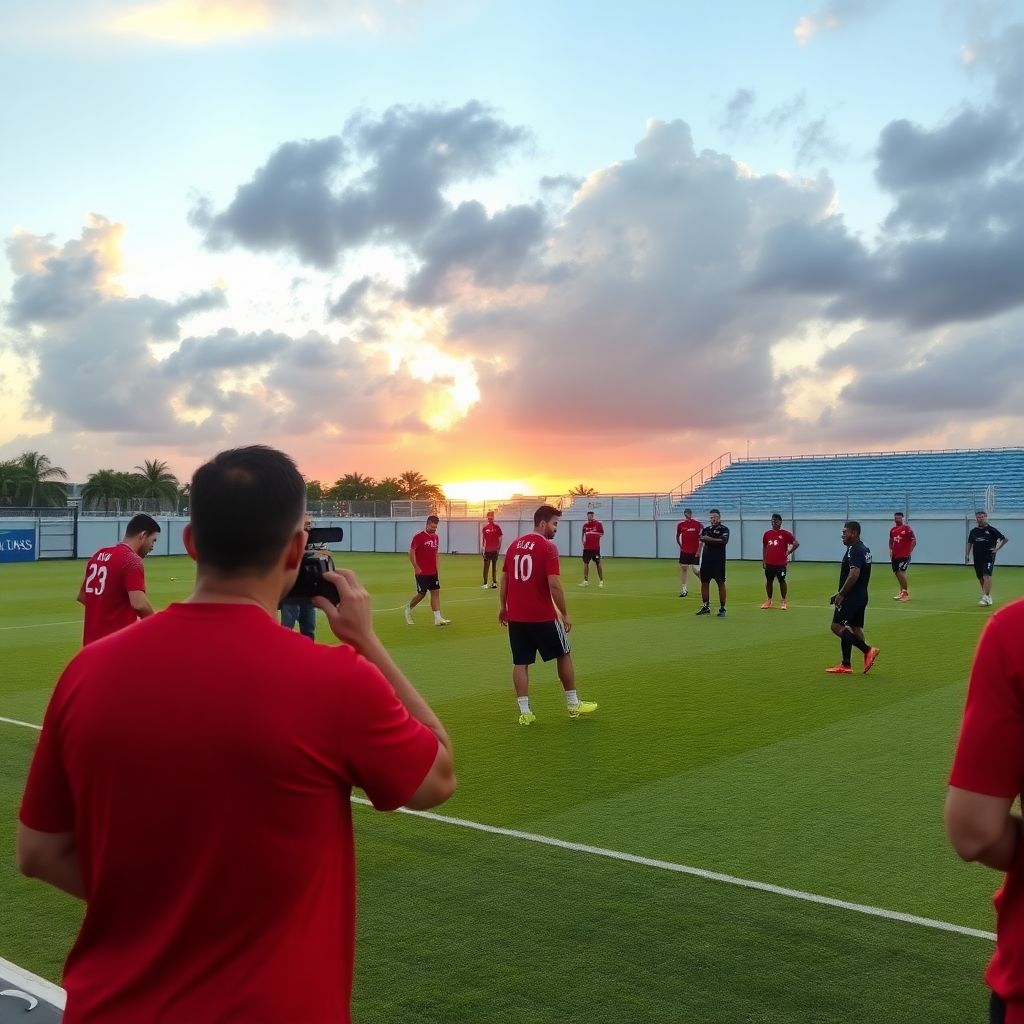
The Turkish national football team has completed its first training session in Miami, marking the beginning of the second stage of preparations for the 2026 FIFA World Cup. After traveling from Istanbul to the United States, the squad took to the pitch at the Florida Blue Training Center in Fort Lauderdale, the training base of Inter Miami FC, for an evening workout under the guidance of head coach Vincenzo Montella.
The opening 15 minutes of the session were accessible to the media, offering a first glimpse of the team’s physical and mental condition following the long transatlantic journey. The practice started with light running and dynamic stretching, focusing on loosening muscles and adapting to the humid Florida climate. Players then moved into short passing drills and basic technical exercises to regain rhythm after travel.
Once the warm-up phase concluded, the remainder of the training was held behind closed doors. In this section, Montella and his staff reportedly worked on tactical patterns, focusing on positioning, pressing triggers, and transitions between defense and attack. Given the short window before the friendly against Venezuela on 7 June, the emphasis was placed on clarity of roles and collective organization rather than heavy physical load.
Injury management was another major topic of the session. Ferdi Kadıoğlu, who is still undergoing treatment, trained individually away from the main group. His program was tailored by the medical team and fitness coaches, aimed at maintaining his conditioning without putting excessive strain on the affected area. The coaching staff remains cautious but hopeful that he will be gradually reintroduced into full training over the coming days.
Kerem Aktürkoğlu participated with the team only during the warm-up segment. After completing the initial running and stretching exercises, he split off from the main group to continue with an individual program. This personalized workload suggests a controlled return to full intensity, likely in response to minor discomfort or fatigue accumulated over the club season. The staff’s approach indicates a clear priority: entering the World Cup build-up with as few fitness risks as possible.
Kenan Yıldız, on the other hand, did not appear on the pitch with his teammates. Instead, he remained at the team hotel, where he followed a gym-based session focusing on strength work, mobility, and injury prevention. This type of indoor training is often used to manage load in young players who have had long seasons, ensuring they remain fresh for key matches while still progressing physically.
The session also drew significant attention off the field. Turkish Football Federation (TFF) President İbrahim Ethem Hacıosmanoğlu, TFF Vice President Mecnun Otyakmaz, and TFF Secretary General Abdullah Ayaz watched from the stands, underlining the importance the federation places on this preparation period. Their presence sent a clear message of support to both players and technical staff during this crucial phase.
Turkey Basketball Federation (TBF) President Hidayet Türkoğlu was also in attendance alongside Hacıosmanoğlu. The appearance of a leading figure from another major sport highlighted a sense of unity across Turkish federations. Such symbolic gestures are often seen as a way of boosting morale, reinforcing the idea that the national football team carries the expectations not only of football fans but of the broader sporting community.
The national team will continue its build-up to the Venezuela match with another training session tomorrow, again at the Florida Blue Training Center. In this second workout, Montella is expected to fine-tune tactical details specifically designed for the South American opponent, whose physical style and high intensity offer a valuable test ahead of the World Cup qualifiers and the tournament itself.
From a sporting perspective, the choice of Miami as a base is far from coincidental. The city’s climate and time zone offer conditions similar to those in many venues that could host World Cup fixtures, allowing players to adapt both physically and mentally. The humid air, fluctuating temperatures, and potential for sudden weather changes help simulate the kind of environment the team might face in North America during the tournament.
Moreover, training at a high-end facility such as Inter Miami’s complex provides the national team with modern infrastructure: quality pitches, recovery areas, and specialized equipment. These factors play a significant role in managing fatigue and preventing injuries in a tightly packed preparation schedule. The combination of first-class facilities and controlled training loads is intended to ensure that players arrive at the World Cup in optimal shape.
The friendly against Venezuela is seen by the coaching staff as more than just a simple warm-up game. Facing a South American side traditionally known for its physical robustness and compact defending will allow Montella to test different tactical schemes. He may experiment with variations in formation, pressing height, and build-up patterns from the back, as well as evaluate alternative partnerships in attack and midfield.
For individual players, this camp in Miami represents a decisive opportunity to stake their claim for a permanent place in the starting eleven. With competition intense in several positions, each training session and every minute on the pitch in friendlies can influence the final selection. Younger talents, in particular, are expected to use this period to demonstrate that they can handle the demands of international football, both technically and mentally.
The medical and performance team is also under the spotlight. After a long club season, many players arrive with accumulated fatigue and minor knocks. In this context, carefully designed recovery protocols-ice baths, massage, nutrition plans, sleep tracking-become as important as tactical meetings. The balance between pushing players to build match fitness and protecting them from overuse injuries will be critical in the coming weeks.
Psychological preparation plays a quieter but equally important role. Isolated from daily club routines, the squad has the chance to strengthen internal bonds, clarify leadership roles within the dressing room, and foster a shared sense of purpose. Team meetings, video analysis sessions, and informal activities off the pitch all contribute to building a cohesive group capable of handling the pressure of a major international tournament.
The presence of high-ranking federation officials in Miami also suggests ongoing strategic discussions beyond the immediate friendly. Topics such as long-term talent development, integration of younger players into the senior setup, and continuity in the coaching staff’s philosophy often surface during these camps. The decisions made in this period can shape not only the run-up to the 2026 World Cup, but also the broader direction of Turkish football in the years ahead.
In the coming days, as the team continues to train and adjust to local conditions, attention will increasingly turn to Montella’s tactical choices. Observers will be keen to see whether he opts for a more proactive, possession-based style or prioritizes defensive solidity and quick transitions. The answers will start to emerge first on the training ground in Miami and then on the pitch when Turkey faces Venezuela on 7 June, a key milestone in the journey toward the 2026 FIFA World Cup.