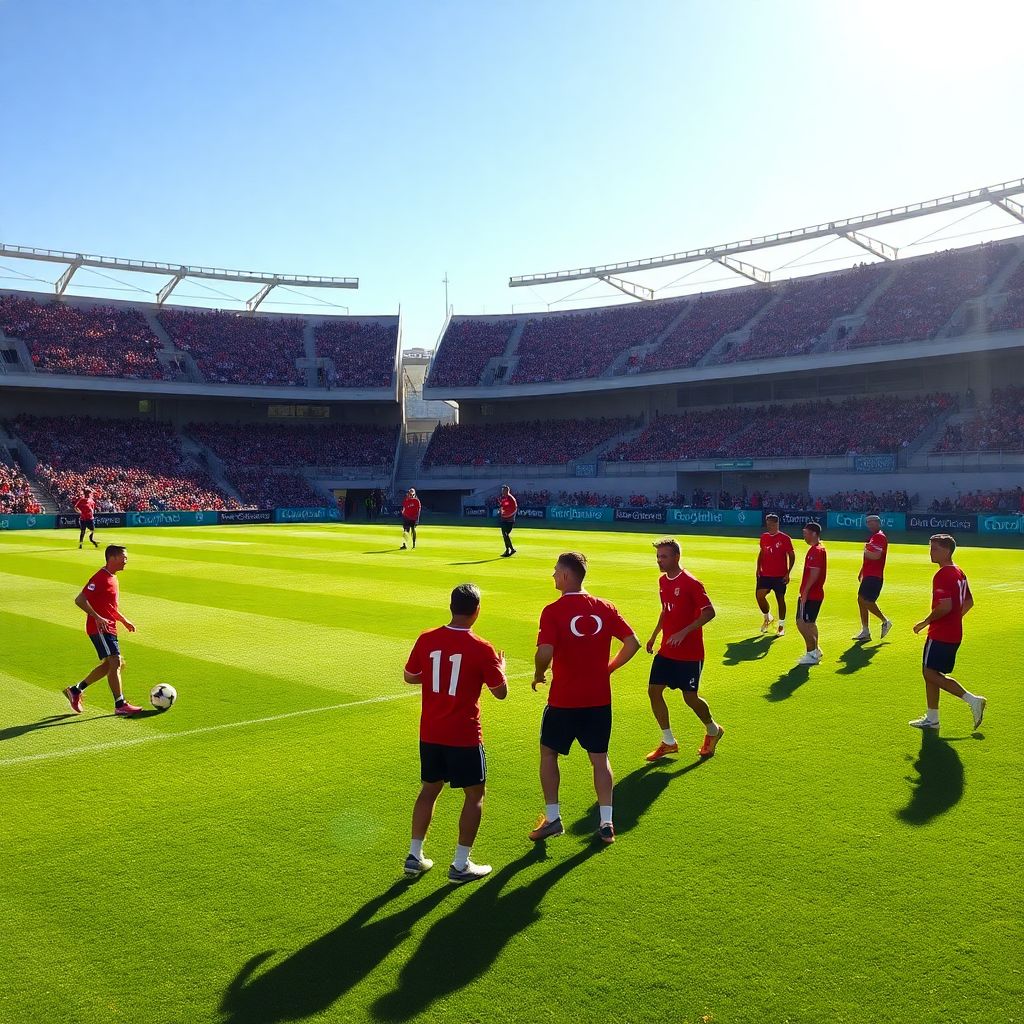
National Team Opens World Cup Camp in Arizona with Open Training Session
Turkey’s national football team has officially launched its 2026 FIFA World Cup preparations with a lively first training session in Arizona, conducted in front of enthusiastic supporters. The opening practice at Arizona Athletic Grounds gave fans a close look at the squad as they began an intense camp designed to adapt the players to both tactical demands and challenging climatic conditions.
Despite the demanding heat, the stands around the training pitch were well populated. Supporters, many wearing national team jerseys and scarves, applauded every drill and small-sided game. The open session turned into a morale-boosting event, creating a strong connection between players and fans at the very start of the World Cup build-up.
Defender Mert Müldür was among the players taking part in the first workout at the Arizona facility. His inclusion in the session was met with particular interest, as he is seen as an important figure in the squad’s defensive structure going into the qualification phase and the final tournament cycle.
Because of the extreme temperatures in the region, the national team staff adjusted the daily schedule, holding training sessions at 19:15 local time. This later start allows players to work in slightly cooler conditions while still experiencing the dry desert climate that is expected to be a factor during parts of the World Cup period. The evening setting also helps manage fatigue and reduces the risk of heat-related issues.
Arizona’s weather has already become a central talking point around the camp. Daytime temperatures climb well above 40 degrees Celsius, making it uncomfortable and at times unsafe to train or even stay outdoors for long periods. Local residents generally avoid going out during midday when the sun is at its peak, and the national team has followed a similar approach with carefully calibrated workloads and recovery plans.
At Arizona Athletic Grounds, where Turkey is staging its preparations, formal heat warnings were issued ahead of the first training. Digital boards across the complex displayed alerts throughout the day, informing visitors and staff about the high temperatures and the importance of hydration and shade. The warnings extended not only to athletes but also to spectators, many of whom arrived hours before the session began.
The first practice was originally planned as a fan-focused event, with a mini festival and various activities around the stadium area. However, during the day organizers signaled that the fan festival could be canceled if the heat continued to intensify. Messages displayed on the venue’s screens advised that, for safety reasons, some entertainment elements might be called off at short notice depending on temperature levels.
In the end, as the afternoon progressed, the mercury did not rise further and the conditions stabilized. This allowed the organizers to proceed with the fan festival as planned. Music, interactive games, and autograph sessions helped create a celebratory atmosphere before the players took to the pitch. The successful execution of the event, despite the weather concerns, was seen as a positive omen for the remainder of the camp.
On the training ground itself, the session was structured to balance intensity with caution. The coaching staff organized warm-ups in shaded areas where possible, followed by short, high-quality drills with frequent water breaks. Ball circulation exercises, positional games, and transition-focused routines dominated the evening, signaling a clear tactical direction aimed at increasing speed, pressing, and vertical play.
Medical and performance teams were highly visible around the turf, monitoring players’ responses to the heat and making sure protocols were followed. Ice towels, electrolyte drinks, and cooling vests were kept on standby. This meticulous planning reflects modern high-performance standards, where avoiding unnecessary risk is as important as building fitness.
The choice of Arizona as a training location is not accidental. The region’s climate resembles that of several World Cup host cities, especially during early and late summer windows. By working in an environment with such extreme temperature swings, the coaching staff hope to toughen the squad both physically and mentally, improving their ability to maintain concentration and tempo in demanding conditions.
Beyond physical adaptation, the camp also has a strong tactical and psychological component. Closed-door video sessions, opponent analysis, and group meetings are expected to complement the on-pitch work. Coaches are focused on refining the team’s pressing structure, set-piece organization, and attacking patterns, ensuring that every minute in camp contributes directly to World Cup readiness.
Fan presence at the first training brought an emotional layer to what could have been a purely functional workout. Chants, flags, and spontaneous applause reminded players of the expectations resting on their shoulders. For younger squad members, sharing such a moment far from home underlined the global reach of Turkish football and the sense of responsibility that comes with wearing the national shirt.
The camp in Arizona is also a chance to integrate new faces and returning players into a cohesive group. Training sessions like the opening one allow the staff to test different combinations, experiment with positional changes, and evaluate how individuals respond under pressure. Observing body language, communication, and leadership during open sessions helps coaches shape decisions about roles within the squad.
Over the coming days, the team is expected to continue working in the late evening slot, with occasional lighter sessions or gym-based workouts earlier in the day to manage overall load. Recovery strategies-such as cryotherapy, massage, and tailored nutrition-will play a critical role in ensuring that players remain fresh enough to absorb tactical instructions while building the necessary physical base.
The first open training in Arizona has therefore served multiple purposes at once: it boosted team morale, provided direct engagement with supporters, tested logistical planning under extreme heat, and gave the technical staff a first real-time look at how the squad is adapting to the conditions. With the World Cup cycle already underway, every session from this point on is another step toward shaping a competitive, resilient team ready to represent Turkey on football’s biggest stage.