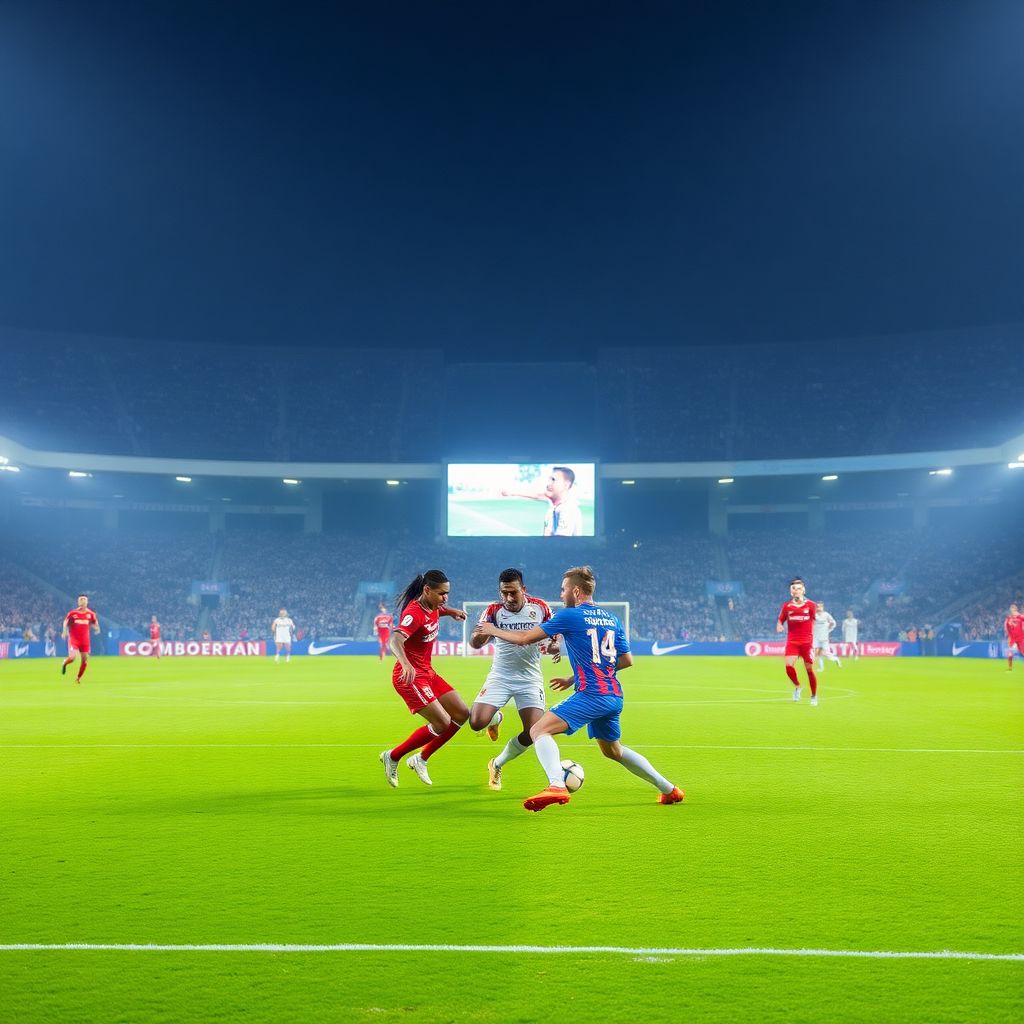
Sports columnists dissect Trabzonspor’s 1-1 draw with Alanyaspor
Trabzonspor’s away trip to Alanyaspor ended with a 1-1 draw that felt far more like two points dropped than one gained. The match not only froze the Bordo-Mavililer in the title race calculations, it also exposed once again how dependent this team has become on its main striker Paul Onuachu and how fragile its attacking variety still is. Leading Turkish football writers highlighted exactly these themes in their post‑match analysis.
Alanyaspor’s plan: suffocate, disrupt, slow down
Olcay Çakır underlined that Alanyaspor came into the game with a very net and minimalistic strategy: deny Trabzonspor space, increase physical duels, and constantly disturb the rhythm. The home side squeezed the pitch, defended compactly, and refused to open up even in front of their own supporters.
For a Trabzonspor side that already struggles to create against set defenses, this was the worst possible script. The attacking “production line” was almost entirely blocked. Whenever Trabzonspor tried to accelerate, Alanyaspor responded with fouls, tight marking and deep positioning, forcing the visitors into slow, predictable set attacks.
Life without Onuachu: a plan without its finisher
One of the key turning points happened even before the first whistle: Onuachu’s injury in the final training session. Trabzonspor have built most of their attacking patterns this season around his presence in the box – high crosses, cut-backs to the penalty spot, second-ball attacks around him.
Çakır points out that for a coach like Abdullah Avcı, who is known for his attention to rehearsed patterns and repetition, losing the central reference point at the very last moment was like having the entire tactical script erased. The system remained, but the main executor disappeared. From the outside this might look like a small detail; inside the dressing room and on the pitch, it was a major rupture.
Umut started as the central forward, and while he offers a similar physical profile on paper, he simply does not have Onuachu’s penalty-box presence, timing or finishing quality. This mismatch between plan and personnel was felt throughout the ninety minutes.
Effort without sharpness: Trabzonspor dominate but do not kill the game
Despite these handicaps, Trabzonspor still managed to impose themselves for long stretches. They kept Alanyaspor pinned in their own half, dominated possession and controlled the tempo of the game. The sense in the stadium was that the goal would eventually come – and it did, once again via a header, this time from Ozan Tufan.
Yet, as Çakır stresses, the performance never reached the desired speed and variety. Pass circulation was often slow, changes of flank were rare, and the element of surprise was largely missing. Against a low block like Alanyaspor’s, Trabzonspor needed more tempo, more late runs from midfield and more aggressive movements behind the defense.
This is why one tactical question hung in the air: why was Umut, the only real physical alternative to Onuachu, not used earlier or in a more decisive role? With such a deep and compact opponent, throwing in a classic target man sooner could have created more chaos and second-ball opportunities.
In the end, Alanyaspor earned their point almost without playing proactive football, relying on a penalty to equalize. Trabzonspor, on the other hand, walked away having dropped two extremely valuable points.
A dangerous opponent for title hopefuls
According to Çakır, this match should serve as a serious warning for any team aiming for the championship. Alanyaspor’s game model and formation are precisely the kind that title contenders never want to face: ultra-compact, relentlessly disruptive, and completely uninterested in spectacle.
For Trabzonspor, the draw came right after a big win, magnifying the sense of frustration. However, irrespective of where they ultimately finish in the table, the overall picture of this season remains positive. The team has shown resilience, improved structure and a fighting spirit that has earned them widespread praise.
Reha Kapsal: “The idea was right, the execution not enough”
Reha Kapsal approached the match through the lens of the title race. After defeating Galatasaray the previous week, Trabzonspor had recalibrated their ambitions and returned to the conversation at the top. With that mindset, they travelled to Alanya with a clear objective: nothing less than three points.
In the first half, as Kapsal underlines, Trabzonspor controlled both phases – with and without the ball. Alanyaspor deliberately ceded possession and set up in a deep 5‑2‑3 structure, defending close to their own penalty area. This approach forced Trabzonspor into stable, set-possession attacks rather than counterattacking opportunities.
The 3‑1‑6 attacking structure: bold but incomplete
Kapsal praised Fatih Tekke’s decision to adopt a 3‑1‑6 shape with the ball. Wing-backs Pina and Mustafa pushed high and wide, while Zubkov and Nwakaeme drifted into inner channels. Ozan provided additional support between the lines, and Augusto remained the anchor in midfield.
The idea was to flood the opposing penalty area with numbers, especially from wide zones. Crossing from the flanks and entering the box with multiple runners was, in principle, a correct response to a deep defense. Trabzonspor’s counterpress after losing the ball was also effective; they immediately pressed and recovered possession, limiting Alanyaspor’s ability to counter and avoiding long defensive runs back to their own goal.
However, the issue lay in the final third: the team created a few clear chances but lacked both volume and quality in finishing. Possession dominance did not translate into consistent, high-quality goal opportunities.
The turning point: an early answer to Trabzonspor’s goal
The second half seemed to follow the same pattern until Trabzonspor finally broke through. Ozan’s goal, assisted by Pina, reflected the general attacking plan: wide progression, cross, late arrival into the box.
Yet the joy was short-lived. Conceding an equalizer almost immediately after going ahead changed the entire narrative of the game. Kapsal believes that if Trabzonspor had managed to protect their lead for just a few more minutes, the second goal would likely have followed, given the momentum and psychological advantage.
The absence of Onuachu was again heavily felt at this stage. There was no dominant presence in the box to capitalize on crosses or half-chances when Alanyaspor were slightly destabilized.
Question marks over substitutions and timing
Although Kapsal remains a firm believer in Tekke’s coaching qualities, he argues that this specific match should act as a moment of self-reflection for the coach. The starting lineup, the half-time adjustments and, importantly, the timing of substitutions all merit a second look.
In such a tight and strategic encounter, earlier and bolder changes might have increased Trabzonspor’s attacking volume, especially once it became clear that Alanyaspor would not abandon their ultra-defensive posture. More vertical players, earlier use of fresh energy and perhaps a different central reference could have tilted the balance.
Despite the disappointing result at a crucial juncture, Kapsal insists Trabzonspor must not lose focus or motivation. The team still has objectives on more than one front, and one of its biggest strengths is the strong internal bond between players and staff, as well as the collective belief in their targets.
İskender Günen: “A team that doesn’t attack still gets its point”
İskender Günen emphasized the paradox of the match: Alanyaspor, playing at home, virtually abandoned any attacking ambition and yet managed to take a point. From a purely results-based perspective, the strategy worked. But Günen argues that football is not only about the scoreboard; clubs also have a responsibility to offer their fans competitive and attractive football, regardless of their position in the standings.
He was particularly critical of the first-half officiating. In his eyes, referee Mehmet Türkmen made a major mistake by failing to award Trabzonspor a foul near Alanyaspor’s penalty area, then stopping the attack and immediately blowing the half-time whistle – a sequence he described as inexplicable.
Onuachu as a structural pillar
Günen focused strongly on the structural impact of Onuachu’s absence. He characterizes the Nigerian striker as a phenomenon inside the box – a player without whom the entire attacking framework starts to wobble. When he is not there, the weaknesses in creativity and variation become far more visible.
In the first 45 minutes, Trabzonspor kept the ball but offered a low tempo and limited creativity. The right flank in particular was underwhelming; most of the few dangerous actions came from Mustafa’s individual efforts rather than coherent patterns. Without a commanding target in the box, those forays rarely translated into high-probability chances.
The penalty that ruined a mature performance
The second half did not bring a radical change in Alanyaspor’s approach. They continued to sit deep and avoid risk. Trabzonspor finally took the lead through Ozan Tufan, again via Pina’s contribution from the flank, and seemed on course for a professional, if unspectacular, away win.
Then came the moment that defined the scoreline: Nwaiwu’s completely unnecessary handball inside the box. The penalty decision was inevitable, and Alanyaspor converted to make it 1-1. For Günen, the most painful aspect was not only the goal conceded, but the context – conceding to a team that had shown virtually no attacking intent for the entire match.
What this draw reveals about Trabzonspor
Taken together, the three analyses converge on several key themes:
1. Structural dependence on Onuachu
Trabzonspor’s attacking model is heavily built around a tall, dominant striker in the area. When Onuachu is absent, the team lacks an equally effective alternative and struggles to adapt on the fly. This raises strategic questions for squad planning and tactical flexibility.
2. Limited variety against deep blocks
Even with territorial dominance, Trabzonspor have difficulty breaking down deep, compact defenses. The circulation can be too slow, the runs from midfield not frequent enough, and the movements around the box predictable. The team needs more automated movements and combinations in the final third.
3. Game management and coaching decisions
While the general game plan was widely considered correct, several columnists pointed to the timing and selection of substitutions as areas for improvement. In matches where the opponent refuses to play, coaches must be especially proactive in changing rhythm and profiles on the pitch.
4. Psychological resilience and outlook
Despite the frustration, all three writers recognize that Trabzonspor’s season as a whole deserves respect. One poor result does not erase the progress made, and the group has shown enough unity and ambition to remain competitive until the end.
How Trabzonspor can evolve after Alanya
From a broader perspective, this match can serve as a blueprint for future improvement:
– Develop a “Plan B” without a classic target man
Trabzonspor need alternative attacking structures for matches when Onuachu is injured, suspended or effectively marked. That could mean more vertical play through midfield, more rotations between wingers and full-backs, or using a false nine to drag defenders out of position.
– Increase the number of goal threats from midfield
Ozan’s goal is a positive sign, but the team still needs more consistent scoring contributions from central and half-space midfielders. Late bursts into the box, shots from the edge of the area and clever underlapping runs can all diversify the threat.
– Speed up ball circulation
Against low blocks, seconds matter. Quicker passing, one-touch combinations, and earlier switches of play can destabilize compact defenses and create the half-spaces that were missing in Alanya.
– Use the wings more unpredictably
Mustafa and Pina showed they can be involved, but their runs and crosses need more variation – cut-backs, low balls, chipped deliveries, and overlaps combined with underlaps from inside forwards. This unpredictability will make it harder for opponents to simply sit back and clear.
– Maintain defensive concentration in key moments
The penalty conceded was not a product of structural defensive weakness but of individual lack of focus. In tight title or European races, such details can decide entire seasons. Turning dominant performances into clean-sheet wins must be a priority.
Conclusion: a warning, not a collapse
The 1-1 draw with Alanyaspor encapsulates both the strengths and the limitations of this Trabzonspor side. They are organized, competitive, and capable of controlling matches away from home. But they are also still searching for more attacking diversity and a reliable identity when their main striker is missing.
For the columnists, this is not a reason for despair, but a lesson. If properly analyzed and addressed, the issues that surfaced in Alanya can help shape a more complete, less predictable Trabzonspor for the coming seasons – a team less dependent on one player and more equipped to break down exactly the kind of defensive walls that cost them two crucial points on this day.