
The tactical evolution of the Turkish National Team runs from Fatih Terim’s structured, transition‑heavy era to today’s more flexible, data‑sensitive game model. Terim built clear principles around compactness, aggressive counter‑attacks and emotional momentum. Successors have adjusted pressing height, buildup risk and set‑piece focus, while integrating younger profiles and modern analytics into Turkey’s national football identity.
Defining tactical milestones in Turkey’s national game
- Fatih Terim established a recognisable template: compact block, ferocious transitions, emotional intensity.
- Full‑backs, a creative number 10 and a resilient target forward became structural pillars of that template.
- Post‑Terim coaches experimented with press heights, formations and risk control against stronger opponents.
- Data and video analysis now shape pressing triggers, chance creation patterns and opponent‑specific plans.
- Youth development and positional retraining aim to supply the national team with tactically adaptable players.
- Modern Turkey balances in‑game adaptability, match management and set‑piece routines as core competitive edges.
Fatih Terim’s blueprint: structure, transitions and attacking principles
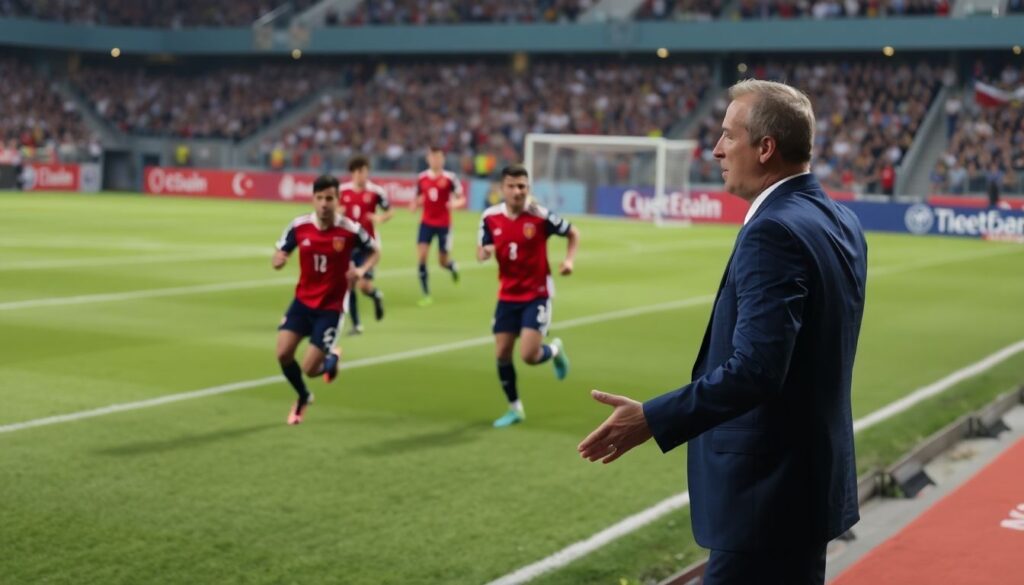
Fatih Terim’s blueprint for the Turkish National Team was built on clear structure, emotional energy and decisive transitions. His sides were rarely passive: even in a mid‑block, the intention was to spring forward as soon as the ball was won. This created a strong, recognisable identity at tournaments and qualifiers.
Structurally, Terim favoured compact lines with a clear spine: goalkeeper, dominant centre‑backs, a combative double pivot, a roaming number 10 and a powerful centre‑forward. The block stayed narrow to protect the central corridor and half‑spaces. Once possession was regained, the first pass was often vertical or diagonal into space, not backwards.
In transition, wide players and full‑backs had licence to attack aggressively. The rest defence (the players staying behind the ball) was relatively simple: centre‑backs plus at least one midfielder ready to delay the counter. This simplicity suited Turkey’s player pool: high physicality, strong one‑v‑one qualities, and a cultural tendency toward emotional surges inside games.
Attacking principles under Terim revolved around three ideas: win the second ball, attack quickly after regains, and overload the box. Rather than long, patient possession, his teams valued verticality and chaos: crosses from advanced full‑backs, cut‑backs from wingers, and late runs from midfield into finishing zones.
Role architecture under Terim: full-backs, number 10s and target forwards
Under Terim, roles were designed to be both simple to understand and demanding in execution, which matters when players gather only a few days before big games. Each position carried clear tactical tasks that shaped the whole system.
- Full‑backs as primary width providers
Full‑backs pushed high to stretch the opposition horizontally, often arriving early in the final third. Their overlaps created 2v1s with wingers, and their crosses targeted the near‑post and penalty‑spot zones. Coaching implication: wide players at club level needed to be comfortable combining with overlapping runs, not always staying wide themselves. - Number 10 as free connector
The number 10 floated between lines, linking midfield and attack. He was allowed to drop near the pivot to help buildup or move into half‑spaces to receive on the turn. When Turkey attacked quickly, he became the first receiver after a regain, choosing whether to drive, play wide or thread a through ball. - Target forwards as reference points
Forwards provided vertical reference: they pinned centre‑backs, contested aerial duels and offered a direct ball when pressed. Their lay‑offs enabled midfield runners. Even when the team was under pressure, a long ball to a strong nine could reset the attack and push the block higher. - Double pivot for balance and second balls
Typically, one midfielder was more destructive, the other more constructive. Together they shielded the defence, attacked second balls around the box, and released early passes to wingers or the number 10. In Turkish conditions and intense stadiums, this balance helped control emotional swings in matches. - Wingers as direct outlets
Wide players were encouraged to attack their full‑backs, carry the ball at pace and deliver early balls into the box. Defensively, they tucked inside to close half‑spaces, allowing full‑backs to engage wide.
For today’s coaches and analysts, understanding this role architecture is useful when analysing older footage or discussing tactical evolution during a broadcast where fans watch Turkey national football team live stream and try to connect past heroes with current profiles.
Tactical pivot: how formations and risk profiles shifted after Terim
After Terim, successive coaches inherited his emotional and transitional DNA but adapted structural details. Tactical pivots showed up in formation selection, pressing height and risk tolerance in buildup. These shifts are visible if you compare tournament footage, not only highlight reels but also longer analyses that fans now access easily online.
- Against higher‑ranked opponents
Turkey became more willing to sit in a lower or medium block, with an extra midfielder instead of a pure number 10. The aim was to close central lanes, protect the box and counter with fewer players but more control. Risk in central buildup was reduced; long diagonal passes to wingers re‑emerged as key tools. - Against similar or weaker teams
Coaches experimented with higher pressing and shorter buildup from the back. Full‑backs still advanced, but the double pivot occasionally split wider to receive from centre‑backs. The risk profile was higher: more passes in front of the box, more players committed to attacks, and more structured rest defence. - Tournament game management
At major finals, including the recent European Championship cycle where fans checked Turkey Euro 2024 odds and squad news daily, management of leads became a priority. Substitutions aimed to lower chaos: bringing on extra midfielders, moving from two forwards to one, or shifting from a 4‑2‑3‑1 into a 4‑1‑4‑1 to protect a narrow advantage. - Shape flexibility within matches
Later coaches pushed for in‑game shifts: 4‑2‑3‑1 to 4‑4‑2 out of possession, then 3‑2‑5 in attack via an inverted full‑back. This contrasted with Terim’s tendency to keep one main structure and change intensity rather than shape. - Integration of younger, more versatile profiles
As younger players came through European academies, systems adapted to their comfort zones: inverted wingers, ball‑playing centre‑backs, and pressing‑oriented forwards. This created more options for out‑of‑possession schemes, particularly mid‑to‑high pressing with clear triggers.
For coaches in Turkey, these scenarios provide templates: lower‑risk 4‑1‑4‑1 plans when facing stronger sides, or more aggressive 4‑3‑3 pressing systems when dominating the ball in league play or youth tournaments.
Data-driven shifts: pressing intensity, chance creation and opponent modelling
As analytics tools spread across clubs and federations, the national team staff started using data to refine long‑standing instincts. Pressing, chance creation and opponent modelling no longer relied only on coach experience; they became more evidence‑based, supported by tracking data, video tagging and opposition scouting reports.
Pressing intensity is now planned per opponent: where Terim’s teams often relied on emotional surges to press, modern Turkey sets pressing traps in predetermined zones. Chance creation is tracked by zones of origin and final pass types, not just by shots. Opponent modelling feeds into game plans: which full‑back is weaker under pressure, which centre‑back struggles when forced onto their weaker foot, which midfielder must be denied forward passes.
Mini‑scenarios for applying the data-informed model
Scenario 1: facing a build‑up team with technically strong centre‑backs. The data shows they struggle when forced wide. Turkey can start in a mid‑block, then trigger a coordinated press when the ball goes to the full‑back, using a winger’s curved run to block the return pass.
Scenario 2: against a deep‑defending side. Shot maps from previous games reveal they concede many cut‑back chances from the byline. Training sessions focus on third‑man runs into half‑spaces, with wingers driving inside and full‑backs underlapping, reproducing the patterns that historically hurt that opponent.
Scenario 3: tournament group match with short recovery. Physical data suggests certain players drop in intensity after an hour. The plan: press high for the first phase, then substitute key pressers around the sixty‑minute mark to maintain intensity, rather than dropping the block automatically.
These types of scenario planning also influence communication with fans. When people buy Turkey national football team tickets or Turkey national football team merchandise, or when they choose which Turkey national football team jersey to wear, they increasingly engage with tactical storylines presented on broadcasts and social media, often supported by simplified data visuals.
Benefits of the data-aware evolution
- Pressing and block height are tailored to each opponent instead of being purely emotion‑driven.
- Chance creation work in training is linked to specific zones and pass types that historically produce better shots.
- Squad rotation and substitutions are informed by physical and tactical data, not only intuition.
- Video and stats help align club and national‑team expectations for key players.
Limitations and practical constraints in national team use
- Short camps limit the time to teach complex, data‑informed pressing patterns or possession schemes.
- Data samples for international matches are small, making trends less stable than in league play.
- Players come from clubs with different tactical languages; analytics must be translated into simple, universal cues.
- Overreliance on models can dull the intuitive, emotional edge that historically defined Turkey’s big‑game performances.
Pathways from academy to national system: positional retraining and youth templates
The bridge between Turkish academies, European club systems and the national team has become central to the tactical evolution. Modern coaches want players who can operate in multiple structures, not only the classic Terim template. That has led to positional retraining at younger ages and the design of simple “national team templates” that academies can reference.
However, there are recurring mistakes and myths when trying to align youth work with national‑team tactics.
- Myth: one fixed national formation should be taught at all levels
Reality: players benefit more from mastering principles (spacing, pressing triggers, rest defence) than memorising a single shape. For Turkey, ensuring youth players can function in both 4‑2‑3‑1 and 4‑3‑3 structures is more useful than rigidly copying one senior‑team lineup. - Mistake: late positional retraining for key roles
Turning a winger into a full‑back or an attacking midfielder into a deeper playmaker at senior level is difficult. Retraining should start earlier, with academy players exposed gradually to alternative roles that suit their profiles in the national‑team context. - Myth: Turkish players are inherently “too emotional” for complex tactics
This stereotype can limit coaching ambition. With clear, well‑rehearsed cues, Turkish players have shown they can execute sophisticated pressing schemes and structured possession while still using emotion as a performance enhancer. - Mistake: ignoring club‑team micro‑roles
Many national‑team players arrive having very specific responsibilities at their clubs (inverted full‑back, half‑space winger, deep‑lying playmaker). National coaches who ignore these realities and force players into completely different roles within days risk confusion and underperformance. - Myth: academies must copy senior tactics exactly
Youth football should emphasise broad skill development and decision‑making. Instead of cloning all national‑team patterns, academies can focus on the underlying tactical literacy that makes adapting to any senior coach easier.
Contemporary identity: in-game adaptability, match management and set-piece emphasis
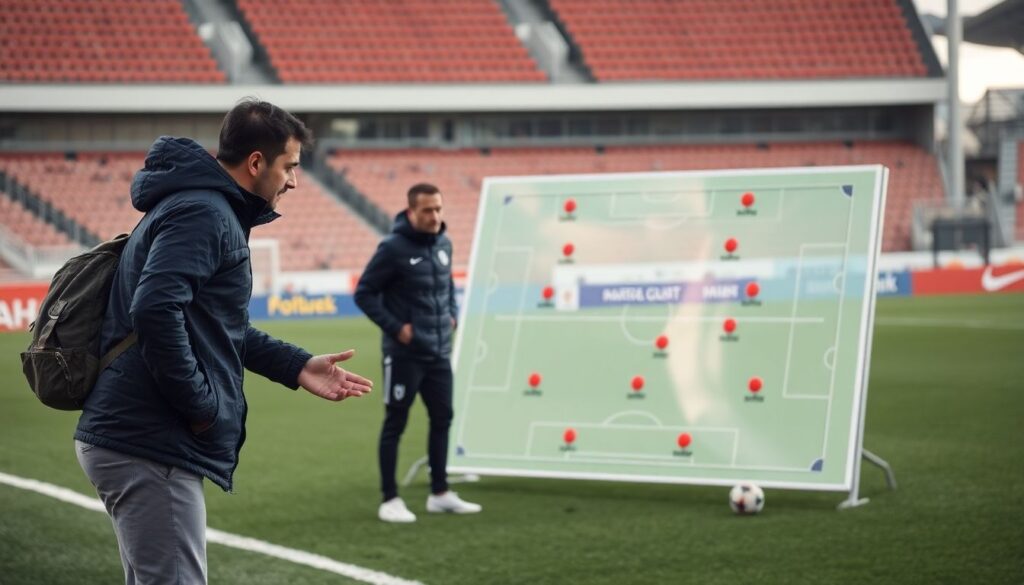
Contemporary Turkey aims to merge historical strengths with modern adaptability. Emotional intensity, direct running and transitional threat remain, but there is greater emphasis on managing phases of the game, adjusting block heights and leveraging set‑pieces as repeatable, trainable weapons.
A typical recent match might look like this simplified sequence:
Minute 1-20: Start in a medium‑high 4‑2‑3‑1 press, forcing the opponent wide. Full‑backs step aggressively, wingers curve runs to cut off backward passes. The goal is an early regain near the box, ideally turning into fast shots or corners.
Minute 20-60: If leading, the team drops to a more compact mid‑block, keeping the front four ready for counters. Possession phases become slightly longer; the double pivot circulates the ball, and full‑backs choose their moments to advance. Set‑piece routines are prioritised: rehearsed corner patterns, free‑kick screens, and second‑ball traps at the edge of the box.
Minute 60-90: Planned substitutions refresh pressing roles and aerial power for defending and attacking set‑plays. The shape may shift to a 4‑1‑4‑1 for extra stability. Game management includes tactical fouls, touchline traps and using corners and throw‑ins to slow or speed the tempo as required.
For analysts, this evolving identity offers a clear narrative to share with supporters. Whether someone is trying to watch Turkey national football team live stream from abroad, deciding which Turkey national football team jersey to buy, or browsing Turkey national football team tickets for a qualifier, the modern tactical story connects historic passion with structured, adaptable game plans.
Practical tactical questions coaches and analysts face
How can I explain Turkey’s tactical evolution to intermediate fans in simple terms?
Frame it as a journey from Terim’s direct, transition‑heavy, emotionally charged football toward a more flexible, data‑aware style. Emphasise three pillars: press organisation, buildup risk and set‑piece planning, showing how each changed over time while the core fighting spirit remained.
What should I look for when analysing Turkey’s pressing in recent matches?
Focus on the first pressing line: where the centre‑forward starts, how wingers curve their runs, and whether midfielders jump to support or hold position. Compare phases of the game: opening minutes, just after scoring, and final minutes often use different pressing heights and intensities.
How did the role of the number 10 change after Terim?
Under Terim, the number 10 was a free connector and creative hub between lines. Later coaches sometimes replaced this role with an extra midfielder for stability or pushed creativity wider into the half‑spaces, using inside‑moving wingers and deeper playmakers instead of a classic central 10.
Why is set-piece work now highlighted so much in Turkey’s preparation?
International football offers limited preparation time, but set‑pieces can be drilled quickly and reused across games. Turkey’s staff treat corners and free‑kicks as high‑leverage situations: they design rehearsed movements, blocking runs and second‑ball structures to generate chances and protect leads.
How can youth coaches in Turkey align with the national team without copying everything?
Teach universal principles: spacing, pressing triggers, switching play, and protecting rest defence. Expose players to multiple shapes (4‑2‑3‑1, 4‑3‑3, 4‑4‑2) and roles (wide, central, deeper). The goal is tactical adaptability so players can integrate quickly into any senior national‑team scheme.
What is the main risk when adopting complex national-team tactics with limited training days?
The key risk is overloading players with concepts they cannot rehearse enough. This leads to hesitation and half‑presses that are easy to play through. Coaches must prioritise a small set of clear behaviours that can be executed consistently, even under pressure.
How do fan expectations and media narratives influence tactical choices?
In a football‑intense country like Turkey, fans and media often value visible aggression and attacking intent. Coaches sometimes adjust pressing height or substitution timing to align with these expectations, especially in home matches, while still trying to protect the team’s structural balance.