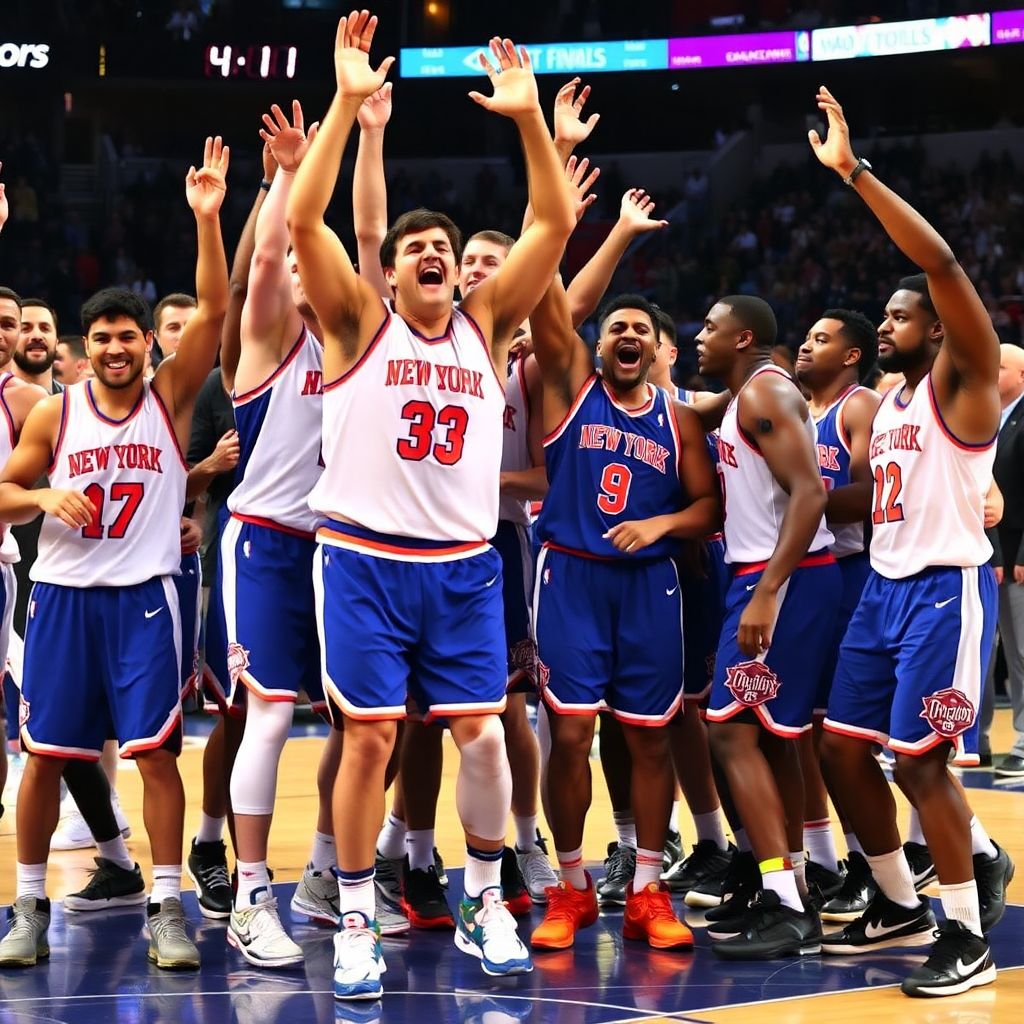
Knicks take 2-0 lead over Spurs with dramatic one‑point win in NBA Finals
The New York Knicks have seized firm control of the NBA Finals, edging the San Antonio Spurs 105-104 in a tense Game 2 to move ahead 2-0 in the best‑of‑seven series. In a contest that swung back and forth for 48 minutes at Frost Bank Center, New York’s depth and late‑game poise proved just enough to overcome another dominant performance from Victor Wembanyama.
Thriller in San Antonio
Game 2 delivered exactly what a Finals matchup promises: physical defense, high‑level shot‑making and a finish that came down to the last possession. The lead changed hands multiple times in the fourth quarter, and neither team was able to pull away by more than a few points. In the closing minute, every rebound, every loose ball and every free throw felt decisive.
New York managed to protect a razor‑thin advantage in the final seconds, forcing the Spurs into a contested look on their last offensive trip. San Antonio’s desperation attempt failed to drop, and the Knicks escaped Texas with a 105-104 victory and a commanding series cushion.
Balanced Knicks attack overwhelms Spurs
The Knicks didn’t rely on a single superstar performance to steal Game 2 on the road. Instead, they rode a balanced offense that spread the scoring load and kept San Antonio’s defense constantly rotating.
Karl‑Anthony Towns led the visitors with 21 points, showcasing his versatility as a floor‑spacing big man. His ability to step out beyond the arc, put the ball on the floor and attack mismatches created persistent problems for the Spurs’ frontcourt. Whenever San Antonio adjusted by sending extra help toward Towns, the Knicks punished them by finding open shooters and cutters.
Mikal Bridges and Jalen Brunson each chipped in 20 points, underscoring how difficult this New York team is to defend when all three are in rhythm. Bridges, with his fluid mid‑range game and aggressive drives, repeatedly exploited gaps in transition and semi‑transition. Brunson, meanwhile, controlled the tempo in the half court, using his footwork and strength to create separation against bigger defenders.
This trio’s combined 61 points didn’t come in isolation. Their scoring flowed from strong ball movement and disciplined spacing, allowing the Knicks to consistently generate quality looks rather than relying on low‑percentage heroics.
Wembanyama shines again, but Spurs fall short
On San Antonio’s side, Victor Wembanyama once more looked every bit like a future Finals MVP, even in defeat. The towering French star poured in 29 points, attacking from all three levels and repeatedly bailing out stagnant possessions. Whether slipping to the rim, popping out for jumpers or putting the ball on the floor against slower big men, Wembanyama was the focal point of nearly everything the Spurs did offensively.
However, his individual brilliance wasn’t enough to tilt the result. New York’s defense focused on limiting his supporting cast, forcing others to beat them. When the Knicks sent selective double‑teams, they rotated quickly on the perimeter, closing out hard on shooters and making every Spurs drive a challenge amid packed‑in help defenders.
San Antonio generated a few clean looks down the stretch, but they couldn’t convert enough of them to wrest control away from New York. The game’s final sequence, with the Spurs unable to get a clean shot off in the dying seconds, encapsulated their frustrating night: close, competitive, but just short.
Defensive adjustments define the margins
Beyond the scoring numbers, Game 2 was shaped by subtle strategic adjustments. The Knicks varied their coverages on Wembanyama, sometimes switching smaller defenders onto him briefly before bringing quick help from the weak side, and other times playing more conservatively to stay home on shooters. This mix‑and‑match approach prevented San Antonio from settling into a comfortable rhythm.
On the other end, New York hunted mismatches involving Towns and Brunson, dragging bigger Spurs defenders into space where they were forced to guard quicker ball‑handlers on the perimeter. When San Antonio tried to counter by downsizing, the Knicks responded by attacking the glass and punishing them inside.
These constant tactical tweaks meant neither team could simply rely on its Game 1 blueprint. In the end, New York’s flexibility and their ability to execute under pressure tipped the scales in a game that could have gone either way.
Psychological impact of a 2-0 lead
A 2-0 advantage in the Finals doesn’t guarantee a championship, but historically it puts the leading team in a very strong position. For the Knicks, winning both games – including this nail‑biter on the road – reinforces their belief that they can close out tight contests against an elite opponent. This type of win strengthens locker‑room confidence and deepens trust in the coaching staff’s game plans.
For the Spurs, the loss is more than just a number in the standings. Dropping a one‑point game at home after a standout performance from their franchise cornerstone can be mentally draining. They now face the challenge of quickly resetting their mindset, identifying what went wrong in the closing minutes and convincing themselves that the series is still there to be taken.
Key questions heading into Game 3
As the series shifts with New York holding a 2-0 edge, several storylines will shape Game 3:
– Can San Antonio find a way to ease the offensive burden on Wembanyama and get more consistent production from their perimeter players?
– Will the Knicks continue to get balanced scoring, or will someone be forced into a heavier scoring role if the Spurs successfully clamp down on Towns or Brunson?
– How will fatigue and physical wear start to influence rotations as the series intensifies and minutes accumulate for top contributors?
– Can the Spurs make the kind of defensive adjustments that turn late‑game one‑possession heartbreak into a narrow victory?
The answers to these questions will largely determine whether this Finals becomes a tense, extended battle or tilts decisively in New York’s favor.
Importance of clutch performance in the Finals
Game 2 underlined a fundamental truth about the championship stage: the ability to execute in the final minutes often matters more than any statistical edge over the first three quarters. Both teams defended with intensity, both created opportunities to win, but the Knicks were slightly sharper when the margin for error shrank to zero.
Brunson’s steady ball‑handling under pressure, Towns’ timely shot‑making and Bridges’ two‑way activity were crucial in those moments. Combined with discipline on the defensive end – avoiding unnecessary fouls, staying solid on switches and finishing possessions with rebounds – New York’s composure was the difference between a tied series and a 2-0 lead.
Looking ahead: Game 3 tip‑off time
The Finals now move forward with New York holding a two‑game cushion and the Spurs desperate for a response. Game 3 is scheduled for 9 June, with tip‑off set for 03:30 Turkish time. With San Antonio fighting to stay alive in the series and the Knicks chasing an even more commanding 3‑0 advantage, the intensity is expected to rise another notch.
If the opening two clashes are any indication, fans can expect more tactical battles, standout individual performances and a series that, despite the 2-0 scoreline, still feels finely balanced in terms of competitiveness. For now, though, it is the Knicks who stand just a little taller, having delivered in the key moments and pushed the Finals score to 2-0.