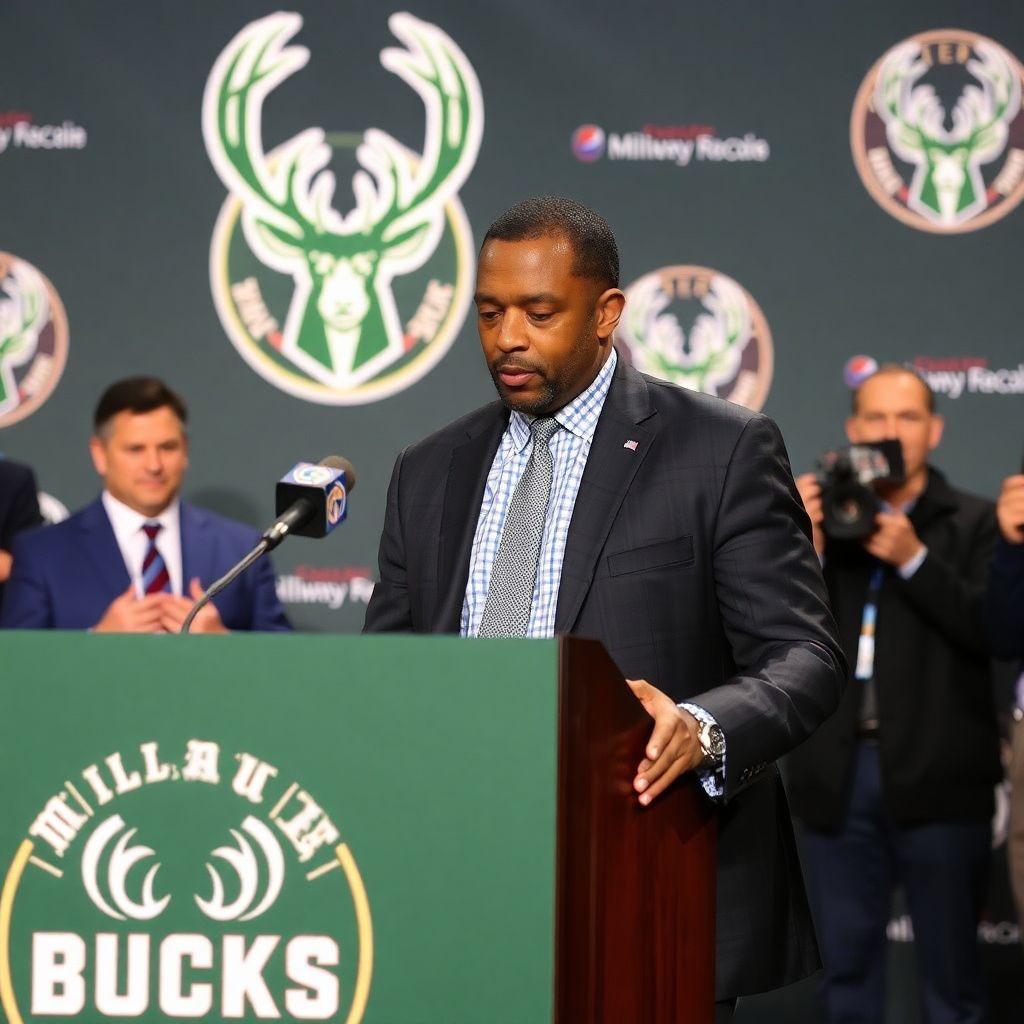
Doc Rivers era coming to an end in Milwaukee: what it means for the Bucks
Milwaukee Bucks management has decided to move on from head coach Doc Rivers, bringing a close to his tenure on the sidelines and opening a new chapter for the franchise. According to reports, the two sides have reached an agreement to part ways, with the final year of Rivers’ contract set to be fully honored financially by the organization.
While the possibility of Rivers transitioning into a different position within the Bucks’ structure has been discussed, the veteran coach is currently believed to be leaning toward stepping away and taking some time off from day‑to‑day basketball duties. After nearly three decades on NBA benches and a turbulent stretch in Milwaukee, a break from the grind appears to be an option he is seriously considering.
Disappointing season and missed expectations
The split comes after a deeply underwhelming campaign for the Bucks. The team finished 11th in the Eastern Conference, falling short not only of the playoffs but even of the play‑in tournament. For a roster built around one of the league’s premier superstars and constructed with championship aspirations, such a finish was well below organizational standards.
Injuries played a significant role. Giannis Antetokounmpo, the centerpiece of the franchise and a two‑time league MVP, struggled with recurring physical issues throughout the season. His frequent absences disrupted the team’s rhythm and placed added pressure on the supporting cast. Combined with inconsistent performances from key rotation players, those setbacks proved too much to overcome in a crowded and increasingly competitive Eastern Conference.
Rivers’ record with the Bucks
Under Rivers’ guidance, Milwaukee compiled a 97-103 record over two and a half seasons. While close to an even split, the sub‑.500 mark reflected a group that never fully managed to stabilize or consistently impose its identity on either end of the floor.
The postseason only amplified frustrations. Over the last two years, the Bucks’ results against the Indiana Pacers became a particular point of disappointment. Expected to be one of the conference’s powerhouses, Milwaukee instead suffered early exits that raised questions about lineup choices, late‑game adjustments and the overall strategic direction of the team.
A long and accomplished coaching career
Despite how his Milwaukee stint will be remembered, Doc Rivers remains one of the most accomplished coaches in NBA history. Across 27 seasons on NBA sidelines, he has amassed 1,194 regular‑season victories, a total that places him among the winningest coaches the league has ever seen.
Rivers’ legacy is highlighted by his championship run with the Boston Celtics in 2008. That title, built around the core of Paul Pierce, Kevin Garnett and Ray Allen, cemented his reputation as a coach capable of managing star personalities, instilling defensive discipline and guiding a veteran group through the pressure of a title chase.
His résumé also includes multiple deep playoff runs with different franchises, along with a reputation for strong communication skills and an ability to command respect in veteran locker rooms. For that reason, even if he chooses to rest in the short term, interest from other teams-either in coaching or front‑office roles-would not be surprising in the future.
Why the Bucks decided to move on
For Milwaukee, the decision to end the Rivers era seems rooted in a combination of on‑court performance and long‑term planning. A team built around Giannis Antetokounmpo cannot afford prolonged years of underachievement, particularly as the rest of the conference continues to reload and improve.
The Bucks struggled to define a consistent playing style under Rivers. Defensive intensity fluctuated from game to game, and offensive schemes at times relied too heavily on individual shot creation rather than cohesive ball movement. Late‑game execution was another recurring issue, with leads slipping away and close contests turning into narrow defeats.
In such a context, front office leaders appear to have concluded that a new voice is needed-someone who can re‑energize the locker room, optimize lineups around Antetokounmpo, and better balance the roster’s offensive firepower with a more reliable defensive identity.
What this means for Giannis and the franchise’s future
Any coaching decision in Milwaukee is inevitably tied to Giannis Antetokounmpo’s timeline and ambitions. The franchise’s primary objective is to convince its superstar that it remains fully committed to contending for titles, not just making the playoffs.
A change on the sidelines sends a clear message: mediocrity will not be accepted. The next coach will be tasked with maximizing Giannis’ prime years, managing his workload to protect him from further injuries, and building schemes that reduce the physical burden he carries on both offense and defense.
The franchise will also have to address how to better complement Antetokounmpo’s strengths. That means refining three‑point spacing, ensuring a more creative half‑court offense, and surrounding him with defenders capable of sustaining playoff‑level intensity over a full season. The identity and philosophy of the new coach will play a central role in these adjustments.
Possible profiles for the next head coach
While specific names have not been formally announced, the types of candidates Milwaukee is likely to consider are relatively clear:
– Defensive specialists who can restore the suffocating defensive identity the Bucks once had and build schemes tailored to Giannis’ versatility.
– Modern offensive minds capable of designing fluid systems with better spacing, ball movement and off‑ball actions to prevent the offense from stalling in crunch time.
– Player‑development-oriented coaches who can extract more from role players and younger talents, ensuring that the supporting cast grows instead of stagnates around the star core.
– Experienced leaders with a track record of managing high expectations and pressure‑packed environments, which is critical for a franchise that measures success in championships, not just wins.
Milwaukee must balance the desire for fresh ideas with the need for stability. A rushed or ill‑fitting hire would only deepen the uncertainty surrounding the team’s future.
Rivers’ possible next chapter
Although a new role within the organization has been floated, Rivers appears more inclined to step away and rest. After 27 seasons in the league, this is understandable. The pace of an NBA schedule-travel, constant media attention and the relentless pressure to win-takes a toll on even the most seasoned coaches.
A sabbatical would allow Rivers to reset, study the evolving dynamics of the modern NBA, and decide whether he wants to return to coaching, transition into a front‑office position, or focus on other forms of basketball involvement such as consulting or broadcasting. Given his history, it is unlikely that his name disappears from NBA conversations for long.
Evaluating Rivers’ legacy beyond Milwaukee
Judging Rivers solely by his stint with the Bucks would paint an incomplete picture. While his time in Milwaukee did not produce the successes hoped for, his overall body of work positions him as one of the defining coaching figures of his era.
He coached multiple Hall of Fame-level players, helped shape championship and contending cultures in several cities, and left a clear imprint on the way teams think about leadership and locker‑room dynamics. Even critics who point to some of his playoff disappointments acknowledge that his longevity and consistent presence near the top of the coaching ranks are rare achievements.
The pressure is now squarely on the Bucks’ front office
With Rivers’ departure, attention turns to management. The roster is expensive, the expectations are sky‑high, and the margin for error is shrinking. The next coaching hire, along with upcoming decisions about role players and depth, will help determine whether Milwaukee can quickly return to contender status or drifts further away from the top tier of the league.
How the organization navigates this transition will send a powerful signal to players, fans and the rest of the NBA. A well‑chosen coach who can immediately establish clear principles and unlock the group’s potential would restore belief that the Bucks are still built to chase titles. Another misstep, however, could turn this into a prolonged period of instability.
A turning point in Milwaukee
The end of Doc Rivers’ tenure marks more than just a change on the bench; it represents a decisive moment in the Bucks’ long‑term trajectory. With one of the game’s brightest stars in Giannis Antetokounmpo and a record of recent success still fresh in memory, Milwaukee stands at a crossroads between resurgence and regression.
Rivers leaves with an impressive career total of 1,194 wins and a championship ring from 2008, ensuring his legacy in league history. For the Bucks, the challenge is to transform the disappointment of recent seasons into motivation-and to find a leader capable of turning a talented, yet underperforming, roster back into a genuine championship threat.