
TFF 1. Lig is a reliable talent factory if you know what to look for: specific positions, repeatable metrics, and profiles that translate to Süper Lig intensity. Focus on young, undervalued archetypes, build a clear screening workflow, then combine video, data and character checks before deciding if a player should jump directly up or via a structured loan.
Scouting priorities for TFF 1. Lig talent
- Prioritise positions where the gap between TFF 1. Lig and Süper Lig is bridgeable in 12-18 months (full-backs, mobile 8s, wide forwards).
- Focus on underlying habits (pressing intensity, scanning, decision speed) rather than raw highlight actions.
- Use data only to narrow a wide pool, never as a final decision-maker on TFF 1. Lig best young players.
- Cross-check how each player handles game states: pressing leads, deep blocks, chasing the score.
- Plan the contract and development path on day one: minutes, loans, role, and staff support.
- Target underrated Turkish football talents early, before they put up eye-catching goal or assist numbers.
High-upside positions and archetypes emerging from 1. Lig
TFF 1. Lig is ideal for clubs seeking TFF 1. Lig transfer targets 2024 who are tactically flexible and physically robust but still under-scouted. It suits clubs that can give 1-2 seasons of structured development, not those expecting instant Süper Lig starters in every case.
When you should use 1. Lig as your primary talent pipeline:
- When your budget forces you to find value below Süper Lig and resell at a profit.
- When your game model needs high-running, aggressive players who can adapt quickly to new tactical demands.
- When your staff can invest time into tailored integration (language, off-pitch, individual coaching).
When you should be more cautious about relying on 1. Lig:
- When you need immediate European-level starters with no adaptation window.
- When your squad age is already very low and adding more developmental profiles adds instability.
- When your club lacks clear processes for individual development and loan management.
Position profiles with highest upside
Problem → evidence → action for key archetypes that often become TFF 1. Lig players ready for Super Lig.
1. Attacking full-backs / wing-backs
Problem: Süper Lig demands both high defensive awareness and attacking output from wide defenders.
Evidence to look for:
- Repeat overlapping/underlapping runs, not just occasional sprints.
- Pressing recovery runs after turnovers.
- Crosses after timing the run, not hitting from static positions.
Concrete actions:
- Tag 5-10 games versus top-6 1. Lig teams and code every wide defensive duel and overlap.
- Rate each sequence: positioning, body orientation, recovery intensity.
- Shortlist only players whose off-ball work is as strong as their crossing.
2. Box-to-box eights and hybrid six/eight
Problem: Transition intensity jumps sharply between TFF 1. Lig and Süper Lig.
Evidence to look for:
- Number of high-intensity presses that lead to turnovers or forced long balls.
- Support runs into both boxes, especially late arrivals on the edge.
- Scanning before receiving under pressure.
Concrete actions:
- Use data filters on defensive duels, progressive passes and distance covered per 90.
- Cross-check video to confirm that running is purposeful, not random.
- Flag players who can play both in a double pivot and as a high 8.
3. Inverted wingers / inside forwards
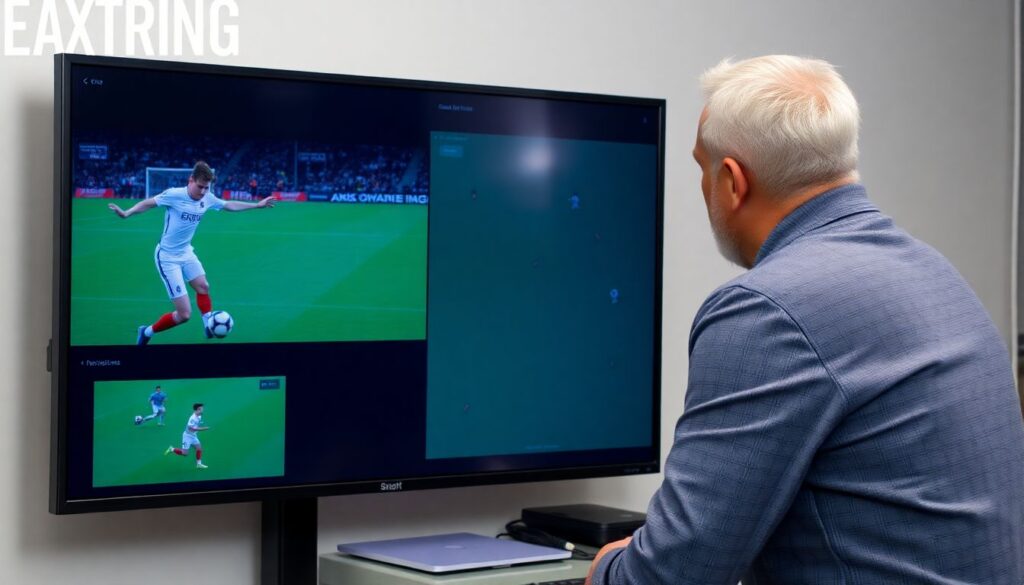
Problem: Many wingers dominate 1. Lig with dribbles but struggle versus Süper Lig defensive structures.
Evidence to look for:
- Quality of decision after the first man is beaten (shot, pass, recycle).
- Pressing and counter-press habits in wide zones.
- Shot locations and body shape when finishing.
Concrete actions:
- Evaluate shot selection rather than just goal totals.
- Tag every defensive action in the middle and defensive thirds.
- Discard wide forwards who switch off out of possession.
Role profiling action checklist
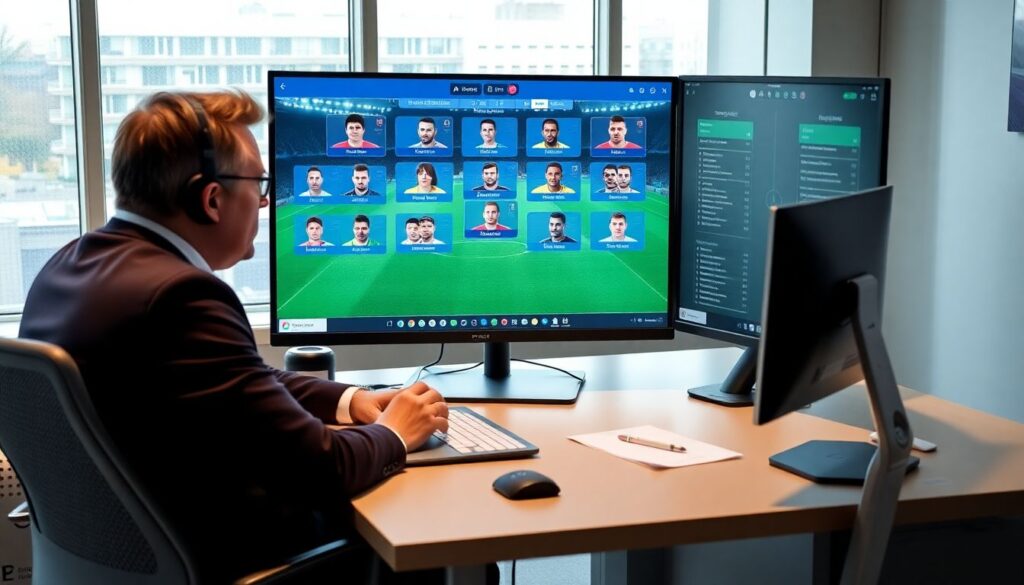
- Define 3-4 priority archetypes that fit your club model (e.g., top Turkish league wonderkids to buy as future starters, not backups).
- Create a profile sheet per role with non-negotiable behaviours and desirable extras.
- Review your current squad to see where a 1-2 year development window is realistic.
Quantitative metrics and data workflows for initial screening
To run a safe and efficient first filter on TFF 1. Lig transfer targets 2024 you need basic data access and a consistent workflow. The goal is to cut the long list quickly, not to replace video or live scouting.
Minimum tools and data you should have
- A league-wide event/data provider with touch-by-touch data for TFF 1. Lig.
- Access to minute-by-minute or tracking-style running metrics (even basic estimates).
- Simple database or spreadsheet where you store and update your own ratings.
Core screening metrics by position
Keep ranges broad and use metrics as signals, not absolutes.
- Full-backs: progressive passes/carries, crosses into the box, defensive duels in wide areas, pressing actions in opposition half.
- Centre-backs: aerial duels, line-breaking passes, interceptions, long ball accuracy.
- Six/eight: progressive passes, pressures, ball recoveries, passes received under pressure.
- Wingers/forwards: shots from central zones, non-penalty xG (if available), successful dribbles, possession-adjusted pressures.
Practical data workflow
- Build role-based filters (age, position, minimum minutes, 3-4 key metrics).
- Export shortlists of 15-30 players per role.
- Tag each player with a quick visual grade: A (priority watch), B (monitor), C (only if cheap/free).
Template: quick data note for a player
Use a consistent structure for all underrated Turkish football talents you monitor:
- Profile: Position(s), dominant foot, age bracket.
- Usage: Minutes, starts vs sub appearances, game states he plays most in.
- Signals: 3 positive indicators and 1-2 red flags from the data.
Data screening action checklist
- Define 3-5 key metrics per role that matter specifically for your game model.
- Set up a monthly update routine to refresh and re-grade all shortlisted players.
- Reject any player for whom data and video tell conflicting stories until you resolve the gap.
Tactical translation: how 1. Lig performances map to Süper Lig demands
Before following any how-to steps, prepare with this short checklist:
- Clarify your own team’s defensive and attacking principles in writing.
- Collect at least 3 full matches of the target player against strong 1. Lig opponents.
- Agree inside your staff what “ready for Süper Lig” precisely means for each position.
- Prepare a simple coding sheet: build-up, transition, final third, set pieces.
The following steps help you safely judge whether 1. Lig performances will scale up to Süper Lig or higher.
-
Anchor everything in your game model
Map your core principles: pressing height, build-up style, defensive block, attacking structure. Then list what each position must do in these phases. Use this as the benchmark for all film you watch. -
Contextualise club playing style
Check how the player’s current team plays. A dominant 1. Lig side can hide defensive weaknesses, while deep-block teams may hide offensive potential.- Note team possession share, pressing height, and typical block (low/mid/high).
- Record if the player’s role is unusually protected or simplified.
-
Study behaviour against pressure
Süper Lig pressure is faster and better coordinated. Focus on how the player reacts to tight spaces, traps and double-teams.- Clip every touch under pressure in central areas.
- Grade decisions: escape, safe recycle, turnover, panicked clearance.
-
Evaluate transition moments
Many TFF 1. Lig best young players impress in settled phases but struggle in chaotic transitions.- On loss of possession: immediate reaction, sprint distance, positioning.
- On win of possession: recognition of space, runs, and pass choices.
-
Adjust expectations by opponent level
Double-weight games versus top-6 1. Lig sides and cup matches vs Süper Lig teams. These show closer-to-reality stress.- Create separate grades for “vs bottom half” and “vs top half”.
- Be sceptical of players who only dominate weak opposition.
-
Simulate the role in your own system
Imagine precise responsibilities in your team: pressing triggers, passing lanes, rotations. Check if the player has shown each required behaviour at least a few times on film.- Note observable habits that match your demands.
- Highlight missing behaviours to be trained, not assumed.
-
Decide the entry route: direct, rotation, or loan
Use the evidence to categorise: ready starter, rotation piece, or needs 1-2 year loan bridge.- Match the role to the risk: higher risk is only acceptable for lower-impact depth roles.
- Write a 6-12 month development plan before finalising any move.
Tactical mapping action checklist
- Write a one-page document translating each position’s role from TFF 1. Lig context into your Süper Lig context.
- Score every target on behaviour in pressure and transition before looking at highlight clips.
- Label each player clearly as direct, rotation, or loan-based integration.
Physical, technical and mental readiness checklist before promotion
Use this checklist to validate whether a prospect is safe to promote or should remain on your list of TFF 1. Lig players ready for Super Lig but still needing a bridge step.
- Physical intensity: Can he repeat high-intensity runs for the full match without visible drop? Ask S&C staff to review running patterns.
- Acceleration and agility: Does he recover quickly over the first 5-10 metres when beaten or after changing direction?
- Robustness: Does he ride challenges, absorb contact and get up quickly, or does he stay down often?
- First touch and ball security: Can he control difficult balls with pressure nearby and keep the action flowing?
- Decision speed: Does he know what to do before receiving, or does he need extra touches to decide?
- Game understanding: Does he adjust position based on team shape and game state without constant coaching?
- Resilience: How does he respond after mistakes or conceding? Look for visible body language shifts.
- Professional habits: Reports from staff about training consistency, punctuality, and willingness to learn.
Promotion readiness action checklist
- Have S&C, technical and psychology/leadership staff each give a short written rating for the player.
- Promote only players with no major red flags in at least two of the three areas (physical, technical, mental).
- Build an individual development plan to address the top two weaknesses before or immediately after the move.
Contract, loan and transfer strategies to accelerate development
Many clubs identify top Turkish league wonderkids to buy, but lose value through poor deal structures and development planning. Avoid these frequent mistakes:
- Overpaying for peak form, not long-term profile
Paying based on a hot three-month scoring run instead of stable underlying habits and metrics. - Ignoring sell-on and resale dynamics
Not negotiating realistic sell-on percentages, buy-back or matching rights that protect your upside. - Loaning to tactically incompatible clubs
Sending players to teams whose style contradicts your development goals. - Unclear playing-time guarantees
Agreeing loans with no real incentives for the receiving club to give minutes. - Short contracts for long-term projects
Signing developmental players on too-short deals, leaving little time to realise value. - No individual development clauses
Failing to include clear expectations about position, role, or extra training in loan agreements. - Poor communication during loans
Not assigning a staff member to track, visit and support each player on loan.
Practical contract and loan clause ideas
- Appearance incentives: Bonuses to the loan club or reduced fee if the player starts a set number of league games.
- Role description: Soft clause stating preferred position zones and tactical role.
- Mid-season break option: Option to recall if minutes or role are far below agreed thresholds.
Contract and loan action checklist
- Draft a standard “development loan” template contract including minutes-related incentives and recall options.
- Maintain a ranked list of partner clubs by tactical fit, staff trust and recent track record with young players.
- Appoint a dedicated loan manager to track progress and update each player’s plan monthly.
Club case studies: successful promotion pathways and scout playbooks
Below are anonymised models for using TFF 1. Lig as a talent factory. Each shows a different way to treat underrated Turkish football talents safely.
Pathway A: Direct starter with protected role
A mid-table Süper Lig club signs a high-intensity box-to-box midfielder from 1. Lig. They give him a clear role as the third runner from midfield and protect him with an experienced holding six.
- He starts mainly at home matches and against lower-half teams at first.
- Coaches avoid overloading him with set-piece responsibilities early.
- Individual video sessions focus only on 2-3 key behaviours for the first months.
Pathway B: Buy-and-loan-back to 1. Lig
A top-four Süper Lig side buys a creative 10/winger early, leaving him on loan at his 1. Lig club for a full season.
- The parent club sets specific targets on pressing and defensive positioning to prepare for their higher block.
- Loan club staff share monthly reports and game clips with the parent club.
- The player joins the parent club in pre-season camps even during the loan.
Pathway C: Multi-club ladder system
A group owning clubs in 1. Lig and Süper Lig uses a ladder: sign young 1. Lig talents, promote to lower Süper Lig club, then sell to bigger markets.
- Scouts coordinate a joint target list for TFF 1. Lig transfer targets 2024.
- Shared data and video systems reduce duplication of work.
- Each club specialises in certain positions to develop (e.g., full-backs at one, centre-backs at another).
Pathway D: Sell first, keep minutes at current club
For certain TFF 1. Lig best young players, the safest option is to sell them to a foreign club while they remain at home on loan.
- The player gains stability and guaranteed minutes while the buying club secures a long-term asset.
- All parties agree on a gradual physical and tactical programme for the next 12-18 months.
- This reduces adaptation shock, especially for younger prospects.
Pathway selection action checklist
- Choose which pathway (direct, buy-and-loan, ladder, or sell-and-loan) your club can realistically execute well.
- Create a simple internal playbook describing steps, responsible staff and timelines for each pathway.
- Review past moves from 1. Lig and classify them by pathway and outcome to refine your strategy.
Scouting snapshot: underrated 1. Lig player archetypes
This table illustrates how to summarise potential targets safely. Replace “Player A/B/…” with real names in your internal reports once you have data and video to support each tag.
| Label | Primary role | Key strengths (qualitative) | Main risk | Suggested next step |
|---|---|---|---|---|
| Player A | Attacking right-back | High stamina, aggressive overlaps, decent crossing on the run | Positioning in rest defence | Sign then loan to mid-table Süper Lig team with clear full-back coaching |
| Player B | Left-footed centre-back | Calm on ball, line-breaking passes, good timing in duels | Top speed in big spaces | Integrate as rotation CB in back four; extra sprint work with S&C |
| Player C | Box-to-box eight | Relentless pressing, late box arrivals, strong mentality | Limited long-range passing | Immediate Süper Lig squad role; individual work on switches and diagonals |
| Player D | Defensive midfielder (6) | Good positional sense, intercepts well, simple but clean distribution | Limited aerial dominance | Loan to team using a single pivot; targeted aerial and strength programme |
| Player E | Inverted right winger | 1v1 dribbling, strong shot from edge of box, cuts inside intelligently | Defensive work rate inconsistent | Buy and keep in 1. Lig for one more season with pressing KPIs |
| Player F | Second striker / 10 | Finds pockets, plays quick combinations, good final pass | Physical duels vs stronger defenders | Use as impact sub first season; gym-based strength plan |
| Player G | Wide forward | Runs in behind, understands offside line, strong finishing in box | Link-up play under pressure | Loan to counter-attacking Süper Lig team; specific back-to-goal training |
| Player H | Attacking left-back | Good crossing, combination play, solid 1v1 defending | Concentration late in games | Rotation option in Süper Lig; mental skills and focus work |
| Player I | Goalkeeper | Shot-stopping, brave claim of crosses, quick distribution | Playing under intense press | Sign, keep as cup GK; extra sessions on short build-up patterns |
| Player J | Right-sided centre-back (back three) | Carries ball forward, comfortable wide, covers channels well | Adapting to back four spacing | Loan into a back-three system abroad or in Süper Lig; gradual transition later |
Practical concerns scouts and coaches commonly face
How many full matches do I need to watch before moving on a 1. Lig player?
For serious targets, aim for at least 4-6 full games, including matches against top-6 teams and at least one away game. Complement this with highlight compilations only after you have a base impression from full matches.
Should I trust data if I have limited video from certain TFF 1. Lig matches?
Use data as a guide to where to look, not as proof of quality. If video coverage is thin, downgrade confidence in your assessment and avoid big financial commitments until you have seen enough footage.
Is it safer to promote directly or to use a loan bridge first?
It depends on squad depth, position and the player’s maturity. If you cannot guarantee at least some meaningful minutes in the first year, a well-structured loan to a tactically similar team is usually safer.
How do I compare a 19-year-old 1. Lig player to a 24-year-old option?

Project the younger player’s development curve, including minutes, resale potential and wage demands. A slightly weaker current level can be acceptable for a 19-year-old if you can offer a clear pathway and development resources.
What if coaching staff disagree with scouting about a player?
Bring everyone around the same table and walk through clips tied to specific behaviours and game situations. Translate scouting language into concrete tactical tasks so coaches can judge fit rather than only raw talent.
How early should we move on an emerging 1. Lig talent?
Ideally before he posts standout counting numbers that attract larger bidders. If underlying behaviours are strong and stable, moving one window early is usually more cost-effective and gives you time for a controlled integration.
Can foreign clubs rely on TFF 1. Lig as a main recruitment source?
Yes, if they invest in local knowledge, language support and at least one trusted partner club in Türkiye. 1. Lig can be a consistent pipeline, but success depends on your ability to support adaptation off the pitch.