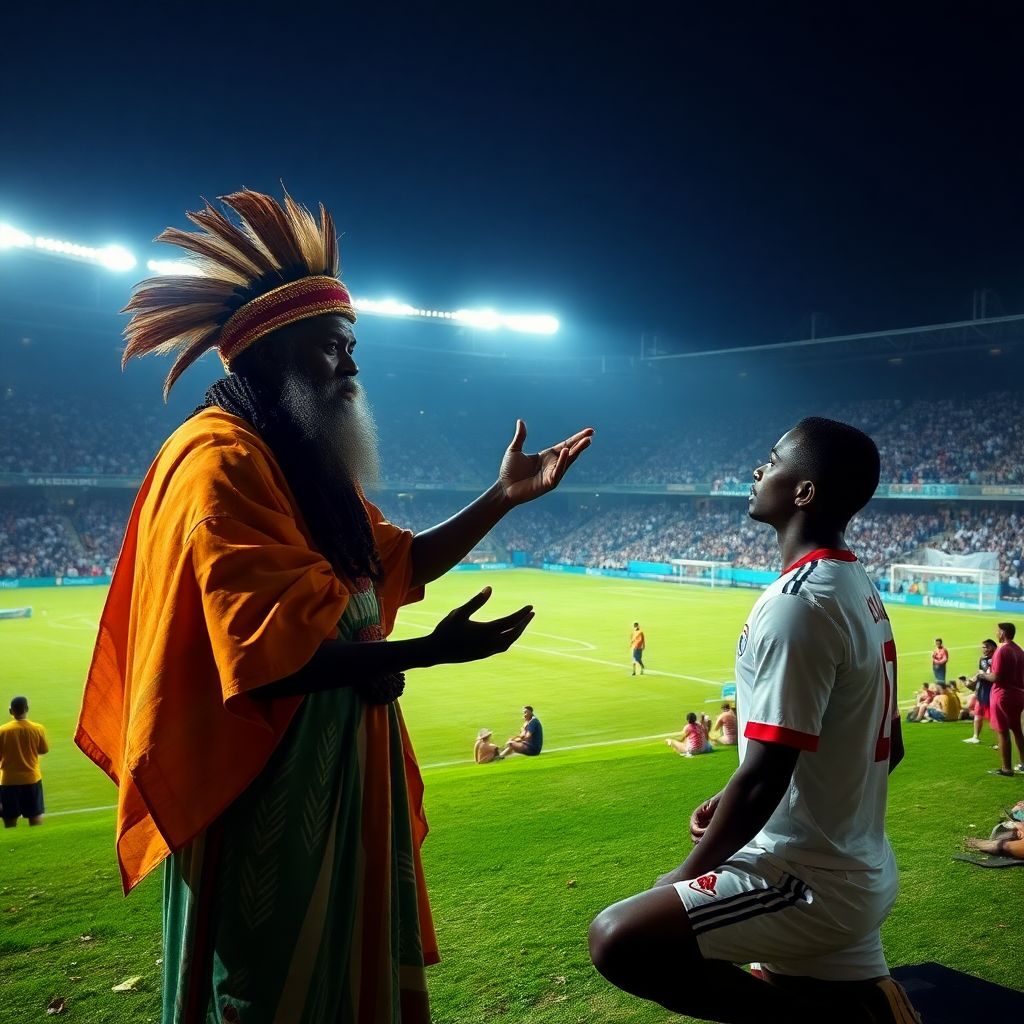
Ghanaian shaman lifts Harry Kane’s “curse” ahead of World Cup
A self-proclaimed spiritual healer from Ghana, Nana Kwaku Bonsam, claims he has removed a mystical “curse” said to be weighing on England striker Harry Kane during the 2026 FIFA World Cup. Known in parts of African football culture for his prophecies and talk of spells, Bonsam says he has cleansed the forward of all negative energy and spiritual pressure, opening the door for Kane to perform at his absolute best.
According to his own account, the shaman insists that whatever supernatural forces might have been holding the England captain back are now gone. He portrays the intervention not as an attack, but as a gesture of admiration and support for one of the most prolific goalscorers in modern football.
“I lifted the curse on Harry Kane yesterday,” Bonsam is quoted as saying. “He is not my enemy. If I ever have a son, I will name him Harry Kane. I’m completely sure that from now on he will play very, very well.” In his view, the striker had been burdened by unseen spiritual obstacles, which he claims to have cleared away during the tournament.
From “negative energy” to renewed confidence
Bonsam describes his ritual as a process of removing “negative energy” and “spiritual pressure” surrounding Kane. In many African spiritual traditions, poor form or recurring misfortune on the pitch can be interpreted not only as a sporting or psychological issue, but also as a sign of metaphysical interference. The shaman argues that once this invisible weight is lifted, the player can express his full potential.
Whether one believes in curses or not, the narrative taps into a familiar football storyline: a star player battling expectations, criticism and internal doubts. While sports psychologists would frame these as mental blocks, Bonsam casts them as spiritual chains that can be broken through ritual and intention.
A striking declaration of admiration
What makes Bonsam’s comments particularly striking is the intensity of his admiration for the England striker. Saying he would name his own son after Harry Kane is a dramatic way of underlining the respect the Ghanaian shaman claims to have for the forward’s talent and professionalism.
In football culture, naming a child after a star is a long-standing expression of devotion. By placing Kane in that category, Bonsam aligns the English forward with the very top tier of global icons in the game. It also serves to distance himself from any idea that he might actively want to harm the player with witchcraft or malicious spells.
Faith, superstition and modern football
Stories like this sit at the crossroads of belief, superstition and elite sport. At the top level, everything is measured in data: distance covered, expected goals, shot maps, pressing intensity. Yet around this data-driven core, a parallel world of rituals, lucky charms and spiritual narratives still thrives.
Players tie their boots in a specific order, step onto the pitch with the same foot every time, kiss tattoos or say prayers before kick-off. Entire fan bases cling to certain routines that “must” be followed on matchday. In that context, the idea of a shaman lifting a curse on a striker may sound exotic, but it is part of the same human impulse: to find meaning, control and hope in a game where so much is uncertain.
In some cultures, that impulse takes the form of religious devotion; in others, it includes traditional spiritual practices or consultations with healers and fortune-tellers. Football, as a global phenomenon, absorbs all of these layers at once.
Pressure on Harry Kane and the search for explanations
Harry Kane, as captain and primary goalscorer, often carries a heavy load of expectation for both England and his club. Every missed chance, every quiet game and every fitness concern tends to be dissected in forensic detail. When a player of his status goes through a difficult patch, people search for explanations that go beyond tactics and form.
For some, it’s the manager’s system. For others, it’s fatigue, mental strain or injury. For believers in the supernatural, it might be a curse, an evil eye or a run of spiritual bad luck. Bonsam’s claim to have intervened taps directly into that way of understanding misfortune on the pitch.
Even if most analysts reject the idea of actual witchcraft in football, they acknowledge that belief itself can influence performance. A player who is convinced that a curse has been lifted may, at a psychological level, feel more liberated, more confident and better prepared to seize crucial moments.
Media fascination with the mystical side of sport
The story of a Ghanaian shaman “freeing” Harry Kane from a curse fits perfectly into a long media tradition: mixing football coverage with mythology and mystery. From tales of haunted stadiums to rumours of strange rituals before decisive matches, the mystical side of sport consistently attracts attention.
This kind of narrative does more than entertain. It reflects how deeply football is woven into cultural and spiritual life around the world. In some regions, a big match is not just a 90-minute contest, but a test of fate, faith and cosmic alignment. The idea that a spiritual specialist in West Africa might feel compelled to intervene in the career of an English star illustrates how global the game has become and how many belief systems it encompasses.
Between ritual and performance
Whether one views Bonsam as a serious spiritual figure or a colourful character, his comments highlight an important theme: many athletes and fans believe that performance can be influenced by forces beyond pure training and tactics. Some players wear the same boots for months, others refuse to touch a trophy before a final, and entire squads might invite religious leaders or spiritual advisers into the dressing room.
From a strictly rational perspective, none of this changes a player’s first touch or shooting accuracy. Yet, if the ritual makes the athlete feel calmer, more focused or more protected, it can have a very real effect on performance. In that sense, a “curse being lifted” functions as a powerful symbol of a fresh start.
How such stories shape fan expectations
For supporters, a narrative like this becomes part of the emotional build-up to a major tournament. Many fans are desperate for signs that their star players are ready to deliver on the biggest stage. The image of a curse being removed fits neatly into the storyline of redemption, renewal and destiny that surrounds international football.
If Kane goes on a scoring run, some will jokingly credit the shaman. If he struggles, others will dismiss the whole episode as superstition. Either way, the story adds another layer of drama to every chance he gets, every penalty he takes and every celebration he leads.
The enduring power of myth in a data era
Modern football is increasingly dominated by analytics, but mythmaking remains a central part of how the sport is experienced. Fans still talk about “cursed” stadiums, “jinxed” kits and “lucky” goals that changed history. Managers and players speak of “football gods” smiling or turning their backs on a team.
Nana Kwaku Bonsam’s claims slot naturally into that landscape. He personifies a worldview in which luck, fate and spiritual forces are active participants in each match. Even those who don’t share this belief may find themselves drawn to the story because it echoes the ancient human habit of turning games into legends.
What ultimately matters on the pitch
In the end, the decisive factors for Harry Kane will still be his physical condition, tactical role, mental resilience and the support of his teammates. No ritual can replace preparation, training and execution. Yet for a player under intense scrutiny, any narrative that symbolises a break from past disappointments can be psychologically useful.
If Kane believes that the “curse” narrative is nothing more than a curiosity, it will likely fade into the background. If he chooses to embrace the idea that a cloud has lifted – whether spiritually or metaphorically – it could serve as a mental reset, helping him approach the rest of the tournament with a renewed sense of freedom.
What is certain is that the story of a Ghanaian shaman lifting a supposed curse has already become part of the wider World Cup conversation. It underlines how football continues to be more than a sport: it is a stage where statistics, superstition, science and spirituality all compete to explain what happens when a striker steps up to shoot and a nation holds its breath.