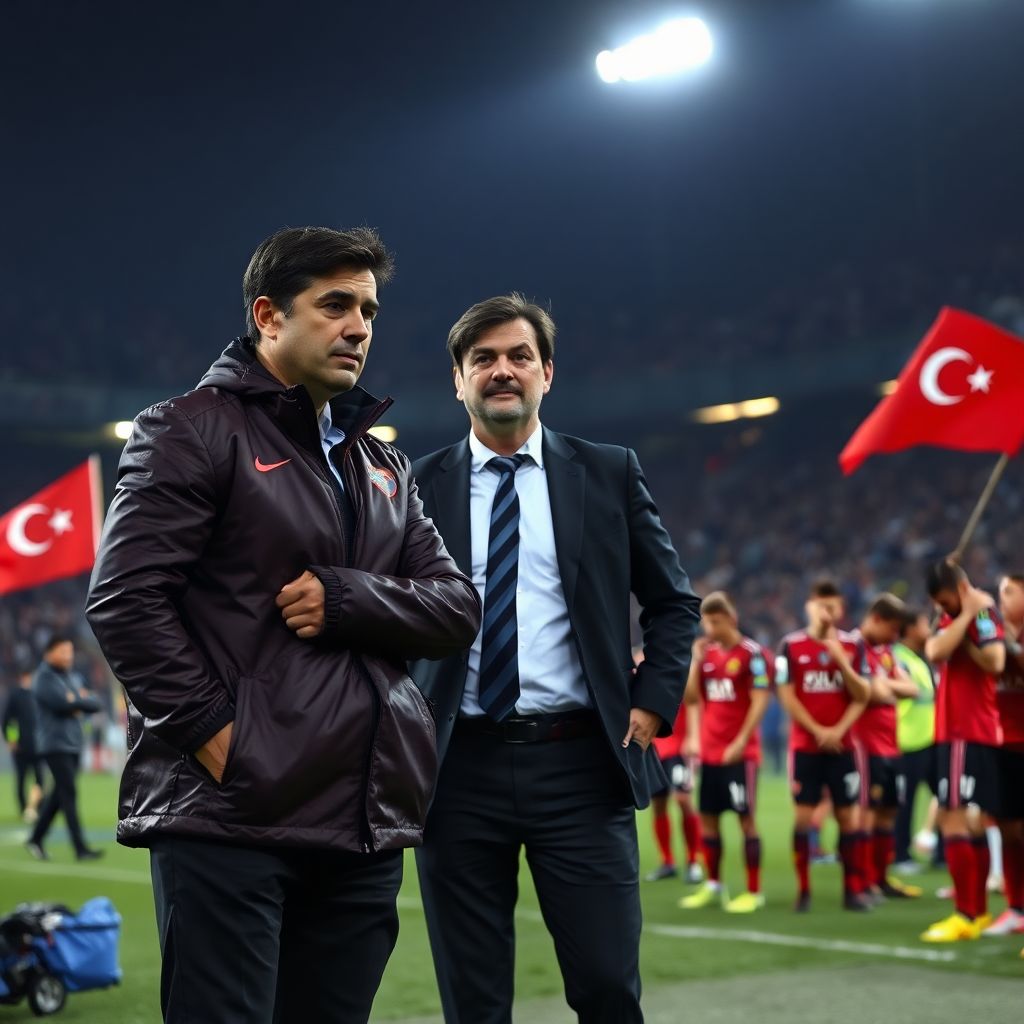
“We’ll do better next time”: Montella vows response after Australia defeat
Turkey’s national team started their 2026 FIFA World Cup campaign with a disappointing 2-0 loss to Australia, but head coach Vincenzo Montella insists this performance will not define their tournament. Speaking after the match, Montella underlined that the game unfolded largely as his staff had anticipated tactically, yet the outcome was shaped by missed chances and Australia’s clinical finishing.
According to Montella, Australia’s approach came as no surprise. He explained that he and his staff had prepared for a rival that would wait deep in their own half and look to strike on the counter:
“We knew they would sit back in a low block and try to hurt us in transition. They used counterattacks effectively. We conceded twice and of course we are very disappointed. But we showed team spirit, we played with heart. If we keep that attitude and intensity, the results we want will come. We’ll do better in the next match.”
The statistics underline the frustration. Turkey attempted around 30 shots over the 90 minutes, yet failed to find the net. Montella stressed that volume of attempts alone doesn’t guarantee victory, especially when efficiency and a bit of luck are missing:
“When you have 30 shots and the ball still doesn’t go in, it means that fortune is not on your side. We came very close to scoring several times, but we couldn’t break their defensive wall. They are a very tall, physically strong team; playing against this kind of opponent is never easy. Australia deserve congratulations, they played very well and executed their plan.”
Despite the disappointment, Montella accepted that defeat inevitably brings scrutiny. For him, criticism is part of the job, even when he feels some of it may be harsh:
“When you lose, you have to be ready to accept all criticism, even if it’s not entirely fair. That’s part of football. Our responsibility is to respond on the pitch, not with words. What matters now is how we react.”
The Italian coach also highlighted individual efforts, singling out several players for their commitment and tactical roles. He praised winger Kerem Aktürkoğlu in particular for his intensity and desire:
“Kerem left everything on the pitch. He put his soul into the game and fought until the final whistle. That’s the kind of mentality I want from everyone. Can Uzun played in his natural role behind the striker, trying to connect midfield and attack. As for Arda Güler, I wanted to keep him on the field as long as possible because he can change a game with one moment of quality.”
Aktürkoğlu, speaking after the final whistle, confirmed that the team had expected Australia to defend deep and look for quick breaks:
“We knew they would sit back and then look for counterattacks. As a team, we couldn’t stop those transitions well enough. While we were dwelling on the chances we missed and regretting not scoring, we were caught unprepared and conceded. At this level, a moment of lack of focus costs you dearly.”
Tactical reading of the match
From a tactical perspective, Turkey tried to take control from the start, pushing numbers forward and attempting to stretch Australia’s compact defensive structure. The high shot count shows that Montella’s side did manage to reach the final third frequently, but they often struggled to turn territorial dominance into clear, high-quality opportunities.
Crosses and long-range efforts were a major part of Turkey’s attacking repertoire, yet Australia’s physically imposing defenders dealt well with aerial balls and crowded the box to block shots. This forced Turkish players to attempt efforts from difficult positions or under strong pressure, which reduced accuracy and composure in front of goal.
Montella’s choice to keep creative talents like Arda Güler on the pitch for as long as possible reflected his belief that one piece of individual brilliance could unlock such a tight defense. However, without an early breakthrough, Australia grew in confidence and found more room to counter as Turkey committed more men forward.
The challenge of facing physically dominant opponents
One of Montella’s key points concerned Australia’s physical attributes. Their height and strength gave them a clear advantage in aerial duels, set pieces, and direct battles. For a team like Turkey, which often relies on quick combinations and technical quality, this type of opponent demands a very precise game plan.
Breaking down a tall, compact side typically requires rapid ball circulation, constant movement between the lines, and sharp runs in behind rather than repetitive crosses into a crowded box. The fact that Turkey ended the game without scoring suggests that, while they were determined, they did not always find the right balance between patience and risk, or the right patterns to fully exploit the spaces Australia left.
Mental resilience and the road ahead
Despite the negative result, Montella’s message focused heavily on mental strength. He emphasized that the team’s fighting spirit remained intact and that such setbacks can serve as fuel rather than a burden:
“Defeats at tournaments like the World Cup are painful, but they can also be turning points. What matters is that we stay united, keep believing in our football, and learn quickly from what went wrong. If we maintain this hunger and improve our efficiency, we will start collecting the points we need.”
For the players, processing a loss in the opening match is as much a psychological issue as a tactical one. Starting a major tournament with a defeat can create tension and external pressure; fans and media demand immediate reactions. Montella appears determined to shield his squad from excessive negativity and to use the criticism as motivation.
Key areas Turkey must improve
Looking ahead to the next fixtures, several areas of improvement stand out:
1. Finishing and decision-making in the final third
Thirty shots without a goal points not only to bad luck, but also to problems in shot selection and composure under pressure. Turkey will need to be more selective, seeking clearer chances rather than rushing attempts from low-percentage positions.
2. Transition defense
Both Montella and Aktürkoğlu acknowledged that counterattacks were decisive. Improving how the team organizes immediately after losing the ball will be crucial. Better rest defense – positioning of defenders and holding midfielders when attacking – can reduce the space opponents find on the break.
3. Variety in attacking patterns
Against compact, physically strong teams, repeating the same attacking approach plays into the opponent’s hands. Turkey may need more varied combinations, including quick one-twos around the box, diagonal runs behind the defensive line, and coordinated movements to pull defenders out of position.
4. Set-piece efficiency
Facing a tall defense is a challenge, but it can also be an opportunity if set plays are executed with precision. Clever routines, blocks, and runs can neutralize height differences. Improving delivery quality and timing might turn dead-ball situations into a real weapon.
The role of key players in the response
Montella’s comments on individual players hint at the roles he envisions for them in the upcoming matches. Kerem’s energy and directness on the wing will remain vital for stretching defenses and creating one-on-one situations. Can Uzun, operating behind the striker, is expected to link midfield with attack, finding pockets of space where he can receive between the lines and feed runners.
Arda Güler, with his creativity and vision, is central to the plan when Turkey needs to unlock a packed defense. Keeping him on the pitch as long as possible is a gamble on his ability to decide a game with a single pass or shot. The challenge for Montella will be to surround such talents with the right complementary profiles – runners who create space, midfielders who balance attack and defense, and defenders who can defend large spaces when the team is pushed high.
Balancing expectations with realism
Turkey’s ambitions for the 2026 World Cup remain high, but this early defeat is a reminder that progress is rarely linear. A single match does not define a campaign, yet it exposes weaknesses that cannot be ignored. Montella’s insistence that the team will “do better next time” is not just a promise to supporters; it is a commitment to rapid adaptation in a high-stakes environment.
For the fans, the disappointment is understandable: a 2-0 loss to a team they expected to compete with directly for qualification from the group is a blow. However, the performance did include positive elements – high energy, territorial control, and a clear intent to attack. Turning those positives into goals and points is now the primary task.
What “doing better” actually means
When Montella says, “We’ll do better in the next match,” it is not only about winning; it’s about improving the quality of Turkey’s performance in measurable ways. That likely includes:
– Conceding fewer clear chances on the counter.
– Creating a higher proportion of high-quality goal opportunities, not just a large quantity of shots.
– Managing the emotional swings of the match more calmly, especially after missed chances or refereeing decisions.
– Showing the same fight and heart, but with more clarity and structure in possession.
If Turkey can raise their level in these aspects, the next matches can quickly change the mood around the team and restore belief both within the squad and among supporters.
A defeat as a lesson, not a verdict
Ultimately, the loss to Australia is a setback, not a sentence. Montella’s post-match remarks reflect a coach who recognizes the flaws but also sees a group willing to fight and improve. The World Cup rarely forgives repeated mistakes, yet it often rewards teams that learn fast from early blows.
Turkey now faces a simple but demanding task: turn frustration into focus, criticism into concentration, and promise into points. The message from Montella is clear – this team intends to respond, to adjust, and, as he put it, to “do better next time.”