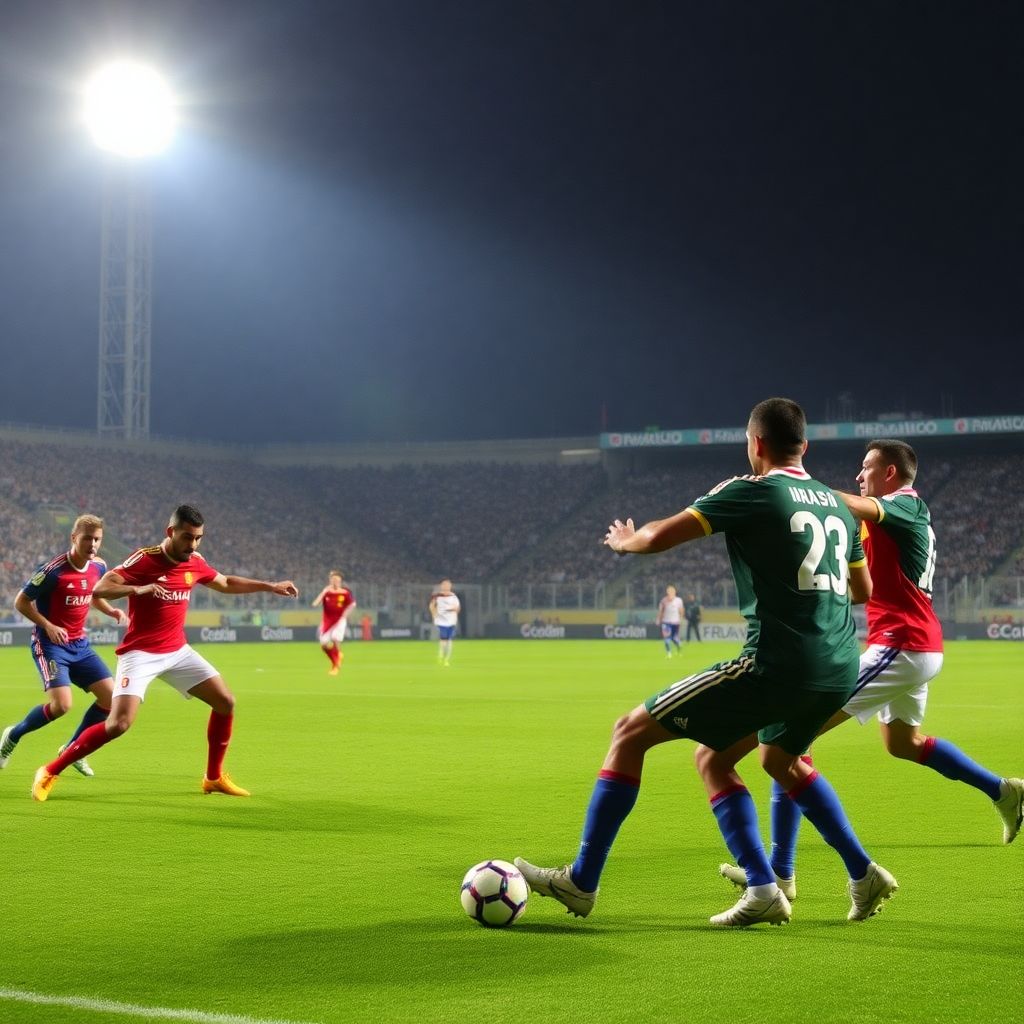
Spain stumble to 1-1 draw with resilient Iraq in World Cup warm‑up
Spain’s preparations for the 2026 FIFA World Cup hit an unexpected bump as La Roja were held to a 1-1 draw by Iraq in a friendly match played at Riazor Stadium. Despite a bright start and an early lead, the Spanish side failed to turn their dominance into a convincing victory, while Iraq showed discipline, intensity and tactical maturity to earn a deserved result.
The home side struck first. In the 16th minute, Spain broke the deadlock through Torres, who capitalised on sustained pressure in the Iraqi half. After a patient passing sequence, the forward found enough space inside the box to finish clinically and put Luis de la Fuente’s men ahead, suggesting that an easy evening might be in store for the hosts.
Iraq, however, refused to be overwhelmed by Spain’s quick goal or the hostile atmosphere in A Coruña. Instead of retreating into a deep defensive shell, the visitors gradually grew into the game. They tightened their lines, improved their pressing and began to threaten in transition whenever Spain lost the ball in midfield.
Their reaction was rewarded in the 27th minute. Doski, who had been active down the flank, stepped up with the equaliser that ultimately decided the scoreline. Exploiting a rare lapse in Spain’s defensive organisation, Iraq moved the ball quickly and efficiently, and Doski finished off the move to make it 1-1. From that point on, the match turned into a tactical battle rather than a one-sided Spanish showcase.
Spain continued to enjoy longer spells of possession, circulating the ball and trying to stretch the Iraqi back line, but they repeatedly struggled in the final third. Iraq remained compact, closed central channels effectively and forced Spain to rely on crosses and shots from distance. Whenever Spain managed to find a way through, the Iraqi defence and goalkeeper stood firm.
One notable absence from Spain’s squad list was Lamine Yamal. The young star, who has quickly become one of the most talked‑about talents in world football, was not included in the matchday group. His omission inevitably shifted extra creative responsibility onto other attacking players and may have contributed to Spain’s occasional lack of spark in the final phase of their attacks.
On the touchline, head coach Luis de la Fuente used the friendly not only as a chance to gauge his team’s current level, but also as an opportunity to test different combinations and give minutes to several squad members. With the World Cup approaching, rotation and experimentation are key, yet this also meant that Spain sometimes looked less fluid than usual, with certain players clearly still working on their chemistry.
Spain now turn their attention to their final pre‑tournament test, a friendly against Peru. That match will be crucial for ironing out the flaws that surfaced against Iraq: sharper movement in the box, quicker ball circulation in tight spaces and better concentration in defensive transitions. De la Fuente will also have to decide whether to restore some of his most trusted names to the starting XI or continue to experiment.
At the World Cup itself, Spain will compete in Group H, where they are widely considered favourites on paper. They will face Cape Verde, Saudi Arabia and Uruguay in what promises to be a varied and challenging group. Cape Verde offer physicality and collective discipline, Saudi Arabia bring high energy and tactical organisation, while Uruguay traditionally combine rugged defending with lethal forwards. Any complacency from Spain, such as the lapses seen against Iraq, could be punished at this level.
For Iraq, the draw is more than just a morale boost; it is a statement that they can compete with established football powers when they remain organised and clinical. Iraq will play in Group I at the World Cup, where they are set to meet France, Norway and Senegal. Each of these opponents presents a different test: France’s star‑studded squad and attacking depth, Norway’s physical approach and aerial threat, and Senegal’s pace and power across the pitch.
This result against Spain will reinforce Iraq’s belief that a compact defensive block, quick counterattacks and high work‑rate can trouble even elite teams. Doski’s equaliser and the team’s collective defensive commitment provide a clear blueprint. If they can maintain that level of discipline over 90 minutes in tournament conditions, Iraq might not be the soft underdog many expect.
From a tactical standpoint, the friendly highlighted several issues Spain must address. Their build‑up from the back was generally smooth, but once they reached the final third, the lack of direct running in behind and occasional predictability of their passing patterns made them easier to defend. Without a consistently effective penalty‑box presence and with crossings not always finding their target, many promising sequences fizzled out before turning into clear chances.
Defensively, Spain were mostly secure, but the goal they conceded underlined a familiar concern: vulnerability when their full‑backs push high and the holding midfielder is left covering large spaces. Quick switches of play and aggressive running from deep forced Spain’s back line to make difficult decisions, and Iraq exploited one of those moments with precision.
Psychologically, dropping points in a friendly might not be disastrous, but it serves as a timely reminder that tournament football punishes every mistake. The aura of invincibility that once surrounded Spain has already faded in recent years; to re‑establish themselves among the top contenders, they will need to match their technical excellence with sharper decision‑making and greater ruthlessness in front of goal.
For neutral observers, the match also showcased how so‑called “smaller” football nations are closing the gap. The days when a top side could expect to cruise through warm‑up games without being seriously tested are largely gone. Modern scouting, improved coaching structures and the growing number of players with experience in competitive leagues abroad are raising standards across the board, and Iraq’s performance was a perfect example.
In the short term, Spain will be under pressure to respond with a more convincing display against Peru, both to reassure their supporters and to rebuild internal confidence. A strong performance, especially in attack, would help shift the narrative from dropped points to valuable lessons learned.
In the long term, however, this draw might prove useful. It exposes flaws in a context where there is still time to correct them and challenges Spain’s players to step out of their comfort zone. For Iraq, it offers confirmation that rigorous preparation and tactical clarity can level the playing field against more illustrious opponents, and it sends a clear message to their future World Cup rivals: underestimate them at your own risk.
When the final whistle blew at Riazor, the scoreboard read 1-1, but the implications went beyond a simple friendly result. Spain left the pitch knowing that their road to the World Cup will require refinement, realism and renewed urgency. Iraq departed with pride, momentum and a growing sense that, on the biggest stage, they may be capable of surprising far more than one European heavyweight.