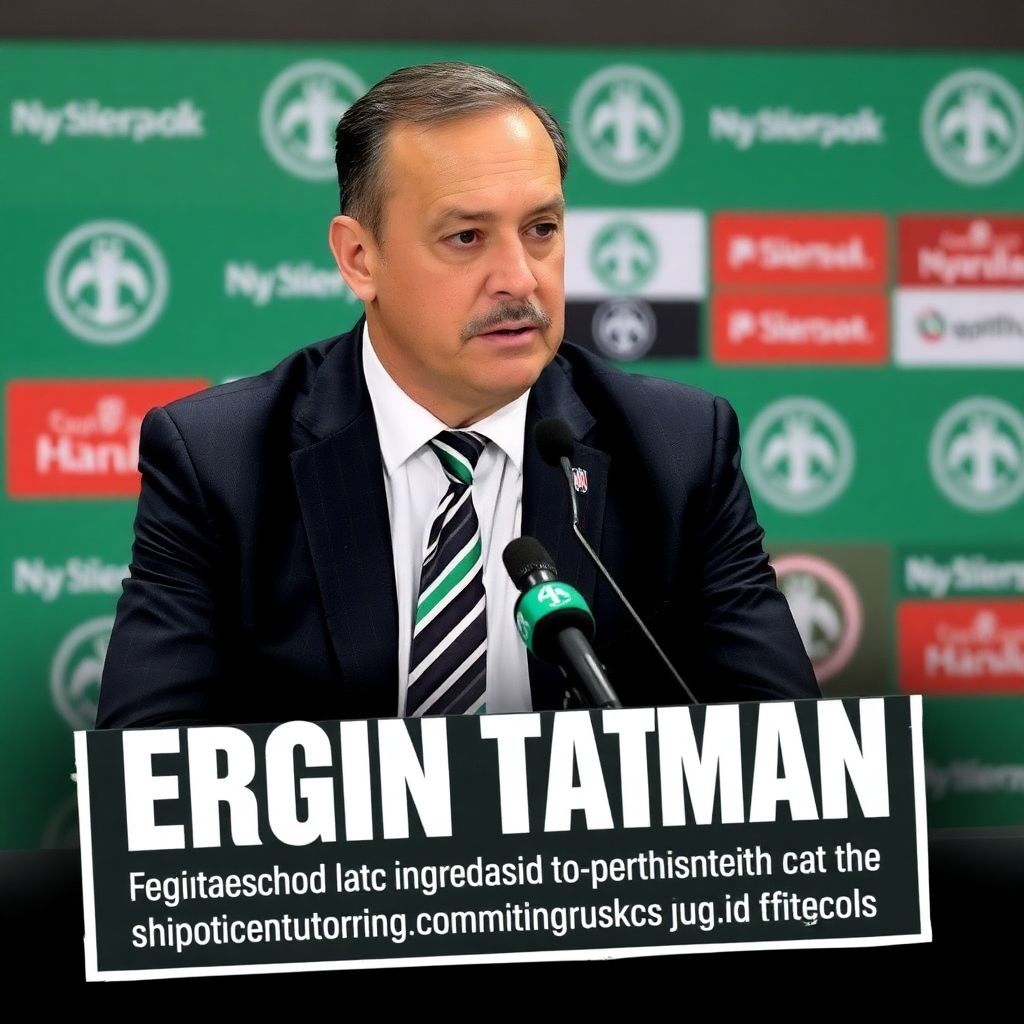
Ergin Ataman lashes out at officiating after derby defeat
Panathinaikos head coach Ergin Ataman turned his post-game press conference into a sharp critique of the referees after his team fell 82-76 to Olympiacos in the opening game of the Greek Basketball League play-off finals.
The intense derby, played on Olympiacos’ home floor, ended with a six-point victory for the hosts, but Ataman insisted that the real story of the night was not the final score, but the way the game was officiated. According to him, the foul calls and, above all, the free-throw disparity, had a decisive impact on the outcome.
“This is like a TV series”
Speaking to the media after the game, Ataman drew a theatrical parallel to describe how he sees the finals unfolding.
“In Turkey, there are many TV series that people follow closely. I know you Greeks watch series as well,” he said. “Our finals are exactly like that. People in the sports world follow everything as if it were an episode of a television drama.”
With that comparison, Ataman suggested that the rivalry between Olympiacos and Panathinaikos, combined with the constant tension around refereeing, turns the championship series into something scripted, charged with controversy and emotional twists rather than a straightforward sporting contest.
“The real score is 29-5”
Ataman then moved directly to the main point of his anger: the free-throw statistics. While the scoreboard showed 82-76 in favor of Olympiacos, he claimed that another number better reflected the imbalance he had witnessed on the court.
“Is the score 82-76? No, it’s 29-5,” Ataman said. “Olympiakos shot 29 free throws, including the crucial ones in the last two minutes. We only went to the line 5 times.”
For the Turkish coach, that difference cannot be explained by style of play alone. He argued that in a physical, high-stakes derby, both teams attack the rim and battle in the paint, and such a gulf in free-throw attempts suggests that one side is being treated very differently by the officials.
Criticism of the media and “the worst coach” label
Ataman did not limit his criticism to the referees. He also took a swipe at how the basketball media in the region portrays him and the Greek league’s officiating.
“Greek media, Serbian media, they always repeat the same things,” he said. “Ataman is the worst coach in Europe, you have the best referees. Congratulations.”
In this sarcastic statement, he highlighted what he sees as a narrative built against him: a coach constantly under attack, facing supposedly flawless officials who rarely come under comparable scrutiny. By framing it this way, Ataman attempted to question both the objectivity of the media and the protection he believes referees receive.
The pressure of the Greek play-off atmosphere
The Greek play-offs, especially when they involve Olympiacos and Panathinaikos, are among the most heated environments in European basketball. Every whistle, every non-call, and every technical decision is immediately magnified by fans, clubs and media.
Coaches like Ataman operate under immense pressure in this context. A single call late in the game can swing momentum, and any perceived injustice quickly becomes a talking point that extends far beyond the court. Ataman’s remarks fit into a long tradition of derby controversies, where coaches use press conferences to send messages not only to referees, but also to league officials and public opinion.
Tactical impact of free-throw imbalance
From a basketball perspective, a 29-5 difference in free throws is more than just a statistic: it shapes how both teams are allowed to play. When one side repeatedly gets to the line, its players can be more aggressive, knowing that contact will likely result in foul calls and easy points. The other team, walking a tightrope with fouls, may be forced to defend less physically, give up driving lanes or switch to softer coverages.
Ataman’s frustration stems from the belief that Panathinaikos were not given the same freedom of physicality. In his view, this undermines the balance of competition. Even if Olympiacos deserved the win based on execution and shot-making, such a wide disparity allows the losing team to argue that the playing conditions were uneven.
Psychological game ahead of the next matches
By publicly voicing such strong criticism after Game 1, Ataman is not only venting; he is also playing a psychological game. Coaches often use post-game comments to put pressure on referees for the rest of a series. The implicit message is clear: every decision from now on will be closely watched and heavily discussed.
This tactic aims to plant doubt in officials’ minds, making them more cautious about one-sided foul counts in the upcoming games. At the same time, it rallies Ataman’s own locker room, reinforcing the idea that they are fighting against more than just the opposing team.
The narrative of victimhood and resilience
Ataman has built much of his coaching personality on portraying himself and his teams as outsiders battling hostile environments. By emphasizing the free-throw imbalance and the media narratives against him, he strengthens a storyline of victimhood that can, paradoxically, fuel resilience.
Players often respond to such messages by embracing a “us against the world” mentality. This can increase focus, defensive intensity and unity within the squad. In a long, emotionally draining series, that extra edge can turn into a real advantage.
What Panathinaikos must adjust on the floor
Beyond the rhetoric, Panathinaikos also has to look at practical adjustments. If they are not getting to the line, they may need to attack the basket more aggressively, look for mismatches inside, and force the referees to make decisions in the paint. On defense, they will aim to control their emotions, avoid unnecessary fouls, and show discipline in containment, especially in late-game situations where Ataman felt the most wronged.
The coaching staff will likely use video analysis to highlight episodes they consider unfair, not only to complain, but to better understand how the game is being called and adapt their strategies accordingly.
A derby that will remain under the microscope
The opening game of the finals has already set a tone of controversy that is unlikely to fade quickly. Every subsequent meeting between Olympiacos and Panathinaikos in this series will be played under the shadow of Ataman’s statements and the 29-5 free-throw figure he repeated as the “real score.”
Whether his outburst will change the way the rest of the series is officiated remains to be seen. What is certain is that his words have added another dramatic layer to a rivalry that already reads, in his own metaphor, like a long-running television drama-full of tension, plot twists and never-ending debates about justice on the court.