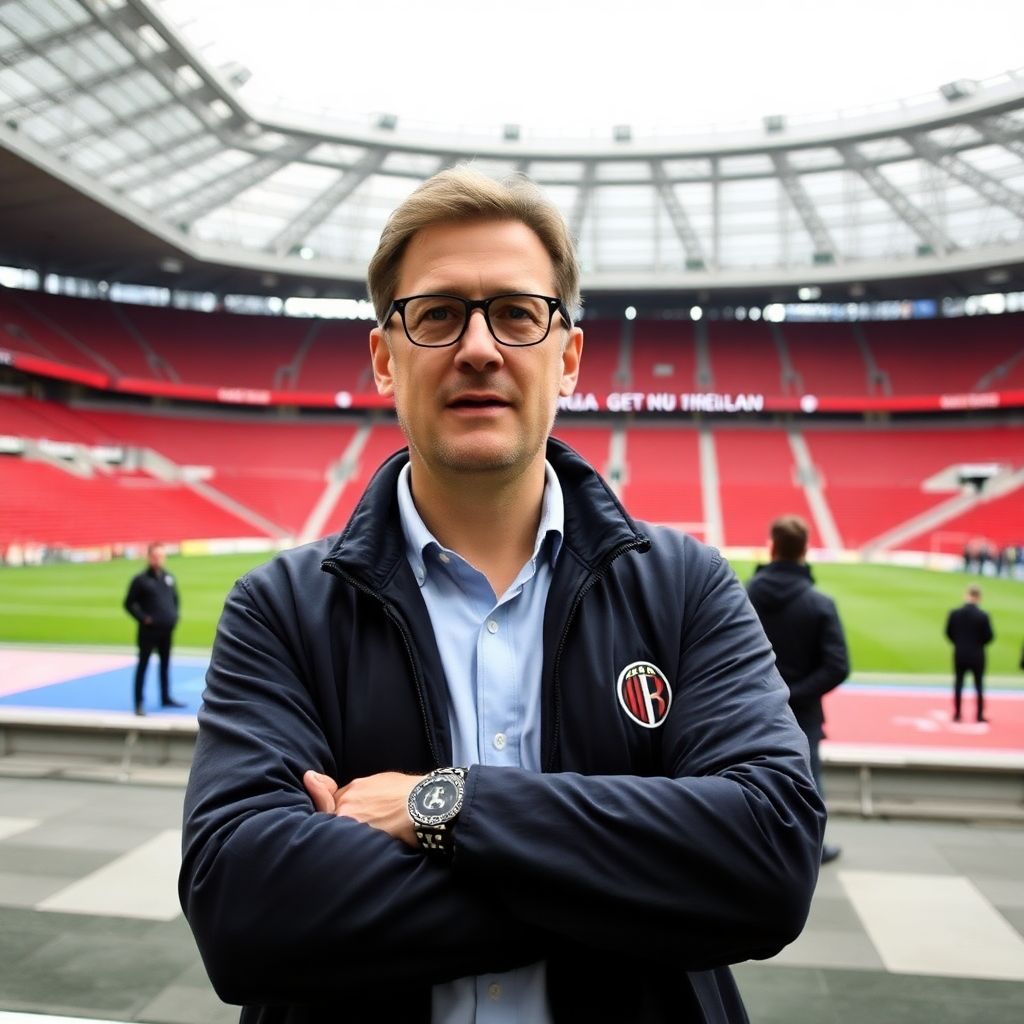
Oliver Glasner emerges as leading candidate for Milan job
After parting ways with Italian coach Massimiliano Allegri, Milan have reportedly turned their attention to Austrian manager Oliver Glasner as a serious option for the bench.
According to Italian reports, the club’s hierarchy has already made initial contact with Glasner and held preliminary talks about the project. The Austrian coach is seen as one of the most intriguing names on the European market thanks to his recent track record and his ability to build competitive, aggressive teams in a relatively short time.
Glasner’s coaching journey has taken him through several different football cultures and levels. He began his managerial career in his homeland with Ried, before making his name at LASK, where he transformed the club into one of the most dynamic sides in Austria. His work there opened the door to the Bundesliga, where he coached Wolfsburg, helping them establish themselves in the upper half of the table and competing for European places.
The real international breakthrough, however, came with Eintracht Frankfurt. Under Glasner, the German club experienced a memorable European run in the 2021-22 season, ultimately lifting the UEFA Europa League trophy. That campaign not only broadened his reputation but also showed his capacity to manage high-pressure knockout matches and get the best out of a squad that, on paper, was not among the favourites.
Following his success in Germany, Glasner crossed the Channel to take charge of Crystal Palace. In England he confirmed his reputation as a cup specialist. With the London side he captured the FA Cup in the 2024-25 season, a remarkable achievement given the level of competition and the financial might of the traditional top clubs. He then followed that up with a European success, winning the UEFA Europa Conference League in 2025-26, and added the FA Community Shield to his list of honours the same year.
This series of titles has made Glasner one of the most decorated Austrian coaches of his generation and a highly respected figure in modern European football. His teams are often characterised by compact defensive structures, quick vertical transitions and a strong collective mentality. Those traits could appeal to Milan, who are seeking a clear identity and stability after a period of turbulence.
The situation at the club goes beyond just the head coach. Milan not only ended their relationship with Allegri; they also implemented a wider shake-up in the sporting structure. CEO Giorgio Furlani, sporting director Igli Tare and technical staff coordinator Geoffrey Moncada have all been removed from their positions. Such sweeping changes suggest that the club’s owners are planning a broader reset of strategy rather than a simple change of coach.
In this context, appointing Glasner would likely be part of a longer-term project. The Austrian is known for his detailed planning and systematic approach to squad building. At his previous clubs he worked closely with management on recruitment, often favouring versatile players capable of adapting to different systems. Milan’s current squad, a mix of experienced figures and promising talents, could provide him with a solid base to implement his ideas, provided the new management aligns with his vision.
From a tactical perspective, Glasner’s preferred setups could bring a different flavour to Serie A. He has frequently used back-three systems, such as 3-4-2-1 or 3-4-3, with wing-backs pushing high and an emphasis on structured pressing. At times he has also switched to back-four formations, showing flexibility based on the players at his disposal. For Milan, who have alternated between several shapes in recent years, his adaptability might be an asset, especially if the club intends to refresh key areas of the squad in the transfer market.
Another aspect that makes Glasner attractive is his work with developing players. In both Germany and England, several footballers progressed significantly under his guidance, improving tactically and mentally. Milan, traditionally proud of their youth development and scouting network, could benefit from a coach willing to trust and refine young talents while still demanding high standards from senior professionals.
The potential appointment also has a symbolic dimension. While Italian clubs have often favoured domestic coaches, turning to an Austrian manager with a strong Bundesliga and Premier League background would underline Milan’s ambition to modernise and remain competitive at European level. The experience of winning in different countries and competitions could prove crucial as the club aims to return to the later stages of continental tournaments.
Of course, negotiations are still at an early stage and no agreement has been officially announced. Financial terms, the length of the contract and, above all, the sporting plan will be decisive factors. Glasner is likely to request guarantees on transfer policy, staffing and the time needed to implement his philosophy. Milan, for their part, must weigh the risk of another major transition against the potential upside of bringing in a coach with fresh ideas and a winning pedigree.
If the deal were to go through, one of the first challenges for Glasner would be managing expectations. Milan remain one of the most demanding environments in Europe, with a fanbase that expects both results and an attractive style of play. Balancing domestic ambitions in Serie A with the physical and mental demands of European competition would require careful squad rotation and strategic planning, areas in which Glasner has previously shown competence.
There is also the question of how existing key players would fit into his system. Attackers used to playing in a front two might need to adapt to operating as wide forwards or central attacking midfielders, while full-backs could be transformed into wing-backs with greater attacking responsibilities. Central defenders, meanwhile, would be required to defend large spaces and participate actively in the build-up, something that could influence Milan’s transfer priorities.
In the broader picture, Milan’s pursuit of Glasner reflects a trend across European football: clubs are increasingly drawn to coaches who can combine tactical sophistication with a clear, data-informed approach to squad management. The Austrian’s blend of organisation, flexibility and proven success in cup competitions fits neatly into this profile, making him a logical target for a club seeking to reassert itself.
For now, Milan’s coaching puzzle remains unsolved, but the emergence of Oliver Glasner as a leading candidate signals a potential turning point. Whether the negotiations culminate in an agreement or not, the interest alone underlines the club’s intention to move in a new direction, with a coach capable of delivering both stability and silverware in the coming seasons.