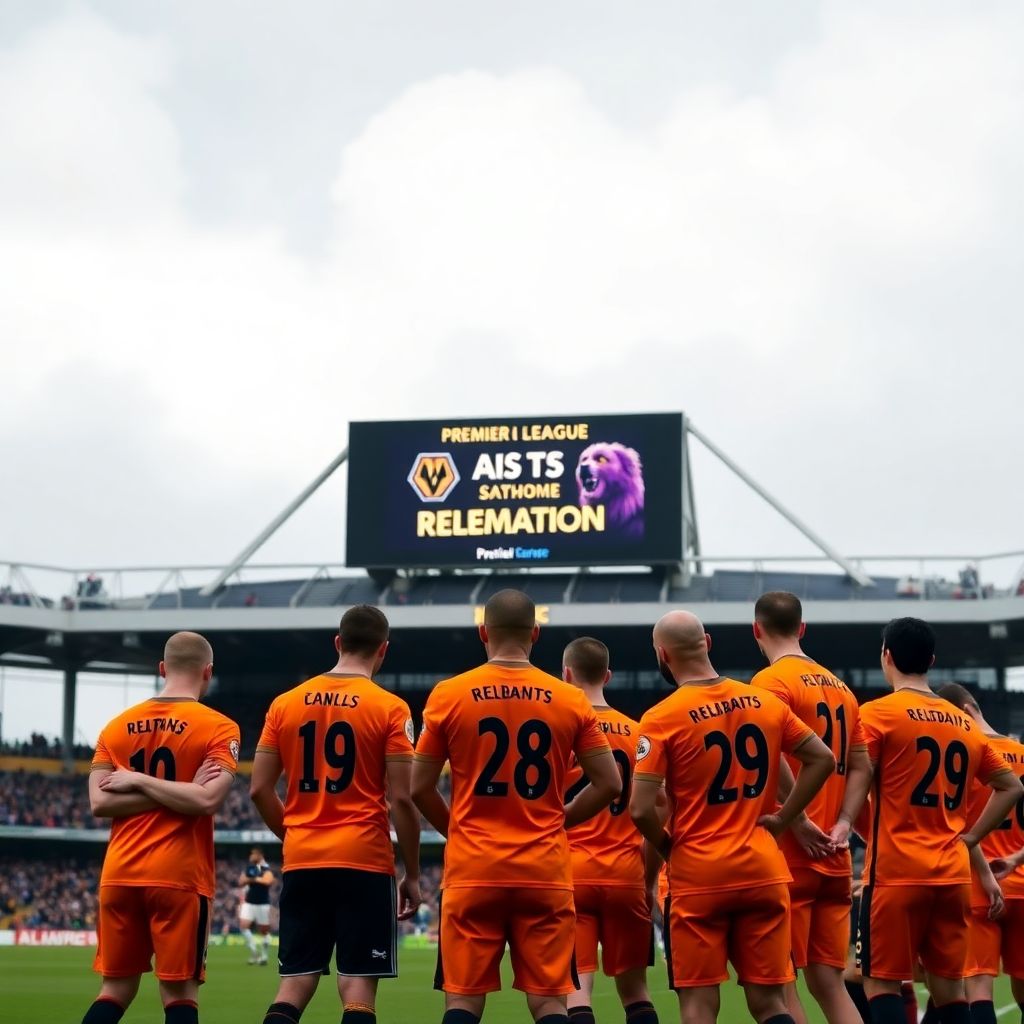
Wolverhampton relegated from Premier League with five games remaining
Wolverhampton’s fate in the Premier League has been sealed weeks before the end of the season. With five matches still to play, the club has been mathematically relegated and will return to the Championship after an eight-year spell in the top flight. Rob Edwards’ side becomes the first team of the season to lose its Premier League status.
The decisive blow did not even come directly on the pitch for Wolves. Their relegation was confirmed when West Ham managed to take points from Crystal Palace. That result meant Wolverhampton could no longer catch the teams above them, ending any lingering hope of survival. The orange-and-black side is now condemned to finish in the bottom three, regardless of what happens in the remaining fixtures.
For Wolverhampton, this is a painful conclusion to a journey that began with so much promise. The club had climbed back into the Premier League after dominating the Championship in the 2008/09 season, when they were crowned champions with an impressive 90 points. That campaign had been seen as the foundation of a new era, with expectations that Wolves could become a stable top-flight club.
However, the following years were anything but straightforward. The team struggled to establish itself in the Premier League, and instead of consolidating, Wolverhampton slipped down the pyramid. Poor decisions, inconsistent performances and managerial changes eventually resulted in a dramatic drop to League One in the 2013/14 season. That relegation was a warning of how quickly things can unravel in English football.
The club eventually rebuilt and returned to the Premier League for the 2018/19 season under the guidance of Nuno Espirito Santo. That promotion sparked optimism, as Nuno’s Wolves quickly developed a distinct style: compact defensively, dangerous on the counter-attack and capable of troubling the biggest sides. The team’s performances during those years earned them respect and suggested that Wolverhampton could establish itself as a solid Premier League presence.
Yet this season, the team never truly recovered from a disastrous start. Wolves began the campaign under Vitor Pereira, but the project fell apart almost immediately. In their first ten league matches, the yellow-and-black side failed to win a single game, collecting just two points from a possible thirty. The lack of victories, combined with poor form and growing tension, made it clear that change was inevitable.
The club hierarchy responded by dismissing Pereira and appointing Rob Edwards in an attempt to spark a late turnaround. Edwards did manage to deliver some memorable wins, including victories over West Ham, Aston Villa and Liverpool, hinting at what might have been with more time and stability. However, those isolated successes were not enough to compensate for the damage done early in the campaign.
After 33 league fixtures, Wolverhampton had amassed only 17 points, leaving them rooted to the bottom of the table. The gap to safety became insurmountable, and any hope of an escape act gradually faded. The team’s inability to build a sustained run of results, combined with defensive lapses and a blunt attack, sealed their fate long before the final day.
Relegation brings with it not only sporting disappointment but also significant financial and structural consequences. Dropping out of the Premier League means Wolves will lose a considerable portion of their broadcasting and commercial income. While parachute payments will cushion the immediate blow, the club will be forced to reassess its wage bill, squad size and long-term investment plans. Several high-earning players may have to depart, either to balance the books or because they wish to remain in top-flight football.
From a sporting perspective, Wolverhampton now face a familiar but demanding challenge: adapting once again to life in the Championship. The second tier is notoriously competitive, with a crowded schedule, physical matches and very little margin for error. Clubs that come down with a damaged squad or dressing-room morale frequently struggle to bounce straight back, and Wolves will be determined not to become stuck in a lengthy cycle outside the elite.
The key question now is how the club will manage this transition. Decisions about the head coach will be one of the first priorities. Rob Edwards showed flashes of tactical competence and the ability to lift the team in high-profile games, but the board must evaluate whether he is the right figure to lead a full rebuild in the Championship. Stability on the touchline can be priceless at this level, yet ambition may push the hierarchy to consider other profiles and philosophies.
Squad planning will be equally crucial. Some players, particularly those who impressed despite the poor collective season, are likely to draw interest from Premier League and overseas clubs. Wolverhampton must decide which footballers are essential cornerstones of their future and which can be sacrificed to fund reinforcements. Championship success usually rests on having a balanced group that mixes experience with energy, leadership with hunger, and technical ability with resilience.
The tactical identity of the new-look Wolves will also be a central topic. In recent years, the club has gone through several stylistic shifts: from Nuno Espirito Santo’s compact, counter-attacking setup to later attempts at more possession-based approaches. In the Championship, sides that go up tend to be those with a clear game plan and the capacity to dominate at home while remaining solid away. Whether Wolverhampton opt for aggressive, front-foot football or a more pragmatic style could define their entire campaign.
Beyond tactics and transfers, the psychological aspect cannot be underestimated. Relegation is a heavy emotional blow for players, staff and supporters alike. Dressing rooms can fracture, and motivation can dip when a team goes from facing the world’s best clubs to competing in a grueling second-tier schedule. The leadership group within the squad, along with the coaching staff, will need to reset the mentality and turn frustration into determination.
For the fans, this moment is particularly bitter. Many have witnessed the full cycle: the joy of promotions, the excitement of returning to the top division, memorable victories over bigger sides – and now, another relegation. Yet Wolverhampton’s history shows that the club and its supporters are resilient. Previous setbacks did not break the bond between team and fanbase, and that connection could once again become a decisive factor in the push for promotion. A noisy, united home crowd often provides the extra edge in tight Championship matches.
Off the pitch, the club’s leadership must communicate clearly and honestly about the plan going forward. Supporters will look for signs that lessons have been learned from this season’s failure: misjudged appointments, inadequate squad depth, or failure to respond quickly enough to poor form. A transparent strategy – whether centered on youth development, smarter recruitment or infrastructural investment – can rebuild trust and create a sense of direction during a turbulent period.
Another important dimension is the development of young players. Relegation, while damaging in many respects, can open doors for academy prospects who might not have been given opportunities in the Premier League. Championship seasons are long and demanding, often forcing coaches to rotate and rely on a broader pool of talent. If Wolverhampton can integrate promising youngsters alongside experienced figures, they may not only reduce costs but also lay foundations for a sustainable future.
In sporting terms, the Championship will expose Wolves to a very different rhythm. The number of games, the physical intensity and the variety of opponents require robust squad management. Rotations, fitness programs and recovery plans become essential parts of any promotion campaign. Clubs that handle these aspects poorly tend to fade in the second half of the season, no matter how strong they look in autumn. Wolverhampton must prepare for this challenge now, rather than reacting in midseason.
Looking back, this relegation can be traced to a combination of structural and on-field problems: an unsuccessful managerial appointment at the start of the campaign, a squad that seemed ill-balanced, and a failure to respond quickly enough to warning signs. However, looking forward, the drop also presents an opportunity for the club to reset, modernize certain processes and clarify its identity. Many teams have returned from relegation stronger, using the setback as a catalyst for deeper reform.
For now, though, the conclusion is unavoidable: after eight consecutive seasons among England’s elite, Wolverhampton have lost their Premier League place. The final weeks of the campaign will be about pride, evaluation and preparation rather than survival. When the new season starts, the club will walk out not at the biggest arenas in the country, but at demanding Championship grounds where every point is fought for fiercely.
Whether Wolverhampton’s stay in the second tier is brief or prolonged will depend on the decisions made in the coming months. A clear strategy, intelligent recruitment, strong leadership and a united fanbase will determine if this relegation becomes a short detour on the way back to the top – or the beginning of another long, complicated chapter in the club’s history.