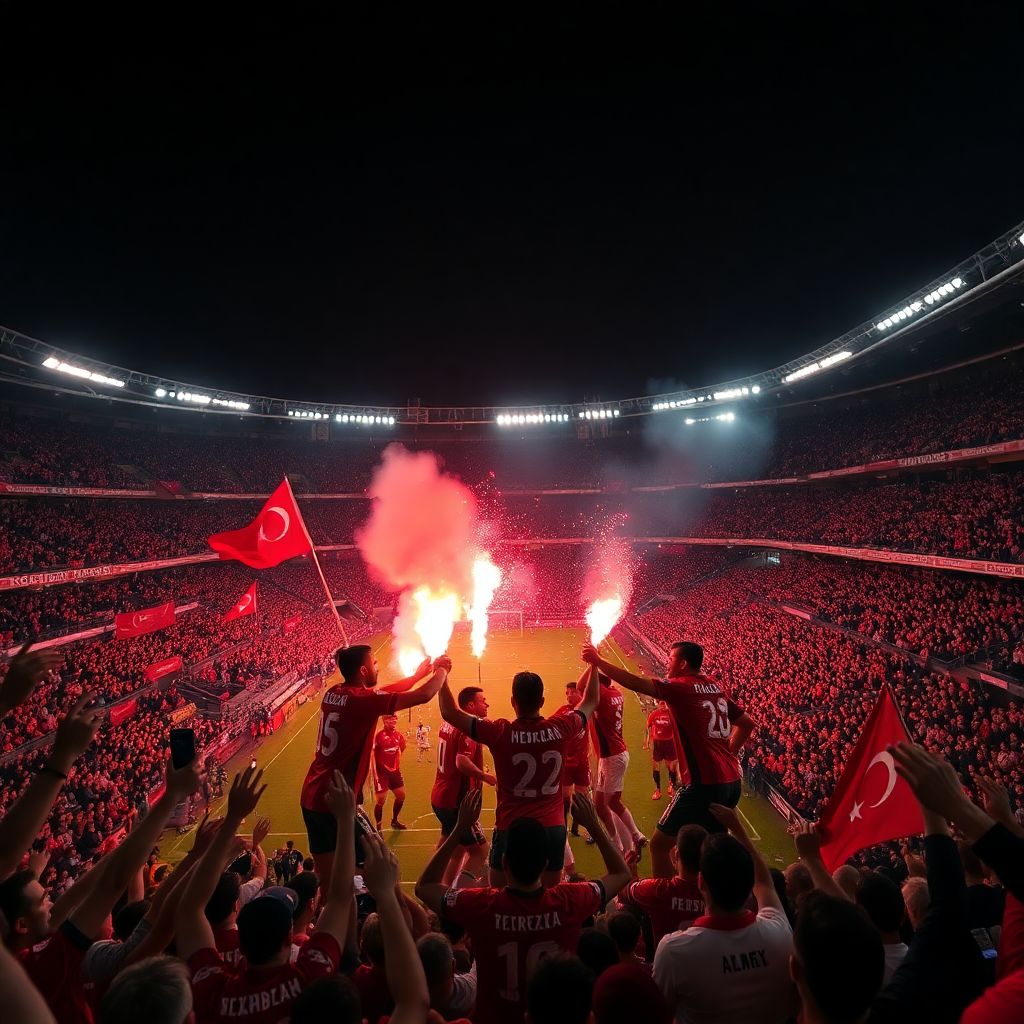
Head-to-head comparison: Beşiktaş vs Galatasaray
Matchday 25 of the Trendyol Süper Lig brings one of Turkish football’s biggest rivalries back into the spotlight as Beşiktaş host Galatasaray in a high-stakes derby. Using the “Team Comparison” data from this season, it’s possible to map out not just the points gap between the sides, but also the contrasting styles and strengths that could shape the outcome.
In the first half of the season, the clubs met on Matchday 8 in a clash hosted by Galatasaray. That encounter ended 1-1, underlining how tight the rivalry can be regardless of form or league position. Since then, both teams have developed clearer tactical identities, and the numbers now paint a more detailed picture of the balance of power ahead of the return fixture.
Under Sergen Yalçın, Beşiktaş have embraced a more controlled and measured approach. The black-and-whites prioritise balance between defence and attack, often preferring to manage risk and avoid chaotic transitions. On the opposite bench, Okan Buruk has built a Galatasaray side that thrives on intensity, tempo and constant attacking movement. The yellow-reds look to dictate the game, push the opposition back and maintain sustained pressure in the final third.
The league table tells one part of the story. Galatasaray sit at the top with 58 points, while Beşiktaş occupy fourth place with 46 points. On paper, that gap reflects Galatasaray’s greater consistency, but it also mirrors their offensive power: the leaders have found the net 58 times, making them one of the most prolific attacking units in the division. Beşiktaş, by contrast, have scored 45 goals – a respectable tally, yet clearly behind their rivals in raw output.
Discipline is one of the areas where the differences between the teams emerge clearly. Beşiktaş have been more card-prone this season, collecting 4 red cards and 54 yellow cards. Galatasaray, though also aggressive at times, show a slightly better disciplinary record with 2 reds and 42 yellows. In a derby, where emotional control is often as vital as tactics, this trend can become crucial: a sending-off or a flurry of bookings can completely reshape the match scenario.
Squad profile is another interesting contrast. Beşiktaş field a slightly younger group, with an average age of 26.38, signalling a squad with room to grow and perhaps more physical energy over 90 minutes. Galatasaray’s players average 27.57 years, giving them a touch more experience, particularly useful in high-pressure contexts such as title races and derby clashes. Performance ratings also reflect Galatasaray’s edge: their average Mackolik score stands at 7.17, compared to Beşiktaş’s 7.01.
From an attacking perspective, both clubs generate plenty of chances, but in different ways. Galatasaray attempt more shots per game, averaging 17.04 efforts on goal, slightly ahead of Beşiktaş’s 16.12. However, Beşiktaş are more clinical when they do shoot: they deliver 6.17 shots on target per match and boast a 38% shooting accuracy. Galatasaray’s figures in this area are 5.96 shots on target and 35% accuracy. In simple terms, Galatasaray shoot more, Beşiktaş hit the target slightly more efficiently.
Still, Galatasaray’s presence in the opposition box is heavier. They record 30.83 touches in the opponent’s penalty area per game, while Beşiktaş manage 26.33. This higher volume of final-third and penalty-area activity is one of the key reasons Galatasaray translate their chance creation into more goals overall, despite a marginally lower accuracy percentage.
When it comes to the type of goals scored, the gulf widens. Okan Buruk’s side have scored 39 goals from open play, which highlights the fluency and creativity in their attacking patterns. Beşiktaş, in comparison, have 25 open-play goals. Inside the box, Galatasaray are again clearly superior, netting 51 goals from inside the penalty area, versus Beşiktaş’s 41. Both teams are equally dangerous in quick transitions, having scored 7 goals each from fast breaks, underlining that both can punish opponents who lose the ball cheaply.
Set-piece and penalty efficiency offer another layer of difference. Beşiktaş have been awarded 5 penalties and converted 3 of them. Galatasaray, meanwhile, have taken 4 penalties and scored all 4, showing flawless execution from the spot so far. In a derby where margins are fine, a single penalty could be decisive, and Galatasaray’s perfect record is a psychological advantage.
In possession, Galatasaray clearly stand out as the more dominant and control-oriented team. They average 521.04 passes per match, significantly more than Beşiktaş’s 425.79. The story remains the same for pass accuracy: Galatasaray complete 458.38 passes per game with an 88% success rate, while Beşiktaş register 349.71 accurate passes at an 82% success rate. This suggests that, in most games, Galatasaray are the side dictating rhythm and territory.
The structure of Galatasaray’s attacks also looks more sophisticated in statistical terms. Buruk’s team produce 5.38 “big chances” per match, whereas Beşiktaş create 4.79. That difference, though not huge, reflects a slightly higher frequency of clear-cut opportunities. Moreover, Galatasaray spend more time camped in the opposition half: they complete 219.79 successful passes in the attacking half per game, compared to Beşiktaş’s 161.42.
Wing play and crossing patterns reinforce this picture. Galatasaray are more active on the flanks, averaging 21.96 crosses per match, with 6.83 of those reaching a teammate. Beşiktaş send in 19.83 crosses per game, 5.04 of which are successful. In crossing accuracy as well, Galatasaray lead with 31%, ahead of Beşiktaş’s 25%. This indicates a more refined use of wide areas by Galatasaray, who often overload the wings to stretch defences and supply their forwards.
Defensively, however, the gap between the two sides narrows. Beşiktaş post 41.96 ball recoveries per match, just ahead of Galatasaray’s 41.33. In interceptions, Beşiktaş again edge it, with 9.12 per game, suggesting good anticipation and reading of passing lanes. In terms of tackles, both sides are almost identical, with 16.08 challenges per match each. When looking at successful tackles, Galatasaray hold a microscopic advantage, averaging 9.71 versus Beşiktaş’s 9.67, but both teams maintain around a 60% success rate in defensive actions.
In danger-prevention metrics such as clearances, blocks and emergency interventions, Beşiktaş often emerge as the more active side, reflecting their more reactive style of defending. Spending slightly more time under pressure than Galatasaray, they are forced into more last-ditch actions in their own half. This does not necessarily mean a weaker defence; rather, it suggests a different game model, where Beşiktaş are more comfortable absorbing pressure and then striking when space opens up.
—
Tactical implications for the upcoming derby
The statistical contrast between these teams feeds directly into how this derby could unfold. Galatasaray’s higher passing volume and superior ball retention point towards a scenario where they will try to control possession, circulate the ball patiently and pin Beşiktaş back. Beşiktaş, with their solid recoveries and decent interception numbers, are well equipped to defend in a mid-block or low-block and look for moments to break.
Beşiktaş’s greater shooting accuracy could be decisive if they manage to get the match into the kind of rhythm they prefer: fewer but clearer chances, sharp transitions and efficient finishing. If they can limit Galatasaray’s touches in the penalty area – even slightly below their season average – they might tilt the balance in their favour despite having less of the ball.
Galatasaray, on the other hand, will aim to replicate their season-long pattern: heavy involvement in the final third, high numbers of penalty-box entries and constant crossing from the wings. Their dominance in open-play goals and goals scored inside the box suggest that once they establish territorial control, they are ruthless in turning pressure into goals. For Beşiktaş, cutting off supply from the flanks and reducing space between lines will be essential.
—
Key areas that could decide the match
1. Discipline and emotional control
With Beşiktaş already showing a higher card count, maintaining composure will be crucial. A single reckless challenge in a heated atmosphere could not only lead to a dismissal but also hand Galatasaray the kind of numerical and territorial advantage they usually exploit with their possession game.
2. Set pieces and penalties
Beşiktaş’s lower conversion rate from the penalty spot contrasts with Galatasaray’s flawless record. In tight derbies, dead-ball situations often become the decisive moments. Both teams must be wary of conceding cheap fouls around the box, especially against opponents who are comfortable sending in accurate crosses.
3. Midfield battle and passing networks
Galatasaray’s superior passing numbers are born in midfield, where their players can recycle possession and switch play quickly. If Beşiktaş can disrupt these passing networks through aggressive pressing at carefully chosen moments, they may force Galatasaray into uncharacteristic errors and open up opportunities for counter-attacks.
4. Use of width
The data underline Galatasaray’s stronger use of the wings, with more and more accurate crosses. If Beşiktaş are to neutralise this, their full-backs and wingers must coordinate well in defensive phases, closing down crossing angles without leaving too much space inside. Conversely, Beşiktaş might try to exploit the spaces behind Galatasaray’s pushing full-backs when they surge forward.
5. Bench strength and in-game adjustments
While the statistics quoted focus mainly on starting performances, the ability of both coaches to use their benches effectively could shift the dynamic. Fresh legs in wide areas for Galatasaray can maintain crossing volume late in games, while Beşiktaş can introduce pace up front to take advantage of tired defenders and stretched lines.
—
Psychological and historical dimensions
Beyond the numbers, derbies like Beşiktaş-Galatasaray are always shaped by psychology and history. The first meeting of the season, ending 1-1, will be fresh in the minds of both squads. Beşiktaş know that despite Galatasaray’s league position and attacking firepower, they have the tools to hold them. Galatasaray, for their part, will be determined to turn their statistical superiority into a clear scoreboard advantage this time.
Playing at home gives Beşiktaş an additional emotional boost. The atmosphere in their stadium often becomes a factor in itself, driving the intensity of duels, especially early on. If Beşiktaş can harness that energy without slipping into indiscipline, they might tilt the mental balance against a Galatasaray side accustomed to controlling games but sometimes vulnerable when dragged into a physical, stop-start contest.
—
What each side needs to do to win
– Beşiktaş’s priorities:
– Keep compact between defence and midfield to reduce Galatasaray’s room in the half-spaces.
– Maximise the efficiency of limited possession through quick vertical passes once the ball is recovered.
– Maintain their above-average shot accuracy and ensure that the majority of attempts come from favourable positions rather than speculative efforts.
– Stay calm under pressure and avoid the disciplinary trends that have plagued them throughout the season.
– Galatasaray’s priorities:
– Establish early control of possession and keep passing accuracy high to prevent dangerous turnovers.
– Maintain a high volume of penalty-area entries, particularly via combinations on the flanks and overlapping full-backs.
– Use their superior open-play goal record and final-third presence to impose a tempo that Beşiktaş find hard to match over 90 minutes.
– Stay focused on defensive transitions, as Beşiktaş are capable of punishing any lapses with sharp counters.
—
Overall outlook
Statistically, Galatasaray arrive at this derby as the more dominant and complete side: more goals, higher possession, better passing accuracy and greater penalty-area presence. Beşiktaş counter with a younger squad, slightly better shooting efficiency and a defensive structure that can absorb pressure and strike back.
The first match of the season between these two giants showed that form tables and data do not always dictate derby outcomes. Still, the current numbers provide a clear roadmap: if Galatasaray can play to their strengths in ball control and sustained attacking pressure, they will be favourites. If Beşiktaş can turn the game into a more direct, transition-heavy battle, using their accuracy and defensive resilience, the balance could swing.
In the end, the clash between Beşiktaş’s controlled, pragmatic approach and Galatasaray’s high-tempo, possession-based style promises a tactical duel as compelling as the rivalry itself.