
TFF 1. Lig feels wildly unpredictable because several structural and contextual factors stack together: playoff pressure, dense fixtures, financial volatility, constant squad and coach changes, strong home‑advantage nuances and variable pitch conditions. These do not create pure randomness; they create a league where classic models underperform and edges are narrow, dynamic and short‑lived.
Myths vs Reality: Why TFF 1. Lig Feels So Unpredictable
- Myth: Results are random. Reality: They follow patterns strongly linked to travel, squad age balance, and fixture congestion.
- Myth: Form tables are useless. Reality: Short, 4-6 match form windows can be informative; long‑term form is often misleading.
- Myth: Big‑name clubs dominate like in other second tiers. Reality: Historic Süper Lig brands regularly struggle against compact, well‑coached provincial sides.
- Myth: Betting markets fully price in chaos. Reality: Market efficiency improves late, but openers often misprice travel fatigue and rotation risk.
- Myth: Tactical analysis does not matter. Reality: Knowing which coaches adapt mid‑game and which do not is one of the few reliable edges.
Quick Practical Pointers for Dealing with TFF 1. Lig Volatility
- Anchor your TFF 1. Lig predictions today on current squad health and rotation, not season‑long xG or league table alone.
- Before using any TFF 1. Lig betting tips, cross‑check travel distance, rest days and likely line‑ups from local news.
- Treat TFF 1. Lig odds and fixtures as fluid: re‑evaluate after coach changes, late injuries or heavy weather news.
- Use at least two of the best bookmakers for TFF 1. Lig to compare prices; early discrepancies often signal exploitable misreads.
- When watching TFF 1. Lig live streaming, note in‑game tactical shifts (back‑three switches, aggressive pressing) and log them; these patterns repeat with the same managers.
Structural Factors: Playoff System, Fixture Congestion and Competitive Calendar
The unpredictability of TFF 1. Lig starts with its structure. A multi‑slot promotion system with playoffs keeps a large mid‑table cohort mathematically alive deep into the season. That means more teams oscillate between attacking aggressively for three points and playing cautiously to protect their position, depending on weekly table swings.
Compared with many European second tiers, the calendar is dense, with stretches of three games in short windows, domestic cup overlaps and long away trips. Fixture congestion amplifies rotation, fatigue and injury risk. For analysts, this makes team strength far more time‑dependent than in, say, the English Championship or Germany’s 2. Bundesliga.
The playoff format also generates psychological volatility. Clubs near the cutoff line often experience sharp tactical identity shifts: pragmatic all season, then suddenly front‑foot when they sense opportunity, or conversely conservative when fear of missing out grows. Market models built on stable tactical profiles tend to lag behind these rapid swings in risk appetite.
Relegation pressure at the bottom compounds this. Late‑season matches between a playoff chaser and a relegation struggler do not behave like typical top‑vs‑bottom clashes in more stratified leagues. Underdogs often adopt ultra‑direct, high‑variance game plans, increasing both upset potential and goal count variability.
Financial Instability and Rapid Squad Turnover
Financial instability is another core driver of perceived chaos in TFF 1. Lig, creating rapid squad turnover and short team cycles. The mechanics are relatively consistent across clubs, yet their timing differs enough to confuse long‑horizon models and casual observers.
- Short contract horizons: Many key players are on one‑year or incentive‑heavy deals, so each summer and winter window can reshape starting elevens dramatically.
- Late payments and disputes: Wage delays or bonus conflicts can cause sudden motivation drops or player freezes, rarely captured in mainstream data feeds.
- Loan dependencies: A high proportion of loanees from Süper Lig and foreign clubs means that one parent club decision can alter several line‑ups at once.
- Emergency signings: Financially stressed clubs sometimes bring in experienced free agents mid‑season, temporarily raising quality and upsetting previous performance baselines.
- Unbalanced squads: Budget constraints often produce rosters with good first elevens but weak benches, so any injury cluster leads to steep performance declines.
- Coaching linked to budgets: Financial swings often coincide with managerial changes, multiplying uncertainty by resetting both personnel and playing style.
- Short project lifecycles: Few clubs sustain multi‑year tactical projects; successful squads are quickly broken up, preventing stable power hierarchies from forming.
Competitive Parity: Points Distribution, Upset Frequency and Promotion Races
While we cannot quote exact numbers, the points distribution in TFF 1. Lig resembles the more balanced European second tiers rather than top divisions. Gaps between promotion, mid‑table and relegation zones are typically modest, and they remain so until late in the season, which structurally supports frequent upsets.
Several recurring scenarios illustrate this competitive parity:
- Promotion hopeful vs mid‑table spoiler: Mid‑table sides with no relegation fear often play freely, pressing high and embracing risk, leading to open matches and surprise wins.
- Relegation six‑pointers: Matches between bottom clubs tend to be tactically chaotic, with both teams abandoning structure for intensity, making pre‑match models unreliable.
- Historic brand vs provincial climber: Former Süper Lig names carry public betting bias but face well‑drilled opponents comfortable in compact, counter‑attacking roles.
- Playoff line clashes: Late‑season fixtures between teams around the cutoff often flip from cagey first halves to wild second halves as news of parallel results filters through.
- Post‑promotion hangover: Relegated clubs frequently underestimate the league’s balance, over‑committing early and conceding to fast transitions from physically intense opponents.
- Close‑packed mid‑table: With many teams separated by small point margins, a single win or loss can swing perceived momentum far more than underlying quality justifies.
Compared with Serie B or Ligue 2, TFF 1. Lig often features a deeper group of “middle powers” capable of beating anyone at home. This flattens the hierarchy and reduces the predictive value of simple rating models that rely heavily on brand, wage bill or previous‑season finish.
Managerial Churn and Tactical Fragmentation
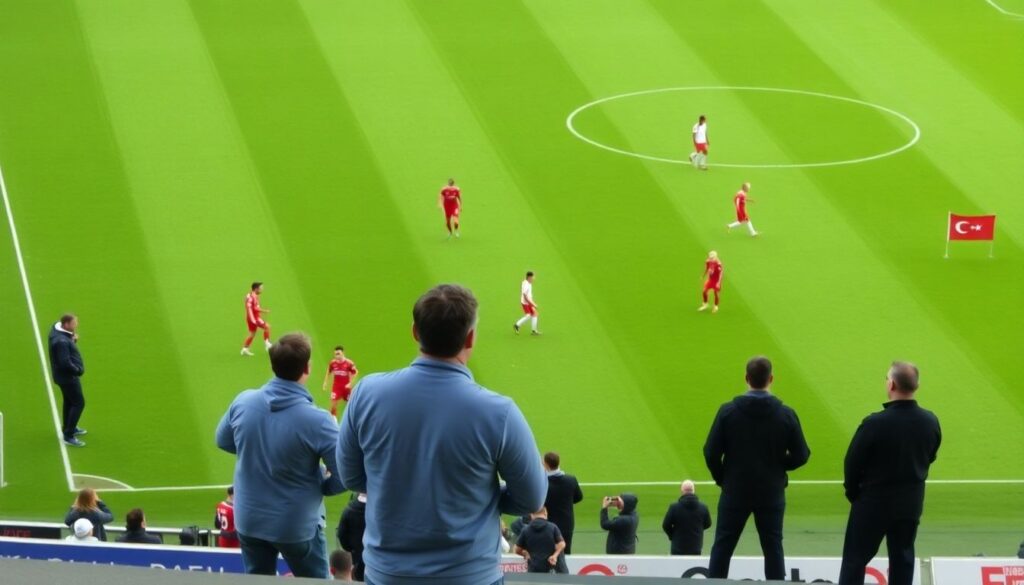
Managerial turnover in TFF 1. Lig is high, but the impact is not uniformly negative. It generates tactical fragmentation: frequent shifts between pressing heights, defensive block shapes and build‑up preferences. For observers used to the more stable tactical ecosystems of the Championship or 2. Bundesliga, this can appear as random noise.
However, certain consistent patterns emerge around new appointments, caretaker spells and experienced “firefighter” coaches brought in to avoid relegation. Understanding these archetypes helps separate structural volatility from genuine unpredictability.
Advantages of High Managerial Turnover for Competitiveness
- Creates constant tactical innovation as coaches try to differentiate through specific schemes (e.g., aggressive wing overloads, narrow diamond midfields).
- Prevents long‑term ossification, allowing smaller clubs to rapidly adopt trends that worked elsewhere in the league.
- Increases in‑season learning opportunities: teams frequently face new game plans, raising the strategic skill ceiling for players and analysts.
- Supports parity by giving struggling teams more “reset points” during the season to correct course and chase mid‑table or playoff positions.
Limitations and Risks Created by Managerial Churn
- Reduces the reliability of historical data, as past performance under one coach often says little about future patterns under another.
- Disrupts player development and role clarity, leading to inconsistency in execution of complex systems like high presses or build‑up from the back.
- Encourages short‑termism in both tactics and squad building, with signings made for one coach quickly becoming misfits for his successor.
- Amplifies sentiment swings: short winning or losing streaks can trigger over‑reactions from boards, media and betting markets.
Matchday Variables: Travel, Pitch Quality and Home Advantage Nuances
Matchday context in Turkey contributes significantly to variance. Long travel inside a geographically large country, variable weather between coastal and inland cities, and non‑standard pitch conditions all affect playing style. These factors are not unique in Europe, but they are more pronounced in TFF 1. Lig than in many compact leagues.
Several persistent misconceptions about these variables fuel the myth of pure randomness:
- Myth: Home advantage is uniform across clubs. In reality, altitude, micro‑climate and crowd proximity create very different home profiles from one stadium to another.
- Myth: Travel only matters in European competitions. Long domestic away trips on tight turnarounds often show up as second‑half intensity drops, especially for older squads.
- Myth: Poor pitches only hurt technical sides. Heavy or uneven surfaces can also neutralize direct teams if they rely heavily on fast transitions and long, accurate diagonals.
- Myth: Weather impacts both teams equally. Squads habituated to certain climates gain subtle edges when conditions match their training environments.
- Myth: Late‑season pitches are always worse. Some clubs invest heavily in maintenance; others deteriorate sharply. Treat each ground as a separate case rather than following the calendar blindly.
For anyone following TFF 1. Lig odds and fixtures, these nuances mean generic “home vs away” adjustments are insufficient. Ground‑specific and travel‑specific corrections are often needed, especially when evaluating midweek fixtures played shortly after weekend matches.
What the Data Shows: Metrics That Predict – and Fail To Predict – Results
Despite the league’s reputation, TFF 1. Lig is not opaque to numbers. Certain metrics carry consistent signal, while others, effective in more stable leagues, lose power here. The challenge is horizon selection: what works over ten‑match samples in other competitions may only be reliable over four‑to‑six‑match windows in this context.
Broadly speaking, the following trends appear when analysts build models for TFF 1. Lig, especially when hunting for edges before consulting TFF 1. Lig betting tips or automated tools:
- More predictive metrics: Recent shot quality (non‑penalty xG) over short windows, high‑value chance creation zones, and pressing intensity indicators adjusted for opponent strength.
- Contextual variables: Rest days, travel distance, average squad age of likely starters, and coaching tenure length show explanatory power for performance swings.
- Less reliable metrics: Season‑long goal difference, simple home/away form tables and brand‑based ratings tend to overfit noise and under‑react to structural changes.
A simple pseudo‑workflow for structuring TFF 1. Lig predictions today might look like this:
// Pseudo‑logic for a lean pre‑match framework
For each fixture:
  1. Start with a baseline rating from recent xG (last 4-6 matches).
  2. Adjust for:
     - Rest differential
     - Travel distance
     - Known injuries/suspensions
     - Coach tenure (< 6 matches vs longer)
  3. Overlay qualitative checks:
     - Pitch condition and weather expectations
     - Tactical matchup (pressing vs build‑up styles)
  4. Compare your view to market:
     - Line movement at the best bookmakers for TFF 1. Lig
     - Any live information from local media or TFF 1. Lig live streaming coverage
  5. Bet only where your edge is robust to small information changes.
This approach does not eliminate uncertainty, but it reframes TFF 1. Lig as a structurally volatile environment rather than a random one, helping coaches, analysts and bettors to focus on factors that genuinely move outcomes.
Practical Clarifications and Quick Answers
Is TFF 1. Lig truly more unpredictable than other European second tiers?
It is not inherently more random, but structural and financial factors make team strength more volatile over short periods. Compared with leagues like the Championship or Serie B, power hierarchies change faster, so predictive edges rely more on freshness of information than on long‑term trends.
How should I adapt my analysis for TFF 1. Lig compared to top European leagues?

Use shorter form windows, put more weight on rest and travel, and track managerial changes closely. Rely less on brand reputation or last season’s table and more on current tactical fit, squad health and the specific environment of each stadium.
Are betting models still useful in such a volatile league?
Yes, but they must be more flexible. Build models that can update quickly to new information and incorporate contextual variables like travel, pitch quality and recent coaching changes. Static seasonal models tend to underperform.
Does watching TFF 1. Lig live streaming really help predictions?
It can, especially for spotting tactical shifts that statistics lag. Observing pressing intensity, defensive compactness and in‑game adjustments live helps you understand which trends are sustainable and which are one‑off reactions.
Why do promoted or relegated teams often behave differently than expected?
Budget shocks, squad rebuilds and new tactical demands mean that promoted and relegated clubs often field line‑ups very different from their previous seasons. Treat them almost as new projects rather than a simple continuation of prior performance.
How can bookmakers’ odds be wrong if the market knows TFF 1. Lig is volatile?
Markets price in general volatility but sometimes underweight specific local factors like late travel issues or coaching turmoil. Comparing early and late lines across multiple operators can reveal where information has not yet been fully incorporated.
Is it better to avoid this league entirely for betting or forecasting?
Not necessarily. The same volatility that makes outcomes less stable also creates inefficiencies. With disciplined risk management and careful contextual analysis, it can be a fertile league for specialist edges rather than one to avoid.