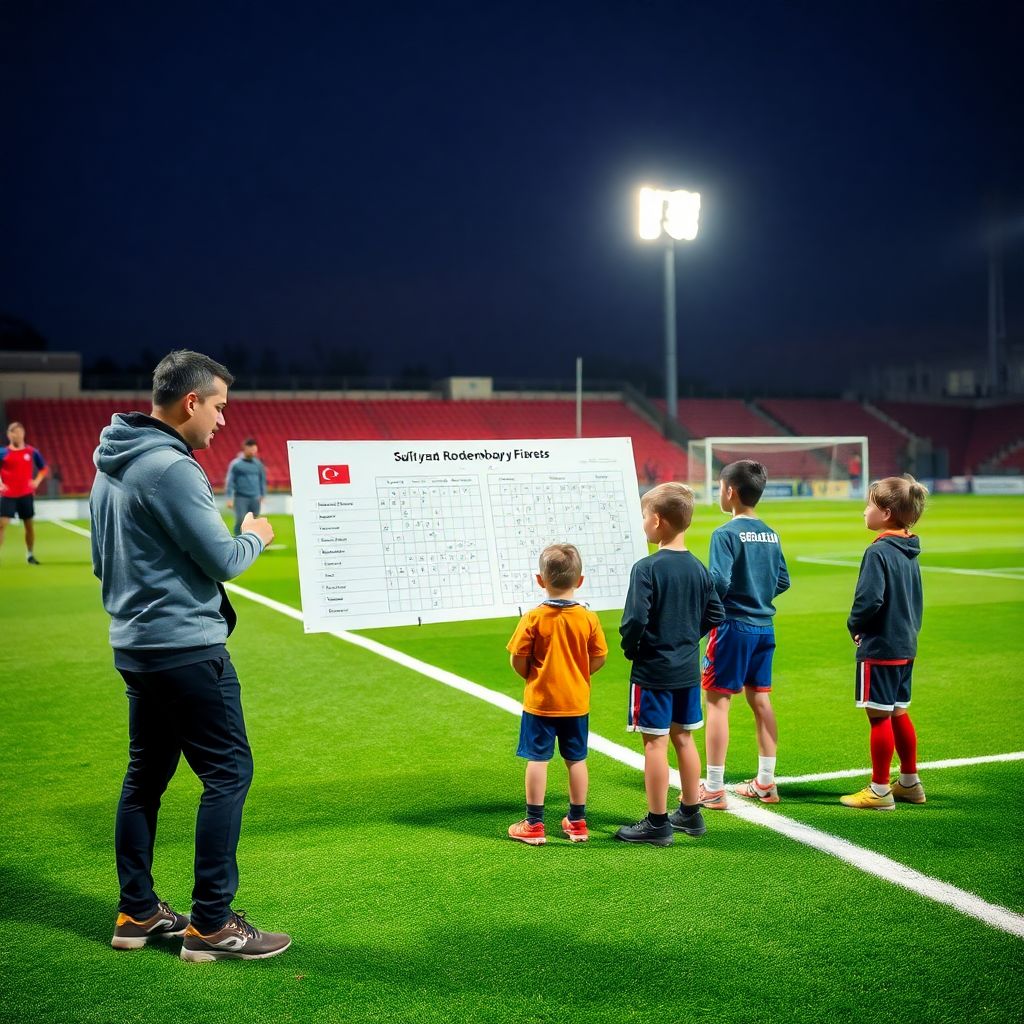
To move from street football into turkish football academies for youth players, you need three things: honest readiness checks, a clear map of pathways in Turkey, and a simple, safe plan for trials and training. This guide breaks the process into concrete checklists and steps you can follow with your family and coach.
Core Steps for Moving from Street Football to Pro Academies
- Clarify whether your current level fits an academy environment and when it is better to wait.
- Identify realistic local and regional pathways instead of chasing only the biggest names.
- Prepare a basic performance profile: clips, match data, and coach references.
- Use targeted training to convert freestyle skills into match-effective actions.
- Organise school, medical checks, and travel before applying to trials.
- Build a support team (parents, coaches, trusted advisers) before speaking with agents or signing anything.
Assessing Readiness: Technical, Tactical and Physical Benchmarks
Quick self-check before aiming for an academy
- Can you train 3-4 times per week without pain or exhaustion?
- Do you already play organised matches (school, local club, amateur league)?
- Can a neutral coach confirm you are above-average for your age locally?
- Is your family ready to support travel, time and basic equipment?
- Academies select players who already perform well in structured matches. If you only play on the street and have never played 11v11 or 8v8 in a team, focus first on joining a local amateur club.
- Technical benchmarks to aim for: confident first touch under pressure, passing accurately with both feet, and performing basic turns and feints at match speed rather than only in freestyle situations.
- Tactical readiness means understanding positions, basic team shapes, and when to press, cover, or drop; if you often lose your position or chase the ball, work on game intelligence with a coach before serious trials.
- Physical benchmarks include being able to repeat short sprints in training, play a full half or more without giving up, and recover within a day; if you need several days to recover from one game, emphasis should stay on fitness and gradual load.
- Do not rush into the best professional football academies in turkey if you are still growing rapidly, have recurring injuries, or struggle to balance school; in these cases, prioritise health, education, and step-by-step development.
Mapping the Landscape: Local Clubs, Scouts and Regional Pathways in Turkey
Preparation checklist for exploring options
- List all amateur and semi-pro clubs within 30-60 minutes of home.
- Identify which clubs have connections to pro academies or regional scouts.
- Ask your current coach or PE teacher for honest guidance on level.
- Collect basic info on trial dates, age groups, and training schedules.
- Before asking how to join a football academy in turkey, understand that most players are noticed through local clubs, school competitions, and regional tournaments, not direct walk-in trials at big clubs.
- Research club websites, social media, and local football association pages for information on academy structures, partnerships, and contact details for youth coordinators.
- Track turkey youth football trials 2024 or later local trial events through regional football associations, city sport directorates, and announcements from pro clubs; save links, dates and contact persons in a simple document.
- Parents should verify that any private academy or camp has clear coaching qualifications, a physical address, and transparent pricing, especially if it is not directly linked to a known club.
- Use smaller, well-run local academies as stepping stones; consistent performance there can lead to invitations to bigger club trials without having to chase every open event across the country.
Creating a Professional Showcase: Trials, Highlight Reels and Performance Logs
Mini prep checklist before any trial or video recording
- Confirm exact time, location, age group, and surface (grass, artificial, indoor).
- Prepare clean kit, suitable boots for the surface, and any medical items you need.
- Sleep well the night before and eat a light, familiar meal 2-3 hours before play.
- Assign a parent or friend to handle filming and logistics so you can focus on football.
- Define your playing profile
Write down your main position, secondary position, dominant foot, physical strengths, and style (for example: fast winger, creative midfielder, aggressive defender). This helps coaches quickly understand where you might fit. - Collect match footage, not just skills
Prioritise full matches or longer clips that show decision-making, positioning, and work-rate, not only freestyle tricks. Use recent games from school, club, or organised tournaments. - Edit a short, clear highlight reel
Keep the video simple: show a title slide (name, age, positions, contact), then best actions first. Avoid music or heavy effects; coaches want to see the ball, your movement, and the game context clearly. - Track performances in a basic log
After each match, write down opponent, minutes played, position, goals, assists, key defensive actions, and coach feedback. Over time this creates a documented record of improvement that you can share with interested academies. - Communicate professionally with academies
When contacting turkish football academies for youth players, send a short, polite message including your profile, highlight link, club history, and coach reference. Parents should manage communication for younger players and always keep it respectful and concise. - Attend well-chosen trials and camps
Instead of going to every event, pick trials where your age group is needed and the level matches your current ability. Verify who is organising the trial and whether scouts from recognised clubs will attend.
Bridging Gaps: Training Plans to Convert Street Skills into Academy-Ready Abilities
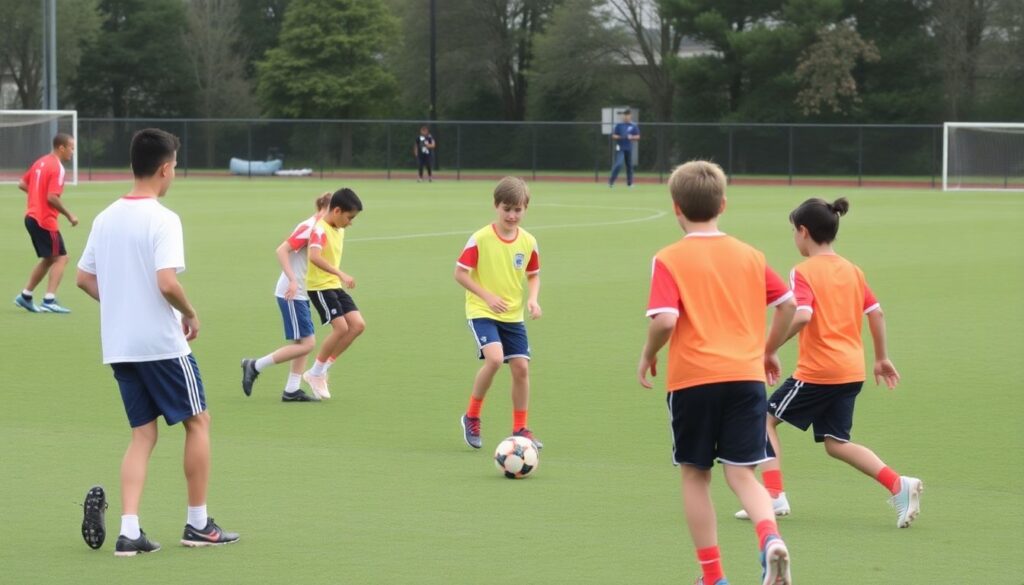
Checklist to see if your training is closing the right gaps
- You practise drills with both feet several times per week, not only your favourite moves.
- You include small-sided games with rules that force quick decisions and passing.
- You work on first touch receiving passes from different angles and heights.
- You train basic strength and mobility safely, suitable for your age.
- You review your own footage to spot repeated mistakes and adjust training.
- Your coach helps you link training drills to specific positions and match roles.
- You schedule at least one full rest day per week to avoid overuse injuries.
- Street skills are valuable, but academy coaches look for players who can use those skills at the right time; design sessions where every trick or dribble has a clear goal such as beating a defender and then finding a pass or shot.
- Replace long, random games with shorter, focused blocks: ball mastery, passing combinations, finishing, and position-specific work such as overlapping runs for full-backs or movement between lines for midfielders.
- To prepare for the intensity of academy sessions, build stamina through repeated short runs with controlled rest and small-sided games that demand continuous movement and pressing.
- Include simple injury-prevention: warm-up routines, dynamic stretches, and post-session cooldown; if any pain persists, reduce intensity and consult a qualified doctor or physiotherapist before continuing.
Welfare and Logistics: Education, Medical Clearance and Contract Basics
Common mistakes families should avoid
- Skipping school responsibilities or dropping grades for extra training or travel.
- Ignoring medical checks before high-intensity training or after injuries.
- Paying large fees without clear written information about services and duration.
- Signing any agreement without reading and understanding all points calmly.
- Letting children travel alone long distances or stay overnight without safe supervision.
- Assuming that a camp guarantee equals a professional contract opportunity.
- Not planning the true cost of youth football training camps in turkey, including travel and equipment.
- Ensure that school remains a priority; if training or travel begins to harm education, reduce load or choose options closer to home until balance is restored.
- Obtain regular medical clearance, especially before entering an academy with demanding schedules; declare all past injuries to coaches so they can adjust training safely.
- For paid academies, camps, or supposed best professional football academies in turkey, request written information on schedules, coaching staff, insurance, refunds, and what exactly is included in the fee before paying.
- Never sign contracts under pressure; take documents home, discuss with your family, and if possible consult a lawyer or a players' union representative to check for unfair conditions.
- Parents should manage all payments and legal decisions; young players should focus on training and learning, not on negotiations.
Support Network: Parents, Coaches and Agents – Roles and Decision Checkpoints
Alternative pathways and when they make sense
- Stay with a strong local club that offers good coaching and school balance, aiming for later trials.
- Use short-term, affordable camps mainly for experience and feedback, not as the only route.
- Delay working with any agent until you are already in or very close to a professional environment.
- Consider boarding-style academy options only if the family is fully comfortable with distance and supervision.
- A committed local club with licensed coaches can be better than moving too early to a distant academy where you struggle with homesickness, school changes, or culture shock.
- Training camps can be useful for learning and testing yourself, but their main value is feedback from coaches; treat promises of guaranteed contracts with caution and verify who actually attends the camp.
- Agents should not be the starting point; first focus on performance, then, if serious offers appear, speak with licensed representatives recommended by trusted coaches or associations, with parents fully involved.
- If a club suggests living away from home, discuss how often you can visit, who supervises daily life, and how education and safety are managed; sometimes continuing development at home and targeting future trials is the safer option.
Practical Concerns and Typical Scenarios for Aspiring Players
At what age should a player in Turkey start thinking about academies?
Players can enjoy street and school football from a young age, but serious academy planning usually begins once they regularly play organised matches. The right age depends on maturity, physical health, and whether the family can support travel and school balance.
Is it possible to join an academy without playing for a local club first?
It is rare but not impossible; most professional academies want to see performance in structured games. Joining a local club or school team is usually the safest and most realistic first step before applying for trials.
How many trials should a young player attend in a season?

Focus on a few well-chosen trials where the level matches your ability and travel is manageable. Too many trials can cause fatigue, injuries, and missed school without improving your chances.
What if we cannot afford expensive camps or long-distance travel?
Prioritise local clubs, school competitions, and free or low-cost regional events. Consistent performance in these environments is often enough to attract attention without paying for every camp across the country.
How can parents tell if a private academy is trustworthy?
Check coaching licences, ask for written details of training and fees, visit the facilities, and speak with other parents. Be wary of anyone promising guaranteed contracts or pressuring you to decide immediately.
What should a player do after a bad trial performance?
Note what went wrong, ask for specific feedback if possible, and adjust training to address weaknesses. Allow time to recover physically and mentally before deciding to attend another trial.
Can injuries during growth stop a player from reaching academy level?
Many players face injuries while growing, but proper medical care, patient rehabilitation, and sensible workload can allow a safe return. Rushing back too early is more dangerous than taking time to heal and rebuild.