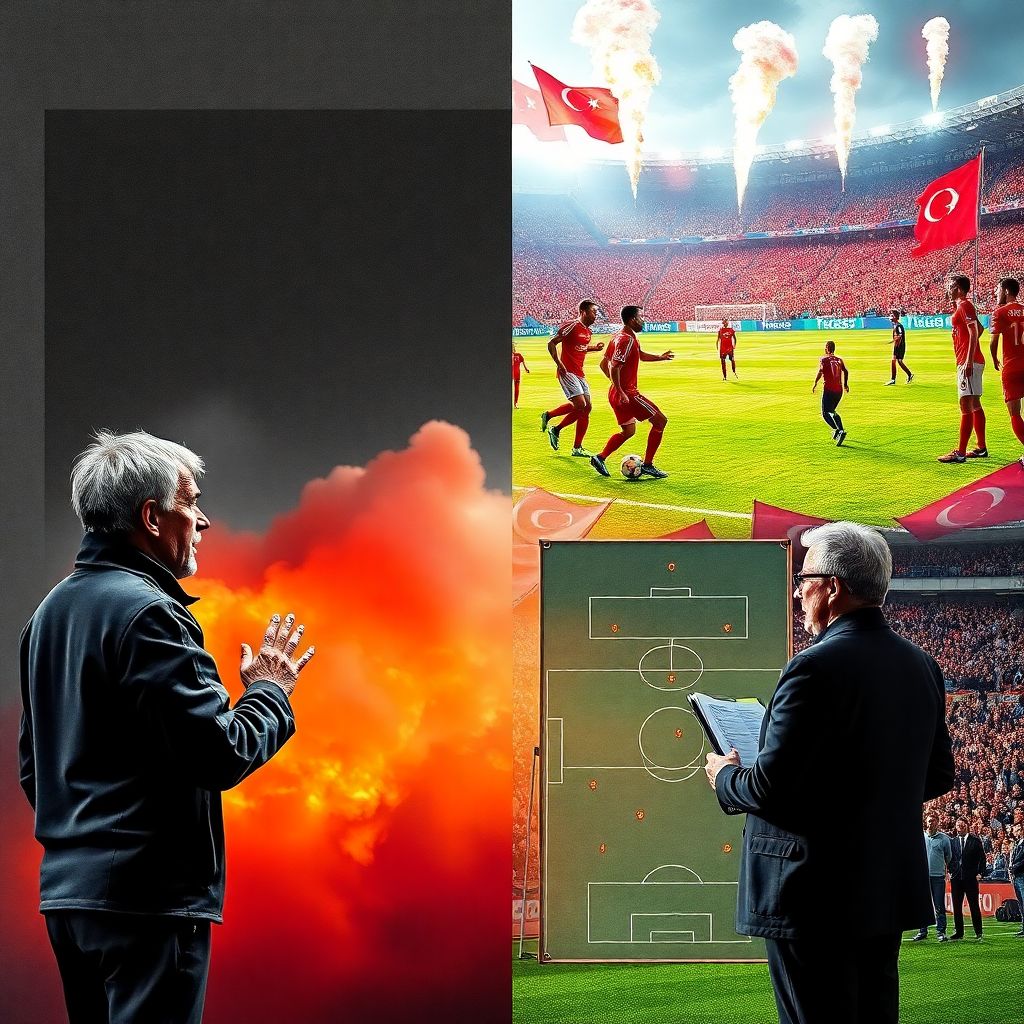
Turkey’s football story isn’t just about star players and noisy derbies; it’s also about a long line of thinkers on the touchline. To understand why the game looks the way it does in Istanbul, Trabzon or Konya in 2026, you have to know the people who designed the systems, set the standards and reshaped the culture. Below is a step‑by‑step guide to Turkey’s most influential football coaches and their philosophies, past and present, with a look at where things seem to be heading in the next decade.
Step 1: Understand the roots – the first big thinkers
Before talking about the best Turkish football managers in history, you need a sense of the early tactical DNA. In the second half of the 20th century, Turkish clubs were still borrowing heavily from Central European and Italian models: rigid defensive blocks, strict man‑marking, and a strong emphasis on discipline over creativity. Coaches like Gündüz Kılıç and later Jupp Derwall (though German, hugely influential at Galatasaray) built the base from which famous Turkish football coaches would emerge. The core Turkish football coaching philosophy of that time was simple but powerful: physical conditioning, compact team shape, and a near‑military focus on obedience to the game plan, often at the expense of positional interchanges or high‑risk passing in the build‑up phase.
Step 2: Fatih Terim – the architect of aggressive, emotional football
You can’t discuss Turkey’s most influential football coaches without starting with Fatih Terim. He turned Galatasaray into a European force around the turn of the millennium and redefined what “Turkish style” meant. Terim fused intense pressing with fluid attacking patterns, especially in a 4‑3‑1‑2 or 4‑4‑2 diamond. His teams tried to suffocate the opponent in midfield, collapse quickly around the ball, and then break lines with fast vertical passes. But beyond tactics, his hallmark was emotional management: he built a “family” culture, used motivational rhetoric and harnessed stadium atmosphere as a tactical weapon. In many ways, his model became a template that aspiring coaches and fans still point to when they talk about famous Turkish football coaches and winning mentality in big‑match contexts.
Step 3: Şenol Güneş – balance, structure and player development
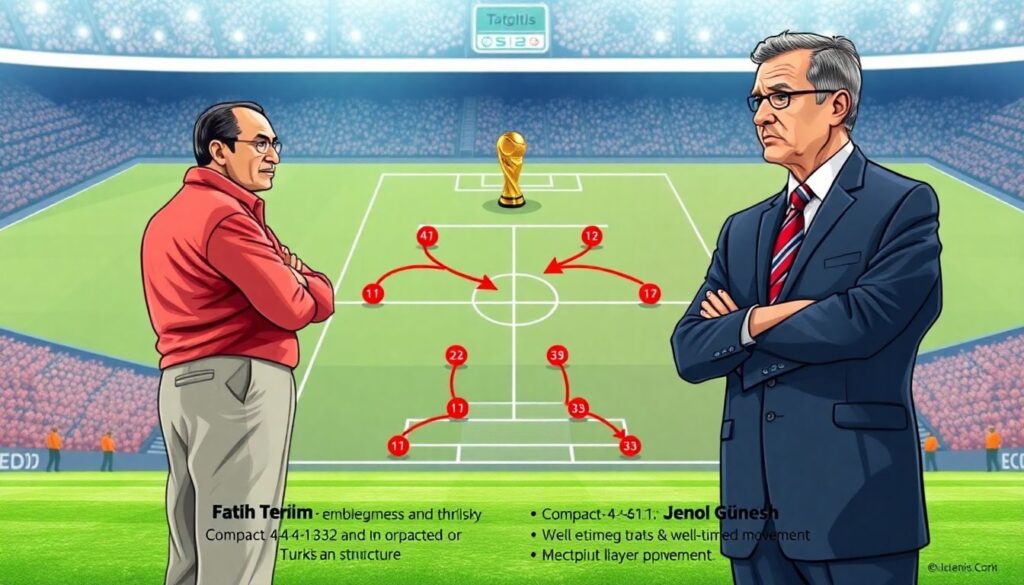
If Terim embodied passion and risk, Şenol Güneş represented balance and structure. At the 2002 World Cup, he led Turkey to third place using a compact 4‑1‑4‑1 that could morph into a 4‑3‑3 in possession. His philosophy was rooted in positional responsibility and well‑timed transitions rather than constant chaos. He put strong emphasis on spacing between lines, coordinated pressing triggers and systematic use of wide areas for overloads and crossing situations. Güneş is also important because he pushed Turkish coaching culture toward long‑term development: he backed younger players, encouraged them to understand game principles instead of memorising rigid patterns, and insisted on video analysis before it was fashionable locally. Many analysts who talk about the best Turkish football managers in history put him alongside Terim because they shaped two complementary strands of the national coaching identity: emotional intensity and rational order.
Step 4: Mustafa Denizli, Ersun Yanal and the attacking wave
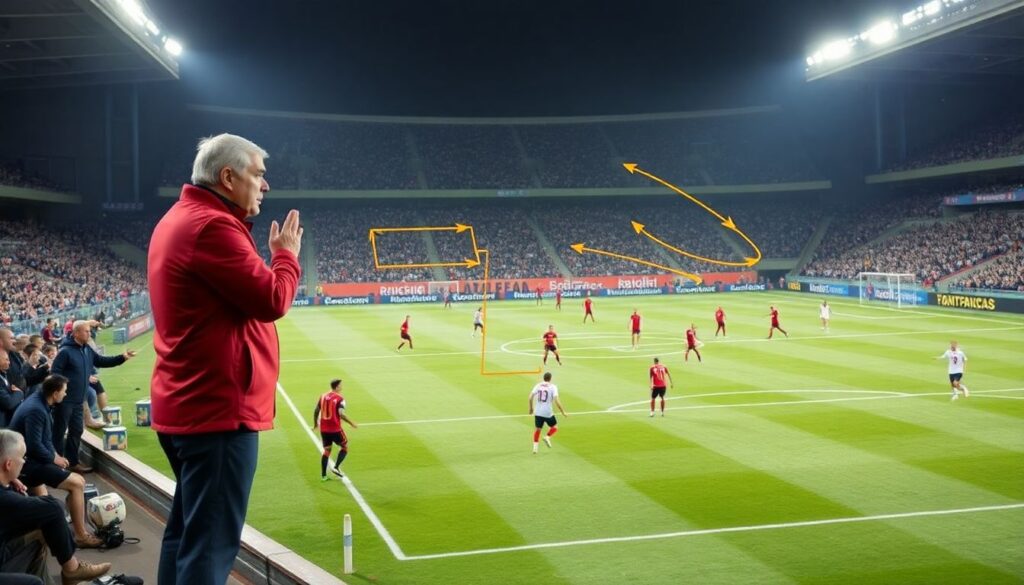
The 2000s and early 2010s saw a rise in coaches who wanted to play front‑foot football almost regardless of opponent. Mustafa Denizli, one of the rare managers who led all three Istanbul giants, liked flexible attacking structures and technical midfielders. His teams often operated with high full‑backs, narrow wingers and heavy emphasis on combination play around the box. Ersun Yanal took the attacking obsession even further, sometimes leaving his defences exposed in pursuit of high‑tempo, high‑pressing football with fast circulation of the ball. This attacking wave broadened the Turkish football coaching philosophy by proving that domestic coaches could design proactive game models instead of reactive, sit‑deep counter styles. The downside was that game management and defensive risk control were sometimes secondary, creating a stereotype that Turkish coaches “don’t know how to close games” when under pressure in European competition.
Step 5: Influence of foreign coaches and hybrid philosophies
Another key step in the evolution of famous Turkish football coaches was the constant collision with high‑profile foreign managers. Names like Mircea Lucescu, Christoph Daum and more recently Jorge Jesus and Vincenzo Montella brought with them detailed training micro‑cycles, data‑driven load management and more modern pressing schemes. Turkish assistants and analysts working under them often later became head coaches, carrying hybrid ideas: Mediterranean emotional intensity mixed with German periodisation methods or Brazilian build‑up concepts. This cross‑pollination gradually professionalised the environment. By the mid‑2020s, it was normal for top Turkish football coaches current to talk about half‑spaces, rest‑defence, pressing traps and expected goals in press conferences, showing how tactical vocabulary and conceptual understanding had widened compared to 20 or 30 years ago.
Step 6: The current generation (2026) – data, pressing and adaptation
In 2026, the new wave of top Turkish football coaches current tends to be defined less by big personalities and more by system thinking. Younger managers in the Süper Lig focus on structured high press, flexible back‑three or back‑four systems, and highly choreographed build‑up patterns from the goalkeeper. They make heavy use of match data, tracking not just goals and assists but pressing efficiency, pitch coverage, packing rates (how many opponents are bypassed with a pass) and set‑piece expected threat. Training sessions are broken into specific tactical scenarios: third‑man runs in tight zones, automatisms for switching the play, and small‑sided games to rehearse counter‑pressing. This does not mean emotion is gone; stadiums are still – and will remain – volcanic. But the emotional component is now layered onto a more stable tactical framework, not the other way around, and that’s a critical shift in the modern Turkish football coaching philosophy.
Step 7: Typical mistakes people make when analysing Turkish coaches
When fans or even journalists talk about Turkish managers, they often fall into a few predictable traps that distort the picture. One is over‑rating or under‑rating someone based purely on short tournament runs or a single derby result, rather than looking at multi‑season performance indicators. Another frequent mistake is assuming that shouting on the touchline equals lack of tactical depth, when in reality several of the most animated Turkish managers are obsessively detailed in their video prep and session design. There is also a bias toward Istanbul clubs, which hides influential work done by coaches in Anatolian teams who innovate with fewer resources. Finally, people tend to lump very different coaches into one box called “Turkish style”, ignoring legitimate diversity from counter‑attacking minimalists to high‑possession positional‑play advocates within the same league.
– Common analytical errors to avoid:
– Judging a coach only by trophies without context (budget, squad quality, injuries).
– Reading emotional behaviour on the sideline as proof of tactical naivety.
– Ignoring data trends like chance creation and defensive solidity in favour of narrative.
Step 8: Practical tips for beginners studying Turkish coaching
If you’re just starting to dive into this world, whether as a fan, analyst or young coach, it helps to follow a systematic process. Begin by picking two or three managers from different eras – for instance Fatih Terim, Şenol Güneş and a modern data‑oriented coach – and watch full matches rather than highlights to capture their game models over 90 minutes. Take simple notes: base formation, pressing height, build‑up patterns, substitution logic. Cross‑check what you see with post‑match comments and long‑form interviews. Next, explore books about Turkish football coaches and tactics; although the catalogue is smaller than in England, you can still find coaching manuals, biographies and tactical breakdowns in both Turkish and English, many of which include training drills and session diagrams. Over time you’ll start recognising recurring principles – aggressive pressing, emotional momentum management, dynamic full‑backs – and also where each coach is trying to be different within that framework.
– Beginner workflow suggestion:
– Choose one coach and track 5–6 games in a row.
– Focus on one phase at a time: build‑up this week, pressing next week.
– Compare your observations with data (possession, shots, PPDA) where available.
Step 9: Warnings for aspiring coaches who want to “copy” Turkish models
If you’re a young coach tempted to simply imitate what you see in the Süper Lig, you need to tread carefully. Directly copying Fatih Terim’s high‑risk pressing or Ersun Yanal’s hyper‑attacking structure without considering your own squad profile and league level is a recipe for structural imbalance. Many amateurs overload the attacking phase with numbers but forget rest‑defence – how many players are ready to counter‑press or defend a counter‑attack if possession is lost. Another trap is over‑using emotional motivation, thinking that constant intensity talks can compensate for poor tactical clarity. At lower levels, players need extremely clear reference points: where to press, how to cover, when to switch play. So rather than cloning “big club” blueprints, you should extract principles – compactness between lines, coordinated pressing, creating overloads wide or centrally – and adapt them to your resources, training time and physical capacity of your squad.
Step 10: How media, fans and literature are shaping perceptions
Media narratives heavily influence which individuals are considered famous Turkish football coaches and which are seen as “just solid professionals”. Television debates often reward strong soundbites over nuanced tactical explanations, so managers who speak calmly about structure can be overshadowed by more theatrical figures. Yet, in parallel, there is a growing ecosystem of tactical blogs, podcasts and long‑form video analysis in Turkey that looks at pressing metrics, spacing and set‑piece design with much more precision. English‑language coverage is still catching up, but as more analysts break down Turkish clubs in European competitions, the international view is gradually moving from stereotypes to specifics. This is reinforced by the slow but steady rise of translated coaching manuals and historical studies, allowing non‑Turkish readers to understand why some consider certain figures to be among the best Turkish football managers in history rather than provincial curiosities.
Step 11: Where things are heading by 2030 – a 2026‑based forecast
Looking ahead from 2026, several trends seem likely to define the next generation of Turkish coaches. First, the integration of advanced analytics into daily training will deepen: tracking technologies and AI‑based scouting tools will filter down from the big three clubs into mid‑table and even second‑tier teams, pushing more systematic decision‑making about pressing zones, substitution timing and player rotation. Second, we can expect more Turkish assistants working abroad under European head coaches, then returning with upgraded methodological frameworks, much like previous waves did with German and Italian influences. This could generate a new hybrid style: tactically patient in possession, less chaotic in transitions, but still ruthless in exploiting emotional momentum in home fixtures. Finally, as financial constraints push clubs toward developing and selling talent, coaching will shift slightly from short‑term result‑chasing to player pathway management. By 2030, if this evolution continues, international observers may talk less about “passionate but inconsistent” and more about a coherent, modernised Turkish football coaching philosophy that can export head coaches to the top five leagues rather than just import them.
– Likely future tendencies:
– Stronger export of Turkish managers to Europe’s mid‑tier clubs.
– Deeper collaboration between academies and first‑team tacticians.
– More academic research and books about Turkish football coaches and tactics, bridging theory and daily practice.
In short, the story of Turkish coaching is moving from a handful of charismatic leaders toward a broader ecosystem of tactically educated, data‑literate professionals. Knowing how the pioneers thought, how the current generation is adjusting, and how the culture might evolve over the next few years will give you a much richer lens on every derby, every European night and every touchline argument you watch from here on.