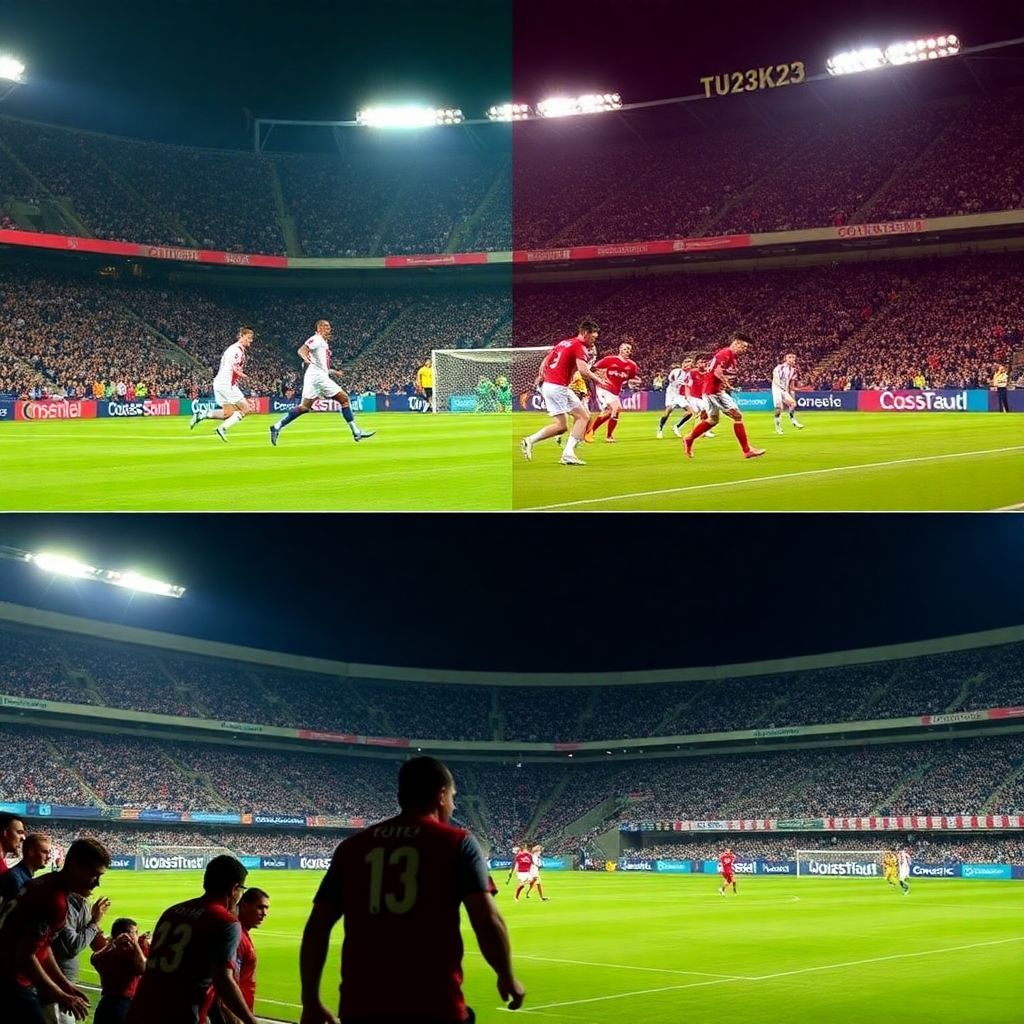
The evolution of the Turkish national team since the 2002 World Cup is a shift from a counter-attacking, emotionally driven side towards a more structured, academy-fed, possession-capable team. Progress depends on safer, step‑by‑step improvements in coaching, infrastructure, and selection, while accepting limits in depth, consistency, and high-intensity decision making.
Pivotal Milestones in Turkey’s Modern Football Journey
- 2002 World Cup bronze: defined a compact, transition-focused identity and raised expectations for the Turkey national football team jersey and badge.
- Post-2002 club investments: new stadiums and training centres, but uneven youth development quality.
- Euro qualification cycles: repeated boom-bust patterns exposing depth and tactical stability issues.
- Export of talent: more players in top-five leagues, yet inconsistent integration into a coherent national style.
- Emergence of a new generation often labelled among the best Turkish football players 2024, creating selection dilemmas and tactical rebalancing needs.
- Growing commercialisation: from Turkey national team memorabilia 2002 World Cup to modern Turkey national team match travel packages, bringing revenue but also fan pressure.
The 2002 World Cup Breakthrough: Tactical Foundations and Legacy
The 2002 World Cup breakthrough is the reference point for Turkey’s modern national-team identity. It was built on compact defending, fast counters, strong leadership figures, and a clear hierarchy. For coaches and analysts, it is a case study in how a team with limited depth can outperform by clarity of roles and cohesion.
Conceptually, this generation framed Turkey as a reactive but dangerous tournament team. Defensive block, aggressive second-ball hunting, and vertical play in transition were core principles. Safe, repeatable patterns – early crosses, clear pressing triggers, and simple set-piece routines – reduced decision-making stress on players.
The legacy has two faces. Positively, it established belief and a tactical template that underdogs can copy. Negatively, it created nostalgia that sometimes traps modern planning: new squads are still compared to 2002 even when their profiles fit a different model, such as structured possession or flexible pressing.
For today’s staff, the safe use of the 2002 blueprint is as a library of principles (compactness, defined leadership, emotional unity), not as a full tactical copy-paste. The game’s tempo, data use, and opponent preparation have changed; only the underlying ideas remain fully transferable.
Club Infrastructure and Youth Academies: Rebuilding the Pipeline
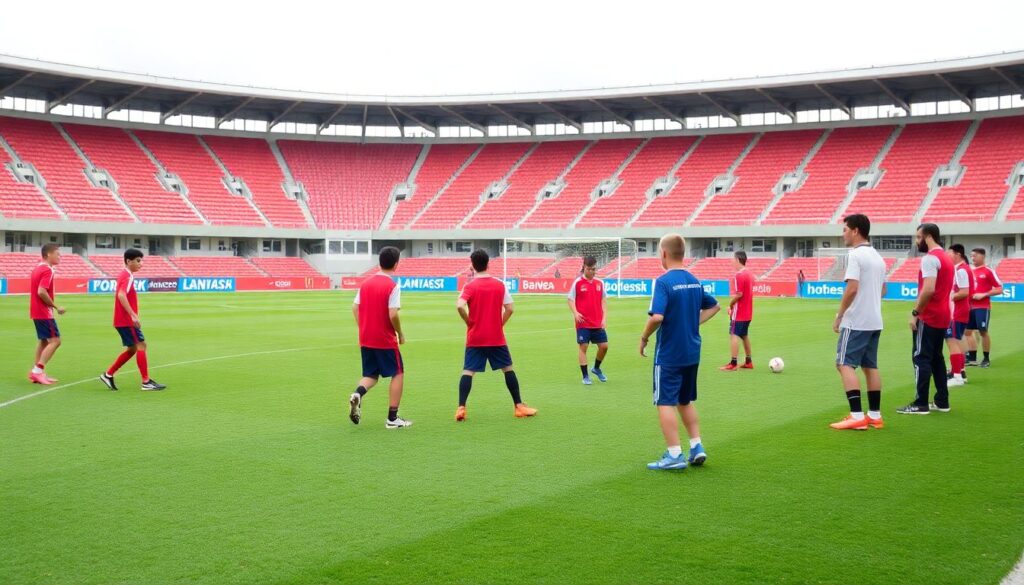
Rebuilding Turkey’s talent pipeline after 2002 runs mainly through club infrastructure and youth academies. For national-team performance, the safest long-term lever is not a new system in one camp, but aligned development standards at club level from U12 upwards.
- Standardised training environments
Clubs must offer consistent pitches, gym access, and recovery facilities to reduce injury risk and allow higher training volumes. National staff should map which academies meet minimum standards and adapt scouting expectations accordingly. - Coach education and alignment
Licensing, mentoring, and model training weeks help youth coaches teach the same fundamental principles – pressing cues, body shape in possession, transition habits – that the national team will later demand. This is the safest way to reduce the adaptation gap when players step into camps. - Data-informed tracking of prospects
Instead of chasing results at U14-U16, staff should track minutes played, positional versatility, and physical robustness. Shared databases between clubs and federation are safer than relying on tournament impressions or highlight videos. - Bridges between senior teams and academies
Clear promotion pathways (B teams, U21 leagues, structured loans) prevent stagnation between ages 17-21. National selectors gain a broader pool of players with regular senior minutes, not just reserves on big benches. - Integration of diaspora talent
Many of the best Turkish football players 2024 are partly developed abroad. A formal process for monitoring, visiting, and integrating these players keeps selection fair and reduces late, rushed decisions or public controversies. - Holistic player support
Education, language support, and mental-health awareness programmes create more resilient players who adapt to travel, pressure games, and commercial obligations like Turkey national football team jersey launches and media days.
For academy directors and national scouts, safe steps include building joint workshops, shared game model documents, and regular feedback loops. The main limitation is time: infrastructure and coaching upgrades take years before they show in senior tournament performance.
Evolution of Playing Style: From Fast Counters to Structured Possession
Since 2002, Turkey’s playing style has slowly shifted from almost pure transition football to more structured possession. This evolution is incomplete and sometimes unstable, but it reflects changes in player profiles, club coaching, and opponent preparation.
- Dominating weaker opponents in qualifiers
Against teams that sit deep, Turkey must break lines through rehearsed patterns: fullbacks providing width, interior midfielders between lines, and rotations that open central pockets. Here, structured possession is safer than relying on chaotic counters. - Balanced approach versus equal-strength rivals
In matches that decide Turkey national team tickets 2026 World Cup qualifiers, a hybrid model is essential. The team must be able to press high selectively, then drop into a mid-block, using possession to rest and to relocate the press trigger safely. - Reactive setups against top-tier opponents
Versus elite sides, a modernised version of the 2002 plan – compact 4-4-2/4-5-1, targeted pressing traps, and fast attacks through technically strong forwards – still has value. The safe limit is not to defend too low or concede endless crosses without pressure on the ball. - Late-game control when leading
To protect leads, Turkey needs automatisms for possession under pressure: third-man runs, safe switches, and clear exit routes from the back. Without these, the old habit of simply dropping back invites unnecessary risk. - Tournament rhythm and rotation
In tournaments, style must adapt to fatigue. Possession phases can help manage energy, while a direct, vertical game can be reserved for specific opponent weaknesses or for impact substitutes.
The practical limitation is training time. National coaches have only a few sessions per window, so any stylistic evolution must focus on 2-3 non-negotiable principles, not full-club-level complexity.
Coaching Trends and Organizational Culture in the National Setup
Coaching trends in the national team mirror club football: more positional play concepts, video analysis, and detailed set-piece planning. Organisational culture, however, is what converts concepts into stable performance under pressure.
Structural strengths of the current approach
- Improved analytical support with video and opponent data, helping staff tailor plans safely to each opponent instead of relying on generic instructions.
- Greater tactical flexibility, allowing switches between back-three and back-four, or between high pressing and mid-block, depending on player availability.
- More open talent pool, including diaspora players and young prospects, broadening competition for places and encouraging higher standards in camp.
- Professional communication practices with clearer messaging around roles, expectations, and off-field conduct, reducing emotional volatility.
Persistent constraints and cultural risks
- Short preparation windows limit the depth of tactical detail and automatisms that can be installed compared with club football.
- Public and media pressure can drive short-term decisions on line-ups and style, especially when comparing current players to 2002 heroes or debating who are the best Turkish football players 2024.
- Inconsistent coordination with clubs, leading to overload or underload of key players and conflicting tactical messages.
- Expectation-management gaps, where commercial narratives around Turkey national team match travel packages and jersey campaigns may overinflate short-term goals relative to realistic squad depth.
For federation decision-makers, safe steps are to stabilise a long-term game model, protect the head coach from short-term swings, and formalise information-sharing with clubs, while accepting that some turbulence from public scrutiny is unavoidable.
Player Pathways and Talent Management: Lessons from Two Generations
Comparing the 2002 generation with today’s players reveals recurring pathway and management issues. Many are less about talent itself and more about timing, role clarity, and expectation control.
- Over-accelerating young stars
Myth: a standout teenager should immediately become a national-team starter. Risk: physical burnout and stalled development. Safer step: phase them in with specific roles and minutes targets, especially in non-decisive fixtures. - Ignoring late developers
Myth: if a player is not a youth international, they have no senior potential. In reality, some key profiles mature later. Limitation: scouting networks may still overweight early fame or big-club badges. - Over-romanticising 2002 profiles
Myth: modern players must copy the exact roles and temperaments of 2002 stars. Instead, player management should adapt to current physical and technical realities, even while honouring Turkey national team memorabilia 2002 World Cup as part of the culture. - Underusing dual-national players
Myth: diaspora players lack commitment. In practice, clear communication about role, timing, and integration can secure them early and safely broaden the talent pool. - Mixing commercial image with selection
Myth: more marketable players should feature to drive Turkey national football team jersey sales and social media. Selection must stay performance-driven; marketing can build stories around those who earn their place.
For coaches and selectors, disciplined criteria – game impact, tactical fit, physical resilience, and attitude – are the safest guards against narrative-driven decisions about players from both generations.
Current Competitive Profile and Strategic Priorities for Upcoming Cycles
Today’s Turkey is a team with a higher technical ceiling, more players in strong European leagues, and better infrastructure than in 2002, but also facing opponents who are fitter, more analytical, and less surprised by Turkey’s emotional surges.
A simple strategic pseudo-plan for the next cycle could look like this:
// Strategic backbone for Turkey 2026 cycle
1. Define 2 base structures (e.g., 4-2-3-1 and 3-4-3) and 3 non-negotiable principles:
   - Compact rest-defence against counters
   - Aggressive pressing immediately after losing the ball
   - Clear, rehearsed build-up patterns from the back

2. Segment fixtures:
   - High-stakes (e.g., Turkey national team tickets 2026 World Cup qualifiers vs direct rivals)
   - Lower-stakes (friendlies, already-secured group games)
   - Use lower-stakes to blood young players and test variants.

3. Align with clubs:
   - Monitor individual loads
   - Share positional expectations with club coaches
   - Avoid tactical demands that contradict players' weekly roles.

4. Manage soft factors:
   - Integrate commercial events (Turkey national team match travel packages, sponsor days)
     around training loads, not inside key prep days.
   - Use 2002 history as inspiration, not a benchmark that paralyses current players.
The safe path is incremental: small, specific improvements in set pieces, rest-defence, and squad rotation each window. The main limitation is depth across all positions; success depends on keeping key players healthy and emotionally stable throughout the qualification and tournament cycle.
Practical Answers on Development, Selection, and Strategy
How should modern coaches balance 2002-style counter attacks with today’s possession trends?
Pick a primary identity based on your player profiles, then keep the other style as a backup. For Turkey, this means training structured possession as Plan A versus weaker teams, while keeping compact, aggressive transition football ready for stronger opponents.
What is a safe way to integrate a new generation of attacking talents?
Start them in defined roles with limited responsibilities – for example, as impact substitutes or within a double-pivot of experience and youth. Increase minutes as they show consistent pressing, defensive contribution, and game understanding, not just highlight-reel moments.
How can the federation minimise club-country conflicts over player workload?
Create transparent load plans, share GPS and medical data, and adjust training intensity during camps for heavily used players. Regular communication with club staff is safer than last-minute negotiations around crucial qualifiers or tournaments.
Do commercial activities like jersey launches or travel packages hurt performance?
They only become a problem if they intrude on tactical meetings, recovery, or sleep. Planned well, Turkey national football team jersey campaigns and Turkey national team match travel packages can fund better infrastructure without touching the competitive core.
What can youth academies copy from the 2002 generation’s mentality?
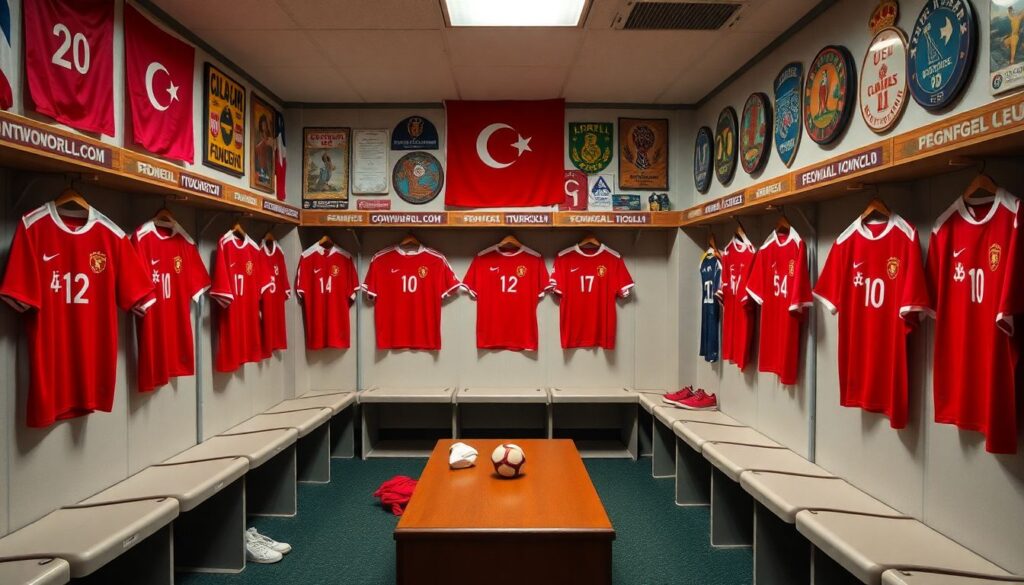
Emphasise resilience, role acceptance, and team-first behaviour. Use 2002 stories and Turkey national team memorabilia 2002 World Cup to teach identity, but connect them to modern habits: recovery, nutrition, data use, and emotional regulation under pressure.
How should fans evaluate claims about the best Turkish football players 2024?
Look at consistent club minutes, impact in big matches, and how well their skills fit the national team’s tactical needs. Social-media hype or marketing visibility around kits and campaigns is not a reliable indicator of international-level readiness.
What is the most realistic short-term goal for the current generation?
A realistic target is stable qualification for major tournaments, plus at least one deep run driven by a clear game model and healthy key players. Comparing every cycle directly to 2002 sets expectations too high relative to squad depth and modern competition.