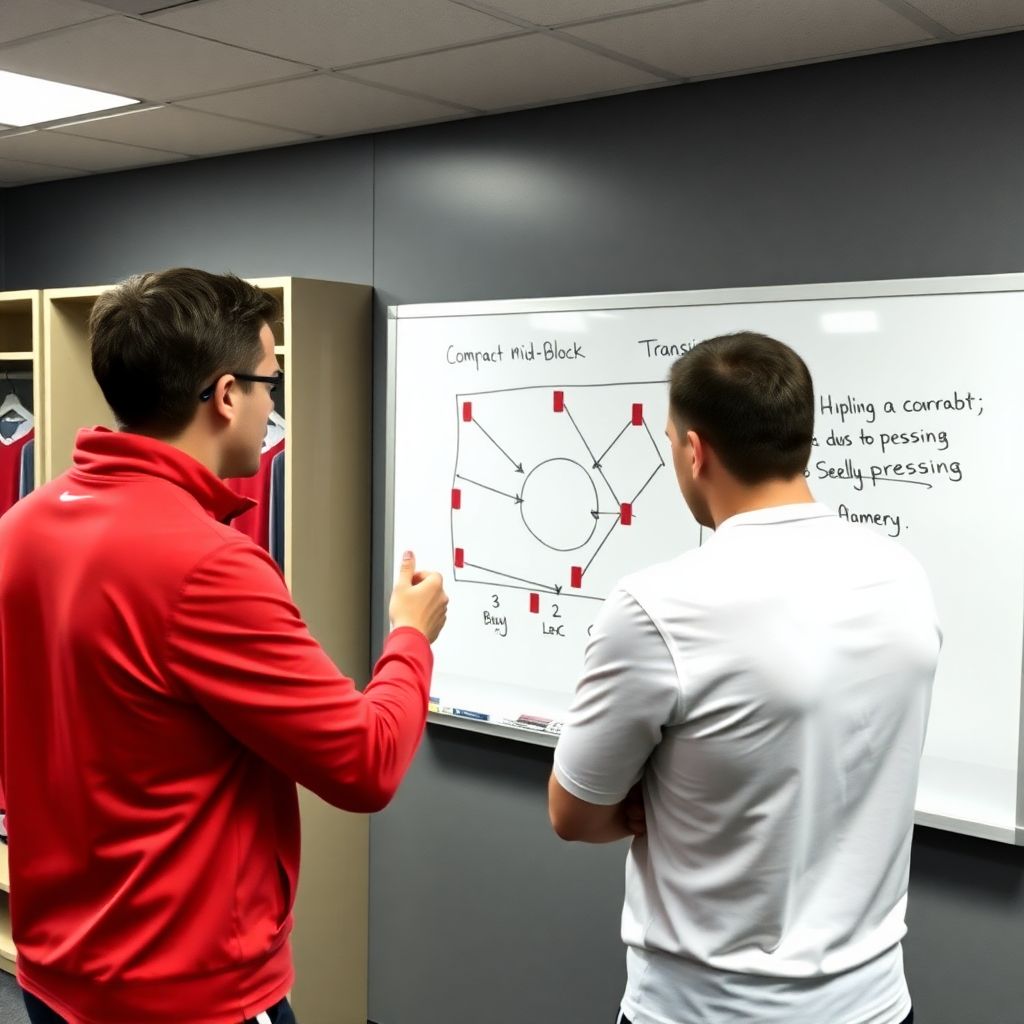
To choose the best tactical direction in the Süper Lig, treat classic 4-4-2, hybrid possession shapes and aggressive pressing as tools, not ideologies. The budget‑smart route is usually a compact mid‑block plus rehearsed transitions, then adding selective high pressing and flexible roles as your squad quality grows.
Concise Tactical Snapshot
- In current Süper Lig tactical analysis, pure 4-4-2 is rarely optimal alone; most teams blend it with asymmetric or 4-2-3-1/4-3-3 structures.
- Modern pressing systems in football demand compact distances rather than extreme fitness alone; spacing beats running.
- For many Turkish Süper Lig coaching tactics, the highest value lies in structured mid‑block pressing plus lethal transitions, not constant high press.
- Hybrid roles (inverted full‑backs, dual No.8s, false nine) are cheaper to build through coaching than buying ready‑made stars.
- Set‑pieces and patterned wide attacks give budget teams a realistic way to compete against bigger squads.
- Coaches can accelerate learning using a focused football tactics course online, then adapting concepts to local squad profiles.
- When doing 4-4-2 vs modern formations analysis, prioritise player strengths, bench depth and training time over fashion.
From 4-4-2 to Hybrid Shapes: Historical Drivers in the Süper Lig
Choosing between classic 4-4-2 and modern pressing systems in football inside the Süper Lig means weighing several practical criteria rather than copying top European teams.
- Squad athletic profile: Can your wide players repeat long sprints? Are centre‑backs comfortable defending large spaces?
- Technical level under pressure: Centre‑backs and pivots who panic when pressed limit high‑press and build‑up options.
- Depth and rotation: Intense pressing and constant high tempo need more reliable bench options than deep‑block approaches.
- Training time and staff: Semi‑rebuilding into complex hybrid shapes (e.g., 3+2 build‑up) demands more video, analytics and repetition.
- Club budget and recruitment reach: Wealthier clubs can buy press‑resistant defenders; budget teams must prioritise compactness and set‑pieces.
- Pitch quality and weather: Poor winter pitches in some Turkish cities punish slow, intricate build‑up more than direct 4-4-2 transitions.
- Opponent profile in the Süper Lig: Top‑4 sides usually dominate possession; mid‑table battles are often about second balls.
- Board patience and identity: Some clubs expect proactive Turkish Süper Lig coaching tactics; others reward pragmatic survival.
- Existing dressing‑room habits: If players grew up in rigid 4-4-2, jump first to simple tweaks (higher line, pressing triggers) before radical change.
Recasting Roles: How Full‑backs, No.8s and False Nines Function Now
Below is a comparative overview of role packages you can build on top of, or instead of, classic 4-4-2, with Süper Lig‑relevant strengths, weaknesses and cost‑to‑implement considerations.
| Variant | Fits whom | Pros | Cons | When to choose |
|---|---|---|---|---|
| Classic 4-4-2 with overlapping full‑backs | Teams with two honest strikers, strong wingers, limited budget for playmakers. | Simple roles, quick to coach, ideal for direct counters and crosses; low cost to implement. | Midfield can be outnumbered by 4-2-3-1/4-3-3; pressing angles are basic; predictable pattern. | Choose when survival and clarity matter more than control, especially for lower‑budget Süper Lig sides. |
| 4-2-3-1 with inverted wingers | Clubs with one creative No.10 and wingers who like to shoot rather than cross. | Better central overloads; easier to press in a 4-4-1-1; supports combination play; moderate coaching cost. | Full‑backs must provide width and big running volume; exposes flanks in transition if poorly coached. | Choose when you have at least one high‑level playmaker and attacking full‑backs, but not elite No.8s. |
| 4-3-3 with dual No.8s and high full‑backs | Technically strong midfields and mobile full‑backs; top half Süper Lig budgets. | Excellent pressing structure; multiple passing lanes; suits modern possession and counter‑pressing ideas. | Demanding physically and tactically; mistakes leave centre‑backs exposed; higher recruitment and staff cost. | Choose when you aim to dominate games, can recruit ball‑playing defenders and invest in detailed coaching. |
| 3-4-2-1 with false nine and wing‑backs | Teams with many central midfielders, few classic wingers, and one clever forward. | Strong central presence; good rest‑defence; flexible pressing heights; disguises lack of pure wide players. | Wing‑backs must be elite athletes; difficult to teach quickly; depth needed for two players per lane. | Choose when you can sign or develop powerful wing‑backs and want long‑term tactical stability. |
| 4-4-2 diamond with pressing forwards | Squads rich in central midfielders and two hardworking strikers but few natural wingers. | Excellent central compactness; clear pressing cues; suits modern pressing systems in football with modest cost. | Relies heavily on full‑backs for width; open to switches of play; complex covering tasks for No.6. | Choose when opponents build centrally and your strikers can lead an aggressive, coordinated press. |
Recent Süper Lig tactical analysis shows top clubs gravitating toward 4-3-3 or 3-4-2-1 variants, while many mid‑table and lower‑budget sides adapt 4-4-2 or 4-2-3-1 with small, cost‑effective role tweaks instead of full tactical overhauls.
Pressing Systems Decoded: Triggers, Lines and Controlled Aggression
Pressing choice is where 4-4-2 vs modern formations analysis becomes decisive for match control and physical load.
- If your squad is technically average and physically mixed, then prioritise a compact mid‑block 4-4-2 or 4-4-1-1, pressing only on poor touches, backward passes and sideline traps; this is the most budget‑friendly model.
- If you have young, aggressive forwards and centre‑backs comfortable 1v1, then implement a situational high press in a 4-3-3 or diamond, targeting opposition goal‑kicks and back‑passes to the keeper.
- If your bench is shallow and you cannot rotate often, then avoid full‑game high pressing; use 10-15 minute pressing waves after goals, substitutions or opponent fatigue spikes.
- If you coach a top‑budget Süper Lig side with strong analysts, then layer complex man‑oriented pressing schemes and asymmetric high blocks tailored to each rival build‑up pattern.
- If you are a lower‑table team chasing points against big clubs, then stay in a low or mid‑block, press only on wing traps, and invest coaching time into first and second‑ball organisation on long clearances.
- Budget framing: mid‑block and touch‑triggered presses cost mainly coaching hours; constant high press in advanced structures costs in recruitment (athletes, depth), sports science, and staff with strong Turkish Süper Lig coaching tactics expertise.
- Premium framing: elite clubs can afford high‑risk, data‑driven pressing schemes, using tracking data and detailed opposition analysis similar to what is often taught in an advanced football tactics course online.
Transition Play: Managing Fast Counters and Possession Resets
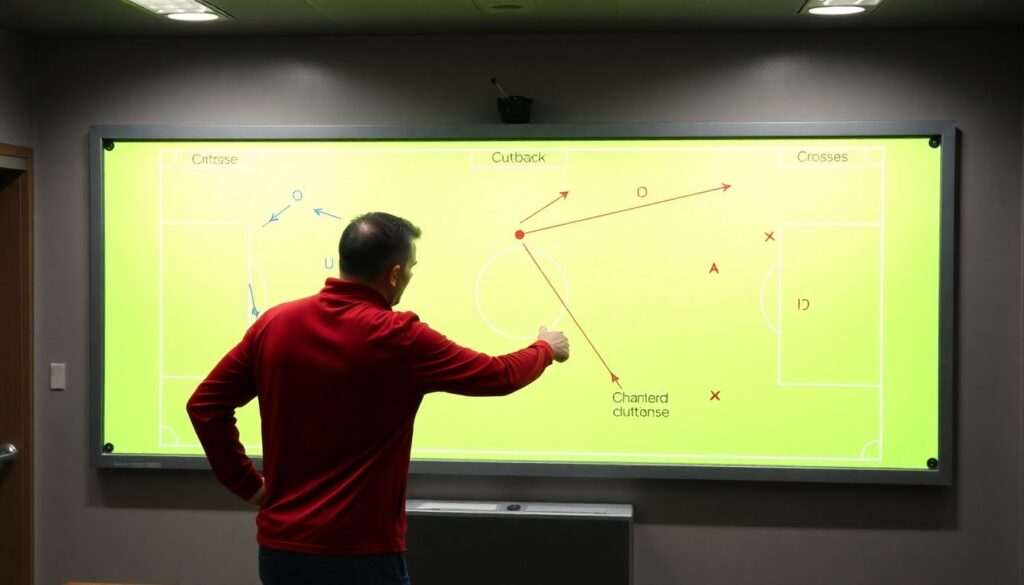
Use this streamlined checklist to decide how your Süper Lig team should handle offensive and defensive transitions with minimal waste.
- Define your primary scoring route: crosses, cutbacks, counter‑attacks or overload‑to‑isolate; choose transitions that feed this route, not fight it.
- Set a maximum risk line: decide how many players you allow ahead of the ball when attacking so your rest‑defence is never outnumbered.
- Assign two transition anchors (usually No.6 plus one centre‑back) who never both join attacks; they control counter‑prevention and first duels.
- Preset a three‑step counter plan: win the ball, one secure pass, then either direct vertical ball to the most advanced runner or quick switch opposite.
- Detail role reactions in three words each (e.g., "sprint inside cover", "press then recover"); keep it simple enough for in‑game recall.
- Decide your reset trigger: if a fast counter is impossible (no forward passing lane in two touches), recycle back to the pivot and re‑form your attacking structure.
- Train transition scenarios 2-3 times per week in small‑sided games with clear scoring rules for quick attacks and well‑timed collective retreat.
Set‑Piece Economies and Patterned Play: High Return, Low Cost
Choosing and designing set‑pieces and patterned play is where budget‑conscious Süper Lig clubs can close the gap efficiently; avoid these frequent errors.
- Copying complex European routines that your players cannot reproduce under pressure instead of building 2-3 simple, repeatable patterns.
- Using the same corner delivery and run shapes against every opponent, ignoring differences in marking style and keeper aggression.
- Failing to link throw‑ins and free‑kicks to your overall pressing plan, letting opponents escape pressure cheaply after stoppages.
- Ignoring second‑ball structure: loading the box with tall players but leaving no edge‑of‑box controller for clearances.
- Over‑relying on inswingers or outswingers only, making your delivery predictable and easy to pre‑defend.
- Allowing creative players to improvise every time instead of giving them clear decision trees: shoot, cross, or short routine based on wall and keeper position.
- Not tracking set‑piece outputs (shots, xG, conceded chances) with even simple spreadsheets, so weak routines stay in the playbook too long.
- Ignoring training time for defensive set‑pieces, assuming "man‑mark and attack the ball" is enough against well‑drilled Süper Lig opponents.
- Spreading practice time thin across ten routines instead of mastering four high‑impact patterns for different game states.
- Neglecting counter‑attack defence after your own corners, leaving only one slow player back as the last defender.
Practical Implementation on a Budget: Training, Data and Recruitment
Compact 4-4-2 or 4-4-1-1 with a disciplined mid‑block is usually best for budget Süper Lig teams seeking stability; 4-2-3-1 adds control if you own a capable No.10; 4-3-3 or 3-4-2-1 suits higher‑budget clubs chasing dominance and advanced modern pressing systems in football.
Targeted Tactical Clarifications
Is classic 4-4-2 still viable in the modern Süper Lig?
Yes, but mainly as a base for compact defence and fast transitions rather than all‑out pressing. Most coaches tweak it into 4-4-1-1 or add asymmetric full‑back behaviour to avoid midfield overloads from 4-2-3-1 and 4-3-3 opponents.
When should a Süper Lig team move from 4-4-2 to 4-3-3?
When you can field three midfielders comfortable under pressure and at least one wide forward who can press and create 1v1. It also requires centre‑backs able to defend larger spaces and start build‑up, which often implies higher recruitment cost.
How can lower‑budget clubs press effectively without burning out players?
Use a structured mid‑block with clear triggers, such as backward passes or sideline traps, and time limited high‑press waves after turnovers or goal‑kicks. Focus on distances between lines and collective shifting rather than constant sprinting.
What roles give the best value for money in the Süper Lig?
Coachable roles like aggressive No.8s, versatile full‑backs and pressing forwards usually offer higher value than buying a single high‑priced No.10. With good Turkish Süper Lig coaching tactics, these roles can transform pressing and transitions without huge transfer fees.
How important are set‑pieces for mid‑table Süper Lig teams?
They are often decisive, especially in tight games against stronger opponents. A small set of well‑trained attacking and defensive routines can add crucial goals and prevent soft concessions at a fraction of the cost of star attackers.
Can an online tactics course really help a working coach in Turkey?
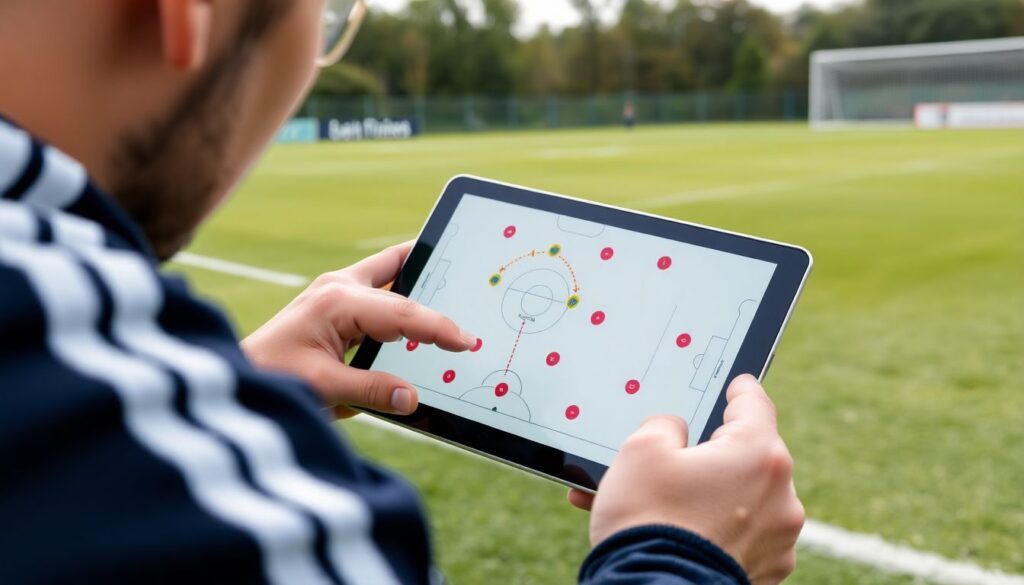
A well‑chosen football tactics course online can speed up understanding of pressing structures, build‑up patterns and data use. The key is translating concepts into simple exercises tailored to your players, not copying foreign game models blindly.
How do I decide between 3-4-2-1 and 4-2-3-1 with my current squad?
If you lack natural wingers but have many central midfielders and mobile defenders, 3-4-2-1 may fit better. If you rely on one main playmaker and have attacking full‑backs, 4-2-3-1 is usually easier to install mid‑season.