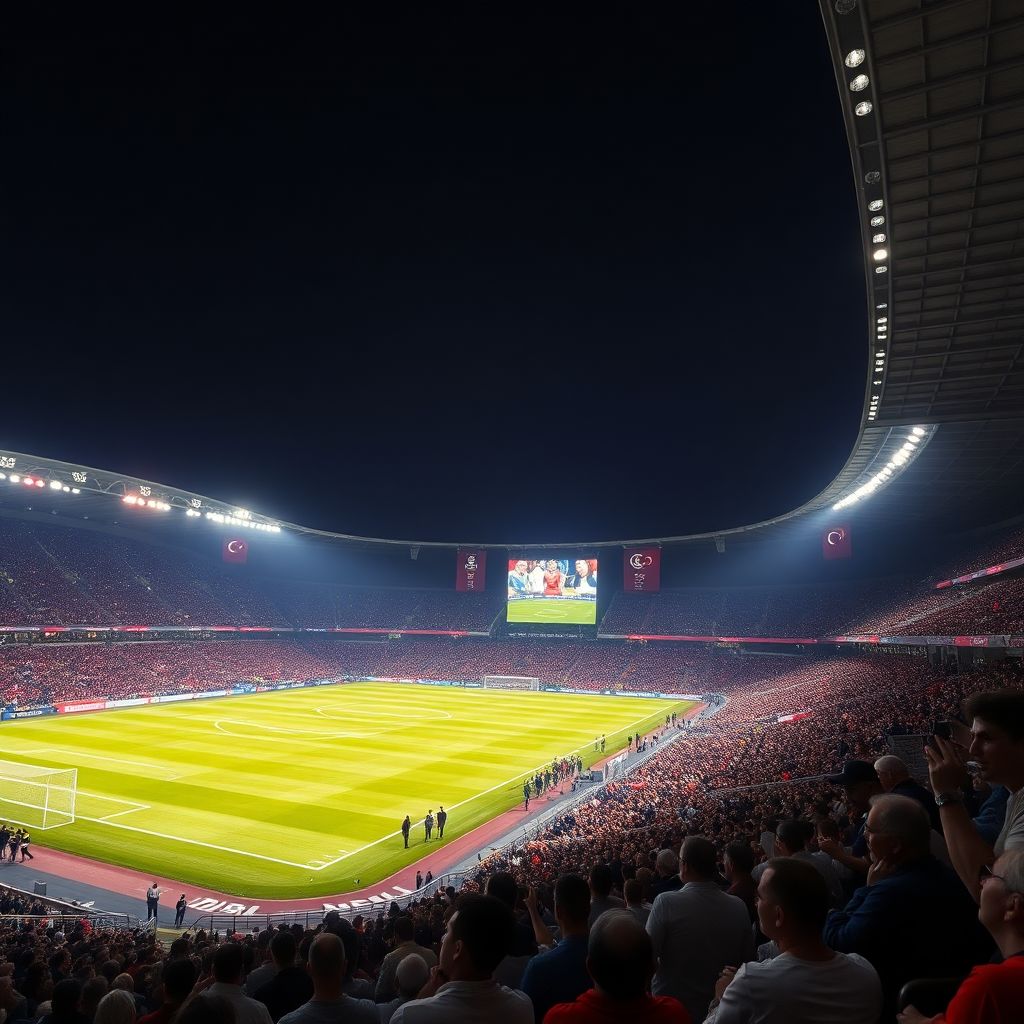
Political and economic changes in Turkey shape football by deciding who finances clubs, how lira volatility hits wages and transfers, which broadcasters show games, and where new stadiums are built. These shifts directly affect turkish super lig tickets online, live stream turkish super lig matches, fan behaviour, and even decisions to buy shares in turkish football clubs.
How Political and Economic Shifts Reshape Turkish Football: A Clear Overview
- State power and political patronage influence who controls clubs, which debts are restructured, and which projects receive public backing.
- Macroeconomic instability and lira depreciation push clubs toward short contracts, foreign-currency risk, and aggressive transfer trading.
- Broadcasting and sponsorship markets determine the money behind prize funds, turkish super lig tickets online pricing, and club survival.
- Migration patterns and identity politics help mobilise ultra groups, regional fan bases, and digital communities following turkey football news and transfer rumours.
- Public investment in stadiums links football to urban development, real estate value, and local political capital.
- Geopolitics shapes international transfers, player flows, and how Turkish talent is positioned in global football hierarchies.
State Power, Political Patronage and Club Governance
State power and political patronage in Turkey affect football by steering who leads clubs, how they manage debt, and how closely they align with national or local authorities. Clubs often operate at the intersection of politics, business, and supporter expectations.
In practice, political support can bring easier access to state banks, municipal land for training facilities, or fast-tracked permits for stadium upgrades. Conversely, a loss of patronage may reveal hidden liabilities, overdue taxes, or unpaid social-security contributions, forcing drastic squad cuts and fire-sale transfers.
This environment creates two broad governance approaches. Politically reliant clubs benefit from short-term stability and easier access to funds but face higher governance risk, because leadership changes may follow election cycles rather than sporting logic. More independent clubs rely on commercial income, transparent accounting and investor oversight, but must accept slower growth and more pressure from creditors.
For fans, these patterns show up in everyday details: ticket subsidies for key derbies, politicised decisions on away allocations, or preferred access for sponsors when turkish super lig tickets online go on sale. For investors considering whether to buy shares in turkish football clubs, mapping each club’s political exposure is as essential as reading the financial statements.
Implementation convenience versus risk usually trades off like this: deep political ties are easier to build quickly, especially for provincial clubs seeking status, yet they carry high long-term risk if the political wind changes; independent boards, minority shareholder protections and fan representation are slower to implement but more resilient to shocks in state policy.
Macroeconomic Instability, Lira Fluctuations and Financial Health of Clubs
Macroeconomic instability and lira depreciation shape Turkish clubs’ finances by redefining wage bills, transfer budgets, and debt burdens from season to season.
- Currency mismatch between revenue and costs. Many foreign players and coaches are paid in euros or dollars, while most income – matchday sales, local sponsorship, domestic TV money – is lira-based. When the lira weakens, wage bills jump without any real increase in revenue.
- Shorter contracts and higher squad turnover. To manage currency risk, clubs prefer shorter deals with foreign players and more performance-based clauses. This can undermine continuity, tactical development and youth integration, leading to unpredictable on-pitch results.
- Restructured bank debts tied to macro policy. Club debts to state-linked banks are often renegotiated when macro conditions worsen. Relief packages may ease immediate pressure but extend repayment periods, reduce transparency, and lock clubs into politically influenced terms.
- Volatile transfer strategies. In strong-lira periods, clubs may overinvest in foreign talent; when the lira weakens, they are forced into quick sales and reliance on academy products. This volatility complicates long-term squad planning and European competition performance.
- Impact on fans’ spending power. Inflation and wage stagnation limit how much fans can pay for season tickets, travel to away games, or premium streaming packages. This directly influences how broadcasters price subscriptions to live stream turkish super lig matches.
- Risk management approaches. Conservative approaches emphasise domestic talent, lira-based contracts and strict budgets, which are harder to sell to impatient supporters but safer in crises. Aggressive approaches chase quick success via foreign signings, carry higher default risk, and depend heavily on favourable macro turns.
For clubs, choosing the right mix between conservative and aggressive financial strategies is mainly a question of risk appetite and governance quality. Conservative models are more difficult to implement politically, because they limit sensational signings that dominate turkey football news and transfer rumours, yet they reduce the chance of insolvency when macro conditions worsen.
Broadcasting, Sponsorship Markets and Commercial Revenue Models
Broadcasting and sponsorship markets define how money flows into Turkish football and how it is shared between big and small clubs, online platforms, and match-going fans.
1. Central domestic broadcasting deals. The main TV contract underpins club budgets and influences kick-off times, fixture scheduling, and exposure. When broadcasters push for flexible rights – highlights, mobile clips, and alternative feeds – clubs gain more windows to monetise but also fragment their audience. Fans decide between classic TV subscriptions and digital services that live stream turkish super lig matches, often bundled with other sports content.
2. International rights and diaspora audiences. Rights sold abroad reach Turkish communities in Europe and the Middle East. These audiences often consume turkey football news and transfer rumours via social media and then subscribe selectively to international streaming platforms. This approach is simple to scale but vulnerable to diplomatic tensions and currency swings that affect pricing in foreign markets.
3. Sponsorship portfolios and naming rights. Shirt sponsors, sleeve deals, and stadium naming rights are heavily influenced by domestic economic cycles and government industrial policy. State-linked companies may sponsor clubs aligned with political priorities, while private firms look for measurable return on investment. High-dependency models with one or two big sponsors are easier to negotiate but risk collapse if a single relationship fails; diversified portfolios are harder to build but offer more stability.
4. Digital monetisation and direct-to-fan models. Clubs experiment with subscription apps, membership tiers, and premium content beyond regular TV coverage. Packages may bundle priority access to turkish super lig tickets online, exclusive interviews, or tactical breakdowns. These models are relatively low-risk financially but require strong in-house digital teams and patient investment before they become profitable.
5. Gambling partnerships and data-driven markets. Turkey football betting sites and international bookmakers seek branding visibility, data rights, and in-play advertising. While such deals can be lucrative, they carry regulatory, ethical, and reputational risk. For leagues, creating a transparent, regulated framework is more complex but safer long term than relying on opaque offshore partners.
Migration, Identity Politics and Supporter Mobilization
Migration patterns and identity politics help organise Turkish football’s supporter base, shaping ultras, regional loyalties, and digital fandom across cities and the diaspora.
Consider three practical scenarios. First, a club in a migrant-sending region uses hometown narratives and local politicians to mobilise both stadium crowds and diaspora donors. Second, a big-city club builds targeted social media campaigns in German and Dutch to attract second- and third-generation Turkish fans abroad. Third, community media platforms covering turkey football news and transfer rumours tailor content to specific identity groups, turning online engagement into merchandise sales and crowdfunding for fan projects.
Benefits for Clubs and Supporters
- Clubs can tap migrant networks for fundraising, overseas fan clubs and pre-season tours, converting identity ties into stable demand for merchandise and memberships.
- Identity-based mobilisation strengthens stadium atmospheres, ultra culture, and home advantage, influencing results and TV ratings.
- Digital communities allow fans who cannot attend games – including diaspora followers – to feel connected through streams, highlights and commentary, even when they rely on third-party platforms to live stream turkish super lig matches.
- Local politicians may support fan-led initiatives such as community academies, youth tournaments, or memorial matches, turning football into a channel for social inclusion.
Constraints and Risks of Identity-Based Mobilization
- Over-politicised supporter groups can provoke stadium bans, fines and closed-door matches, harming both sporting performance and matchday revenue.
- Identity fractures between different fan factions may discourage neutral supporters, families and tourists from attending matches or buying official products.
- Heavy reliance on emotionally mobilised fan groups complicates governance reforms, as any change in ticket pricing or member privileges can spark intense resistance.
- Commercial partners may hesitate to invest when they perceive high reputational risk from political or social controversies around fan behaviour.
Public Investment, Stadium Projects and Urban Development Stakes
Public investment and stadium projects in Turkey are tools of urban development and political signalling, but they carry long-term financial and social risks if mismanaged.
- Belief that “a new stadium automatically pays for itself”. In reality, many new or renovated grounds operate below capacity outside big games. Operating costs, security, and maintenance often exceed expectations, while additional commercial uses – concerts, conferences, museums – may not materialise at planned levels.
- Underestimating access and transport needs. Modern stadiums built on city outskirts require strong public transport links. If planning focuses on the building but ignores mobility, average attendance suffers, reducing demand for turkish super lig tickets online and weakening matchday revenue projections.
- Ignoring community consultation. When local residents are not involved, stadium projects can trigger resistance over noise, traffic or land use. This resistance may delay construction, add legal costs, and damage the club’s relationship with its own neighbourhood.
- Overreliance on political cycles. Stadium promises made before elections can lead to rushed plans, inflated expectations, or half-finished facilities if political priorities shift afterwards. Clubs caught in the middle may carry costs without full control of the asset.
- Assuming “bigger is always better”. Oversized stadiums create poor atmosphere on normal matchdays and increase fixed costs. Smaller, flexible designs with expandable sections are harder to finance up front but reduce the risk of long-term underuse.
- Underdeveloped surrounding urban space. Without integrated retail, leisure and community facilities, stadiums remain single-purpose venues. Mixed-use developments are harder to plan but spread risk beyond football results and encourage daily economic activity around the venue.
For municipalities and clubs, more modest, multi-purpose stadiums are harder to sell politically but usually offer a safer balance between prestige, financial sustainability and community benefit.
Geopolitics, International Transfers and the Global Positioning of Turkish Talent
Geopolitics and international transfers influence how Turkish clubs recruit foreign players, export local talent, and position themselves between European and Middle Eastern markets.
When diplomatic ties with a region improve, work permits, tax arrangements and flight connections often follow, making it easier to sign players and schedule friendlies. Clubs may target specific leagues – for example, Gulf states or mid-tier European competitions – as preferred buyers for their players, adjusting training schedules, language education and media strategies accordingly.
A simplified mini-scenario illustrates the logic:
IF economic_ties(country_X) strengthen AND
   league_X wages > Super_Lig_wages THEN
    focus_scouting_on(country_X);
    market_Turkish_players_to_league_X;
    structure_add-on_clauses in transfers;
ELSE
    diversify_markets;
    invest_more_in_local_development;
END IF;
This approach is relatively simple to implement at big clubs with established scouting networks but riskier for smaller teams that lack bargaining power. Overconcentration on one foreign league or region increases vulnerability to sudden policy changes, currency shocks or regulatory shifts in transfer rules.
Practical Questions from Clubs, Fans and Investors
How do political changes affect my club’s transfer strategy?
Political changes influence access to financing, state guarantees and relations with regulators, which in turn affect wage budgets and debt tolerance. Clubs with strong political backing may pursue more aggressive transfer strategies, while less connected clubs often have to prioritise youth development and low-cost signings.
Why does lira volatility matter for an ordinary fan buying tickets?
Lira volatility affects club budgets, which then influences ticket pricing, payment options and discount policies. When operating costs rise faster than revenues, clubs may increase prices or add service fees for turkish super lig tickets online, making it more expensive to attend matches regularly.
Are streaming platforms safer than illegal feeds for watching Turkish football?
Licensed platforms that live stream turkish super lig matches offer legal, stable access and support club revenues via rights fees. Illegal feeds are unreliable, may contain malware, and do not contribute to the financial ecosystem that sustains your club’s squad and facilities.
What should an investor check before deciding to buy shares in a Turkish club?
Look at audited accounts, debt structure, currency exposure, and governance rules alongside on-pitch prospects. Also map political links, dependence on single sponsors, and exposure to court cases or regulatory sanctions to understand both upside potential and downside risk.
How do turkey football betting sites influence the league?
Betting markets increase overall interest and data demand, which can raise the value of media and integrity services. However, if regulation is weak, match-fixing and problem gambling risk grow, potentially damaging the league’s reputation and leading to stricter future controls.
Why does so much attention go to turkey football news and transfer rumours?
Transfer rumours drive digital engagement, sponsorship value and betting activity, even outside the season. Media cycles based on speculation can pressure clubs into short-term decisions, so well-governed clubs treat rumours as information noise rather than a strategic guide.
How will future public stadium investments affect small clubs?
New or renovated stadiums can boost visibility and commercial options for small clubs, but only if operating costs remain manageable. Without realistic business plans and community integration, smaller teams may struggle to fill modern venues or cover maintenance expenses.