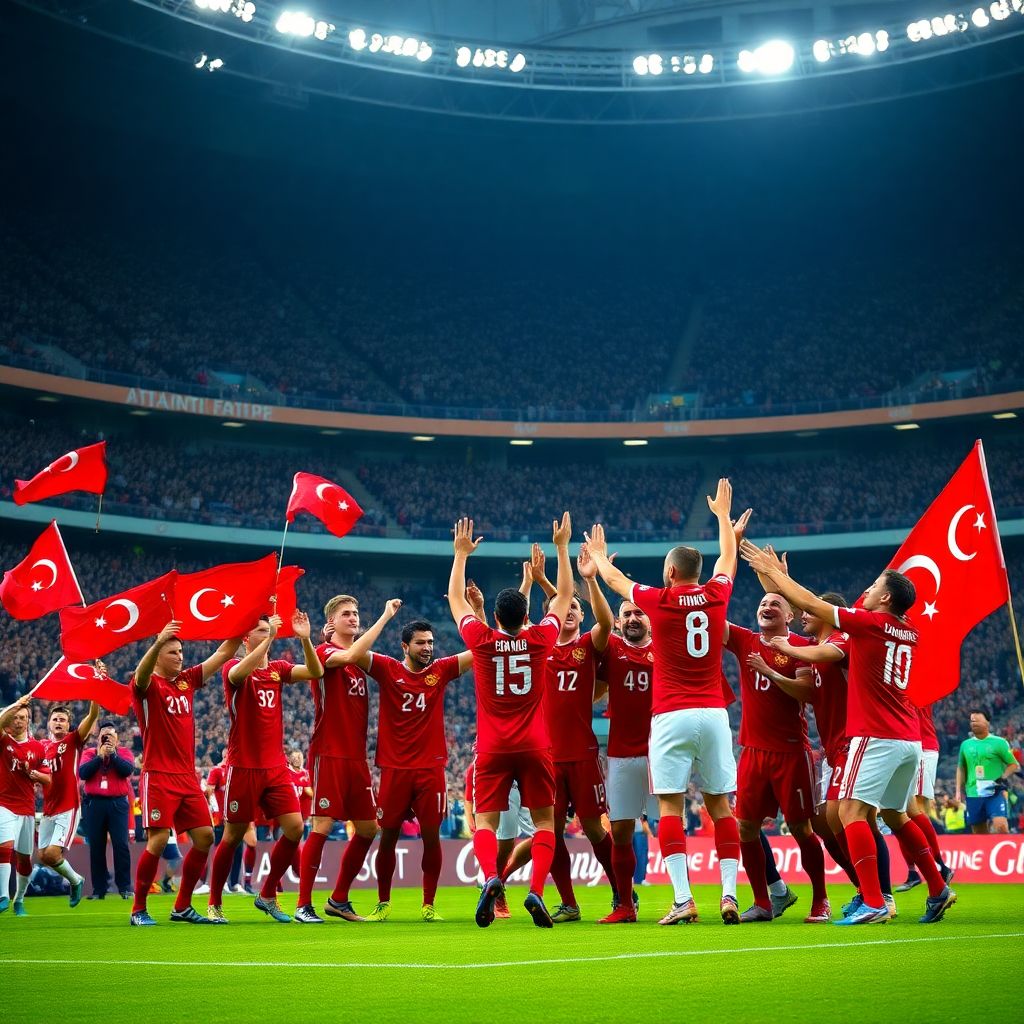
International tournaments shape the identity of the Turkish national team by turning short, intense campaigns into shared national stories. Specific matches, tactical choices, and star performances at Euro and World Cup level crystallise how Turkey sees its football: emotional comebacks, collective fight, and a symbolic bridge between Anatolian passion and European competition.
Myths That Distort How Tournaments Shape Turkey’s National Identity
- Myth: One good tournament permanently defines Turkey’s football identity. In reality, identity is recalibrated across cycles of success and disappointment.
- Myth: Only results matter. Performance style, behaviour of players, and fan culture during tournaments often leave deeper marks than the final score.
- Myth: Identity is decided only on the pitch. Media narratives, sponsors, and even how Turkey national football team tickets are marketed shape the overall image.
- Myth: Tactical systems are neutral. Tournament systems (for example, a brave high press vs. a deep block) become moral stories about what it means to play “Turkish football”.
- Myth: Diaspora players dilute identity. For Turkey, Germany‑born or Europe‑based players often reinforce a modern, hybrid sense of national belonging.
- Myth: Short tournaments are too random to matter. Precisely because they are short and emotional, they fix strong memories that guide future expectations.
Turning Points: Turkey’s Landmark Performances and Their Ripple Effects
International tournaments define the Turkish national team’s identity by providing clear, emotionally charged reference points that supporters and media revisit for years. Each major Euro or World Cup campaign becomes a story about who “we” are: fearless underdogs, unlucky talents, disciplined contenders, or chaotic romantics.
Historically, deep runs and dramatic matches have acted as turning points. The 2002 World Cup transformed Turkey from regional outsider to global dark horse, while later European Championships reinforced images of late comebacks and never‑give‑up mentality. Even failures in Turkey World Cup qualifiers schedule have reframed identity, shifting focus toward patience, rebuilding, or frustration with institutions.
These tournaments set boundaries for what feels “authentically Turkish” on the pitch. A high‑energy, emotional style in a Euro campaign can be celebrated as the true essence of the team, while more cautious approaches may be criticised as “not us” even if they bring results. Over time, each generation’s flagship tournament writes a slightly different version of Turkish football identity.
For fans following Turkey Euro 2024 fixtures and results, this process is visible in real time: every comeback, red card, or tactical change is instantly discussed as proof that the team has either stayed loyal to its soul or betrayed it. Tournaments are therefore not just competitions but laboratories where Turkish football’s self‑image is constantly tested.
Tournament Tactics to National Style: How Systems Become Identity
- Selection of a base system: Coaches enter a tournament with a preferred structure (for example, 4‑2‑3‑1 or 3‑4‑3). Once it works on a big stage, fans and media label it as the “Turkish way” of organising the team.
- Emotional match patterns: Repeated scenarios, such as late goals or high‑risk comebacks, bind certain tactical choices to emotions. A pressing system associated with heroic turnarounds quickly becomes part of the identity narrative.
- Hero players as system symbols: Star individuals embody roles inside the system. A creative number 10 or a dominant centre‑back becomes the face of that style, fixing it in memory as the ideal for future generations.
- Media framing of bravery vs. pragmatism: Journalists and commentators judge tournament tactics with moral language. Playing on the front foot is framed as proud and courageous; sitting deep may be framed as fearful, even if effective.
- Copying at club and youth level: Once a system is hailed as authentically Turkish, clubs and academies imitate it. Over time, this repetition outside tournaments consolidates the style as a national standard.
- Feedback from fans and diaspora: Reactions in stadiums, fan forums, and Turkey national football team live stream chats push coaches toward or away from certain styles, rewarding the systems that feel emotionally correct.
- Institutional memory: Federations and technical directors document which tournament systems performed “with identity” and use that knowledge when defining long‑term game models and coach selection criteria.
From Local Clubs to Global Stage: Player Pathways and Diaspora Influence
International tournaments sit at the intersection of local Turkish club culture and global football flows. The national team is built from Super Lig clubs, European clubs, and a strong diaspora presence, especially in Germany and other EU countries. Tournaments show how these pathways blend into a shared identity.
- Homegrown Super Lig cores: Squads based heavily on domestic clubs carry the tempo, aggression, and atmosphere of Turkish stadiums into tournaments. This reinforces a narrative that national identity is anchored inside the country’s own league.
- Diaspora‑developed players: Footballers who grew up in European academies bring different tactical education and professionalism. When they shine at Euros or World Cups, they normalise a hybrid identity that is both Turkish and European.
- European elite club stars: Players from top leagues carry prestige and set behavioural norms in the national team. Their performances in major tournaments often become benchmarks for what “modern Turkish footballer” means.
- Role of youth competitions: Successful youth Euros or World Cups build early images of a new generation: technical, fearless, or tactically intelligent. When those same players reach the senior team, fans expect continuity of that identity on the big stage.
- Commercial and visual identity: Tournaments are the main shop window for the team’s look. Fans choosing a Turkey national team jersey 2024 buy online are responding to colours, fonts, and design that they associate with specific campaigns and emotions.
- Travel and fan mobility: Tournament host cities become temporary Turkish hubs, especially in Europe where diaspora communities are large. The mix of local and travelling fans on matchdays amplifies the idea of a global Turkish football nation.
Coaches, Federations and Policy: Institutional Drivers of Identity
Institutions decide how much tournament stories become long‑term identity. Coaches, the federation, and technical directors choose whether to lock in a successful style or reset after each cycle. Their policies turn emotional memories into concrete guidelines for how Turkey should play and behave on and off the pitch.
Institutional Advantages When Tournaments Are Used Well
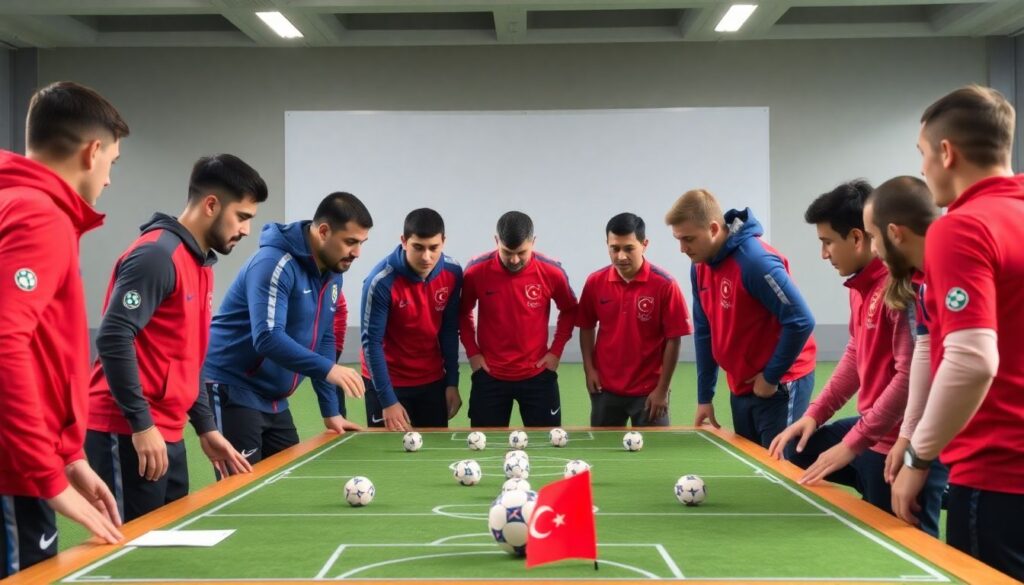
- Clear long‑term game model drawn from successful tournament performances, helping youth and club coaches align toward a recognisable Turkish style.
- Stronger coach selection criteria, prioritising those whose philosophy matches the identity proven to work in high‑pressure tournaments.
- Better communication with fans, using tournament examples to explain why tactical or selection decisions match the national football idea.
- More coherent marketing and branding, from Turkey national football team tickets to merchandise, all grounded in a clear identity narrative.
- Higher trust in the federation when tournament lessons are transparently analysed and turned into specific technical projects.
Institutional Limitations and Typical Pitfalls
- Overreacting to single tournaments, locking in an identity based on a small sample instead of broader performance evidence.
- Personalising identity around one coach, making it collapse when that coach leaves rather than embedding ideas in federation structures.
- Ignoring developmental realities, demanding a possession‑dominant identity when youth systems still produce more reactive, direct players.
- Short‑termism driven by qualification pressure in Turkey World Cup qualifiers schedule, forcing pragmatic choices that do not align with desired style.
- Lack of consistent technical documentation, so each new staff repeats the same debates instead of building on prior tournament analysis.
Media Narratives, Fan Culture and Symbols Forged in Tournaments
Tournament identity is not just about tactics; it is also about stories and symbols. Media, influencers, and fan groups select particular moments and behaviours to represent the whole team. Over time these choices produce myths that can either help or confuse the understanding of what Turkish football really is.
- Myth of the eternal underdog: Constantly framing Turkey as a small outsider, even when the squad is strong, can limit ambition and create satisfaction with “honourable losses” instead of demanding consistent success.
- Myth that chaos equals passion: Celebrating disorderly matches and unstable emotions as proof of “true passion” hides the value of controlled aggression and tactical discipline shown in successful campaigns.
- Myth of the single heroic generation: Over‑romanticising one golden era suggests that newer teams cannot match it, discouraging fair evaluation of present squads and coaches.
- Myth that fans are only emotional: Supporters are often portrayed as purely reactive, while in reality organised fan groups can articulate clear demands for playing style and youth development.
- Myth of media as neutral mirror: Commentary choices, highlight packages, and the tone of Turkey national football team live stream discussions actively shape which aspects of performance are seen as identity‑building.
- Myth that visuals are superficial: Kits, banners, and chants during tournaments create powerful visual identity; dismissing them misses how much a jersey or choreography can symbolise a whole era.
Measuring Change: Metrics, Results and Long‑term Identity Indicators
To understand how tournaments reshape the Turkish national team’s identity, it helps to move from pure emotion to simple, trackable indicators. Even without complex data models, you can build a basic, repeatable check that links specific campaigns to shifts in style, behaviour, and perception over several qualification and final‑tournament cycles.
A practical mini‑case could follow a cycle from qualifiers to a Euro finals. Track how tactical risk, pressing, or youth integration appears in qualifiers, then compare to what happens under big‑stage pressure. Use this comparison to see whether the identity projected during the final tournament is a stable choice or a temporary adjustment.
- Define the observation window: For example, take one full cycle from the start of Turkey World Cup qualifiers schedule or Euro qualifiers until the end of the final tournament.
- Choose simple identity indicators: Examples include average defensive line height, number of young debutants, share of diaspora players, and frequency of late comebacks or collapses.
- Collect consistent snapshots: For each official match in the cycle, log formation, main tactical approach, and key behavioural notes (pressing intensity, game management, emotional control).
- Compare qualifiers vs. finals: Ask whether the style used once the team reached the tournament matches what was built during qualification, or if there was a panic change under pressure.
- Align stories with data: Check how media, fans, and commercial messaging (for example, campaigns built around Turkey Euro 2024 fixtures and results or new kits) describe the team, and see whether those narratives match your indicators.
- Update the identity summary after each cycle: Write a short, evidence‑based statement of what “Turkish football identity” looked like in that period and revisit it after the next tournament.
In very compact pseudo‑algorithm form, a check might look like this: (1) Select cycle; (2) Log matches and basic indicators; (3) Split data into qualifiers vs. tournament; (4) Compare patterns; (5) Cross‑read with public narratives; (6) Decide whether the tournament confirmed, distorted, or reset the evolving identity.
Addressing Recurring Misconceptions About Tournament Influence
Do international tournaments completely redefine Turkish football identity each time?
No. They act more like high‑contrast snapshots than total resets. Each campaign slightly adjusts an existing identity, highlighting or weakening elements such as bravery, discipline, or technical expression, but rarely replacing them entirely.
Are results more important than style for identity building?
Both matter, but style often has longer cultural impact. A brave, proactive run that ends in a narrow defeat can shape identity more strongly than a cautious, lucky qualification that fans find emotionally empty.
Do diaspora players make the national team less “authentically Turkish”?
They usually broaden the definition rather than dilute it. Diaspora players connect Turkish identity to wider European football culture and can symbolise a modern, outward‑looking version of the nation.
Can commercial aspects like jerseys and tickets really influence identity?
Yes, because they fix visual and emotional memories around specific tournaments. Campaigns built around new kits or Turkey national football team tickets link colours, slogans, and designs directly to on‑pitch moments.
Is it enough to watch only highlight packages to understand identity shifts?
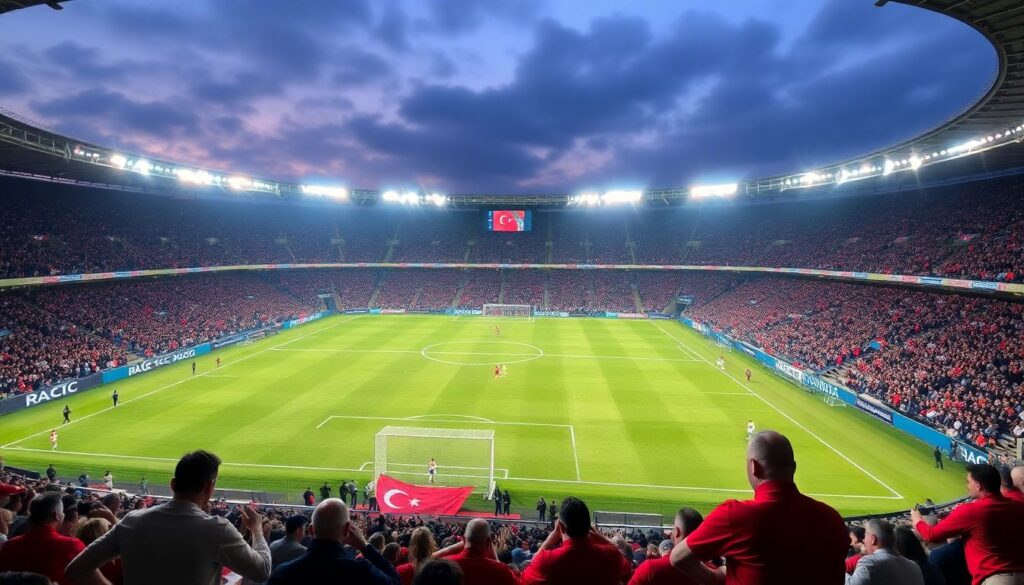
Highlights capture drama but hide context. To see real shifts, it is better to follow whole matches, tactical trends, and even commentary tone on a Turkey national football team live stream or full‑match broadcasts.
Do qualifiers matter less than finals for identity?
Final tournaments are more visible, but qualifiers provide the baseline. The contrast between how the team plays during qualifiers and in the finals often reveals whether the identity is stable or only adapted for big stages.
Is there a quick way for an ordinary fan to test if a tournament really changed the team’s identity?
Yes. Compare how the team played and behaved one cycle before and one cycle after that tournament, using simple indicators like risk level, youth involvement, and emotional control, then see if patterns genuinely shifted.