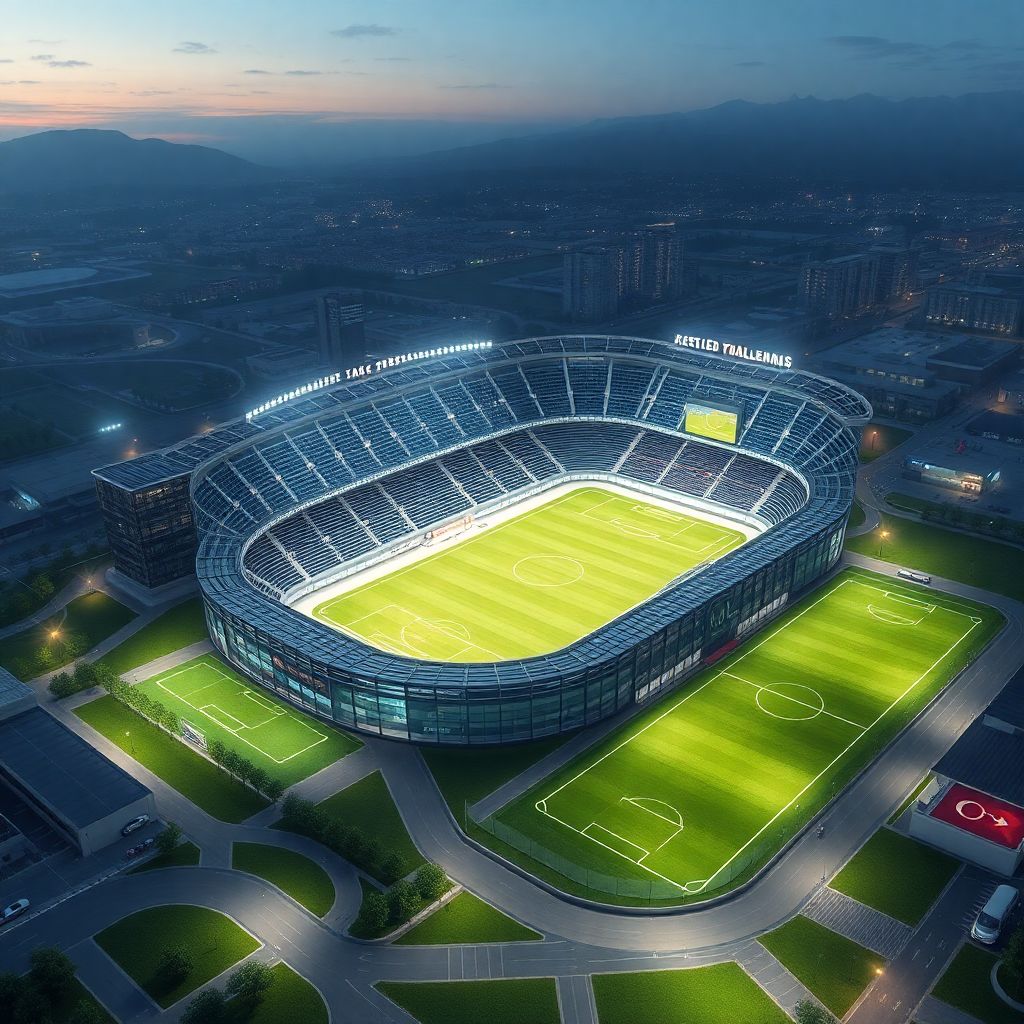
Turkish football is standing at a crossroads. The talent is there, the passion has never been in doubt, and the geography is a gift. What’s missing is a clear, coordinated push in infrastructure, stadium design, and long-term planning that looks beyond the next title race.
Let’s break down where Turkish football can realistically go over the next 10–15 years — and how bold, non‑standard ideas around construction, finance, and planning can change the game.
—
Why Infrastructure Will Decide the Future, Not Just Transfers
Turkey doesn’t lose out because it lacks good players; it loses out because the environment around those players isn’t consistently elite.
Think about it:
– Uneven training facilities between top and mid‑table clubs
– Old municipal stadiums still hosting professional football
– Youth academies with great coaches but poor pitches and outdated gyms
When people talk about turkish football infrastructure investment, they often mean “build a new stadium and we’re done.” That’s not a strategy; that’s a photo opportunity.
The real question is: how do you turn every euro spent on concrete, grass, and technology into more minutes for young players and more revenue per seat?
—
New Stadiums in Turkey 2025: Beyond Concrete and Seats
There’s already been a huge stadium wave in the last decade: Vodafone Park in Istanbul, Şenol Güneş Stadium in Trabzon, the new arenas in Konya, Gaziantep, Sivas, and others. The next step is smarter, not just bigger.
As we look toward new football stadiums in turkey 2025, three trends should dominate:
– Hybrid use: stadiums that work 250–300 days a year, not just matchdays
– Energy efficiency: cutting operating costs instead of just selling more tickets
– Data-driven design: shaping the fan journey and fan revenue before the first stone is laid
Short version: the “one big bowl” model is outdated. The future is compact, multi‑use, and heavily digital.
Technical focus: what a 2025-ready Turkish stadium should include
– Hybrid or stitched natural turf with undersoil heating and moisture sensors feeding into a central pitch‑management system
– Full-fibre backbone and Wi‑Fi 6/6E coverage in the stands to support real‑time apps, dynamic ticketing, and in-seat ordering
– LED lighting systems with programmable scenes for different events, and lower operating costs by up to 30–40% compared to old systems
– Modular stands that can be expanded or reduced without a full rebuild, using prefabricated elements
None of this is science fiction. These are standard tools in new arenas in Western Europe. The opportunity for Turkey is to leapfrog older models and go straight to smarter, lighter structures.
—
Turkish Süper Lig Stadium Construction Projects: Where Things Stand
Recent and ongoing turkish super lig stadium construction projects show a pattern: state-backed, large-capacity, often with impressive exterior design, but mixed execution on training zones and commercial areas.
We’ve seen:
– Big stadiums with underused business lounges
– Gorgeous façades and poor acoustics
– Modern seating but outdated access routes and parking
If you’re designing a 40,000+ stadium in 2024 that fills up only four times a season, you’re building a monument, not a football asset.
A smarter approach is:
– 25–30k high‑yield stadiums with great VIP and semi‑VIP zones
– 5–8k community training complexes feeding the first team
– On‑site commercial units that work on non‑matchdays: co‑working, sports medicine, clinics, gyms, esports hubs
—
Non‑standard idea #1: “Training-first” stadium design
Flip the logic. Instead of “we’ll add training pitches around the stadium,” start with a high-performance training campus and attach the stadium as one of several assets.
Imagine this layout:
– 4–6 full‑size pitches (two heated, two hybrid)
– 1 indoor artificial pitch with a smaller stand for youth league games
– Integrated performance lab: GPS tracking, biomechanical analysis, rehabilitation pools
– Stadium built adjacent, sharing parking, medical, and some office facilities
This way, the most-used assets (training pitches and gyms) are optimised first. The weekend spectacle (the stadium) benefits from the same network without being the only focus.
Technical details: performance campus KPIs
– Hours of pitch use per week without damaging turf quality
– Number of academy teams hosted on‑site (U9–U19 plus women’s teams)
– Medical throughput: how many first-team and academy players can be scanned, tested, or treated per day
– Cost per training hour compared to renting scattered municipal fields
Measure these, and you can justify every extra euro of turkish football infrastructure investment with actual output: more trained players per year, fewer injuries, better resale values.
—
Investing in Turkish Football Clubs and Facilities: New Financial Models
The old model is simple: state or municipality builds, club plays, everybody complains about debt later. That’s not sustainable if you want elite infrastructure.
Investing in turkish football clubs and facilities needs to shift to mixed models that spread risk and invite new types of capital.
Here are some non‑standard financing ideas tailored to Turkey:
– Microbonds for fans
Supporters buy 5–10 year “stadium microbonds” with a modest fixed return and perks (priority tickets, discounts, access). Legally, it’s debt; emotionally, it’s co‑ownership.
– Revenue‑linked leases with municipalities
Instead of fixed rent, municipalities take a small percentage of stadium revenues. When attendance and events grow, both sides win, creating an incentive for the city to promote the venue.
– Facility‑only investment vehicles
Set up a company that owns only the infrastructure (stadiums, training grounds) and rents them to clubs. Local insurance companies and pension funds can invest in that entity because it owns hard assets, not volatile squads.
– Green finance for upgrades
Roof solar panels, water recycling, and smart HVAC systems can qualify for green bonds or EU‑aligned sustainability funding if Turkey aligns documentation and reporting.
Technical focus: turning a stadium into a financial asset
– Clear separation of club balance sheet and stadium operating company
– Long‑term service contracts (10–25 years) with event operators and F&B partners
– Regular usage reports (events, attendance, revenue) to satisfy institutional investors
– Integrated energy management to reduce utility costs, improving operating margins
—
Youth Academies: The Missing Link in the Long-Term Strategy
You can’t talk seriously about turkey football development long term strategy without putting academies at the centre. Yet some top‑flight clubs still lean on short‑term foreign signings while their U17s train on fields that flood in winter.
Infrastructure here doesn’t mean “nice locker room.” It means a system.
Think in layers:
1. Local hubs (U7–U13)
Smaller pitches in densely populated districts or towns, focusing on mass participation, early technical work, and physical literacy.
2. Regional elite centres (U14–U17)
3–4 high-level centres across Turkey where the best kids from local hubs train 3–4 times a week with top coaches, sports psychologists, and physical trainers.
3. Club‑linked finishing schools (U18–U21)
Integrated with professional clubs, with education, dual‑career planning, and clear paths into the first team or loans.
Technical details: what an elite academy needs beyond pitches
– Centralised data system tracking each player’s training load, growth, injury history, and match metrics from U13 onwards
– Coach education lab: video analysis rooms where youth coaches review sessions and matches collectively
– Within-academy analytics unit producing simple reports for coaches (not just raw data)
– Mandatory collaboration with local schools or universities for education and English language training
—
Non‑standard idea #2: Shared “federation campuses” for mid-table clubs
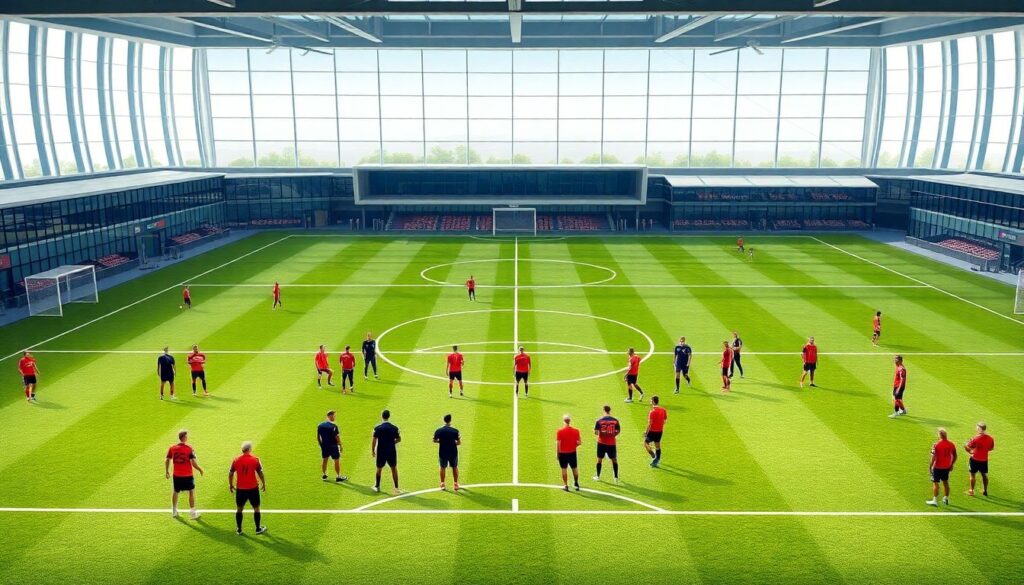
Not every club can afford a world‑class training centre. But the federation or regional associations can.
Imagine three or four shared high-performance campuses across the country, co‑owned by the federation and multiple clubs:
– Each club keeps its own badge, staff, and philosophy
– Campsuses provide top-tier pitches, gyms, medical, and analytics
– Clubs book blocks of time, especially in pre‑season or for rehabilitation
This reduces duplication. Instead of six average gyms and six mediocre medical rooms in six smaller clubs, you get one or two truly elite complexes where everyone rotates.
It’s not traditional, but it’s realistic in a league where budgets outside the top 3–4 clubs are tight.
—
Matchday Experience: Turning Fans into Long-Term Partners
New stadiums are useless if the experience inside them feels 1990s. Younger fans are used to streaming, second screens, and frictionless payments. Stadiums must compete with the sofa.
Here’s how:
– Mobile‑first everything: tickets, parking, food ordering, seat upgrades
– Real‑time stats and replays in an official app, not just generic scoreboard feeds
– Dynamic pricing for certain blocks of seats to fill less attractive areas
– Reasonably priced family sections with integrated kids’ activities
From an infrastructure standpoint, this means planning concourse width, concession density, screen placement, and power outlets with fan behaviour in mind, not as afterthoughts.
Technical focus: data you should collect every home game
– Average queue time for food, toilets, and entry
– In‑stadium Wi‑Fi usage patterns (which stands, which time windows)
– Heat maps of concourse crowding via sensors or cameras
– Conversion rates on push notifications (e.g., food offers, seat upgrades)
Feed that back into layout tweaks, staffing levels, and future renovations, and the stadium evolves instead of freezing in its opening‑day state.
—
Non‑standard idea #3: Stadiums as 24/7 sports ecosystems
Instead of thinking “we have 20 home games, maybe a couple of concerts,” design stadiums as sports ecosystems:
– Publicly accessible running tracks or fitness parks around the stadium
– Official 5‑a‑side and 7‑a‑side pitches rentable by local teams and schools
– A permanent sports tech hub: start-ups, data companies, wearables, esports
– Medical and physiotherapy clinics open to the public, run by the same staff who work with the first team
This keeps the site alive every day, creates community ties, and generates non‑matchday revenue. It also justifies bigger turkish football infrastructure investment because the payback isn’t limited to 90 minutes once a week.
—
Governance and Strategy: Avoiding the 3-Year Cycle Trap
The worst enemy of long‑term planning in Turkish football is the “next election, next president, next coach” mentality. Plans are drawn up, logos are presented, then the board changes and everything resets.
To build a true turkey football development long term strategy, you need:
– Legally binding infrastructure plans at federation level, with milestones and public reporting
– Minimum standards for facilities at each league level that rise on a fixed schedule
– Incentives (not just fines) for meeting or exceeding those standards early
– A dedicated infrastructure and innovation department within the federation with its own budget and KPIs
Technical details: example of enforceable standards
By season X:
– All top-tier clubs must have at least two hybrid pitches (one main, one training)
– Youth teams U15+ must have access to GPS tracking at least 70% of official matches
– Stadiums above 15,000 capacity must offer e‑ticketing with digital turnstiles and real-time occupancy monitoring
– Clubs must publish an annual infrastructure report summarising upgrades, usage, and planned works
Tie some of the broadcast money to these milestones, and suddenly long‑term projects become more attractive than one more panic signing in January.
—
Where to Start: A Practical Roadmap for the Next 10 Years
If you’re in a position to influence plans — as a club executive, city official, investor, or federation member — think in three horizons.
– 0–3 years
– Audit existing stadiums and training centres: usage, condition, energy costs
– Fix the cheapest, highest‑impact issues: lighting, drainage, access, Wi‑Fi
– Start at least one shared facility project in a region where multiple clubs overlap
– 3–7 years
– Launch 1–2 pilot “training‑first” stadium projects
– Roll out a federated academy structure with regional hubs
– Create a facility‑focused investment vehicle to attract long‑term capital
– 7–10 years
– Replace or comprehensively modernise the worst‑performing stadiums
– Integrate fan microbond schemes and green finance into all major builds
– Position at least one Turkish city as a year‑round football destination – pre‑season camps, youth tournaments, coaching conferences
—
The Bottom Line
Turkish football doesn’t need to copy‑paste the Premier League or La Liga. It has its own strengths: densely populated cities, football‑mad communities, favourable climate, and a growing construction and tech sector.
If the next wave of turkish football infrastructure investment focuses on:
– Smarter, modular, and data‑driven stadiums
– Shared high‑performance facilities instead of isolated, mediocre ones
– Innovative funding models involving fans, cities, and institutional investors
– A clear, enforced turkey football development long term strategy around academies
…then the conversation in 2035 won’t be “Why do our best players leave?” but “How did Turkey become one of Europe’s most efficient talent and infrastructure ecosystems?”
The future of Turkish football is being poured in concrete and wired in fibre right now. The real test is whether those projects are built for the next TV deal — or for the next generation.