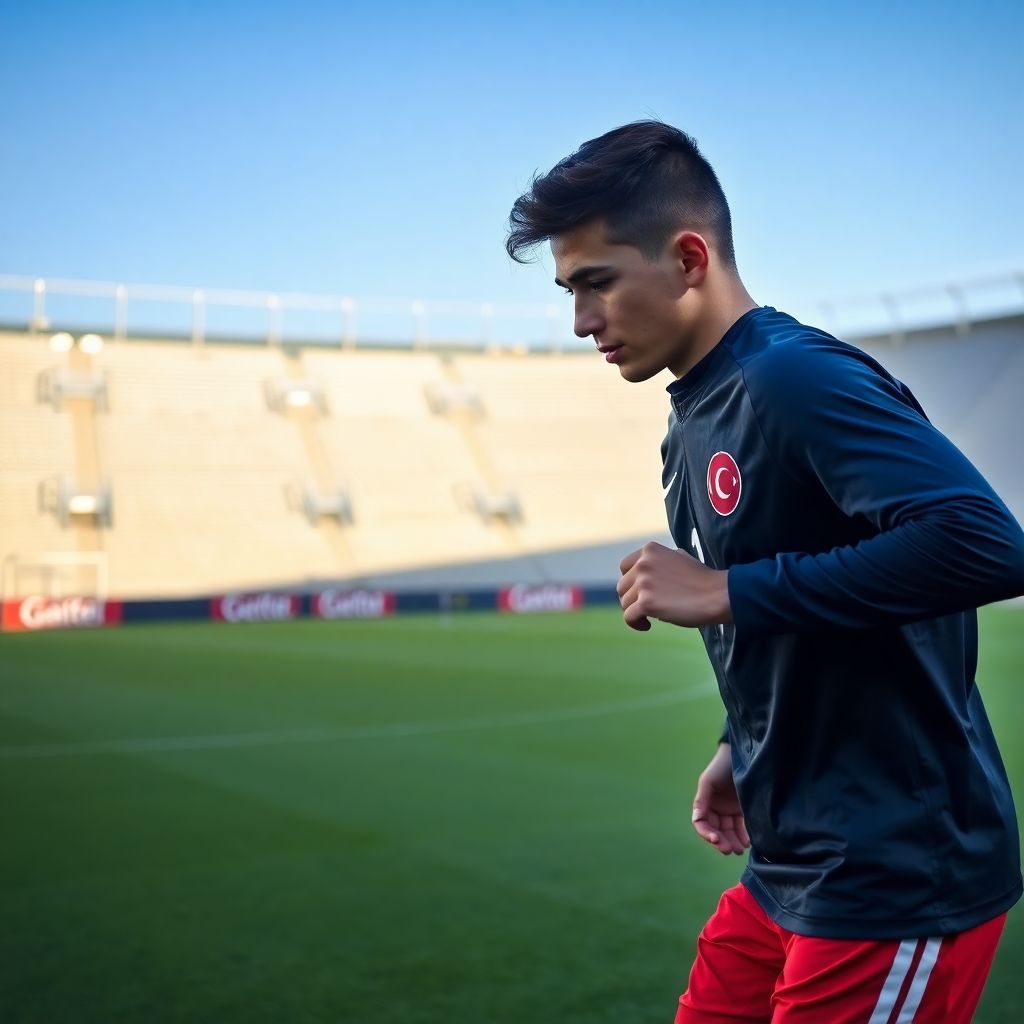
Moving from Turkey U17 to the senior national team requires consistent club minutes, standout performances in youth internationals, and stable physical and psychological development. Focus on excelling in your club environment, understanding what national selectors measure at each age, and progressing safely through U19 and U21 rather than chasing shortcuts or unofficial trials.
Foundational milestones for moving from U17 to senior level
- Secure a strong base at club level with regular starts and clear role understanding by late U17.
- Enter and stay in the national scouting radar through official turkey U17 football academy selection and youth internationals.
- Grow technical and tactical consistency that transfers to faster, more physical senior football.
- Increase physical robustness gradually with monitored load, not sudden jumps in training volume or intensity.
- Develop psychological resilience, identity and professionalism suitable for national-team environments.
- Use smart club pathways, loans and match exposure to face progressively higher levels of competition.
- Track objective metrics and feedback so your progression matches selectors’ timelines and expectations.
Talent identification and selection processes at U17 in Turkey
Moving into the national pathway is suitable for players who already dominate in their club and regional competition, show clear game intelligence, and can handle higher training loads without recurring injuries. It is not recommended to push aggressively for exposure if basic coordination, strength, or emotional control are still unstable.
At U17, turkey national team scouting and recruitment usually combines three channels:
- Club and academy reports – Coaches from professional clubs and the best football academies in Turkey for youth players regularly send reports and video of standout talents.
- Regional and federation events – Official youth tournaments, regional camps and school competitions are observed by federation scouts.
- Youth national team matches – Once invited, performances in training camps and matches strongly influence future call-ups.
Players and families often search for turkish national team football trials, but official selections are almost always invitation-based, drawn from club and academy competition instead of open public trials. Beware of any private company promising guaranteed national-team access for a fee.
For those asking how to join turkey youth national football team, the safest path is:
- Join a competitive club or turkey U17 football academy selection environment that plays at national level.
- Perform consistently well for at least one full season in your age group.
- Maintain communication between your club coaches and federation scouts, without bypassing the club structure.
Do not rush to change clubs every season just to chase visibility. Frequent moves can interrupt development, reduce playing time and create an impression of instability for scouts.
Technical and tactical development priorities for international readiness
To be genuinely ready for youth internationals and later senior level, players need a toolbox of stable technical skills combined with tactical understanding that can be applied under pressure and fatigue.
Core requirements include:
- Ball mastery under pressure – First touch in tight spaces, clean ball manipulation with both feet, passing accuracy after contact and under pressing.
- Position-specific techniques – For example:
- Central defenders: timing of tackles, aerial duels, long diagonal passes.
- Full-backs/wing-backs: overlapping runs, early crosses, 1v1 defending in wide areas.
- Midfielders: scanning, turning under pressure, tempo control, forward runs.
- Forwards: varied finishing, movement off the shoulder, pressing triggers.
- Goalkeepers: modern distribution, starting positions, sweeping behind the line.
- Tactical game intelligence – Reading spaces, understanding pressing schemes, recognising when to slow or accelerate play, and adapting to different opponents.
- Adaptability to game models – Many national coaches prefer flexible players who can perform in at least two roles or systems.
Tools and environments that help build these capacities:
- High-quality club training with periodised technical-tactical sessions, using video feedback.
- Regular competitive matches at or above your age group to apply skills at match speed.
- Individual extra work (finishing, first touch, weak foot) balanced with recovery.
- Basic match analysis skills, learning to re-watch games and identify tactical patterns without over-criticising yourself.
For international readiness, technical work must be integrated with tactical context. Purely isolated drills have limited transfer; small-sided games with clear constraints often provide a safer, more game-realistic way to improve.
Physical conditioning, load management and injury mitigation
Building a body that can tolerate the jump from U17 to senior level is a step-by-step process. The aim is not to become the strongest player in the gym, but the most available, robust and repeatable on the pitch across the whole season.
Key risks and limitations to respect before increasing load
- Rapid spikes in weekly training or match minutes strongly raise the risk of overuse injuries, especially in growing athletes.
- Copying senior players’ gym plans without adaptation can overload immature joints and soft tissues.
- Ignoring sleep and nutrition quality will limit adaptation and make injuries more likely even with good programming.
- Playing for multiple teams (school, club, academy) in the same week can quietly double your real load.
- Returning from injury too quickly to chase selection can create chronic problems that slow or end progression.
- Start with medical screening and baseline testing – Before pushing intensity, get a basic medical check and movement screening from qualified staff.
- Identify previous injuries, growth-related pain, and any red flags that require modification.
- Collect baseline data: simple strength, mobility, and aerobic fitness tests to track progress.
- Build a robust aerobic and strength foundation – Focus on whole-body strength and general fitness before high-intensity specialisation.
- Use technique-focused strength exercises with controlled loads and supervision.
- Run mostly at low to moderate intensities, gradually increasing duration not speed.
- Train 2-3 times per week in the gym rather than daily, leaving room for football sessions.
- Integrate high-intensity work progressively – When the foundation is stable, add sprints and high-speed actions carefully.
- Increase sprint distance and volume over several weeks, not suddenly.
- Include deceleration and change-of-direction drills, starting with short, controlled efforts.
- Limit back-to-back days of maximal intensity for U17 players.
- Plan weekly load and recovery around matches – Coordinate with club coaches to avoid hidden overload.
- Use a simple system: heavy, medium, light days across the week, anchored by match day.
- Balance football, gym, school PE, and informal play when estimating real total load.
- Include at least one genuine low-load or rest day each week.
- Monitor warning signs and adjust early – Teach players to report issues honestly.
- Watch for persistent soreness, sleep problems, mood changes or drops in performance.
- Reduce volume first instead of cutting intensity completely; maintain some rhythm.
- Consult medical staff promptly rather than masking pain to stay on the pitch.
- Periodise the year and protect transition phases – The move from U17 to U19 or to senior training is a sensitive period.
- Plan short deload phases after dense match periods or promotions to higher squads.
- Use off-season to restore, address weaknesses and build gradually, not to chase extreme conditioning camps.
- Coordinate any individual work with club periodisation to avoid conflicting plans.
Psychological resilience, identity and cultural adaptation in national squads
Mental skills often decide who sustains the jump from U17 to senior level. Use this checklist to assess readiness and areas for support.
- You can handle being on the bench or not selected for a game without emotional collapse or blaming others.
- You maintain consistent training intensity even when no scouts or national staff are visibly present.
- You accept constructive criticism, ask clarifying questions, and translate feedback into specific actions.
- You have a stable sense of identity that is not fully dependent on being a footballer.
- You can train and live alongside teammates from different regions, languages and backgrounds with respect.
- You manage pre-match anxiety with routines (breathing, visualization, preparation) rather than last-minute rituals.
- You balance football with school or vocational preparation as part of a realistic dual-career plan.
- You are able to say no to unsafe training or playing requests when you feel pain or fatigue.
- You use social media in a controlled way, without letting online opinions dominate your self-worth.
- You know at least one trusted adult (coach, psychologist, mentor) you can talk to when stress builds.
Club pathways, loans and match exposure that accelerate promotion
Club environment and match exposure shape whether U17 talents actually reach the senior Turkish National Team. Smart decisions increase challenge in controlled steps, with clear communication between player, family and club staff.
Frequent mistakes that slow or block progression:
- Changing clubs only for a big name, then losing playing time and confidence because the level jump was too big.
- Refusing loan moves to smaller clubs where regular minutes would accelerate learning and visibility.
- Accepting loans without checking if the new club’s playing style and coach suit your position and strengths.
- Playing in too many competitions at once (club, school, amateur) and carrying excessive match load all year.
- Chasing showcases and unofficial trials abroad while neglecting daily training quality at the home club.
- Ignoring education, leaving school early without a clear dual-career plan in case of injuries or non-selection.
- Letting agents make decisions without parents and club involved, or signing long contracts that limit mobility.
- Confusing social media exposure with genuine scouting interest; highlight videos cannot replace complete match performances.
Illustrative case: A U17 midfielder at a top Istanbul club accepted a structured two-year loan to a strong 1. Lig team. With clear expectations and support, he became a starter, learned to manage a full adult season, and later returned prepared for U21 and senior selection.
Risk example: A highly rated U17 forward left a stable academy for an overseas trial organised by an unregulated agency. After short-term exposure but no contract, he returned mid-season without a club, lost match rhythm, and dropped out of youth national contention.
Metrics, scouting reports and transition timelines used by selectors
Selectors track patterns over time, not single games. Understanding what they watch helps players and coaches plan realistic objectives and respectful alternatives.
| Age group | Primary development objectives | Main stakeholders | Typical focus metrics / KPIs |
|---|---|---|---|
| U17 | Solidify fundamentals, introduce tactical roles, build safe training habits. | Club academy staff, federation youth scouts, family. | Technical quality, decision-making speed, growth status, basic robustness. |
| U19 | Adapt to faster tempo, handle stronger opponents, manage full-season load. | U19 coaches, physical staff, education advisors. | Match minutes, availability, consistency, physical progress markers. |
| U21 | Bridge to professional level, refine position-specific strengths. | First-team staff, performance analysts, agents (with safeguards). | Impact on results, reliability in big games, tactical discipline. |
| Senior | Deliver under pressure, sustain performance across seasons and tournaments. | National-team staff, club head coach, medical and performance unit. | Availability, performance vs top opposition, leadership, adaptability. |
Alternative routes when direct selection is delayed:
- Extended U21 presence – Staying longer in U21 while accumulating professional minutes can be better than early but unstable promotion.
- Domestic loan ladders – Moving stepwise through TFF 2. Lig, 1. Lig and then Süper Lig can provide a safer physical and tactical progression.
- Late-specialisation positions – Goalkeepers and central defenders sometimes reach national level later; focusing on long-term development instead of early selection pressure is often wiser.
- Academic and dual-career focus – For players not immediately in the national picture, strengthening education and life skills keeps options open while they continue to develop within club systems.
In all cases, communication with those involved in turkey national team scouting and recruitment is best done through club channels and official matches rather than personal messages or unofficial intermediaries.
Practical concerns coaches and players ask about the jump upward
Is it realistic to move from U17 directly to the senior Turkish National Team?
Direct jumps from U17 to senior level are extremely rare. Most players go through U19 and U21 while gaining club experience. Aim to dominate at each step first; selectors prefer players who have already proven themselves against older opposition at club level.
How to join Turkey youth national football team if I am not in a big club?
Playing for a big club helps but is not a strict requirement. Join the strongest team available in your region, seek competitions where federation scouts attend, and maintain high standards of training and match performance. Honest communication from your coach to scouts is more effective than self-promotion.
Are there official Turkish national team football trials I can register for online?
The federation does not usually run open online registration trials for national teams. Selections come mainly from club and academy matches, regional events, and scouting networks. Be cautious of any private organisation using the national team name without clear federation endorsement.
Which are the best football academies in Turkey for youth players to target?
Several Süper Lig clubs and some well-organised regional academies provide strong environments. Focus on academies with qualified staff, clear development plans, and a history of promoting to professional squads, not just big names. Visit, ask questions and prioritise playing time and education support.
How many training sessions per week are safe at U17 when pushing for national selection?
Safe training frequency depends on individual history, maturation and medical status. Rather than copying others, coordinate with club coaches and medical staff to build a balanced plan that includes at least one low-load or rest day weekly and avoids sudden spikes in intensity or volume.
What should parents watch for to protect their child’s long-term wellbeing?
Parents should monitor for signs of chronic fatigue, persistent pain, loss of joy in football, school performance drops and risky promises from agents. Support steady development, honest communication with coaches and dual-career planning instead of chasing short-term exposure at all costs.
Can late developers still reach the senior Turkish National Team?
Yes, especially in positions that mature later. If physical or psychological development is slower, the key is to stay in good environments, avoid serious injuries and keep improving. Consistent growth in your early twenties can still lead to national-team consideration.