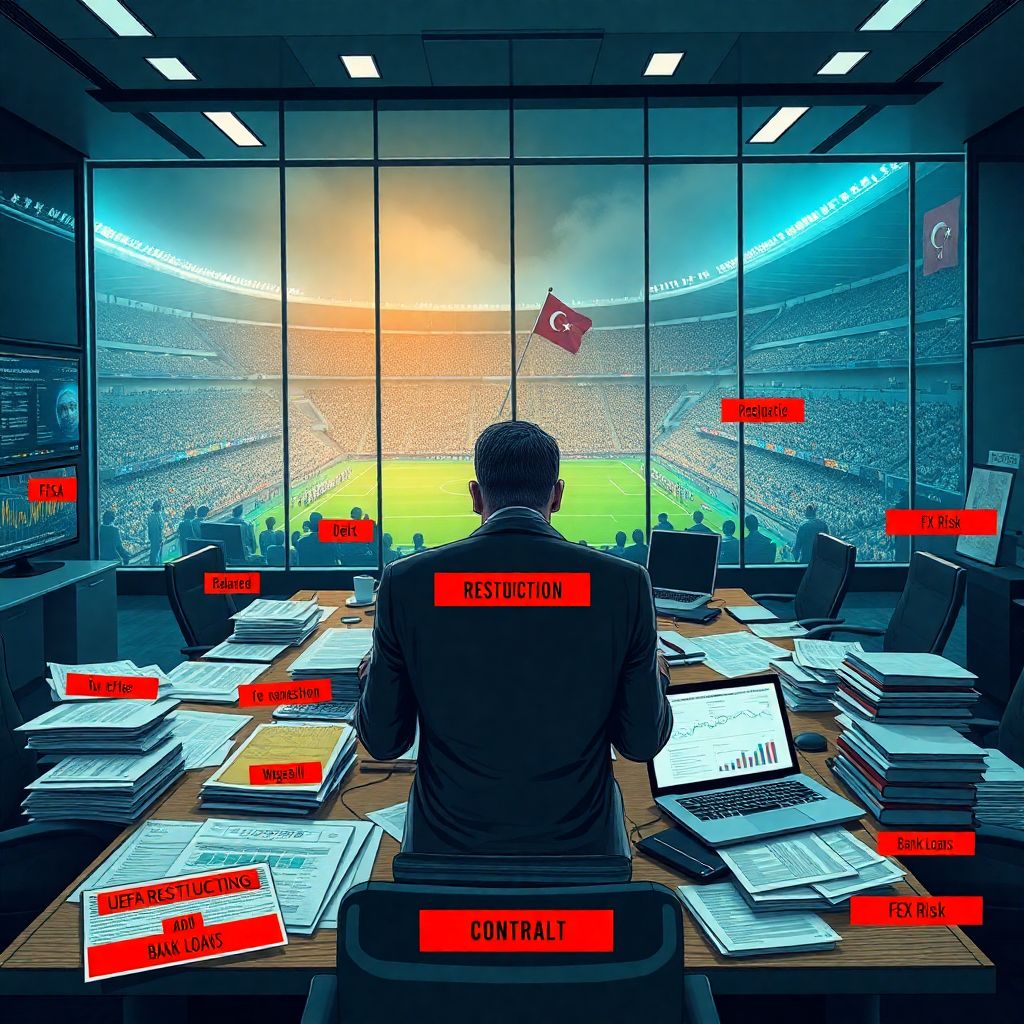
The uncomfortable truth behind Turkish club finances
Let’s be honest: when people talk about Turkish football, they usually think of intense derbies, noisy stadiums, and volatile presidents, not spreadsheets and balance sheets.
But the real drama isn’t always on the pitch. It’s in the accounts.
Over the last decade, Turkish football club finances debt fair play has become a permanent storyline: rising liabilities, pressure from UEFA, and boards trying to keep fans happy while banks keep calling. To understand where things stand—and more importantly, what can be done—you need a practical framework, not just slogans about “modern management.”
Below is a structured, but down‑to‑earth look at how clubs got here, what tools they actually need, what a realistic step‑by‑step repair process looks like, and how different strategies compare in the real world.
—
Necessary tools: what clubs really need before they “fix” anything
Before any rescue plan, you need the right instruments. Not just a new coach or a flashy signing, but a toolbox for financial reality.
H3: Strategic tools (not just accounting software)
At a minimum, a club that wants to survive needs:
– Reliable data systems
Proper accounting software, automated wage and transfer tracking, and basic cash‑flow forecasting. Many clubs still run half their decisions from Excel sheets and WhatsApp messages.
– Independent financial oversight
A strong CFO or finance director who isn’t just a friend of the president. Someone who can say “no” when the board wants another high‑salary 32‑year‑old striker.
– Scenario‑planning models
Tools to simulate “what if we don’t reach Europe,” “what if we get relegated,” or “what if the currency drops another 20%.” Turkish clubs are highly exposed to FX risks due to foreign‑currency contracts and euro‑denominated transfer fees.
Now, technology alone doesn’t solve the financial problems of Turkish football clubs UEFA fair play is trying to address. You also need institutional tools.
H3: Governance and policy tools
Here’s where many Turkish clubs are weakest.
They need:
– Transparent budgeting rules voted by members or shareholders
– Clear debt limits tied to revenue, not political ambition
– Contracting policies for transfers and wages with caps, trigger clauses, and relegation pay cuts
Without that, even the best financial platform is just a prettier way to watch the club sink.
—
How we got here: the debt spiral explained simply
H3: Short‑term hunger vs long‑term health
The pattern is familiar:
1. New president or board arrives, promises trophies.
2. Club overspends on transfers and salaries to satisfy fans.
3. Revenue projections assume Champions League, big sales, and constant growth.
4. Results disappoint; UEFA prize money doesn’t arrive; sponsors pay less than expected.
5. Debt fills the gap. Banks step in, roll over loans, add interest.
6. Next board inherits a financial time bomb and repeats the same cycle.
The result? Massive Turkish Super Lig club debt restructuring and financing deals with banks, often backed by state‑linked institutions. These deals buy time, but they rarely change the behavior that caused the problem.
—
Step‑by‑step process: a practical roadmap to stability
Let’s assume you’re running a mid‑table Turkish club in trouble. What does a realistic, staged approach to stability look like?
H3: Step 1 – Diagnose brutally and transparently
First, no illusions.
– Map all liabilities: bank loans, unpaid transfer fees, delayed wages, tax debt, stadium rent.
– Separate short‑term cash crisis from structural deficit. A temporary cash issue can be bridged; a chronic deficit means your model is broken.
– Publish at least a summary of this diagnosis to members and fans. If people don’t see the hole, they won’t accept the pain needed to climb out.
H3: Step 2 – Freeze the bleeding
This is the emergency room phase.
– Stop new long‑term commitments unless vital. No multi‑year big salaries.
– Renegotiate contracts, especially in foreign currency. Where possible, convert to local currency or add FX‑adjustment clauses that share risk.
– Delay non‑essential investments. A new training complex can wait; paying players and staff on time cannot.
In this phase, you’re not “building for the future.” You’re making sure you’re still alive next season.
H3: Step 3 – Align with fair play instead of fighting it
A lot of local discourse treats UEFA rules as an external enemy. But if you look closely, most financial problems of Turkish football clubs UEFA fair play is forcing into the open were already unsustainable under any standard.
This step means:
– Designing budgets with break‑even in mind rather than “we’ll somehow qualify for the Champions League.”
– Structuring contracts so performance bonuses are heavy, fixed wages are lighter.
– Using academy players and undervalued markets more, accepting some drop in short‑term “glamour.”
Clubs that view UEFA regulations as a discipline tool rather than a hurdle tend to recover faster.
H3: Step 4 – Restructure debt with conditions, not just new dates
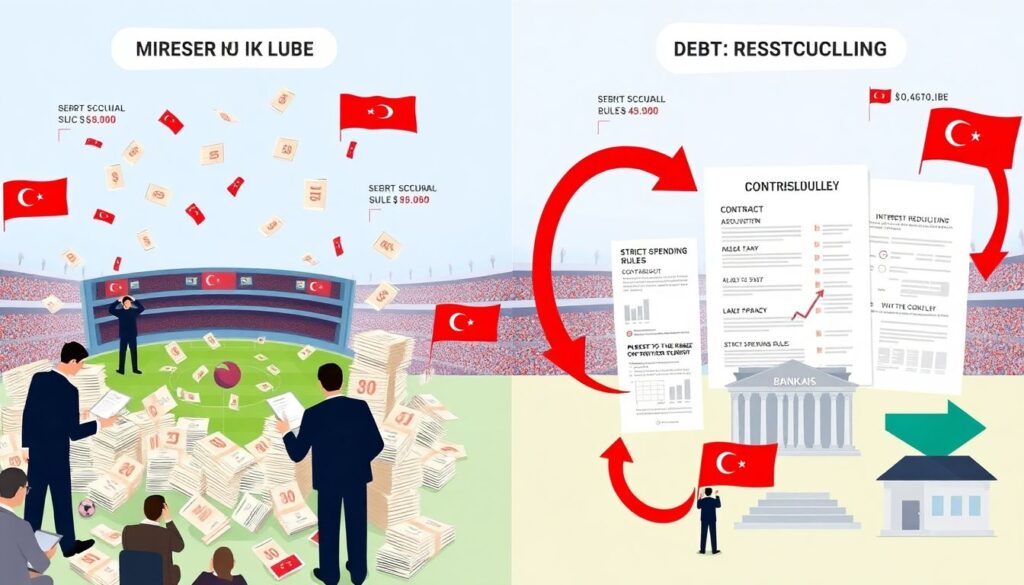
Most clubs won’t magically pay everything off; they will need formal Turkish Super Lig club debt restructuring and financing packages.
The key difference between success and failure here is what’s attached:
– Good approach:
Debt rescheduled with interest reduction in exchange for strict spending rules, external monitoring, and automatic sanctions if targets are missed.
– Bad approach:
Debt rolled over quietly, longer maturities, higher interest, no governance change—just “kick the can” a few years down the road.
Think of it as rehab: restructuring works only if it’s tied to behavioral change.
H3: Step 5 – Grow “clean” revenue streams
At some point, cost‑cutting has limits. You can’t endlessly cut your way to competitiveness. So growth must come from sponsorship and investment opportunities in Turkish football clubs, better use of matchday, and smarter digital strategies.
This means:
– Professionalizing sponsorship sales with clear packages, metrics, and data about fan engagement.
– Monetizing fan bases outside Turkey with multilingual content, international partnerships, and dynamic merchandising.
– Using the stadium as a year‑round asset: events, concerts, conferences, not just 19 home games.
Here, the difference between clubs that think like businesses and those that act like fan associations becomes crystal clear.
—
Comparing different approaches: who’s doing what?
H3: Model 1 – The “chase success now, fix later” approach
This is still the most common.
Core idea: Spend heavily, sign recognizable names, hope results cover the cost.
Advantages: Short‑term boost in excitement, sometimes a European run, easier to win elections or keep the board popular.
Risks: Enormous. One bad season and your wage bill and transfer liabilities crush you. When sponsors or TV revenues dip, you’re exposed.
Clubs using this model often find themselves in permanent refinancing negotiations, dependent on friendly banks and political backing.
H3: Model 2 – The “austerity and youth” approach
Some clubs accept a painful reset.
Core idea: Slash wage bills, promote academy players, focus on medium‑term stability.
Advantages: Lower financial risk, easier compliance with fair play rules, chance to develop valuable assets you can sell.
Risks: Sporting performance can drop; fans become impatient; political pressure grows. If the academy isn’t truly elite, the plan collapses.
This model works when there is strong leadership willing to absorb 2–3 years of pain and clearly communicate the plan.
H3: Model 3 – The “strategic investor & partnership” approach
This is increasingly discussed: instead of relying only on bank loans and short‑term sponsors, clubs look for more sophisticated partners.
Core idea: Attract investors who bring capital AND expertise: data analytics, marketing, global network.
Advantages: Access to know‑how, potentially better scouting, global fan development, and more modern management methods.
Risks: Loss of control, conflicts between sporting and financial priorities, fan resistance to “selling the club.”
This is where investing in Turkish football clubs sustainable growth becomes more than a slogan. If investors only patch the balance sheet, nothing changes. If they demand structural reforms—transparent governance, real budgets, performance‑based contracts—sustainable growth is possible.
—
Troubleshooting: typical problems and how to respond
Even with a decent plan, things will go wrong. Let’s walk through some common issues and practical responses.
H3: Problem 1 – Transfer ban or UEFA sanctions
Transfers blocked or limited spending headroom under UEFA rules can feel like a catastrophe.
What to do:
– Reframe it as forced discipline: build around academy and undervalued players.
– Maximize coaching quality and tactical flexibility to compensate for weaker squads.
– Use the “we’re under sanctions” narrative to reset fan expectations and reduce pressure for big‑name signings.
Often, this period becomes an unexpected laboratory for smarter scouting and youth development.
H3: Problem 2 – Currency shock and exploding wage bills
With many contracts pegged to euros or dollars, currency crises hit hard.
Mitigation steps:
– For new contracts, build in FX bands—wages adjust only within certain limits.
– For existing deals, negotiate partial conversion or bonus‑heavy structures to reduce fixed FX exposure.
– Gradually move to a model where only a small core of top players is on full FX terms.
If you ignore this, your local‑currency revenue will be eaten alive.
H3: Problem 3 – Fan resistance to cost‑cutting
Supporters understandably want trophies, not lectures on amortization.
How to handle it:
– Share simplified financial reports: show the gap in plain language.
– Link every saving to a specific future goal: “This year we save X so next year we can invest Y in scouting or the academy.”
– Use club legends and respected figures to explain the plan publicly; it’s harder to boo someone who brought you titles.
Without cultural buy‑in, the best financial plan will be undermined at the first losing streak.
—
H2: Choosing a path: which mix makes sense?
There is no one‑size‑fits‑all recipe. But for most big and mid‑size Turkish clubs, a hybrid approach is emerging as the most realistic:
– A short, hard reset phase: brutal diagnosis, cost cuts, and contract restructuring.
– A disciplined compliance phase: using fair play as an internal rulebook, not just an external threat.
– A strategic growth phase: leveraging sponsorship and investment opportunities in Turkish football clubs and treating investors, not banks, as the primary partners—provided they accept strong governance rules.
In practice, this means:
– Less gambling on big‑name, late‑career stars; more bets on data‑scouted, re‑sellable talent.
– Fewer emergency loans; more structured, conditional refinancing.
– Less political interference; more professional boards and independent financial oversight.
—
H3: Final thought: from survival to strategy
Turkish football will always be emotional; that’s its charm. But the numbers don’t care about history, songs, or banners.
If clubs continue to treat debt and fair play as annoyances to be dodged, they will keep repeating the same crisis cycle. If they start viewing them as boundaries within which creativity and smart management must operate, the conversation changes—from “How do we survive this season?” to “How do we compete sustainably for the next 10–15 years?”
The real test for Turkish clubs isn’t whether they can win a title next May. It’s whether, a decade from now, they’re still competitive, less indebted, and finally running their finances with the same intensity their fans bring to the stands.