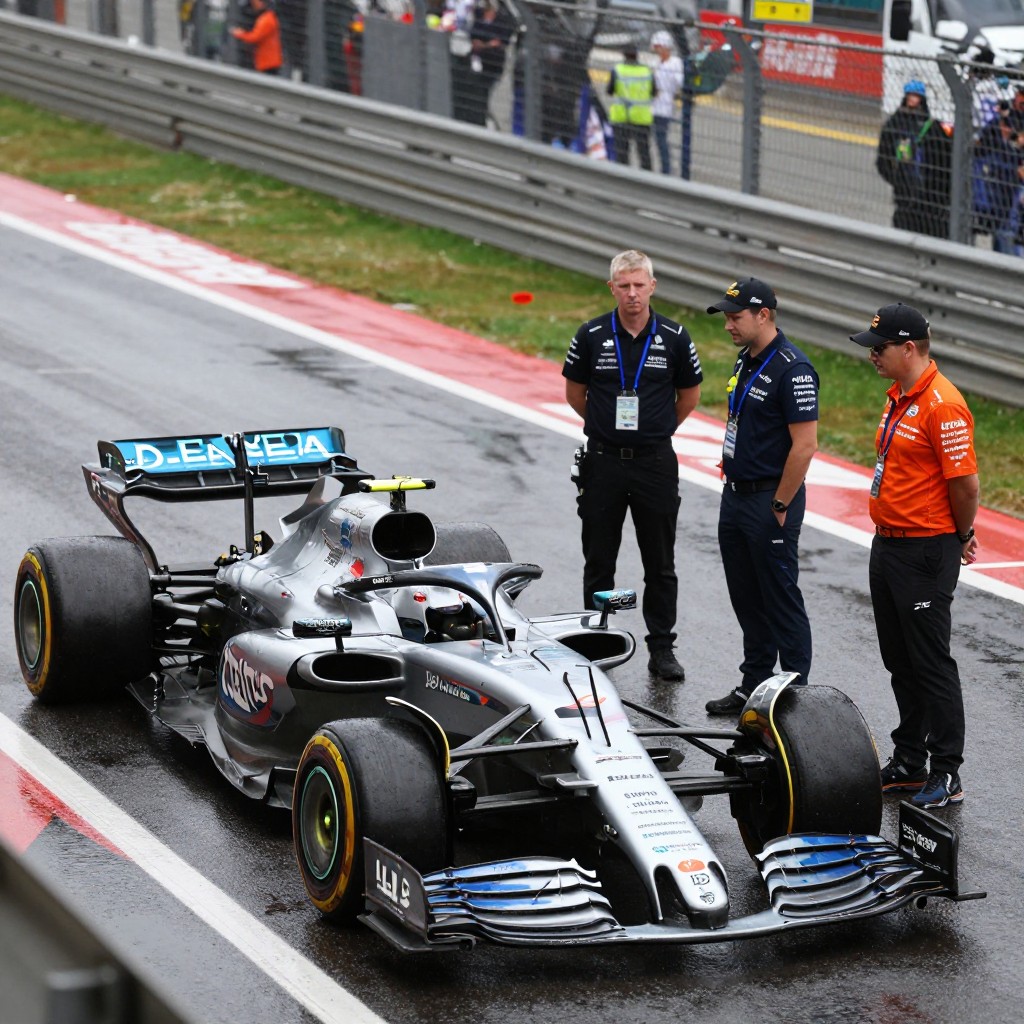
FIA to Investigate Software Failure Behind Bahrain Grand Prix Start Delay
The FIA is launching a detailed investigation into a software problem that disrupted the start of the Bahrain Grand Prix at Sepang. During the formation lap, several cars unexpectedly lost power, forcing officials to postpone the start while the issue was addressed.
The race had already been delayed for an extended period because of heavy rain. When the cars finally left the grid for the formation lap, the low-speed running, slippery track and wet-weather energy-management settings combined with the circuit’s sector layout in a way that caused trouble for some power units.
Lewis Hamilton was among the drivers affected. He said he had never before been forced to stop his car on track and restart it during his career. Max Verstappen, who went on to win the race, also experienced the power loss.
In its initial explanation, the FIA said the conditions created an unintended reduction in power for certain cars. Low engine speeds and limited grip were factors, alongside the energy settings used in wet weather. The effect varied across the field, but in some cases drivers struggled to maintain speed.
To help resolve the problem, the FIA’s technical department removed the energy restrictions that applied in the affected sectors. While the start was delayed, teams were also sent updated software intended to prevent the same behaviour from recurring during the race.
The governing body said the issue had not appeared during testing or on laps completed while cars were travelling to the grid. It will now review the incident with teams and power-unit manufacturers to establish why the fault was triggered and how it can be avoided in future.
Nikolas Tombazis, the FIA’s single-seater director, pointed to limited preseason testing in wet conditions as one factor that may have contributed. He said some cars slowed dramatically, almost coming to a halt, and that the loss of power had a knock-on effect across the field. The software problem then made it harder for affected cars to recover power and accelerate again.
The investigation will need to determine how the interaction between the software, energy-management rules and changing track conditions produced the failure. In particular, officials will examine whether the system responded as expected when cars were travelling slowly on a wet circuit and whether the sector-by-sector limits played a part.
A key challenge is that software may behave differently under a combination of conditions that are difficult to reproduce in routine testing. Rain, reduced grip, low engine speeds and the specific demands of a circuit can all affect how a power unit delivers energy. Testing those factors together could help teams identify problems before a race weekend.
The episode also highlights the importance of clear procedures when a technical issue affects multiple cars at once. A sudden loss of power during a formation lap can create risks for drivers approaching at different speeds, particularly in poor visibility or on a slippery surface. Any changes made during a delay must therefore be introduced in a way that teams can apply consistently.
The FIA’s review is expected to assess whether the software update and removal of the sector restrictions were sufficient, as well as whether additional safeguards are needed. The aim will be to reduce the chance of a repeat without compromising the energy-management systems used during normal racing.
For teams and power-unit manufacturers, the incident is a reminder that reliability depends not only on hardware but also on how software responds to unusual circumstances. The findings could inform future testing plans and help ensure that cars remain controllable when weather and track conditions change quickly.