
Why scouting will never be the same again
If you follow football even casually, you’ve probably noticed that signings feel a lot more… calculated than ten years ago. That’s not an illusion. Scouting has shifted from “a few trusted eyes in the stands” to a hybrid model where live reports are just one layer on top of massive databases, tracking systems and predictive models. In 2026, football data analytics scouting is no longer a niche experiment; it’s the operating system behind how serious clubs make recruitment decisions, from Istanbul to Istanbul Basaksehir to Istanbulspor and all the way to the Premier League, MLS and the Saudi Pro League. The big change isn’t just more numbers; it’s how deeply those numbers are integrated into everyday workflow and strategy.
The global data wave hitting scouting

Over the past decade, the volume of available match data has exploded. Top European leagues now log over 3,000 on‑ball events per match, plus tens of thousands of positional coordinates per player through optical and GPS tracking. According to industry estimates, the global sports analytics market has crossed roughly $8–9 billion by 2025, with scouting and recruitment analytics taking an increasingly visible slice. What used to be a few spreadsheets and video clips has evolved into end‑to‑end sports scouting data analytics solutions that aggregate tracking data, expected goals (xG), pressing metrics, physical outputs and even injury‑risk indicators in a single environment for scouts, analysts and decision‑makers.
Turkey’s late start and rapid catch‑up
Turkey joined this revolution slightly later than Western Europe, but the acceleration since around 2020 has been dramatic. Big Süper Lig clubs now run their own data departments, integrate tracking feeds at home matches and subscribe to global event‑data providers. In 2018, only a handful of Turkish clubs employed full‑time data analysts; by 2026, the majority of Süper Lig sides and several ambitious 1. Lig teams rely on at least a small analytics unit that directly supports scouting and opposition analysis. This shift helps Turkish clubs compensate for financial constraints compared with the “big five” leagues by identifying undervalued players earlier and reducing expensive transfer mistakes that previously strained budgets.
From gut feeling to structured, data‑driven shortlists
The biggest practical change is how shortlists are built. Instead of starting from word‑of‑mouth recommendations and agent calls, scouts increasingly start from data queries: “Left‑footed centre‑backs, 18–23, above‑average aerial win rate, comfortable under pressure, contract expiring within two years.” Modern football scouting software and analytics tools turn that description into a tangible list in seconds, drawing on data from dozens of leagues. The traditional eye test still matters, but it is targeted: live and video scouting now focus on a narrowed pool of candidates pre‑filtered by numbers, context and cost, which makes both travel and time spent much more efficient.
Key components of a modern scouting stack
Today, a reasonably advanced club will typically combine several layers of technology rather than rely on a single platform. Together they form a scouting “stack” that replaces isolated spreadsheets and ad‑hoc reports with a coherent, traceable process that executives can audit when deciding where to spend millions.
– Event and tracking data feeds (passes, pressures, sprints, positioning)
– Video platforms linked to data filters and custom tags
– Internal databases syncing contracts, salaries, age curves and medical notes
What the numbers actually say
This isn’t just about flashy dashboards. Quantitatively, clubs that invested early in structured recruitment analytics report lower “miss” rates on signings and more profitable resale cycles. Internal benchmarking shared at industry conferences suggests that data‑driven recruitment can reduce major transfer errors (players written off within two seasons) by 15–25% compared with older processes. In Turkey, where financial fair play and currency fluctuations make bad signings especially painful, that reduction is huge. It means fewer stranded high‑wage contracts and more assets who retain or grow value, enabling reinvestment rather than fire sales.
Machine learning, prediction and the 2026 landscape
Where things get particularly interesting in 2026 is the growing use of machine learning and predictive modelling. Clubs and sports data analytics companies for scouting are shifting from descriptive metrics (“what happened”) to predictive ones (“what is likely to happen next”). Instead of just knowing a winger’s xG from last season, models estimate how that output would translate from, say, the Austrian Bundesliga to the Turkish Süper Lig, taking into account league style, tempo, defensive intensity and even pitch quality. This kind of translation layer is crucial for Turkish clubs shopping abroad, as they increasingly target value markets in Scandinavia, Eastern Europe, South America and Africa.
Examples of predictive metrics in use
Predictive models now touch almost every stage of recruitment workflows, far beyond simple goal or assist predictions. The idea is to anticipate both on‑pitch performance and off‑pitch risk, feeding that into a unified risk‑reward view for decision‑makers before they approve a deal.
– Performance projection scores that estimate future contribution in a new league
– Injury‑risk flags derived from match load, movement patterns and historical absences
– Value‑curve models estimating transfer and wage evolution over a 3–5 year horizon
How Turkish clubs are using analytics in practice
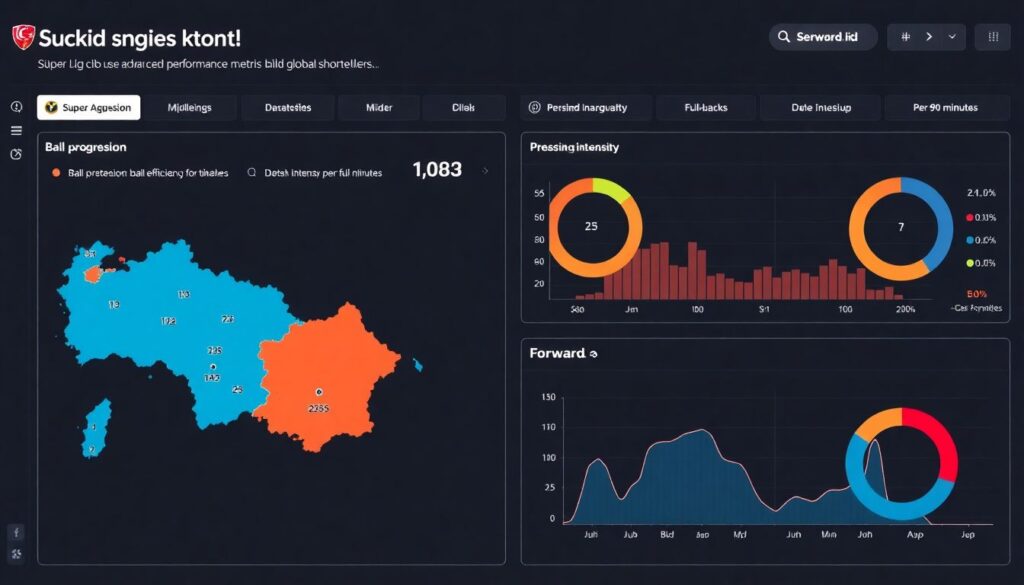
Zooming in on Turkey, you can see several concrete patterns in how data is changing behaviour. Major Süper Lig sides now maintain global shortlists built on objective indicators: ball progression metrics for midfielders, defensive duel efficiency for full‑backs, pressing intensity per 90 for forwards. For player recruitment data analytics services, Turkey has become an active market, as clubs outsource some modelling and data engineering instead of building everything in‑house. Smaller teams in particular buy modular products: for example, automated flagging of free agents who fit tactical and financial constraints, or reports on U‑21 talent in specific regions that match the club’s selling strategy.
Economic impact: saving money, making money
Viewed purely as a financial tool, analytics is about risk management and asset optimisation. Transfer fees and wage commitments have grown so large that not using rigorous evaluation looks irresponsible. Turkish clubs historically paid premium prices for players at the end of their prime, hoping reputation alone would carry them. Data‑driven approaches have shifted that mindset: more focus on age curves, physical decline markers and resale potential. For a club operating on a tight budget, correctly valuing an obscure 20‑year‑old and selling him on after two seasons at triple the price can fund training ground upgrades or academy investment that were previously impossible.
Return on investment and cost structures
The economics of setting up even a modest analytics operation have become more attractive. A small scouting analytics team—say two to four staff plus software—costs only a fraction of a single mid‑level player’s annual wage, yet influences dozens of transfer decisions. That leverage makes the return on investment compelling, especially when embedded into negotiations. Clubs armed with robust valuation models can push back on overpricing, structure performance‑based clauses and walk away from bad deals with more confidence. In Turkey, where TV income has been volatile, this level of discipline can determine whether a club stabilises or drifts into chronic debt cycles.
How software reshapes the daily work of scouts
At ground level, one of the biggest cultural changes comes from tools, not theories. Where scouts used to send long narrative reports by email, today they log structured observations directly into integrated systems. Modern football scouting software and analytics tools let them tag behaviours (pressing intensity, decision‑making under pressure, aerial timing) that feed straight into the central database. Analysts then overlay those tags with event‑ and tracking‑data, comparing what the scout “felt” with what the numbers show. This feedback loop helps scouts refine their intuition: over time, they learn which of their impressions are predictive and which are noise.
New workflows replacing old habits
As a result, the weekly rhythm in clubs has changed. Instead of chaotic last‑minute reactions to agent messages, recruitment meetings revolve around shared dashboards, not paper lists. Coaches can filter targets by tactical fit, sporting directors view financial implications, and board members see simplified risk levels derived from underlying models. For Turkish clubs, which historically depended heavily on personal networks and agent relations, this shift to transparent, data‑anchored processes also reduces the influence of intermediaries who might have misaligned incentives.
How Turkey compares to other regions in 2026
Globally, the analytics race is uneven. Top Premier League and Bundesliga clubs run departments with dozens of specialists spanning data engineering, modelling, opposition analysis and recruitment. MLS and some Asian leagues, backed by central‑league data deals, are catching up fast. Turkey sits in the middle tier: more advanced than many smaller European or regional leagues, but still behind the elites in budget and internal expertise. The practical response has been pragmatic: instead of trying to mirror the biggest clubs, Turkish sides partner with external providers and adopt off‑the‑shelf sports scouting data analytics solutions, customising only the most critical pieces like tactical fit models.
Rise of specialised scouting analytics providers
This is where third‑party players come in. The last few years have seen a surge in specialised vendors focused only on recruitment analytics rather than general performance or fan engagement. These companies package data, algorithms and workflow tools into services that even mid‑level clubs can afford. For Turkey, this outsourcing model bridges the skills gap: clubs tap into advanced modelling without hiring an entire data science team. At the same time, it creates new dependencies, pushing clubs to become smarter clients—understanding at least the basics of how models work so they can question outputs instead of blindly trusting glossy graphics.
Forecasts for 2030: where this is all heading
Looking ahead to around 2030, most analysts expect analytics to become so deeply embedded that we stop calling it a separate thing. It will just be “how scouting works”. Globally, forecasts suggest double‑digit annual growth in recruitment‑focused analytics spend, with Turkey participating as long as its clubs keep international ambitions. You can expect more use of computer vision to generate tracking data from any broadcast feed, automated player similarity searches based on tactical fingerprints, and live integration with training‑ground data to align recruitment with actual fitness and load management. The frontier will be less about new metrics and more about integrating data into every decision layer.
Trends shaping scouting right now (2026)
Several clear tendencies are already visible in 2026 and will likely define the next few years of innovation. They go beyond simply “more data” and focus on how that data is structured, contextualised and communicated inside clubs. For Turkish teams, these trends are especially relevant because they address recurring pain points: budget volatility, high coach turnover and the constant need to sell before buying.
– Stronger emphasis on league‑ and role‑adjusted metrics instead of raw outputs
– Closer linking of recruitment targets to club identity and medium‑term playing style
– Growing demand for explainable models rather than black‑box “AI” recommendations
Human judgment isn’t going away
Despite all the hype around AI, nobody successful is trying to replace scouts with algorithms. What’s actually happening is a clearer division of labour. Models handle scale: screening tens of thousands of players, updating performance indicators each match day, flagging outliers. Humans handle nuance: family situations, language fit, response to pressure, leadership traits, how a player reacts after a bad mistake. In Turkey, where cultural and environmental adaptation can make or break a foreign signing, this human layer is crucial. The most effective clubs are the ones that treat analytics as a decision support system, not an oracle.
New skills and roles inside clubs
This hybrid approach is changing hiring inside football itself. Scouts are learning to read data reports and ask better questions, while analysts are learning to speak the language of coaches and sporting directors instead of hiding behind equations. Some Turkish clubs now employ “translators” in a loose sense: football‑literate analysts who sit between pure data teams and the coaching staff. Their job is to turn model outputs into simple, actionable messages like “This winger will likely struggle if you ask him to defend deep for long periods” rather than bombarding the head coach with advanced graphs.
Opportunities for smaller and mid‑tier Turkish clubs
One of the most encouraging aspects of this transformation is that it doesn’t only benefit giants. Well‑run, medium‑sized Turkish clubs can now compete smarter in recruitment by focusing on niches: specific age bands, leagues or tactical profiles where they understand value better than rivals. It’s easier than ever to set up a lean data‑driven pipeline using external football data analytics scouting platforms and targeted player recruitment data analytics services. With clear strategy, a few competent people and discipline, smaller teams can systematically flip undervalued players, strengthen their squads and gradually climb the table without inflating wage bills.
The broader industry impact beyond clubs
The data boom is also reshaping the football ecosystem around scouting. New roles have appeared in agencies: analysts who build evidence‑based dossiers to argue for a client’s value, cross‑checking club models. Media outlets now use advanced statistics when discussing transfers, influencing fan expectations and putting pressure on directors to justify deals with more than anecdotes. Universities in Turkey and abroad have started offering sports analytics modules, feeding a pipeline of talent to clubs and vendors. All of this reinforces the feedback loop: as more people understand the basics of analytics, demand for credible, high‑quality data and tools keeps rising.
What to watch in the next few seasons
If you pay attention to transfer windows from now to 2030, expect less chaos and more pattern. You’ll see more clubs publicly reference data when presenting new signings, more coaches talk about roles and metrics rather than just “character” and “ambition”, and more stories of Turkish sides selling well‑scouted players abroad at strong profits. Underneath those stories sits a quiet but powerful shift: scouting has become a data‑rich, iterative process instead of a sequence of isolated bets. The clubs that embrace this fully—balancing quantitative insight with sharp human judgment—are the ones most likely to thrive, in Turkey and across the global game.