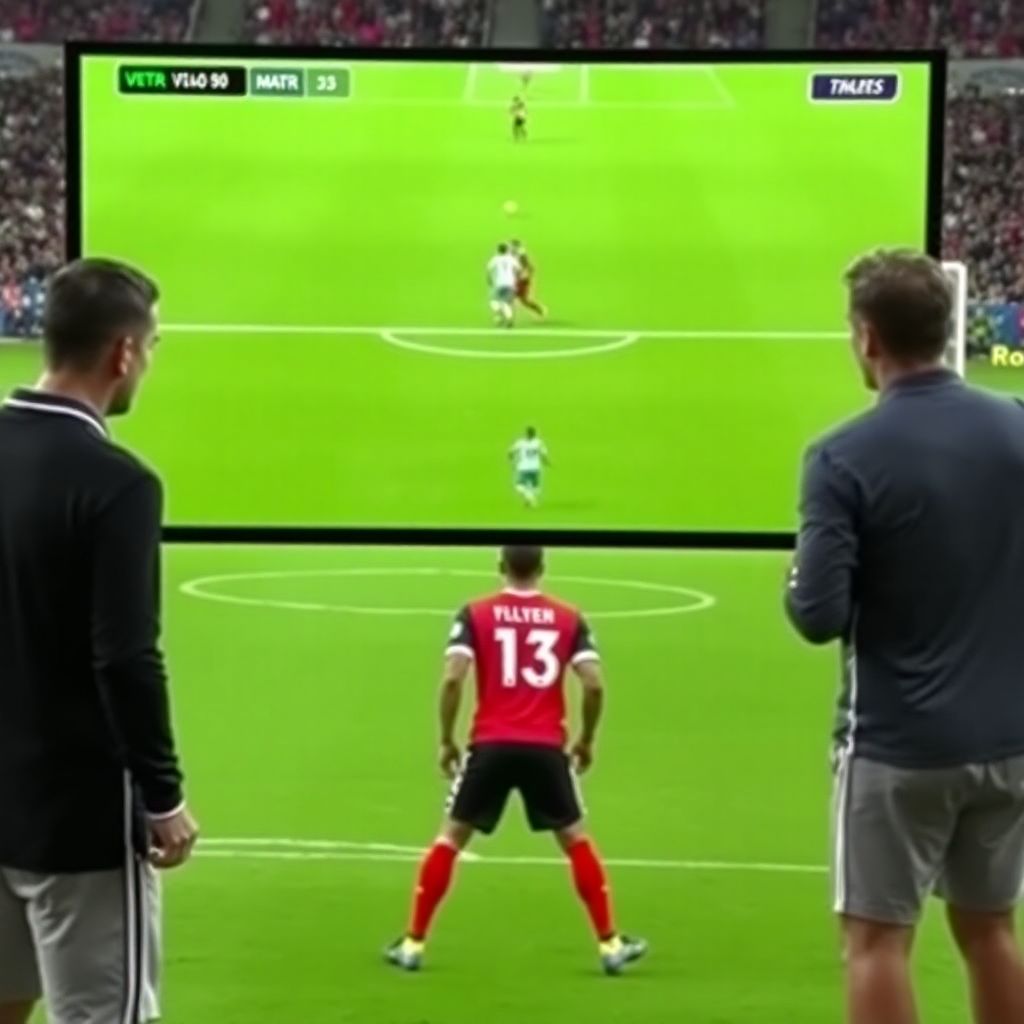
VAR has slowed some phases of play in the Süper Lig while increasing scrutiny on key incidents, especially penalties, offsides and red cards. Coaches must now plan around more penalties, longer stoppage time and psychological swings after reviews, while analysts and bettors integrate VAR risk into preparation, evaluation and Super Lig betting tips VAR influence.
Core impacts of VAR on Süper Lig match dynamics
- Higher emotional volatility after reviews, amplifying pressure on referees, players and coaches during critical moments.
- Greater weight on penalty-box duels and defensive positioning because marginal contacts are re-checked in detail.
- Longer effective match duration, changing substitution timing and physical load management late in games.
- Shift in attacking strategy, with more cut-backs and crosses targeted to trigger reviewable incidents.
- New tactical use of time: teams deliberately manage tempo during checks and extended added time.
- Increased data demand: clubs track best Super Lig teams affected by VAR stats to benchmark discipline and risk.
Implementation timeline and operational model in the Süper Lig
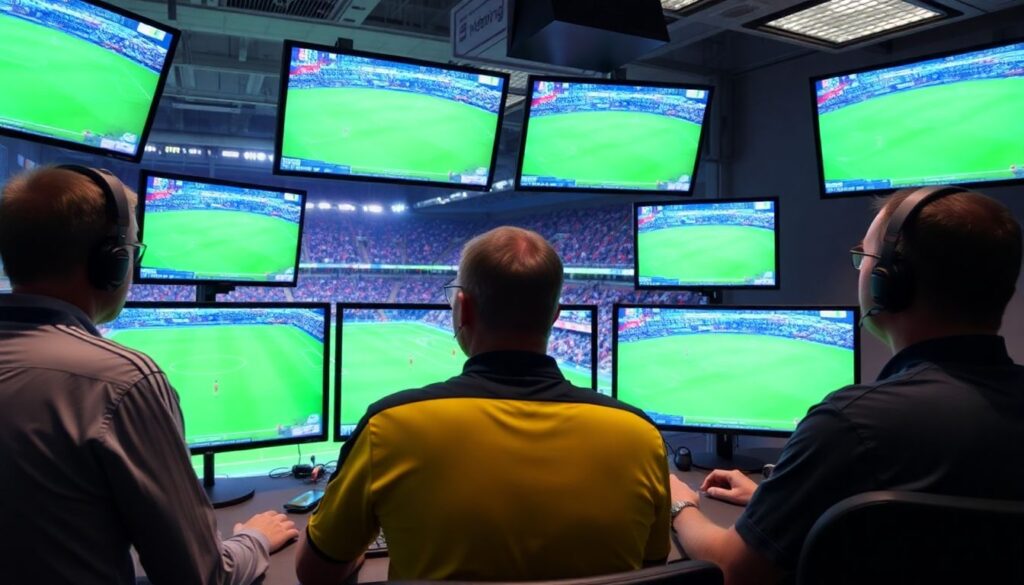
VAR in the Süper Lig follows the global protocol: it assists the referee on goals, penalties, direct red cards and mistaken identity. For Turkish clubs, systematic use of broadcast angles, centralized review rooms and calibrated offside lines are now routine parts of match operations.
This approach suits:
- Clubs with established video-analysis departments able to mirror VAR workflows in their own review processes.
- Coaches ready to adjust training, set-piece design and discipline rules to a world of constant camera scrutiny.
- Analysts and bettors who already model referee tendencies and can incorporate VAR-related volatility safely.
It is less suitable, or at least more risky, when:
- Staff lack basic understanding of VAR protocol and misinterpret decisions, leading to unproductive frustration.
- Teams rely heavily on borderline physical defending in the box and do not adapt, increasing penalty exposure.
- Club leadership reacts impulsively to each Super Lig VAR controversy today, instead of using structured review processes.
Operationally, a VAR team in Turkey monitors the main broadcast and additional angles. They communicate via headset with the on-field referee, suggesting on-field reviews only when there is a clear and obvious error. Understanding this workflow helps coaches predict which incidents are likely to be re-examined.
Tactical adaptations: how coaches altered formations and substitution patterns
To work safely and effectively under VAR, Süper Lig coaches increasingly treat the penalty area as a high-risk zone and adjust both structure and personnel decisions accordingly.
Formations and defensive blocks
- Many coaches prefer compact back-fours or back-fives with clear marking responsibilities to reduce chaotic box situations.
- Holding midfielders are instructed to shield the box and avoid last-ditch tackles that look worse in slow motion.
- Wide players track runners more diligently to prevent desperate recovery fouls inside the area.
Pressing and contact management
- Pressing traps are moved slightly higher, keeping the most aggressive duels outside VAR’s highest-risk zones.
- Defenders are coached to use arms and hands more carefully during corners, minimizing shirt pulls and pushes.
- Training includes video of Super Lig highlights with VAR decisions to illustrate which gestures and contacts get punished.
Substitutions and game-state planning
- Substitutions are often delayed until after a potential review to avoid wasting a change on a player who might be sent off.
- Coaches maintain at least one tactically flexible substitute to react to sudden VAR-driven swings (penalty, red card, disallowed goal).
- Late-game changes account for extended stoppage time: fresh runners are saved for the final minutes plus added time, not just the 80th minute.
Set-pieces as controlled VAR environments
- Attacking corners and free-kicks are designed to create clear, visible fouls against defenders rather than chaotic scrambles.
- Defensive setups emphasize zones and blocking runs legally, reducing risk of penalty after review.
- Clubs systematically tag set-piece incidents when they watch Super Lig live streaming with VAR replay to refine micro-movements.
Refereeing outcomes: decision accuracy, overturn rates and human oversight
Before applying structured steps to work with VAR, practitioners should internalize several risk-aware limitations:
- VAR does not correct every mistake; only clearly wrong decisions in defined categories are reviewable.
- Camera angles can still be inconclusive, so some subjective calls will stand even after a check.
- Long reviews can emotionally destabilize players; preparation must include psychological routines.
- Over-reliance on VAR may erode players’ and coaches’ focus on discipline and positioning fundamentals.
- Public perception, fed by each Super Lig VAR controversy today, can bias expectations about future calls.
- Map the VAR protocol to your match scenarios
Identify all situations in your game model that fall into goals, penalties, direct reds and mistaken identity. For each category, define a clear internal guideline: what players must avoid, and how staff communicate when a check starts or ends. - Build a pre-match VAR briefing into team meetings
Before every fixture, include a two-minute segment in the tactical talk that covers VAR-specific risks:- Known tendencies of the referee crew and how they interact with VAR.
- Reminder of forbidden gestures (appeals, crowding referee, sarcastic applause).
- Expected duration of checks and how players should behave during them.
- Design training drills that simulate reviewable incidents
Once a week, run game scenarios where the coach acts as VAR: stop play after a foul or box incident, announce a simulated review, then restart. Use these sessions to coach:- Calm reactions to disallowed goals or sudden penalties.
- Immediate re-organization after a red card or conceded penalty.
- Communication between captain and referee within protocol limits.
- Integrate video workflows aligned with VAR angles
Analysts should tag and archive all potential VAR incidents from matches and training. When creating clips:- Use broadcast-like angles first, because those drive perception and many decisions.
- Add tight replays to show players how details (hand pulls, studs, follow-through) look in slow motion.
- Link these clips to the match plan so lessons are actionable, not abstract.
- Establish a post-match VAR review routine
Within 24 hours, review all incidents that were checked or could realistically have been reviewed. For each:- Judge whether your team’s behaviour was VAR-safe (e.g., body shape, tackle angle, arm use).
- Document patterns (same defender involved, same type of foul, same pressing trigger).
- Translate findings into one or two concrete training actions for the coming week.
- Coordinate respectfully with referees and observers
When possible and appropriate, use official channels to ask clarifying questions about specific decisions, not to re-litigate the match. Treat feedback as a way to tune your internal standards closer to real enforcement, especially regarding handball and offside interpretations. - Update risk models for analysts and bettors
Performance staff and external modelers who create Super Lig betting tips VAR influence should:- Track how often your team and opponents trigger reviews per match.
- Separate penalties earned from open play and from set-pieces.
- Monitor which players are frequently involved in marginal incidents, both positive and negative.
Statistical shifts in goals, penalties and cards since VAR introduction
Even without precise numbers, clubs can build a practical verification checklist to ensure they are adapting properly to VAR-related statistical shifts:
- Your share of penalties conceded is stable or improving compared with peers in the Süper Lig.
- More of your penalties earned come from repeatable patterns (cut-backs, second balls) rather than random chaos.
- Yellow and red cards for dissent or protests around reviews are rare and trending downward.
- Defenders inside your box commit fewer sliding tackles and emergency pulls per 90 minutes in internal analysis.
- Expected goals (xG) from penalties in your analytics reports aligns with video evidence of box pressure.
- Attacking set-pieces generate a consistent stream of review-worthy situations without exposing you to counters.
- When you re-watch Super Lig highlights with VAR decisions, your team is more often on the “benefiting” end due to smart positioning.
- Coaching staff can quickly list key VAR incidents from recent matches and explain what changed in training afterwards.
- Team discipline metrics (fouls, cards, protests) improve during high-tension moments following reviews.
Match flow, stoppage time and the spectator experience
VAR checks alter rhythm, emotions and perceived fairness. Coaches and club staff should actively avoid several recurring mistakes that damage performance and fan trust:
- Allowing players to mentally “switch off” during long reviews instead of staying tactically engaged.
- Substituting purely on the game clock without accounting for extra stoppage time added due to multiple checks.
- Designing match plans that assume a fixed 90-minute physical load, ignoring the reality of prolonged games.
- Letting the bench area react theatrically to decisions, which can provoke sanctions and distract the team.
- Communicating emotionally on social media after a decision, instead of using structured club statements and internal reviews.
- Failing to leverage stadium screens and announcements to educate fans on what VAR is checking, increasing frustration.
- Ignoring how global viewers who watch Super Lig live streaming with VAR replay perceive your club’s behaviour around officials.
- Over-focusing on past decisions in team talks instead of preparing players for the next potential review scenario.
- Not adjusting time-wasting or tempo-control strategies to avoid obviously punishable behaviour highlighted by cameras.
Disputes, governance responses and lessons for future technology use
Disputes around VAR are inevitable; the key is to respond with constructive alternatives and governance improvements that reduce long-term risk.
Alternative 1: Enhanced on-field communication protocols
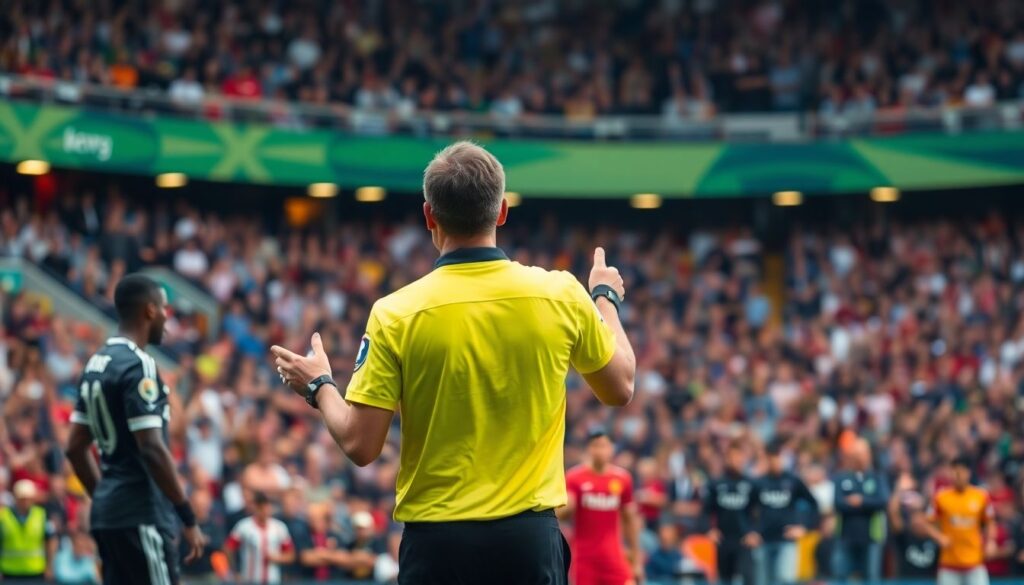
Leagues can prioritize clearer, standardized signals and announcements from referees during and after reviews. This does not replace VAR but reduces the sense of opacity that fuels many Super Lig VAR controversy today narratives.
Alternative 2: Limited transparency measures for broadcast and clubs
Controlled release of referee-VAR audio for educational purposes can build trust, provided it respects safety and does not turn into entertainment. Clubs can mirror this by publishing calm, analytical breakdowns instead of emotional complaints.
Alternative 3: Incremental use of semi-automated technologies
For offside and goal-line incidents, semi-automated systems can reduce review time and perception of bias. Their rollout should be gradual, with clear pilot phases and technical audits, to avoid creating new layers of controversy.
Alternative 4: Independent review panels for systemic issues
Independent panels can periodically review clusters of controversial decisions and publish recommendations on training, protocol tweaks and communication. This approach focuses on learning rather than blame, supporting referees, clubs and fans in adjusting expectations.
Practical questions from coaches, players and analysts about VAR
How should we prepare players for emotional swings after a VAR decision?
Integrate short “shock” scenarios in training where goals are suddenly cancelled or penalties awarded. Immediately reset shape and focus, and reward squads that regain composure fastest. Captains should have pre-agreed phrases to calm teammates.
Is it worth changing our defensive style in the box because of VAR?
Yes, especially for centre-backs and defensive midfielders. Emphasize body positioning over grabs and late tackles. Review clips of your own incidents and recent Super Lig highlights with VAR decisions to show specific adjustments instead of giving generic instructions.
How can analysts incorporate VAR into performance reports safely?
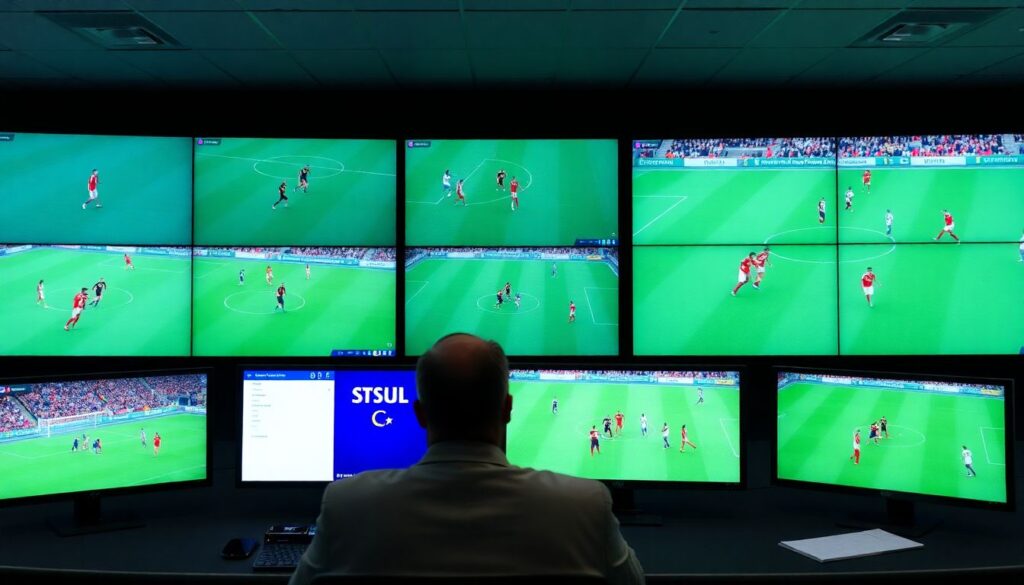
Tag all potential review situations, not only those that were actually checked. Separate “discipline” (avoidable fouls, protests) from “tactical” factors (positioning, timing). Avoid drawing strong conclusions from single incidents; focus on repeated patterns across matches.
What is the best way to discuss VAR with referees without making things worse?
Use official post-match channels, be concise and focus on one or two specific incidents. Ask for clarification of interpretation, not for an admission of error. Maintain a neutral tone so feedback loops remain open for future matches.
Do VAR trends affect how betting models should treat Süper Lig matches?
Yes, but only if done carefully. Those building Super Lig betting tips VAR influence should track penalties, red cards and review frequency over time. Incorporate this as an additional risk factor rather than a deterministic predictor of outcomes.
How can clubs reduce fan anger about contentious VAR moments?
Communicate quickly and calmly after controversial matches. Publish short explainer clips and statements that reference the protocol, not emotions. Show you are running an internal review, and channel supporter frustration into structured feedback instead of online abuse.
Should youth academies already coach for a VAR world?
Yes. Teach clean tackling technique, smart body use and emotional discipline from early ages. Use simple video examples and emphasize that every gesture can be captured on camera, preparing players for professional standards in the Süper Lig and beyond.